
















































































































As artificial intelligence becomes increasingly common in classrooms and workplaces, K-State is moving from planning to action on how the technology is used across campus, allowing faculty more freedom to incorporate AI into their courses.
The university recently announced its new AI Stewardship Committee, a permanent group charged with implementing recommendations from K-State’s Task Force on Responsible Use of Generative Artificial Intelligence. The committee will oversee AI adoption across instruction, research, administration and service. Tasks include developing AI literacy programs, establishing governance policies and creating processes for evaluating university AI tools.
One of the committee’s first major actions is creating an interim AI review and approval framework that evaluates tools based on a list of factors like security, privacy, institutional impact and regulatory requirements. The university also launched a formal AI tool approval request process for faculty and staff.
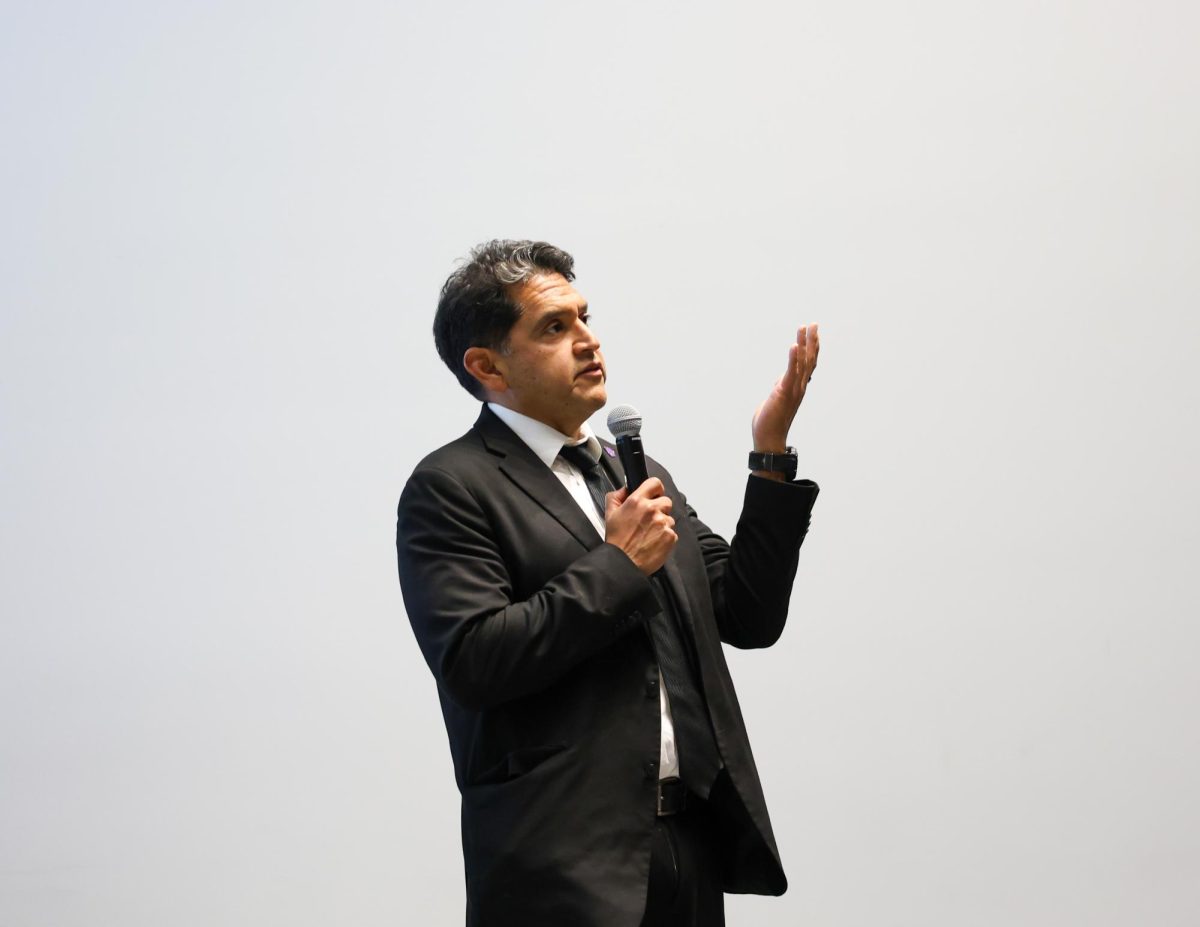
James Wiser, dean of K-State Libraries and chair of the AI Stewardship Committee, said he hopes the committee can provide guidance.
“I think our goals are to provide clarity and sustainability for the implementation of AI tools university-wide,” Wiser said.
The goal is not restricting AI use, he said, but providing direction as it becomes more integrated into daily campus life.
Additionally, the committee recently reviewed and approved limited use of Claude for Teams, one of the first examples of the review process in action. Wiser said that when reviewing, they consider how much access AI tools have to university systems and whether they could expose confidential student and employee information.
Students may have already noticed one of the committee’s changes this year. At the start of the semester, K-State implemented a requirement that instructors include AI guidance on course syllabi, helping to clarify expectations for AI use in individual classes.
“We strongly believe that faculty members have the right to determine if and how they will use AI in their classrooms because every discipline is different,” Wiser said.
Jana Thomas, assistant director of strategic initiatives in the A.Q. Miller School of Media and Communication and assistant director of the Digital Innovation and Media degree program, said faculty flexibility is needed to determine when AI enhances versus interferes with learning.
Thomas taught MC 190, a pilot generative AI course in the A.Q. Miller School, last semester. In her current courses and that pilot course, she said she has seen AI evolve exponentially into something ingrained into everyday schoolwork.
“I think we’re seeing AI move from something that students were initially experimenting with to something they’re beginning to incorporate into their everyday lives and everyday workflows,” Thomas said.
Both Thomas and Wiser said the biggest benefit of AI education is preparing students for careers in their respective fields and that AI should enhance and supplement learning rather than replace it.
“We want to make sure that our graduates are market ready, and to take a completely restrictive view of AI would certainly not do that,” Wiser said.
In Thomas’s classes, students use tools like ChatGPT, Gemini and AI image generators to assist with projects and assignments, but are still responsible for developing strategy, identifying a target audience and evaluating the output’s quality to ensure it’s up to standards.
“I want them to experience AI as a collaborative tool that supports their creativity and decision-making, not a shortcut around those skills,” Thomas said. Your AI output is only as good as the input.”
Thomas said the line between responsible versus unethical use is whether students remain actively involved in the learning process.
“For me, the line comes down to whether the student is still doing the critical thinking and making the decisions,” Thomas said. “They’re leading the AI, not the other way around.”
Wiser said the AI Stewardship Committee will continue developing university-wide governance policies, expanding AI literacy initiatives and establishing an approved AI tool registry for students and faculty in the coming months and years.
As K-State continues to traverse the murky waters surrounding AI, Wiser said the challenge will continue to be balancing innovation with privacy and security concerns.
“It’s a balance that we are learning how to navigate,” Wiser said. “I don’t know if we have it perfect yet, but we’re working on it.”