















































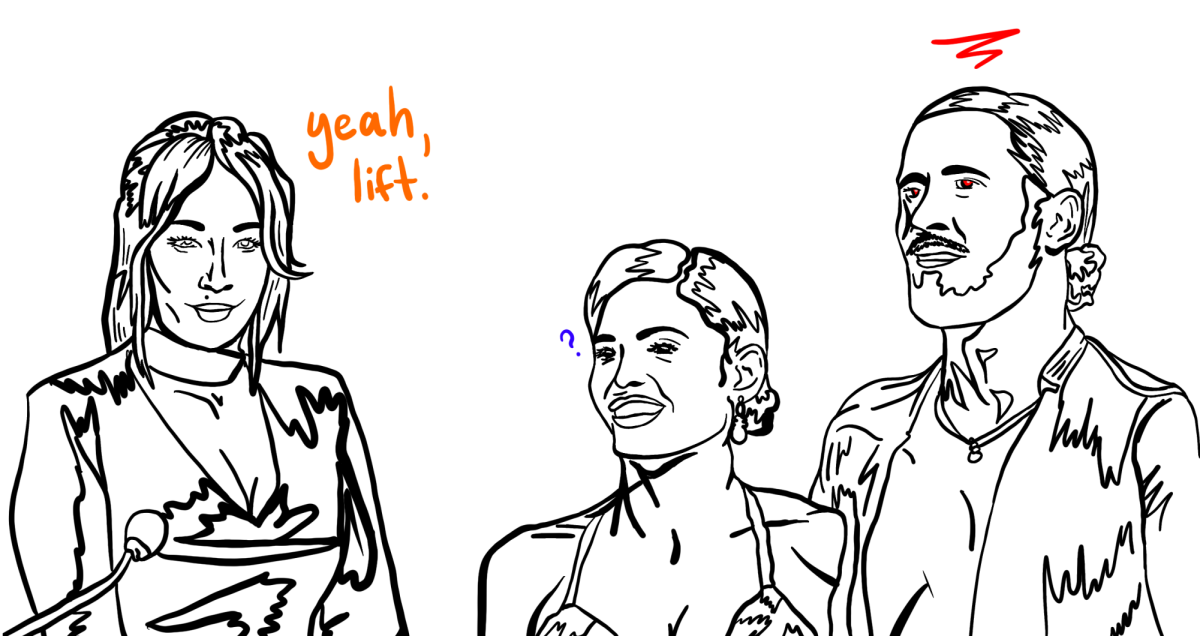










On Tuesday, Oct. 13, “Dancing with the Stars” barred Val Chmerkovskiy, a ballroom dancer and choreographer who has competed as a pro on the show for 22 seasons, as a result of an altercation between him and Carrie Ann Inaba. Last week marked his return to the show after sitting out the week before. While both parties have since publicly apologized and internally resolved the conflict, the internet didn’t forgive quite as fast.
Following “Dancing with the Stars’” recent spike in popularity, new fans come in who get lost among internet wars and vague social media drama, and an overwhelming number of competing opinions from viewers. “Dancing with the Stars” sparks heated debates, as any production relying on a public vote would. But with such a nuanced conflict at hand, one question hangs over viewers’ heads: Who’s actually justified in their behavior?
The most accurate answer is neither Chmerkovisky nor Inaba, nor any other party involved. However, the whole ordeal exists simply due to Inaba’s double standards in judging, escalating what was originally an exchange of snide comments into a hostile environment that the production team now needs to mitigate.
What exactly unfolded to cause such discourse? To put it simply, Inaba docked points from Jenna Johnson, Chmerkovskiy’s wife and fellow professional ballroom dancer, and her partner, Harry Shum Jr., over a highly debated lift in their routine.
Chmerkovskiy subsequently posted an Instagram note stating, “We almost saw Fresh Prince enter the ballroom last night,” referencing Will Smith’s slapping of Chris Rock onstage at the 2022 Oscar Awards, which Smith followed with a remark to Rock to “Keep my wife’s name out your f****** mouth!”
The conflict between Inaba and Chmerkovskiy begins with Inaba’s habit of favoring certain contestants and judging inconsistently overall. Inaba herself stated in a previous episode that a dancer performing a lift with the assistance of the troupe rather than with their partner as the support does not break any rules.
“Very clever way to enhance the routine with lots of lifts,” Inaba said. “Since you didn’t do the lifting, it’s all legal. Those are legal lifts.”
Additionally, Chmerkovskiy and his partner Jenna Dewan, a dancer and actress with feats including roles on “The Rookie” and “Supergirl,” performed a much more blatant lift in their routine and were not called out for it.
The inconsistency in Inaba’s judging and her spiteful tone used in defining a lift as “any movement where the dancer has both of his or her feet in the air with the assistance of her partner,” not only contradicted herself and her previous judging, but sparked outrage among the cast and fans due to the lift involving a troupe dancer lifting Shum Jr. and not Johnson herself. This left Inaba caught in a trap of her own words; unable to validate her decision without contradicting an earlier one.
Chmerkovskiy was extremely justified in his resentment of Inaba’s decision on behalf of his wife, and while he admits his “Fresh Prince” comment was a momentary lapse of judgment, it was altogether an understandable reaction.
Had it not been taken as a serious threat and rather as an exaggerated statement of frustration as he intended, this whole situation would have been a non-issue. Many believe he was referencing Smith’s remark to Rock rather than the slap, but regardless of the intention, both parties agree things got out of hand quicker than they intended.
Chmerkovskiy may have reacted rather strongly for live television and sparked discourse among fans of the show, but he deserved the same treatment as other contestants who have been caught in conflict. Inaba’s direct influence over his punishment creates ethical ambiguity and brings into question whether competitions such as this can truly operate fairly under the weight of personal drama defining the narrative.