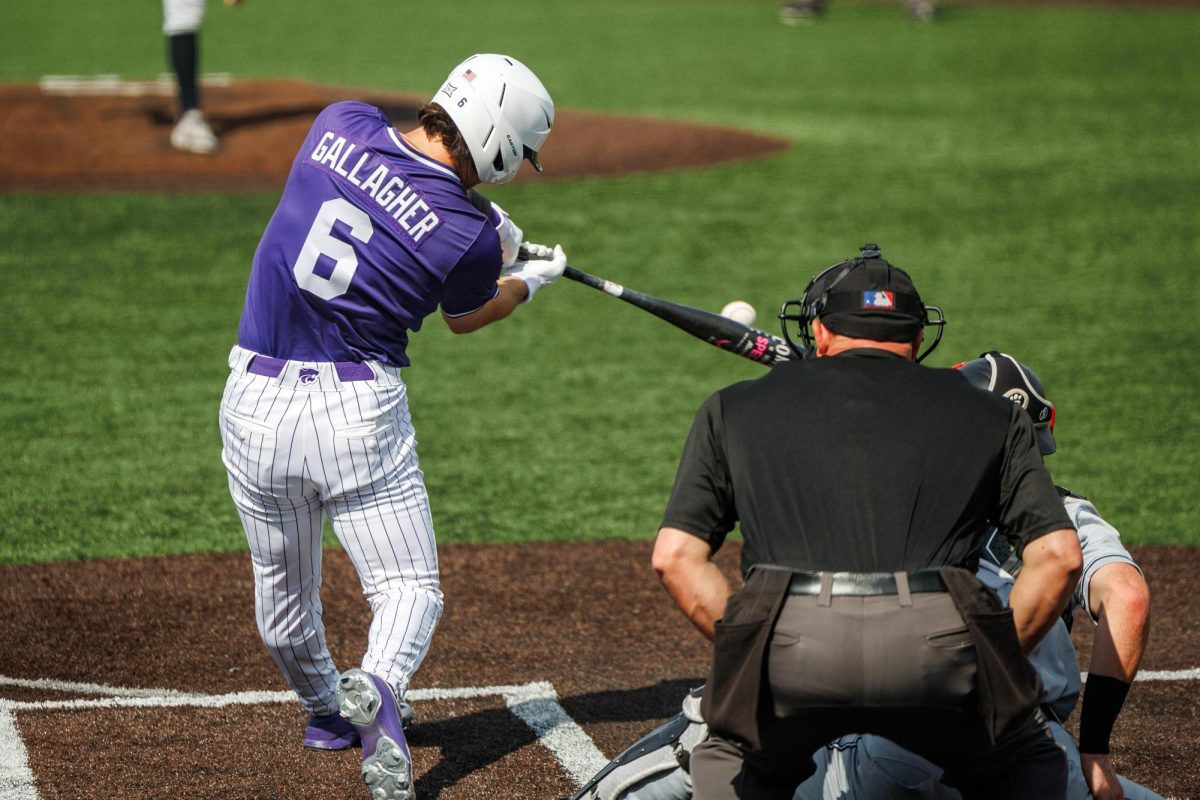









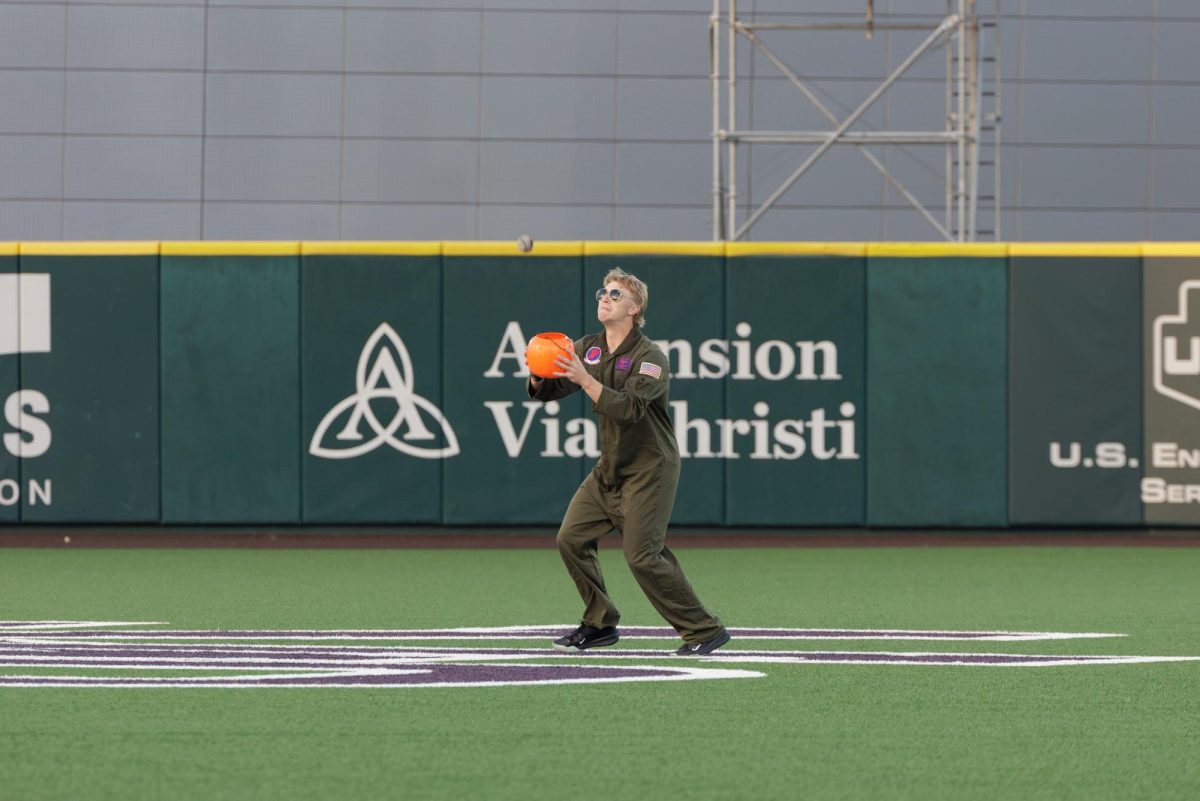





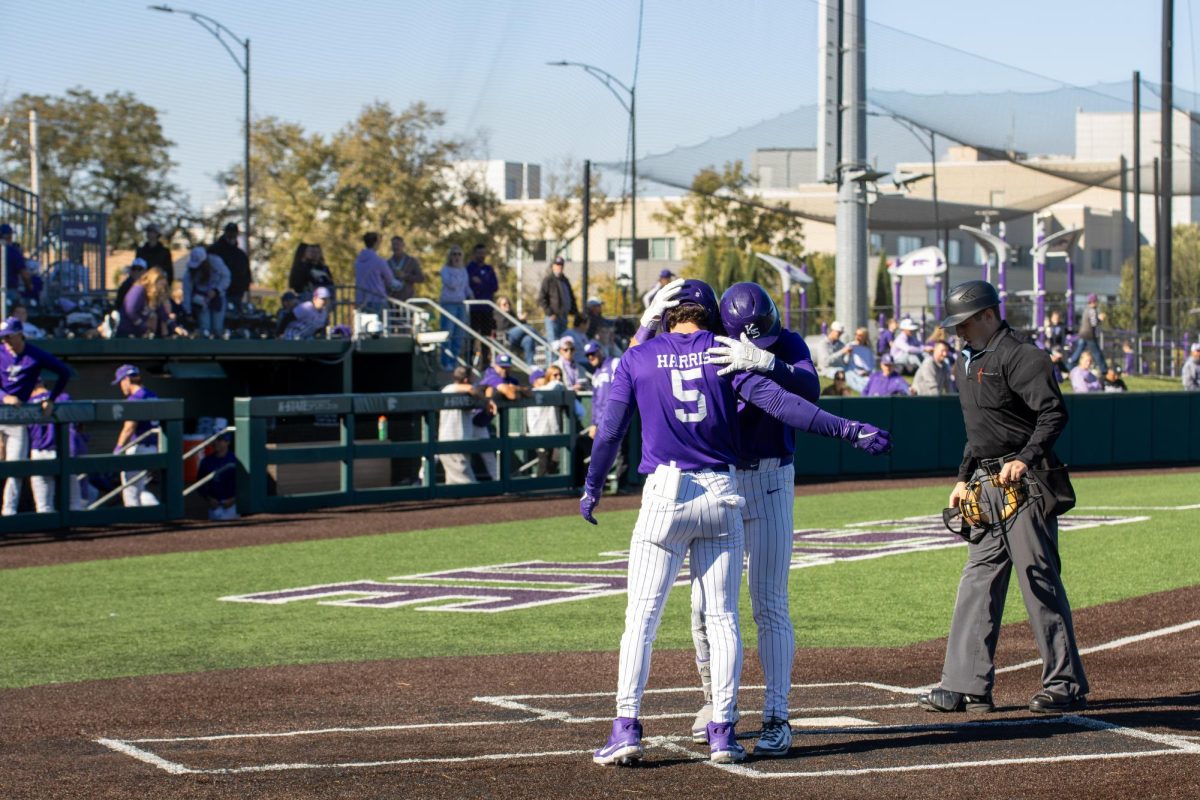
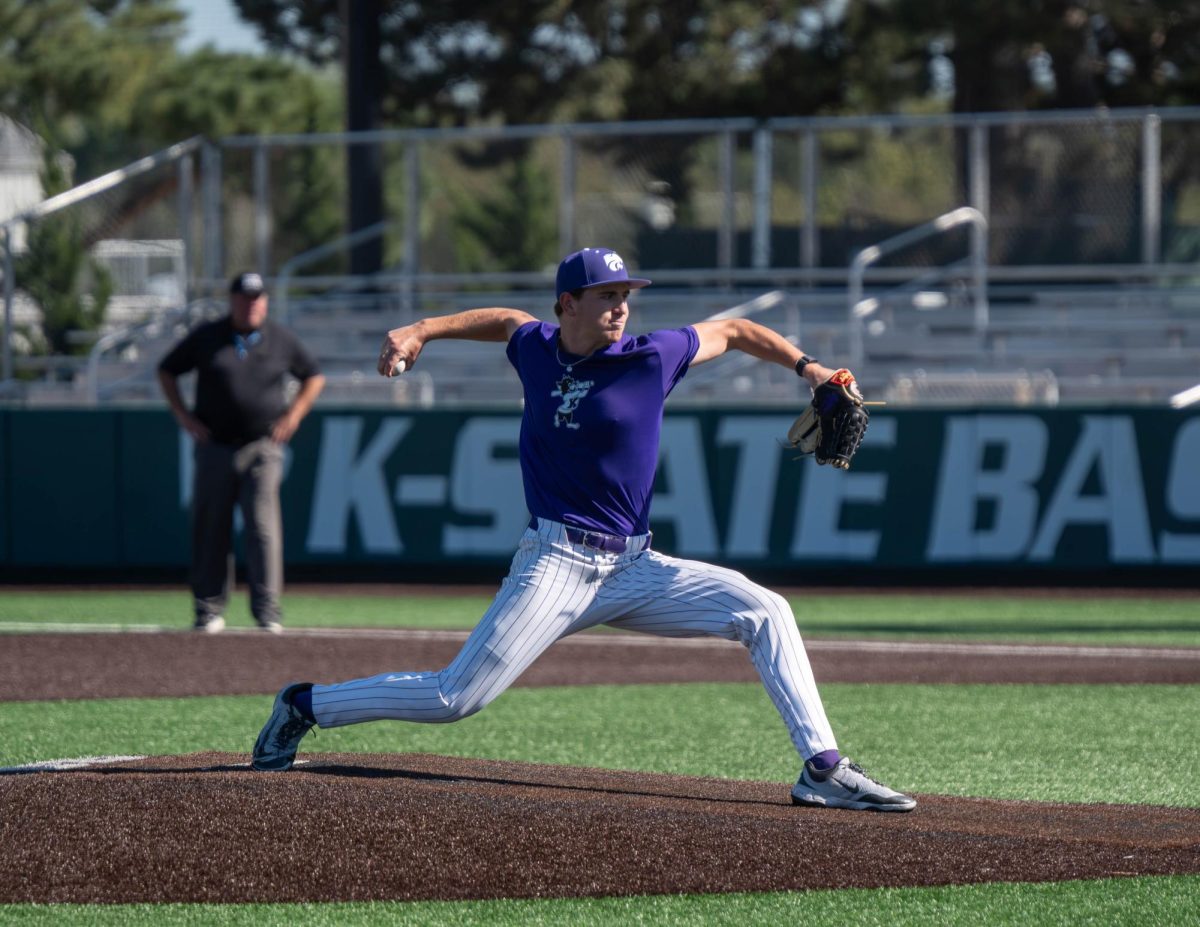
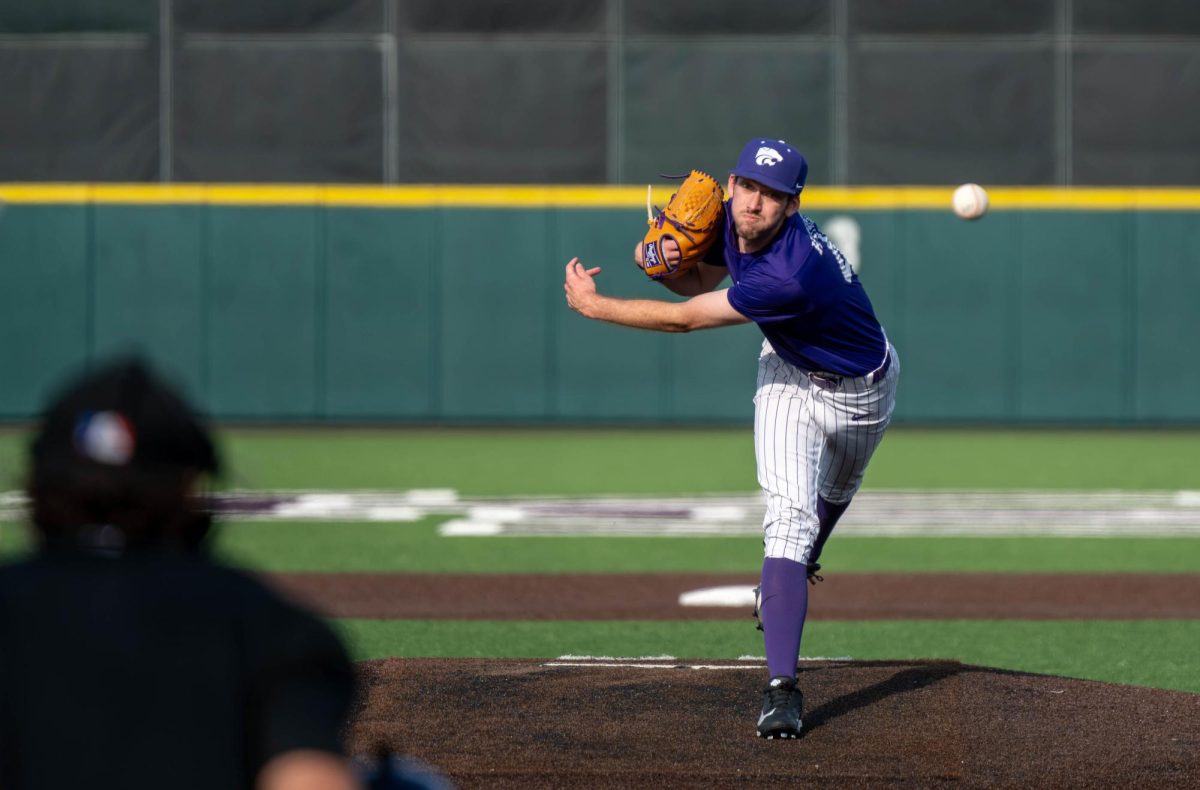
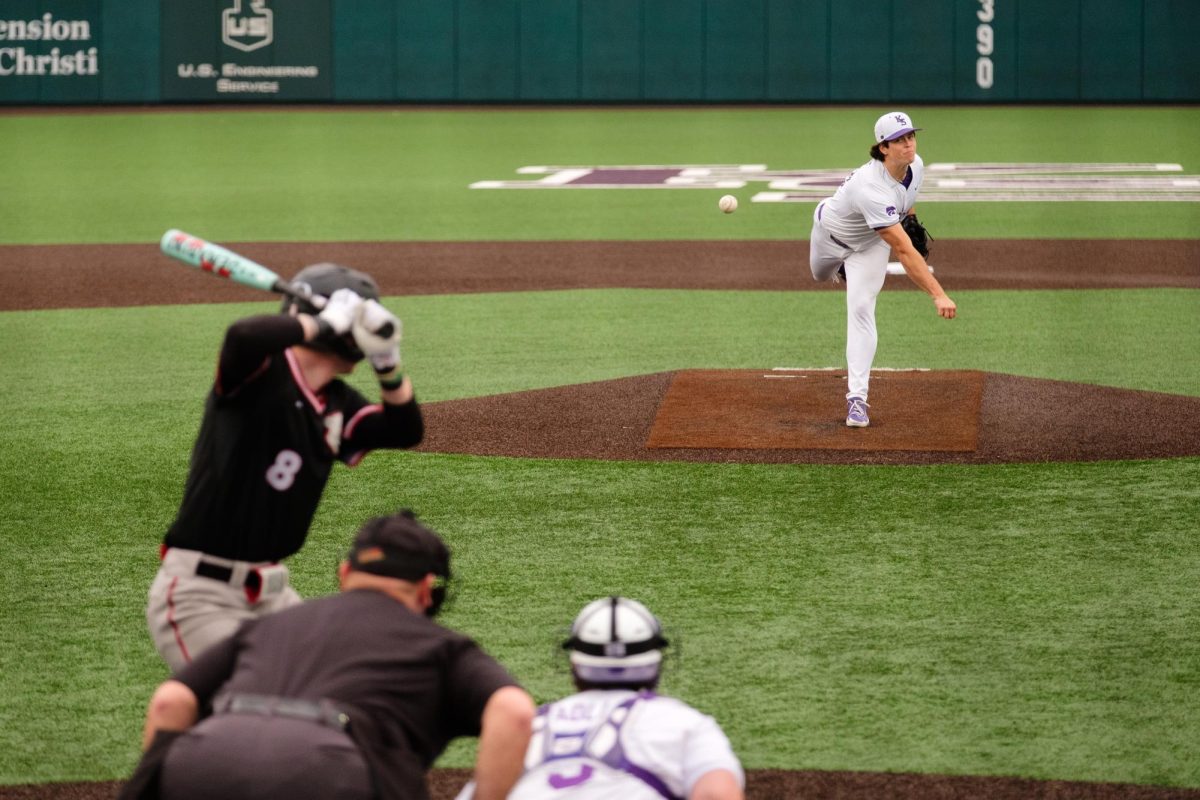
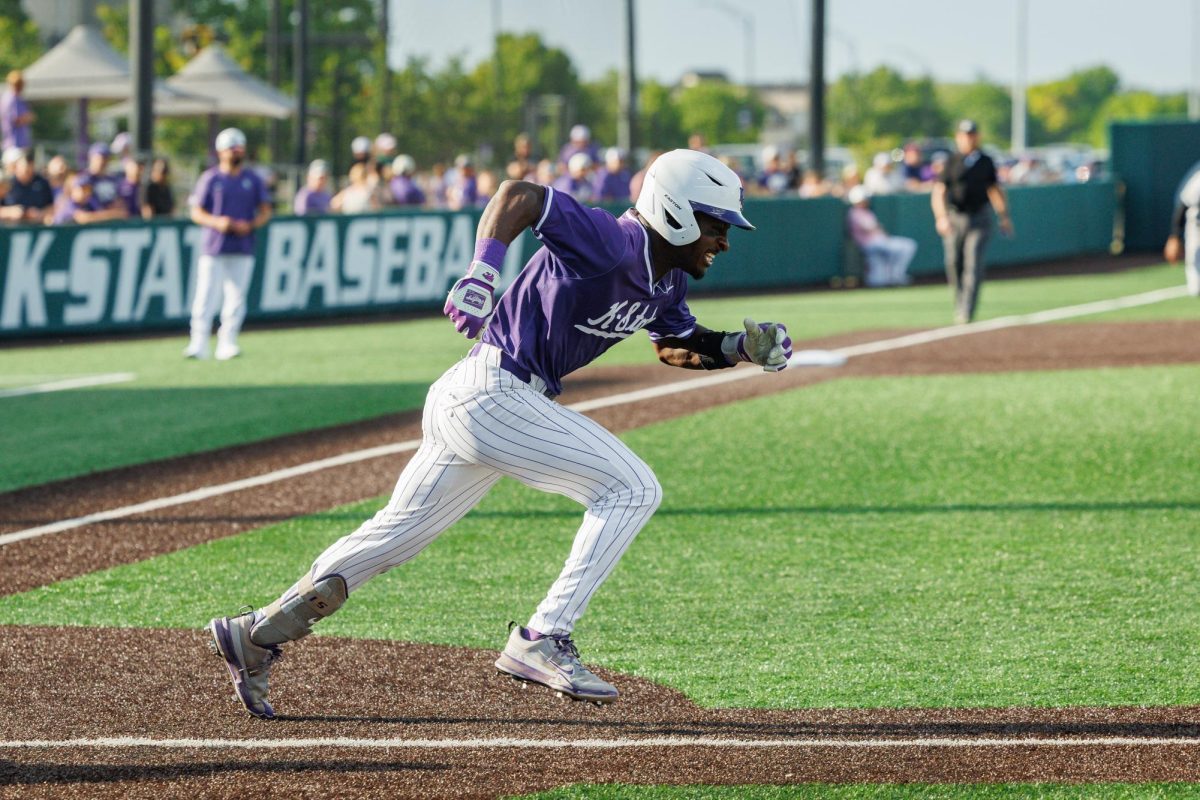




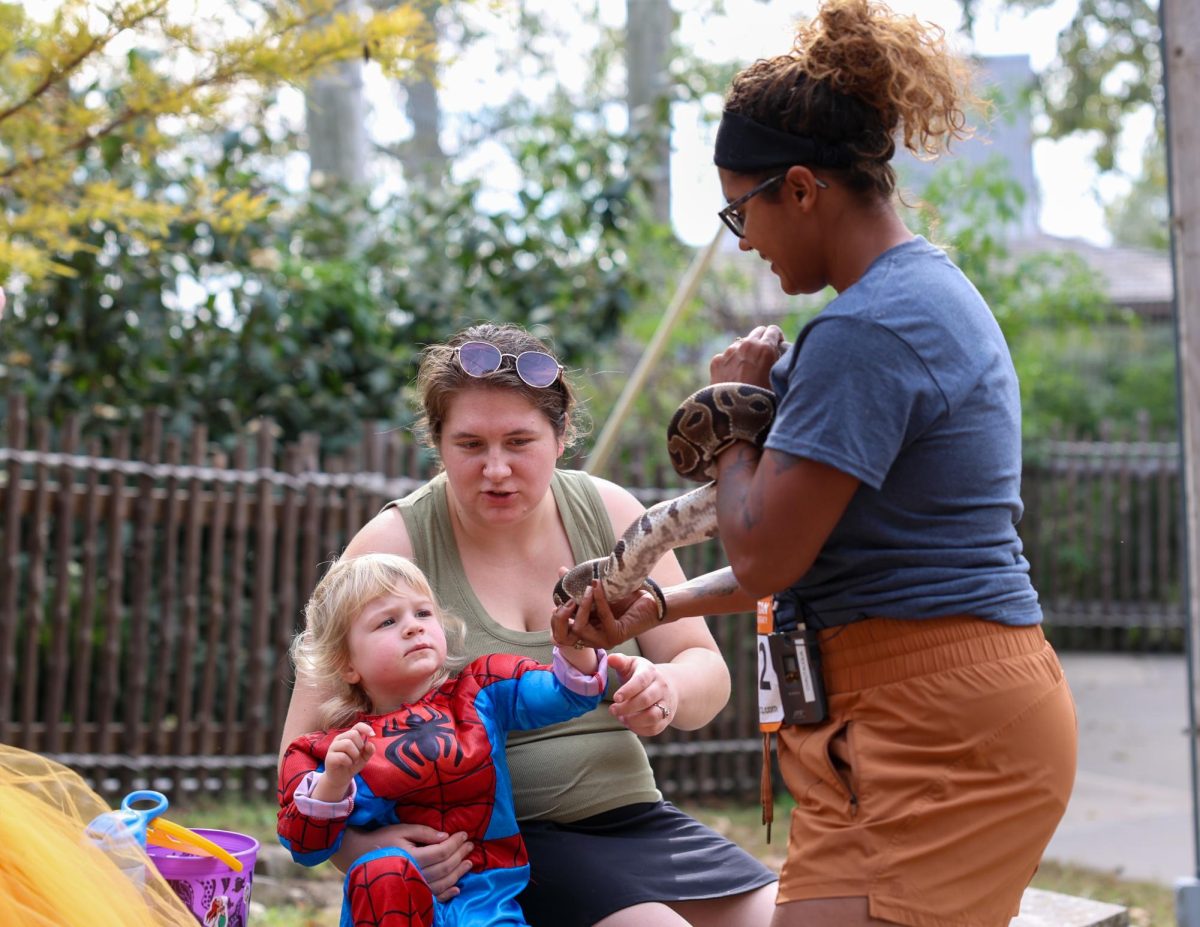












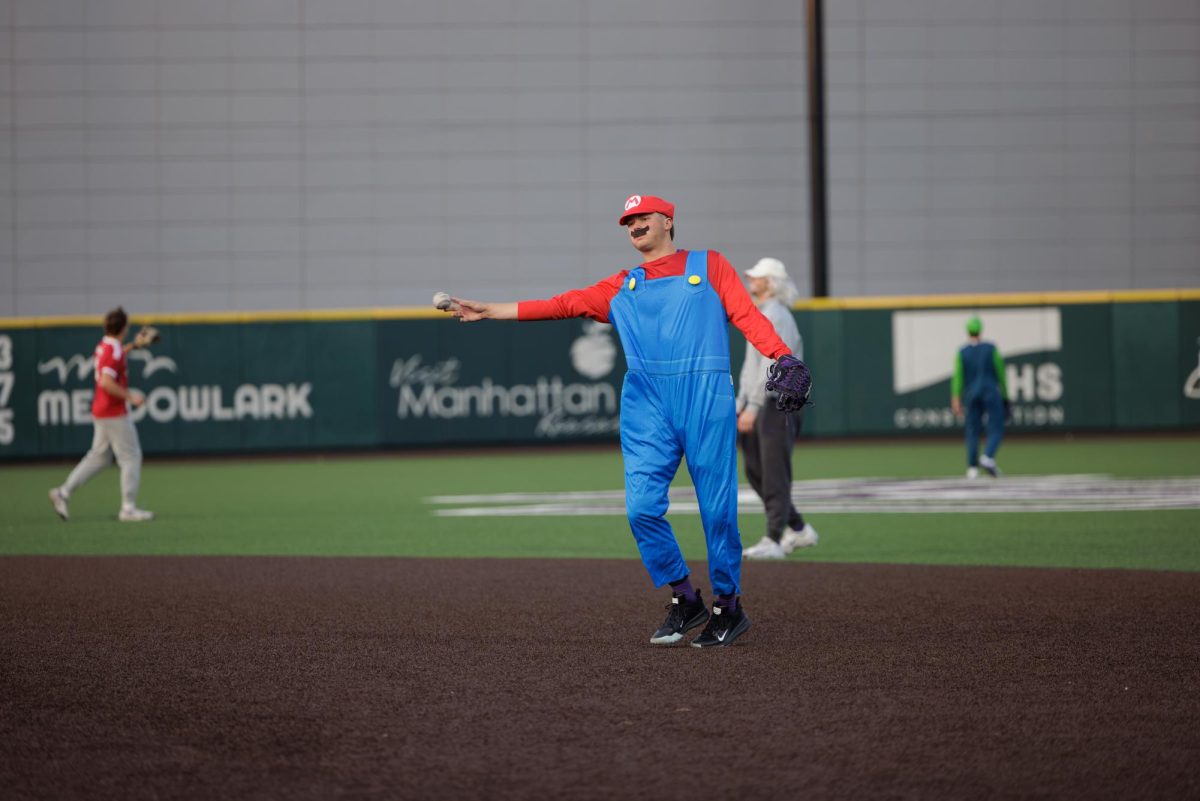










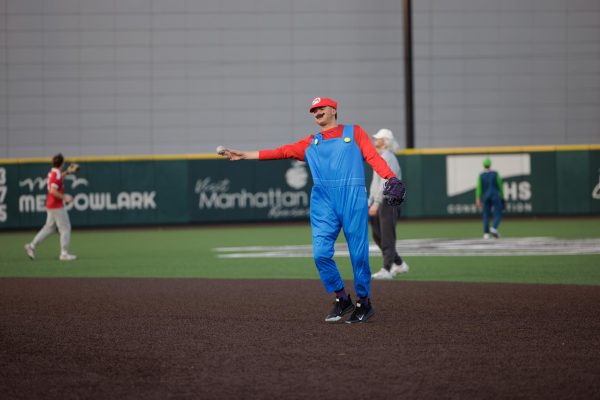
K-State baseball hosted its annual ALS Halloween game at Tointon Family Stadium on Thursday, Oct. 29, a family-friendly event where players dress up in Halloween costumes and go back and forth between two teams, hitting off a pitching machine for fun. Players used creative ways to put the ball in play, with sophomore pitcher Noah Gartner stepping up to the plate and using his giant Among Us costume to hit the ball instead of a bat.
The players also participated in different events between innings, like a Mario Kart go-kart race, with players dressed up as Mario, Luigi and Toad racing around the warning track. There was also a relay race, where two players started on first and third base, ran down the foul line to someone in the corner of the field, and then that player ran to someone else in center field. The two players in center field then ran straight in where they high-fived Ryan Connolly, director of baseball operations at K-State, to end the race.
After the machine-hitting game ended, the players lined up along the third-base line, making a tunnel for kids to run through. The kids ran the bases right after running through the tunnel and took a picture with the players to end the event.
“I think for all of us, our goal, along with 19 Ways, is to set a good example for the kids in this community,” senior pitcher Adam Arther said. “You see it at the end of the night when we have the tunnel for them [the kids] running through, giving them high-fives. If that just makes one kid’s night, we did our job.”
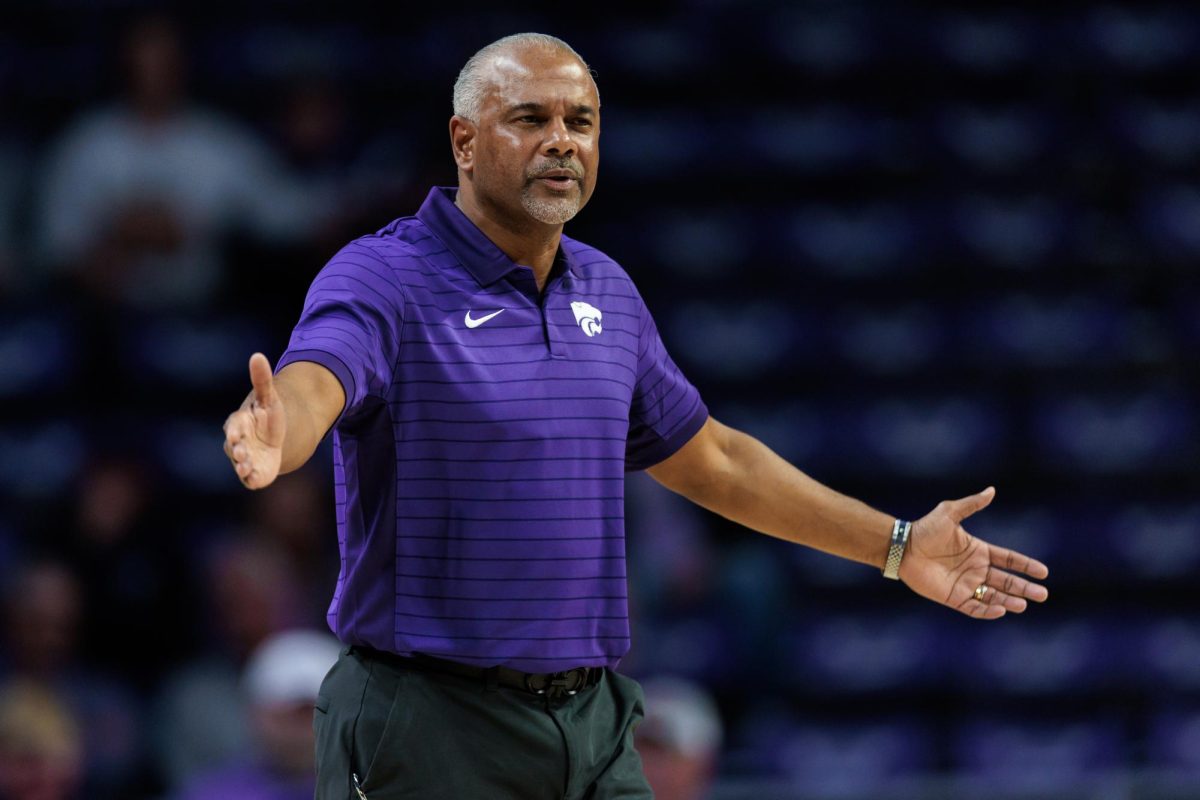
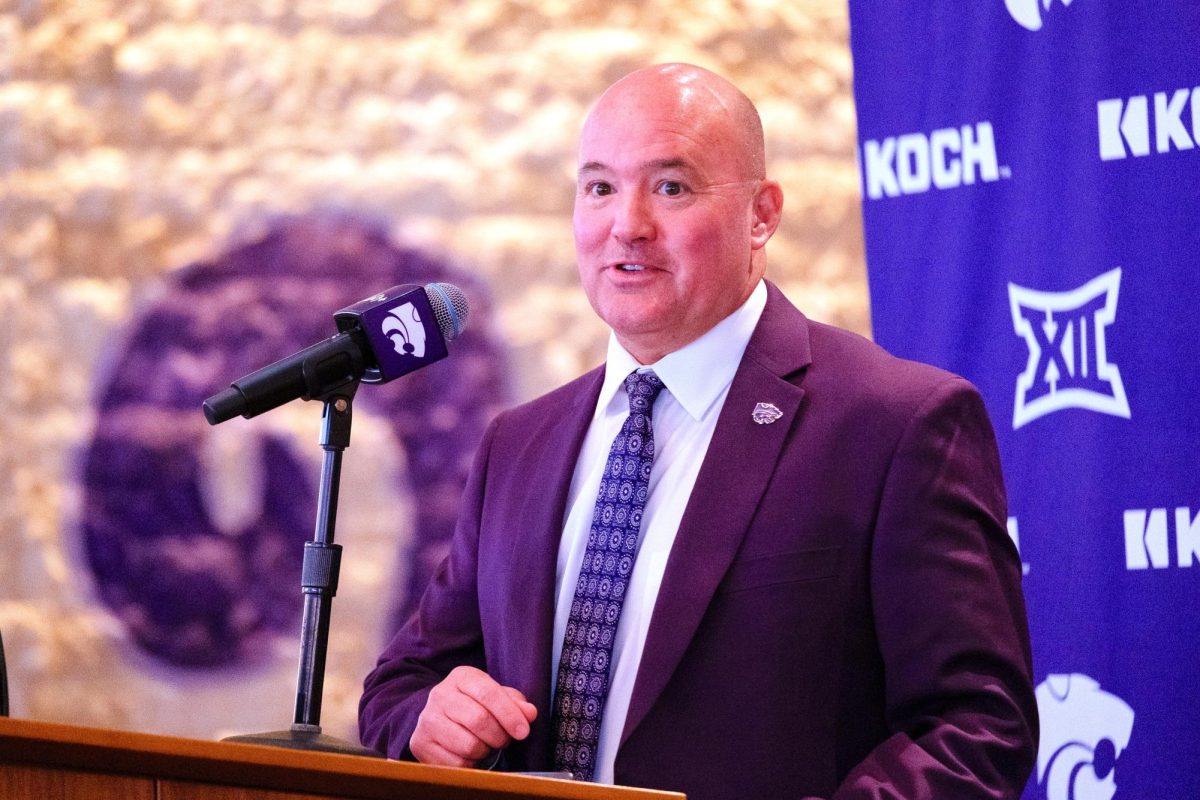
But this night wasn’t about the game or the family-friendly events with the kids. The ALS Halloween game means much more to K-State baseball, especially head coach Pete Hughes and his family.
Back in 2012, when Hughes was the head coach at Boston College, one of the captains, Pete Frates, was diagnosed with ALS, a rare disease that progressively causes nerve cells to stop working and die. This leads to paralysis due to muscle failure, giving people a lifespan of about two to five more years before passing away.
Frates then helped pioneer the Ice Bucket Challenge, where people pour a bucket of ice over their heads, donate to ALS research and awareness and then nominate others to do the same. The Ice Bucket Challenge has helped raise over $220 million towards ALS research and awareness.
Hughes made it his mission to spread ALS awareness by creating 19 Ways, a community service initiative that supports people in the community and raises awareness of ALS. Hughes takes great pride in 19 Ways and in being able to help the community around him through his players.
19 Ways has helped raise over $130,000 for more than 35 organizations through community service and donations. Through this program, K-State baseball has helped grow awareness for a variety of diseases and disabilities, like ALS, Special Olympics and more.
“We get out, and we help 19 different organizations of need,” Hughes said. “We do a lot of good things. We raise awareness, we raise money and we put a lot of smiles on a lot of people’s faces.”
With ALS close to home for Hughes, he started the annual ALS Halloween game to raise awareness. While players switched places on the field, the video board in right field showed facts about ALS, and the PA announcer talked about ALS to raise awareness among the families who attended.
For the Wildcats, this annual game also helps them remember what they’ve done to help out. The players go out with Hughes to do community service for 19 Ways, going across Manhattan to help people in need.
“Our athletes are privileged, never entitled,” Hughes said. “This is a way to remind them that it’s a privilege to be a part of this community. We get our guys out in the community, and we do a lot of good things.”
The players don’t see this as just another thing to do for their coach. In fact, it’s quite the opposite. The players love helping the community and raising awareness for diseases like ALS because they see the impact they are making on the people of Manhattan. They see how it’s affected their coach, and the players do what they can to make an impact where they can.
“You know, to me, it means a lot,” Arther said. “Manhattan is such a special place. It’s a community-driven community, and to be able to play a small part in that is special.”