
































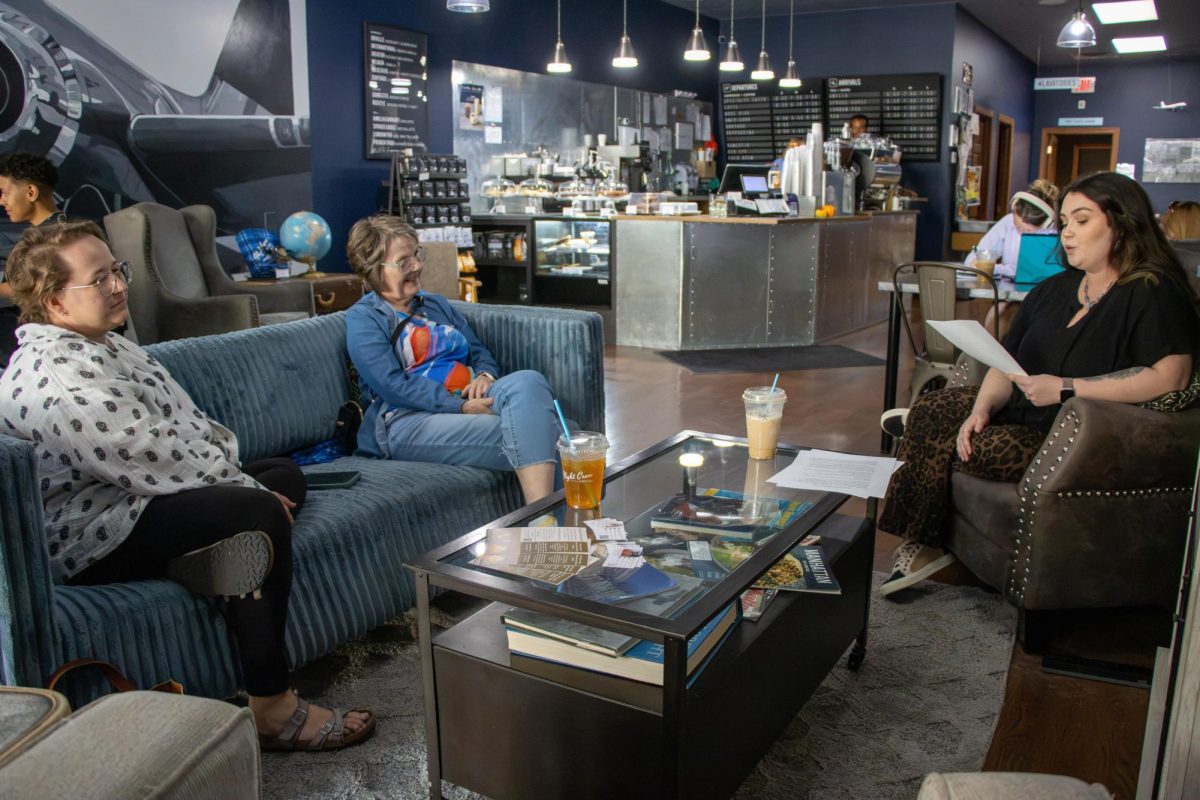

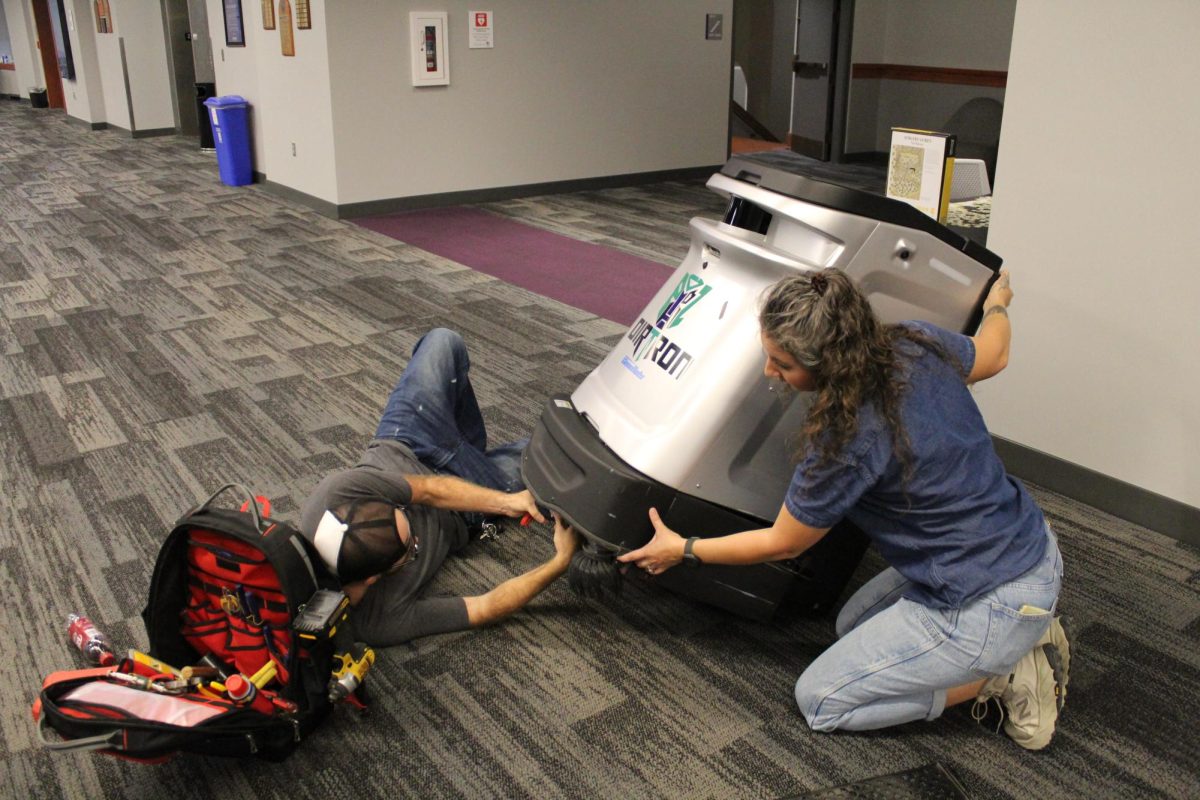

























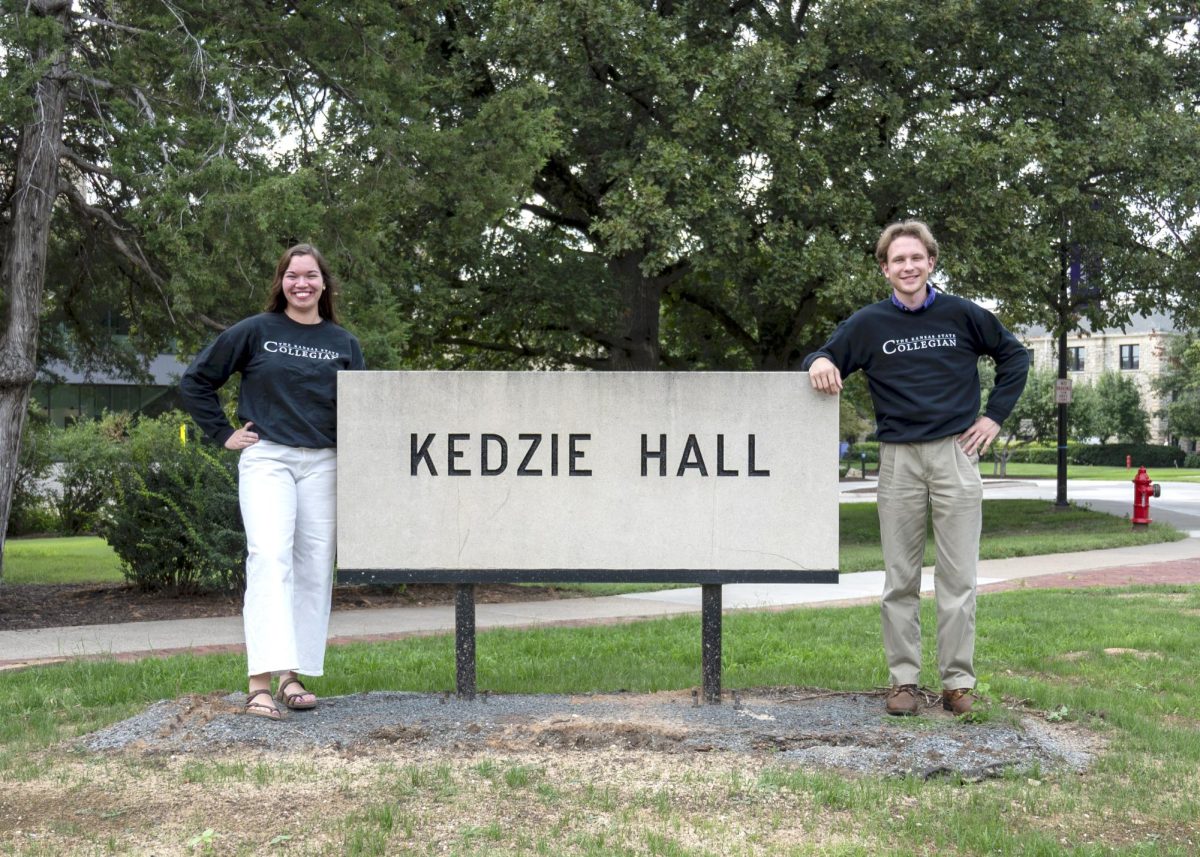





Danielle Salcedo and Jacob Boggs are the custodial maintenance repair technician duo who make sure K-State students have a clean and safe environment before they show up to class. Custodians typically work from the hours of 5 a.m. to 1:30 p.m., with an on-call phone rotating between supervisors capable of dealing with emergencies at any time of day.
According to Salcedo, a lot goes into the university that many students may never think about.
“We all know that the infrastructure here is old, so pipe busts happen a lot,” Salcedo said. “I think that it somehow tends to happen before hours, and so we kind of magically help get it all cleaned up before anybody knows.”
Salcedo and Boggs specifically recall a pipe burst in the College of Business building from a couple of weeks ago when, according to Boggs, water was coming out at about 100 gallons a minute. He said it took about 2 hours to handle the situation.
Water isn’t the only thing coming out of pipes, though. Boggs has dealt with messier situations, specifically in Regnier Hall, where, Boggs said, the building is set up so that the restrooms are stacked all the way up to the roof.
“It started flooding, and people were using the restrooms upstairs,” Boggs said. “You had whole poops shooting out of the sink onto the floor, and so we quickly closed the restrooms down, but it took us 10 minutes to put up ‘closed, closed, closed,’ but the whole time, anytime, somebody would flush — these are really popular toilets across the street from the union — whole turds would fly out over and over and over again.”
A similar situation happened in the engineering building. Salcedo said the sewer was backed up through the floor drains due to a clog, which resulted in sewer water coming up into the basement through five or six different drains.
“So that’s another fun fact,” Salcedo said. “Don’t flush paper towels.”
Even during academic breaks, the custodians work to ensure the buildings on campus are still functional for when students return.
Linda Craghead, director of facilities services, said she remembers the Christmas of 2023 when Denison Avenue was under construction to replace water lines. Craghead said air was in the water lines that would pound and cause vibrations, and the large waterline underneath Ackert and Chalmers vibrated so much that it pushed water and mud throughout the entire building.
“I mean, we’re talking 6 to 12 inches of mud through the whole building,” Craghead said.
The situation happened on Christmas night, around midnight, and custodial staff had to come to campus during the holiday to clean the mess and get the buildings back to an operational state.
“By the time everybody came back from break, it was operational,” Craghead said. “So most people didn’t even realize that event had occurred”
Many students may not realize that water gets to all the buildings throughout campus using an underground tunnel system. Maintenance and power plant workers must go into the tunnels to maintain them and take care of the plumbing and piping.
“It’s dangerous,” said Salcedo. “It’s steam heat, and if something happens, it will boil you alive, like, do not go down there.”
The custodial team deals with many other dangers as well, such as the aftermath of lab explosions. Mike Price, a custodial supervisor who has worked with K-State for decades, said they had to clean up the result of lab work gone wrong.
“There was an explosion that went off in Cardwell,” Price said. “The lab kind of blew up, and we had to go in there and clean up the mess, because they were mixing chemicals and it didn’t mix right.”
Price also remembers doing simpler tasks to preserve campus conditions. He recalls when Jon Wefald was president of K-State and had custodians work evening shifts to scare away crows from the president’s home by clapping wooden blocks together.
“We were going out there scaring the crows away at about 5 o’clock, and we’d stand out there for an hour, clapping big blocks,” Price said. “Then they hired a company to put a spray, fogged the crap out of the whole place, and it stunk; it smelled like skunk for, like, two weeks, two and a half weeks. Whole campus smelled like skunk.”
There are other small things custodians prioritize so that students don’t have to experience negativity throughout their day. Salcedo and Boggs spent one morning power washing away offensive messages written in chalk throughout campus.
“The policy is that you’re allowed to do chalking,” Boggs said. “It keeps them from vandalizing other stuff. But … at what point is what you write too vulgar for children that are taking tours? Racial slurs are not allowed.”
Salcedo emphasized how important erasing those messages was, saying she wants to prevent students from seeing them and being reminded of the negativity in the world.
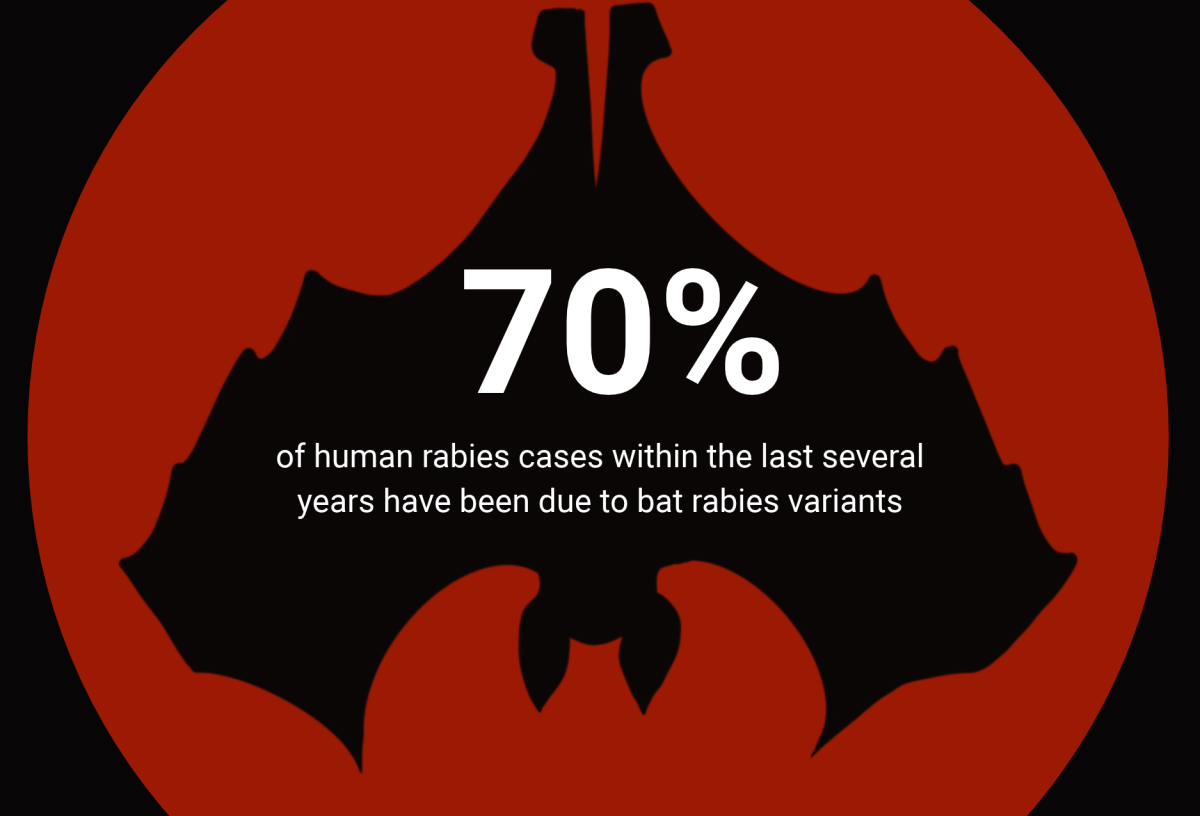
Among other small things that the maintenance team takes care of on top of their other duties is minor animal and pest control. Whenever animals get stuck inside buildings, specifically bats, maintenance is notified, and usually Salcedo is happy to go to the scene to catch and release the animal. She said she has already caught around eight to 10 bats on campus this year, among many other small creatures.
“I caught a skink the other day in engineering,” Salcedo said. “He was in the laundry room. Oh, and toads. I catch toads a lot.”
Salcedo and Boggs have been in every building on campus for their custodial duties, and they have keys to everything, excluding buildings Housing and Dining Services manages.
“We even do almost go to every building in one day sometimes,” said Boggs.
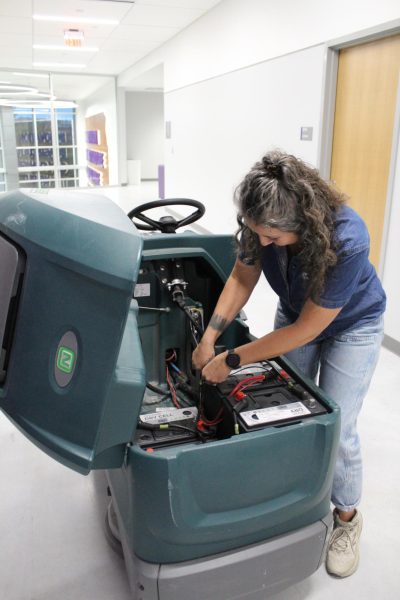
Regardless of having covered almost all of campus, they are still constantly discovering new things.
“I brag about how much we see, but there’s still so much that we haven’t seen,” Boggs said. “It’s been five, six years that I worked here, and then somebody was like, ‘There’s a koi pond,’ and I’m like, ‘No way.’”
The koi pond is beside Ackert Hall and includes small koi fish, lily pads and blooming lotuses. Salcedo and Boggs find beauty all over campus and feel like it deserves appreciation.
“I see a lot of people looking at their phones while they’re walking around,” Boggs said. “Our landscape crew spends too much time for you to look at your phone.”
Salcedo specifically enjoys the wildlife around the university and takes notice of it, believing that students should do the same.
“There’s so many beautiful flower beds and gardens around here, and if you look at them, then you’ll find the critters, you’ll find the bugs, you’ll find the beauty,” Salcedo said.
The custodians have a deep connection and commitment to the students on campus, part of why they enjoy their job so much.
“This [year] was my first time experiencing the first day of school, and I thought that was kind of fun,” Salcedo said. “You could see all the freshmen lost, and since we know the buildings, I’m like, ‘Which room do you need?’ and we can guide them and tell them where to go, and I thought that was kind of fun for me.”
Salcedo and Boggs said custodians will sometimes go in to clean bathrooms and find students upset or crying. They find it fulfilling to comfort and support those students going through hard times.
Eric Curry, a custodian who mainly works in Seaton and Regnier Hall, has found a connection with students in a different way. Someone called Curry one day saying they had seen someone sleeping overnight in Seaton, only to later discover it was a student.
After discovering students sleeping under desks, Curry understood that they were probably experiencing intense project deadlines. He now replaces the trash more often in those specific halls to accommodate them.
Craghead said this profound dedication that maintenance and faculty have to students often goes unnoticed.
“It’s one of those things that our team is recognized, not necessarily because of what they do, but sometimes for what they forget to do,” he said.
Craghead said it is incredibly important that the jobs they are in charge of get done, appreciated or not.
“If we don’t do it right, then we’re not ensuring the health and safety of our student body, and it’s really easy to recognize that a job’s not done, but we don’t want that by any means,” Craghead said. “In fact, what we do is so behind the scenes, we come in at 5 a.m. so the bulk of it happens behind the scenes, so you just think our campus looks like this all the time, but it really can take a lot of work.”