


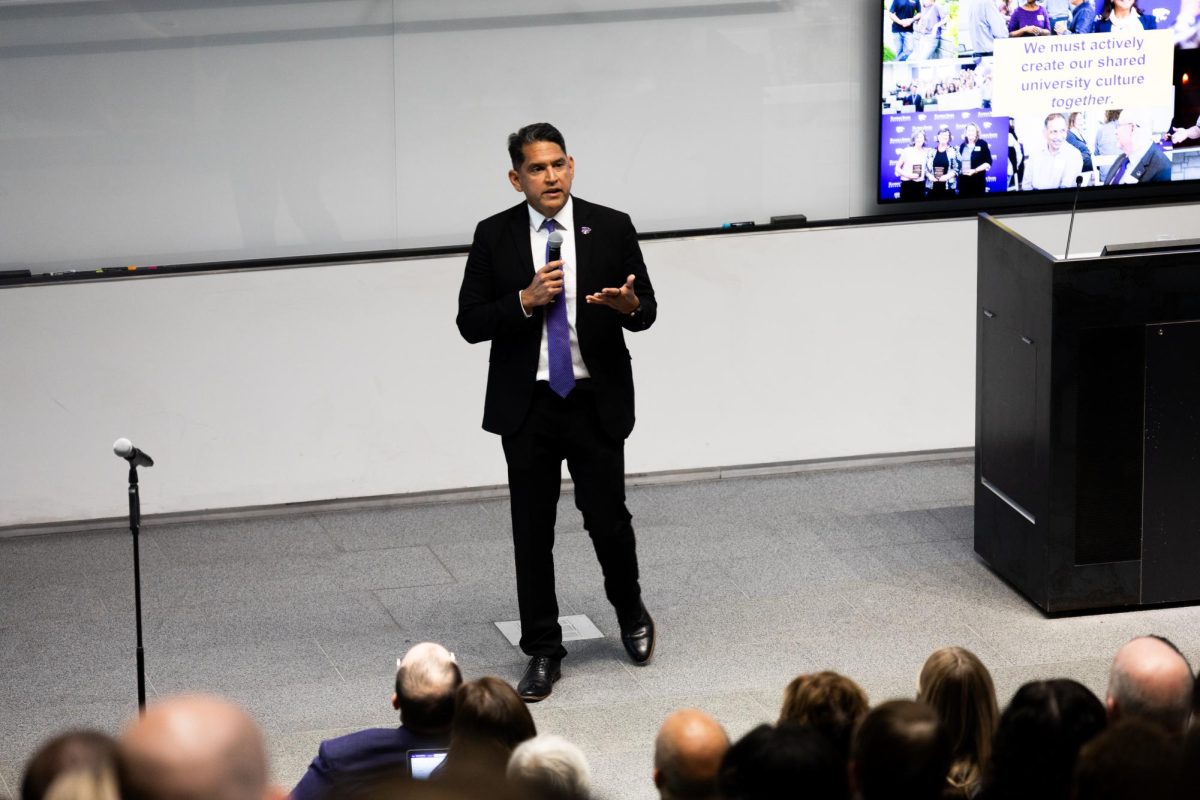
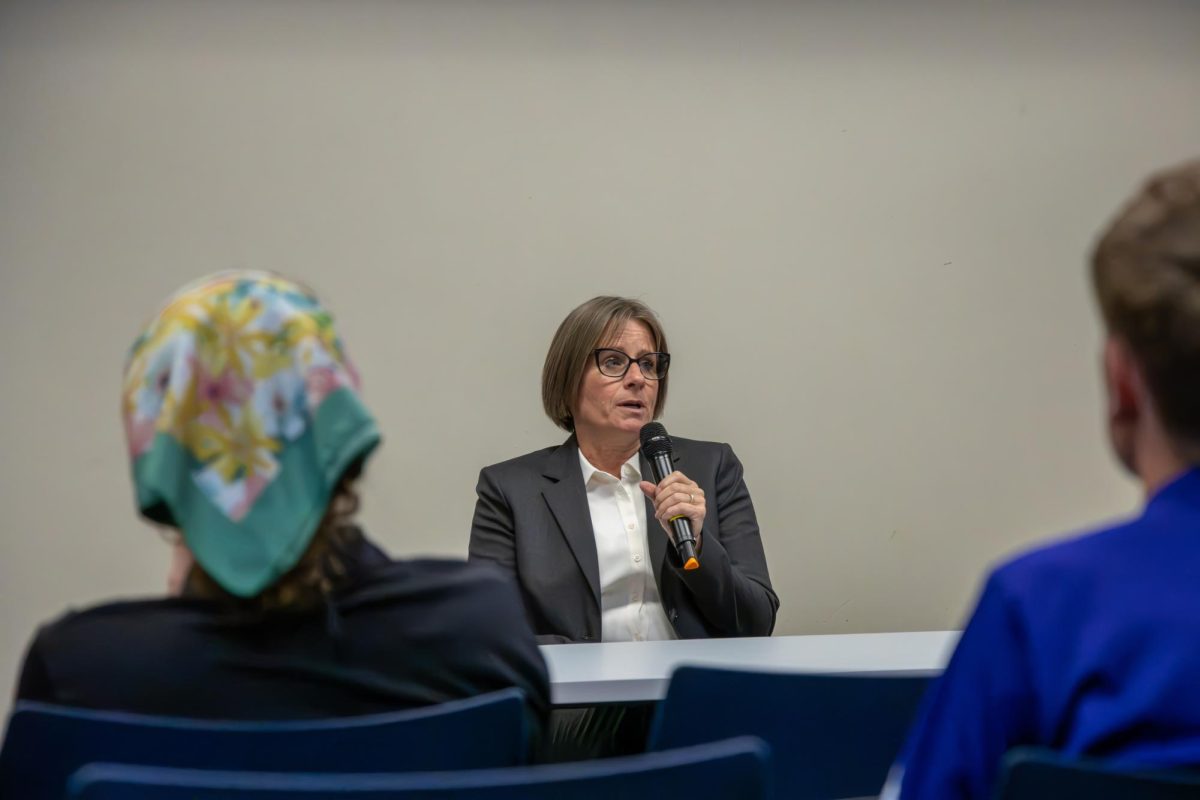


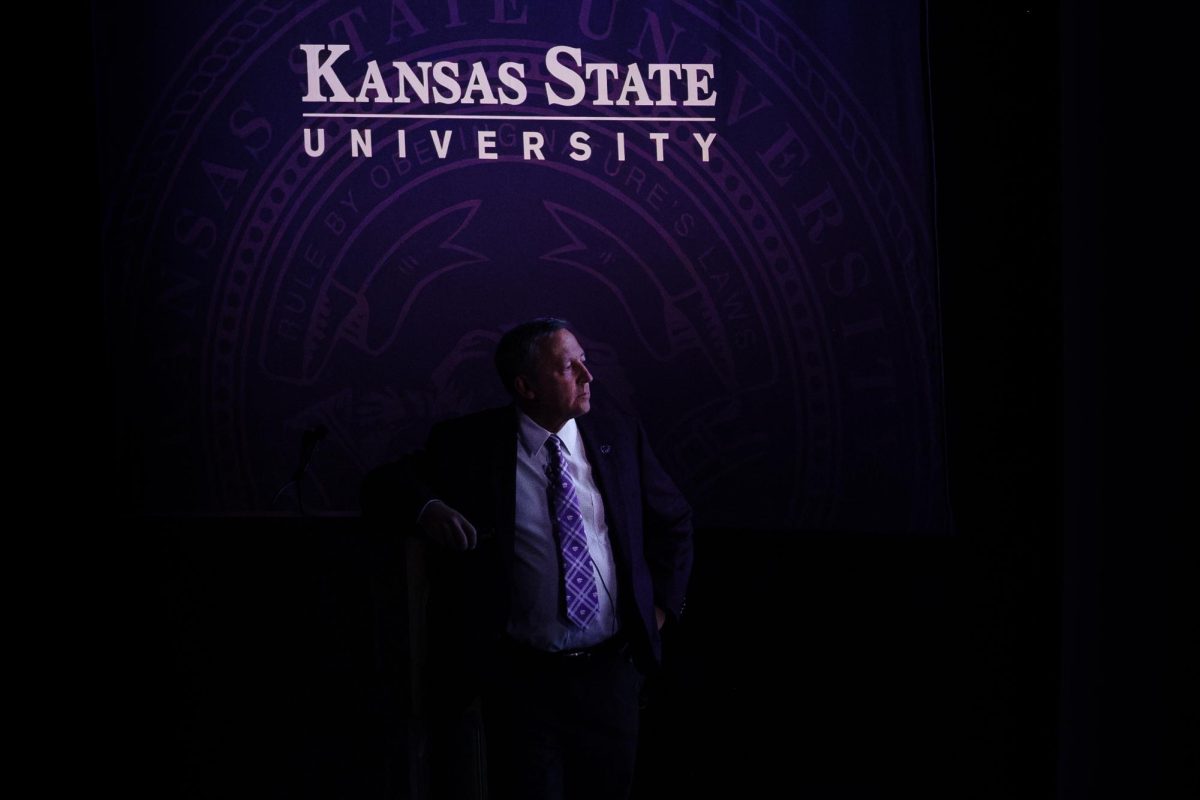
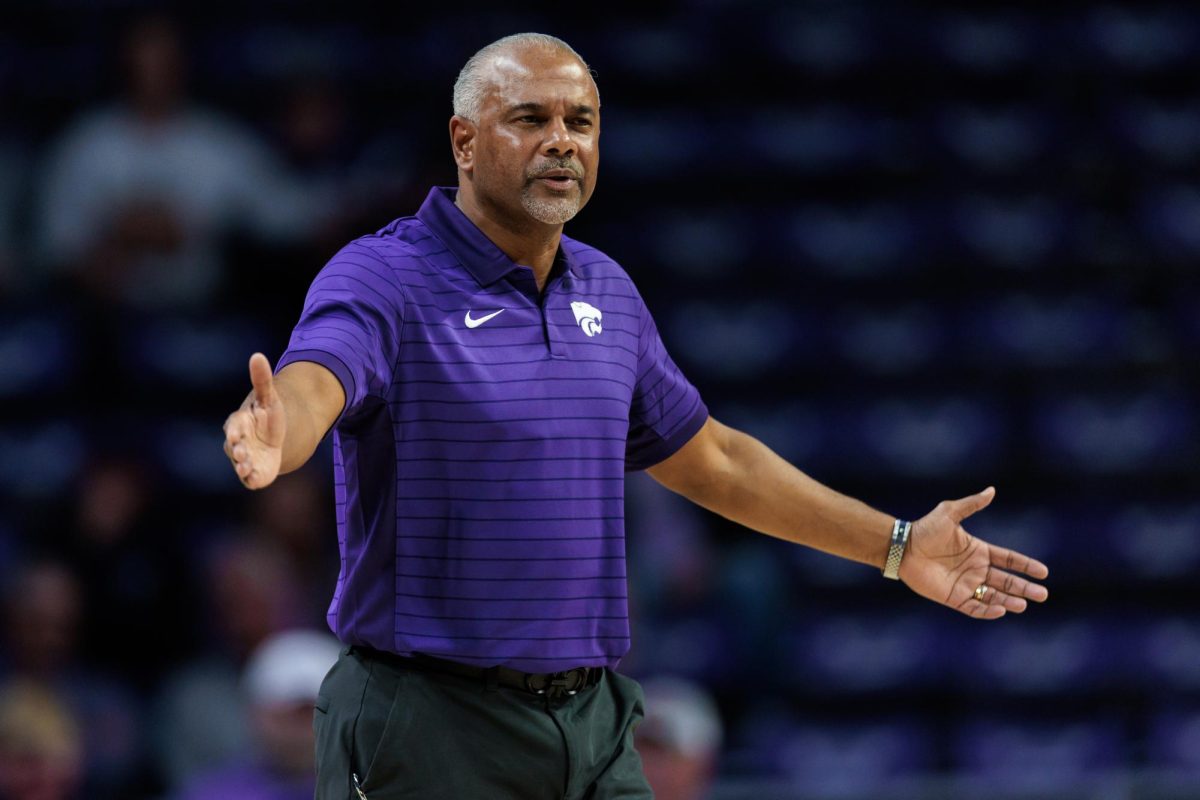


























































































A packed Arts and Sciences town hall meeting on Sept. 10 turned tense as faculty members became broadly displeased over new budget plans for the college.
According to the College of Arts and Sciences town hall presentation, there is a growing imbalance between the college’s revenue and expenditures, resulting in a need to address a $2.6 million budget gap. Consequently, the College of Arts and Sciences will face significant budget cuts over the next three fiscal years.
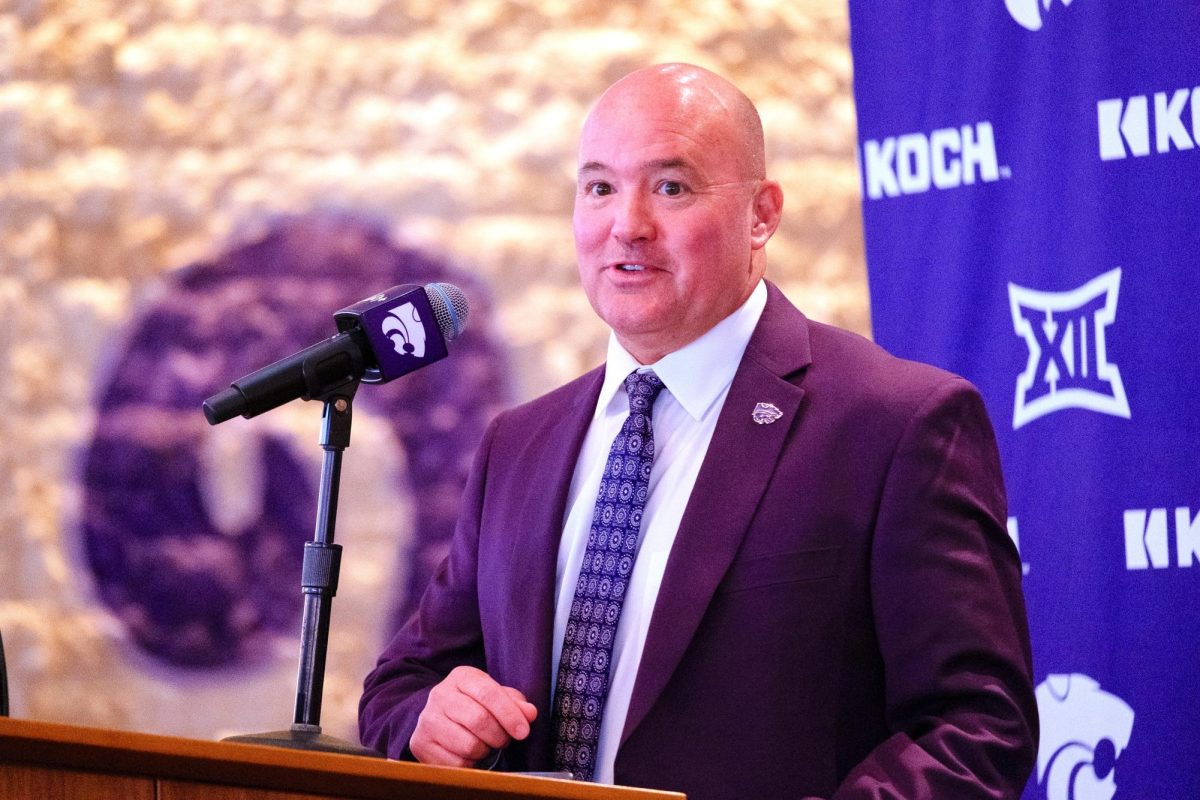
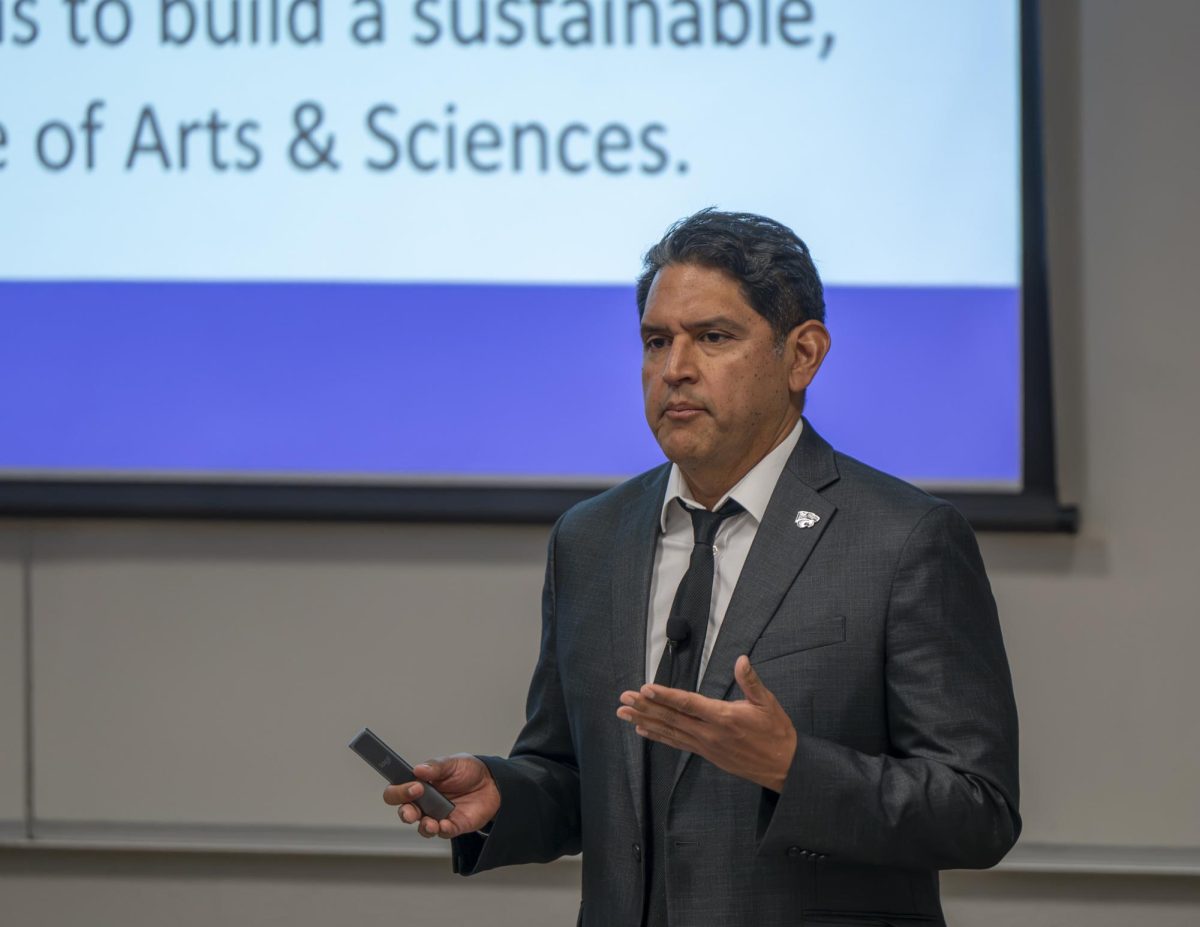
Last Thursday night’s meeting topics included an update on Academic Program Review and Revitalization (APRR) procedures, an update on enrollment trends and a review of the college’s financial needs for the next three years with Jesse Perez Mendez, provost and executive vice president of K-State.
Margaret Mohr-Schroeder, vice provost for academic innovation, said APRR will return to implementing a four-year program review cycle. The review cycle will require faculty to conduct self-studies, after which data collected on a program’s performance will determine whether an action plan for its next steps will be implemented.
Christie Lanius, associate dean for student success in the College of Arts and Sciences, gave a brief presentation on recent enrollment trends and efforts the college may explore to promote higher enrollment and retention rates. Lanius said that the university-wide enrollment rate is down 8.6% for first-time freshmen and down 7.3% for first-time transfers.
“Part of the issue is that with every college getting hit with 1.1% cuts, we were already right on the edge,” Tanona said. “But now, the budget change and the cuts are going to start to hit us a lot harder … so, it’s just worse. This is where we are, and we have to move forward.”
Following the one-hour presentation, Mendez invited discussion from faculty members, and the tone of the meeting shifted. Many attendees voiced their frustrations, showing a strong disapproval of the budget plans, often followed by applause or verbal support from others.
Attendees, including Christer Aakeröy, head of the Department of Chemistry, said a clear end goal for the college would be helpful for processing the coming changes.
“We know there’s going to be a lot of change very quickly in this college,” Aakervöy said. “Everyone in this room is going to have to work harder … programs will go away, positions will disappear … so it might be useful for all of us to have your clear-eyed and concise vision, so that we all know what we’re going to be sacrificing for.”
Aakeröy received applause from attendees after his question, and Mendez responded.
“I care about Arts and Sciences,” Mendez said. “I’m emotionally invested in this college. … I think it’s not just a cost-cutting exercise; it’s how we best set the college up for the future. I do want to recognize that you all have been traumatized for the last 15 years with low enrollment, the ground shifting beneath you and going through COVID. … We’re going to have to make some difficult decisions this year and reform the college for the future.”
According to the presentation’s overview of budget cost categories within the college, 98% of the budget goes toward faculty salaries. Understanding that the budget cuts will likely result in some faculty members being terminated, attendees asked Mendez when they can expect them. Mendez said that once the termination process begins, he will share more information with faculty.
Several attendees questioned how cutting committed faculty and program funding could be part of an effort to create a stronger university, urging the dean’s office to give the matter ample consideration. During the discussion, one attendee said she is curious why, if the university is under a “One K-State” system, this is only a College of Arts and Sciences issue.
Michael Veeman, associate professor in the Division of Biology, said he finds the imbalance between the college’s performance and its financial situation hard to process.
“I’m having a bit of trouble reconciling with the fact that we are apparently in a massive budget crisis, yet we teach roughly 40% of the university’s student credit hours with 30% of its faculty,” Veeman said.
In his response, Mendez said he understands the frustration and that he is happy to have a conversation about it moving forward. Mendez concluded the meeting shortly after.
The next College of Arts and Sciences town hall meeting is set for Oct. 1, when more information on the matter will be shared with faculty.



Worship Money • Sep 21, 2026 at 8:32 pm
Hatchet-man Mendez makes $425K in a state with a $7.25 minimum wage. But sure, let’s hear about those “difficult decisions.” And shame on you for deleting my earlier comment. You’re not actual journalists…you know that, right?
Prole Threat • Sep 21, 2026 at 8:17 pm
Funny how such “difficult decisions” never impact the administrative suits who “earn” $425k/year…
Jean Folkerts • Sep 18, 2026 at 10:27 am
Arts & Sciences
As a former dean of A&S at the George Washington University, and as a former dean of the School of Journalism &in Media at UNC-Chapel Hill, I’ve been in many conversations about budgets. I also was Interim Director of the AQ Miller School at K-State at a time when faculty positions were slashed just because they were available due to retirements. A major reason A&S is in deficit is due much to the Regents’ position that students transfer in credits from community colleges, some of which are acquired while students are in high school. Many of these courses are introductory A&S courses. They are not engineering courses or business courses. In addition, several years ago a new budget model was adopted based on credit hours and majors. While A&S provides many courses for students who major in other colleges, the budget model is not designed to account for this. Before firing faculty in A&S, the budget model should be reviewed and revised.