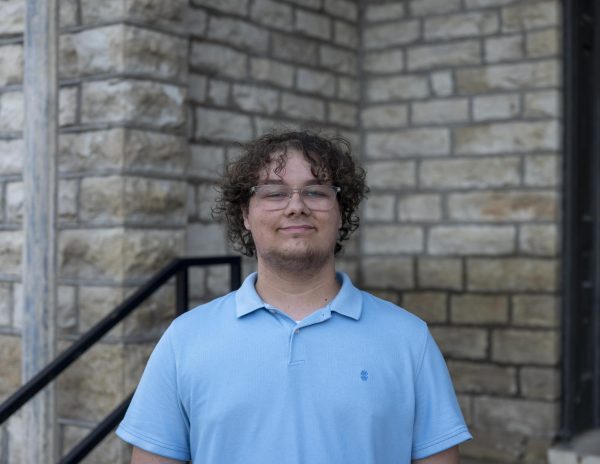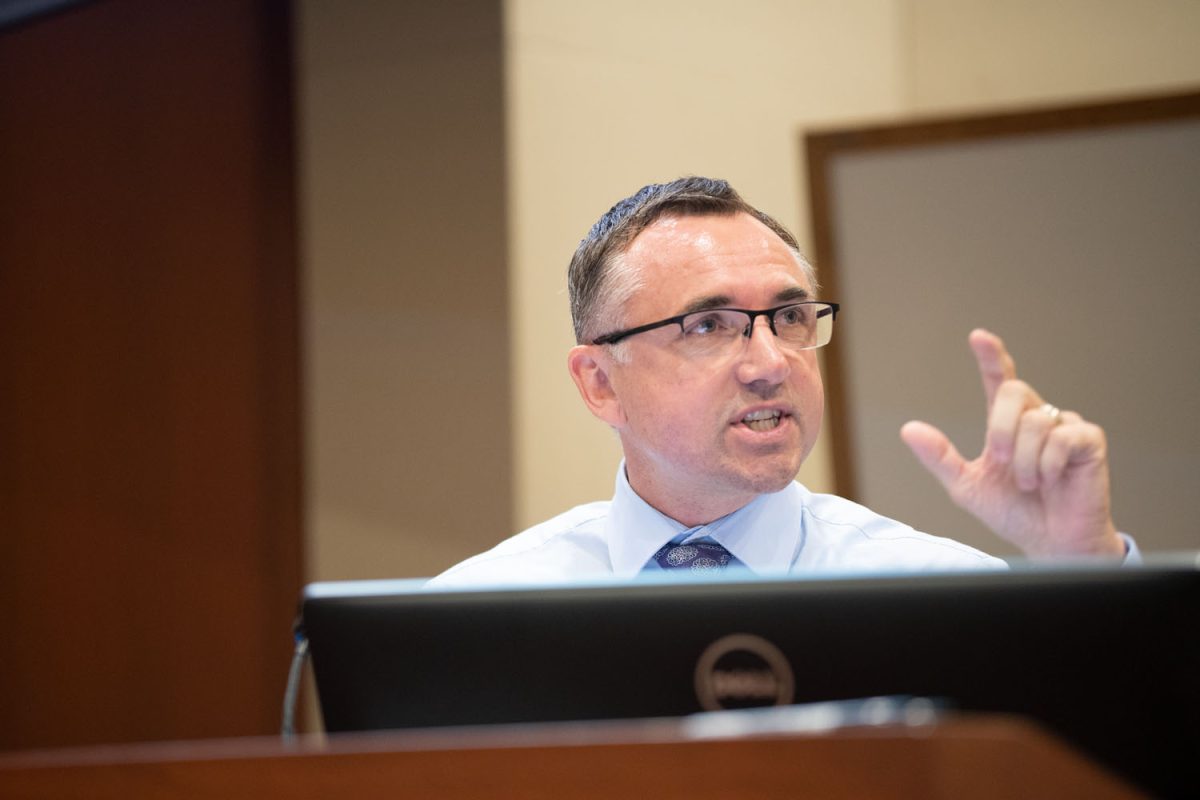



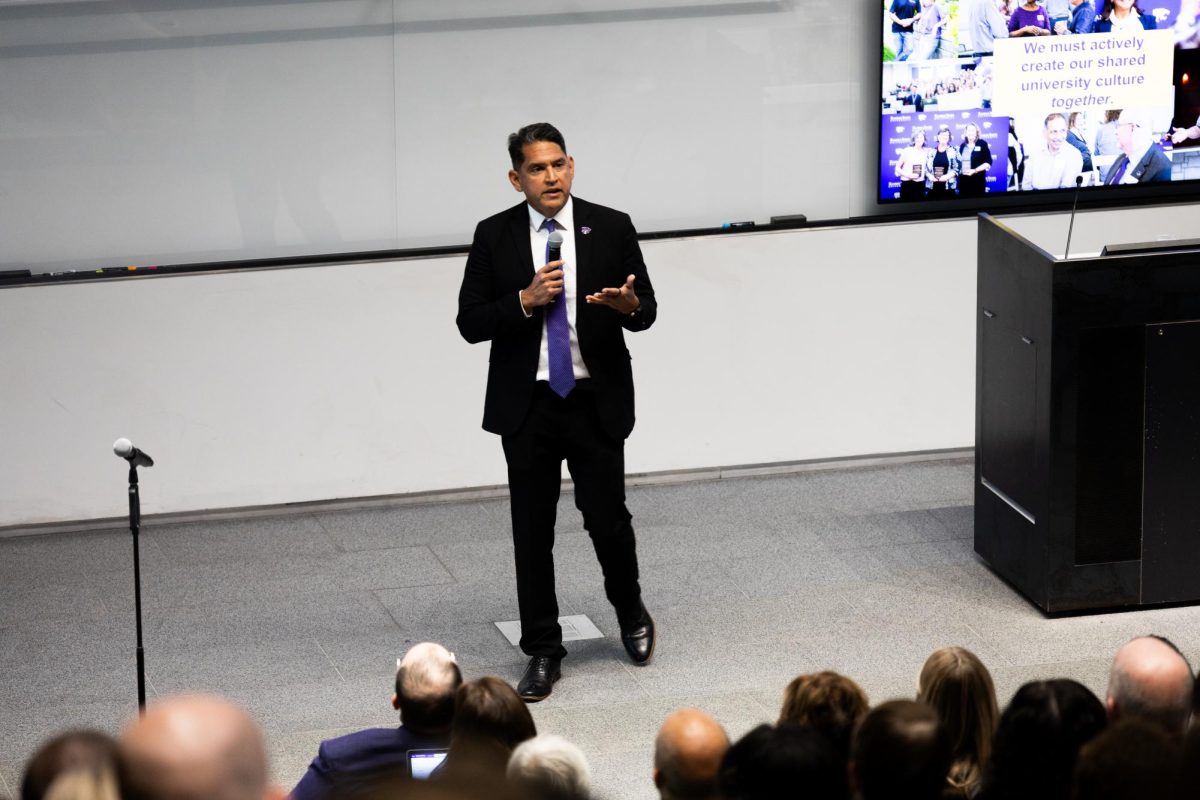


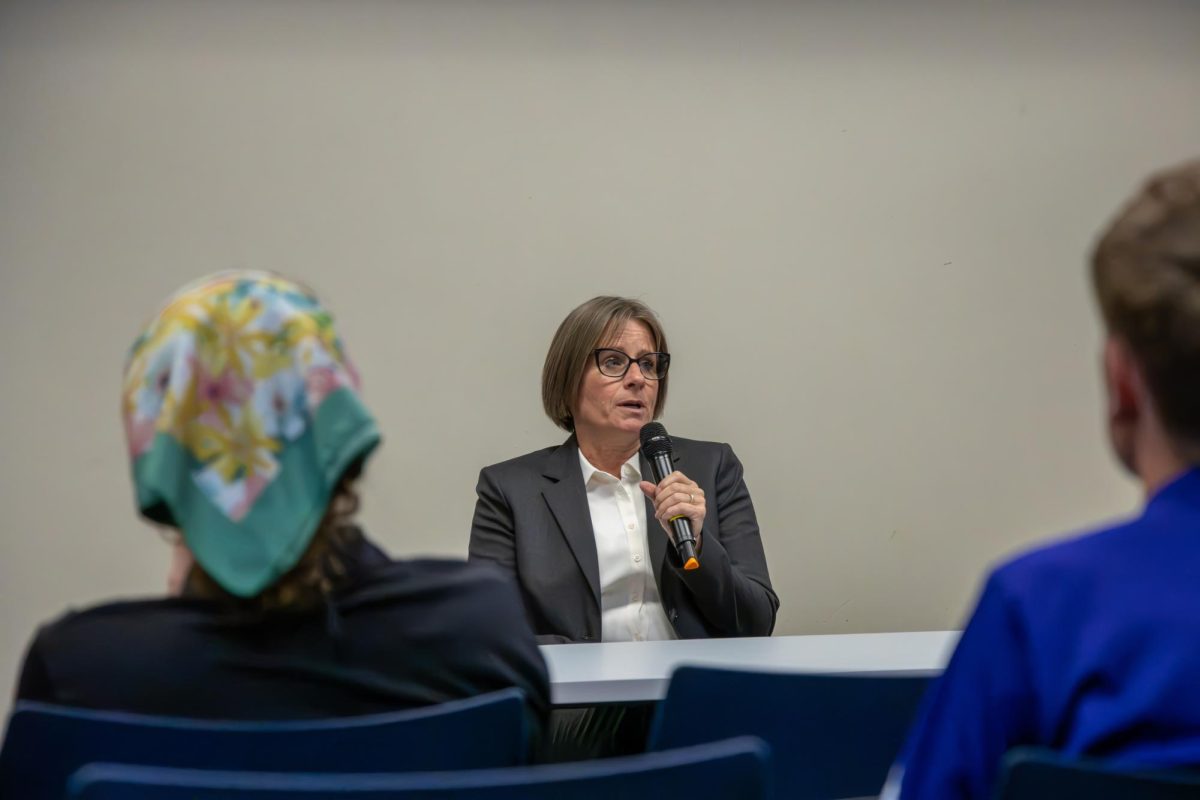






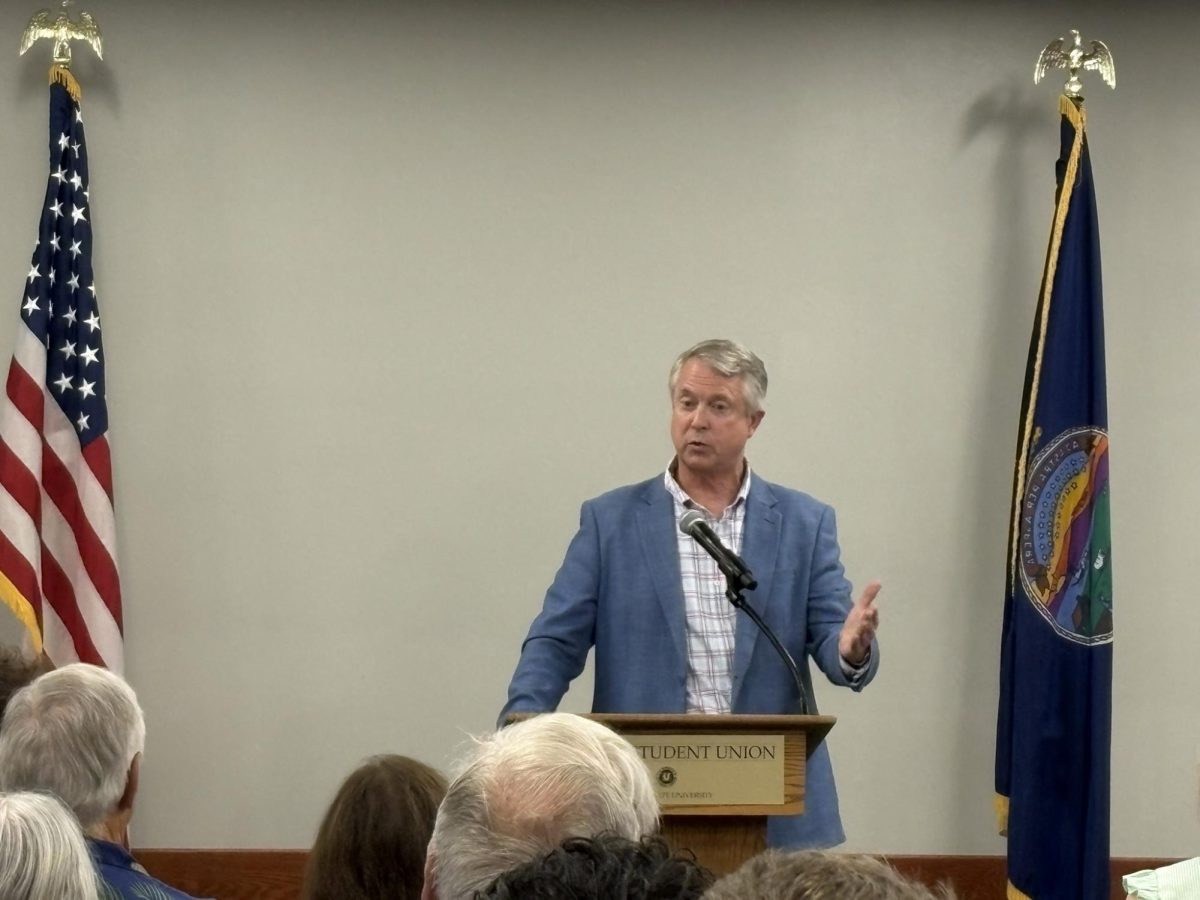
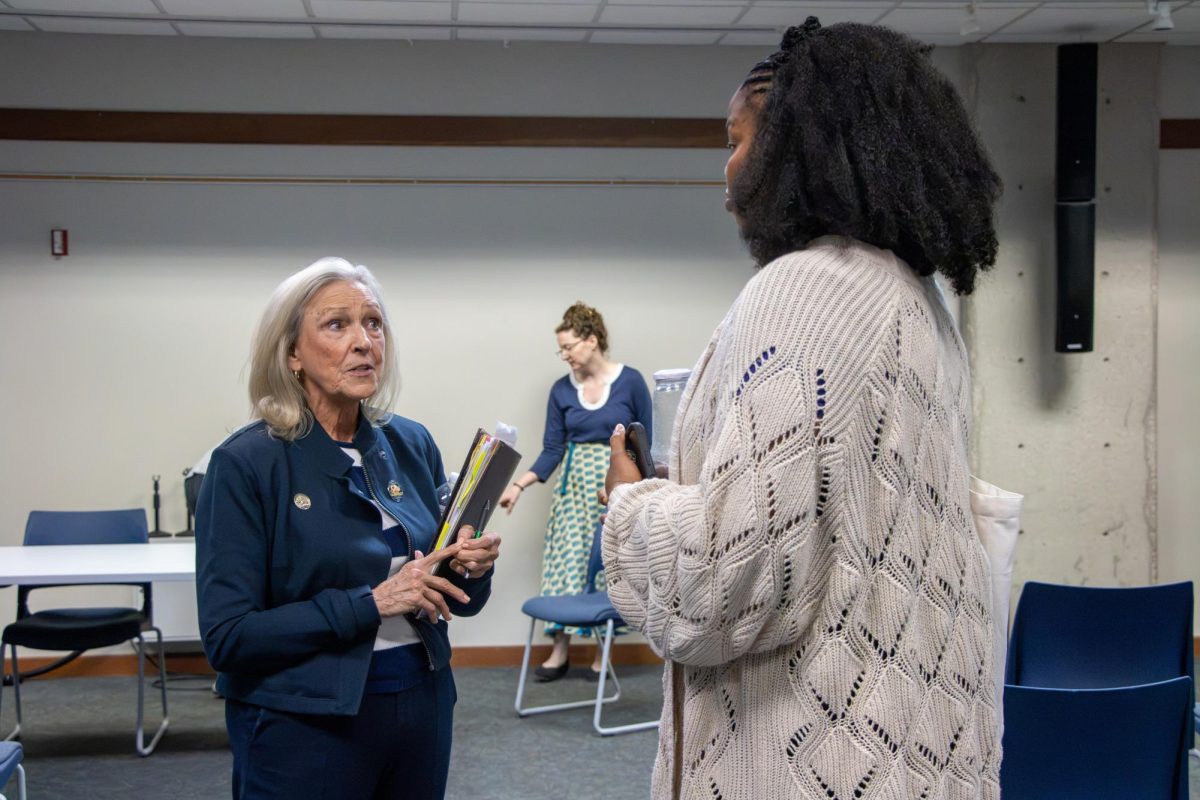















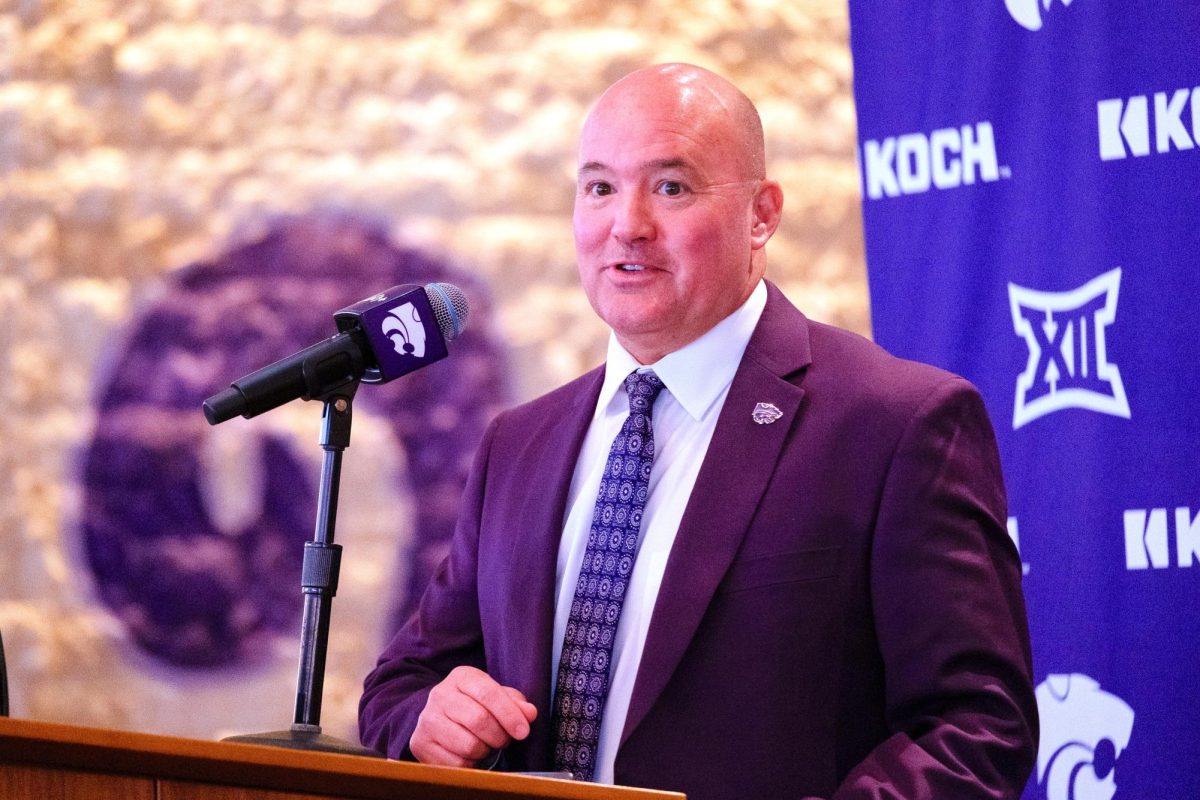
































































Candidates running for the 66th and 67th districts of the Kansas House of Representatives spoke at a forum at the K-State Student Union courtyard on Oct. 26. K-State Student Governing Association hosted and moderated the event, along with leading a subsequent Q&A. Questions ranged from how Kansans can expect to see measurable improvement from each candidate to how radical each candidate is.
Sydney Carlin, Democratic incumbent candidate for Kansas’ 66th House District, said she aims to continue to defend funding for education if she were to extend her stint in her seat.
“There seems to be a movement in the GOP to just dumb people down, make it harder to be in the universities, and unfortunately, a lot of them have votes in the appropriations committee,” Carlin said. “I think our budget should look more like what Governor Kelly has done every single time.”
Carlin also addressed concerns about rising costs and taxes, saying she would continue to be a dissenting voice regarding tax policy in the legislature.
“The last income tax cut we did is, it actually leveled everybody to the same 4.25% of their income was taxed,” Carlin said. “But, that isn’t fair to the lower income level people, because that’s a lot more into their daily spending.”
Noah Perry, junior in business and pre-law, president of College Republicans at K-State and Republican candidate for Kansas’ 66th House District, said his primary policy is to protect Kansas children from abuse and to support victims through legislation such as Erin’s Law, which provides education for children on abuse.
“Essentially, it provides [education] for younger children on what to do when the person who is abusing you is the one who you’re told to go to,” Perry said. “Otherwise, things I think we’ve overlooked in Kansas are residency laws for sex offenders. Currently, there’s nothing that prevents them from living right across the street from a grade school.”
Perry also said he is advocating for early literacy and that the legislature cannot ignore the growing literacy crisis within Kansas.
Andrew Fry, Libertarian candidate for Kansas’ 66th House District, said the biggest way to cut costs in government, and by extension for the people, was to reduce legislation around victimless crimes.
“Whether it be fishing at night or braiding hair without a license, there’s just way too many laws and so-called crimes that have no victim at all,” Fry said. “And so by deprioritizing and abolishing victimless crime laws, you can drastically reduce government spending, create a free society and lower taxes, thereby improving the economy and increasing prosperity.”
Additionally, Fry said law enforcement was just as efficient before the implementation of Automated License Plate Readers such as Flock cameras.
“We’ve had police, detectives, investigators solving crimes without these for a long time,” Fry said. “Even without the license plate itself, they are tracking people. It’s unconstitutional because it’s on public land and it lacks the will of the people.”
Brenda Bandy, Democratic candidate for Kansas’ 67th House District, said the single policy that would help the most Kansans financially is to reduce healthcare costs.
“We have seen rising costs for healthcare, not only for premiums, but also for healthcare services themselves,” Bandy said. “I think the policy for healthcare that is the easiest to pass, it would impact the most Kansans, is to expand Medicaid. This would directly impact over 150,000 Kansans that are currently falling in the gap: They make too much to qualify for Medicaid, but they don’t make enough to qualify for the ACA marketplace.”
Bandy said expanding Medicaid would also directly help rural hospitals stay open.
Stacy Kohlmeier, Republican candidate for Kansas’ 67th House District, said it is important to maintain government efficiency to foster economic development. Kohlmeier also said protecting the state’s agriculture is important and that there needs to be collaboration between state and national legislatures to best serve the people.
“A lot of these problems are actually being occurred because of some of the federal laws that have been put in place,” Kohlmeier said. “Tariffs have really been an issue, and I suppose from a state perspective, we could certainly work with our federal partners to try and help change things.”