



























































































If you’ve followed college sports over the last few years, you’ve probably had the same reaction I have during every season: ‘Wait, how is that player still eligible?’
Fans have watched players receive medical hardship waivers, redshirts and more recently, court-granted injunctions against the NCAA. Players are, somehow, still using COVID years five and six years later. Every offseason seems to bring another eligibility exception and another debate over whether a player’s college career is actually over. Now, instead of following where a player was transferring, you also had to follow whether a player still had eligibility.
Then, this academic year, the NCAA implemented its new 5-for-5 eligibility model, with the goal of answering that long-asked question about eligibility.
I support the rule and what it hopes to accomplish. Not because every athlete needs that fifth season or because it’s perfect, but because the previous system became increasingly difficult to understand, justify and especially enforce in an era of transfers, NIL and constant legal debates.
Under the NCAA’s new age-based framework, Division I and Division II athletes will begin their eligibility after either enrolling full time and taking classes at a university or at the start of the academic year after their 19th birthday. From there, they receive five continuous years of eligibility that have only minimal exceptions; transfers and injuries are not among them.
The rule replaces the old NCAA model built around seasons of competition, traditional redshirts and numerous waiver processes. There were too many moving parts, especially in this era of college athletics where NIL and transfers are rampant, and it was nearly impossible for fans and coaches to track eligibility.
Frankly, this change was needed — it was overdue.
The old eligibility model felt built for a version of college athletics that no longer exists. It was outdated. It was becoming obsolete. What should have been a simple question on paper, “How many seasons does this player have left?” became a nearly impossible question to answer.
Take KU basketball players Melvin Council Jr. and Tre White. Both played in all 35 games for the Jayhawks last basketball season after careers spanning multiple colleges before that, and both were seniors on the team last year and honored at KU’s March 6 senior night against K-State. Realistically, that should have been the finale for both players.
However, White was granted a fifth season alongside other players, and Council Jr., who sued the NCAA in July for another season, has been inexplicably given a seventh year of college basketball. You don’t need me to tell you that is egregious.
Nobody should play seven years of college hoops, even with extenuating circumstances.
That is not a critique of White and Council Jr. as players or a claim that they did anything wrong. They used the opportunities available under NCAA rules to gain another year. You can’t fault them for wanting to play more.
But their careers show a bigger reality and a clear issue: college athletics has reached a point where nobody seems to know exactly how eligibility works anymore. When senior night honorees can come back for another season, it’s a clear sign the system has stopped making sense.
That is clearly a problem, not because athletes were taking advantage of the opportunities available to them, but because the rules became increasingly difficult for everyone else to follow.
The 5-for-5 model finally provides something college athletics has desperately needed: clarity.
The NCAA said the goal was to create a system that is simpler to administer and easier for coaches, players and fans to understand. And it is succeeding.
Instead of wondering whether a player qualifies for another waiver or exemption, athletes, coaches and fans can largely know the timeline from the start. A player gets five years, and once those are exhausted, it’s final. It’s simple. It’s transparent. And most importantly, it’s consistent.
K-State fans can certainly appreciate that simplicity and consistency.
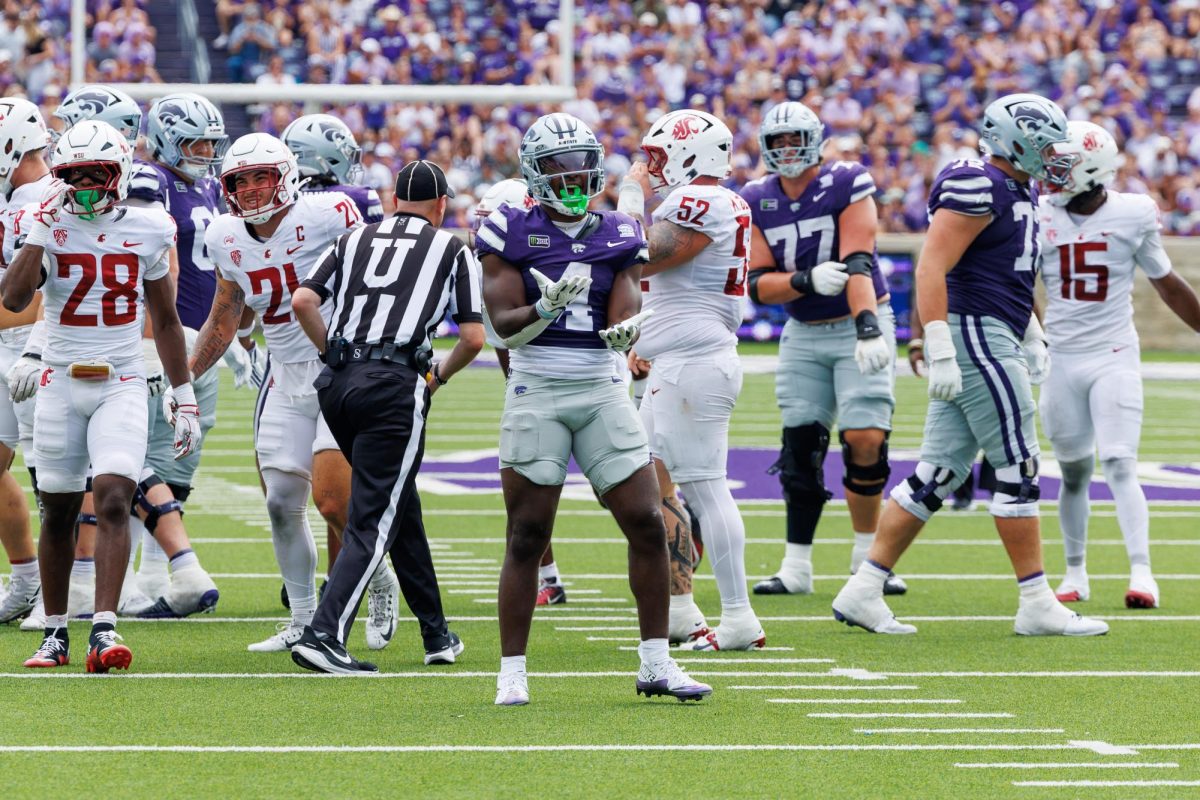
Look at quarterback Avery Johnson. As one of the most prominent faces for the Wildcats, fans naturally wonder how long he has in Manhattan realistically and what the future of the program looks like with him taking the snaps. Under the prior framework, those discussions could quickly turn into questions about redshirting, such as the 2023 season when he largely sat behind Will Howard, and whether that translates into future eligibility in 2027.
The new model makes those conversations much easier and answers those questions. Johnson falls under the rule and could play in 2027 if he decides to. Now the question has shifted from ‘can he play another year’ to ‘will he play another year.’ As a result, fans can spend less time deciphering NCAA rules and looking for legal loopholes for Johnson, and Johnson now has certainty that, if he chooses, he can return to the Little Apple under center.
This shifts the focus to what actually matters: the games.
For years, eligibility fluctuated and felt dependent on who qualified for a waiver and who was willing to lawyer up and challenge NCAA rules in the courtroom. The 5-for-5 model sets a clearer standard that can apply broadly across college athletics, rather than varying by player and relying on an ever-growing list of exceptions.
Coaches no longer need to debate whether playing a freshman for a game or two will complicate their eligibility. Athletes can focus on practice and competition instead of learning the rules. Fans no longer need to follow athletes religiously and keep track of the dozen ways to an extra season.
No system is perfect, and this one obviously has its flaws. Some critics have raised concerns about roster management and older athletes staying in college athletics longer, potentially hurting incoming high school seniors looking for a roster spot. This could have unintended consequences, and those issues may be worth watching as the rule becomes more widespread.
But compared to the system it replaces, this is a significant improvement.
Rather than waiting for the next waiver controversy or redshirt debate, the NCAA chose to simplify the process that had become needlessly complicated. It stuck its feet in the ground and, for this issue, decided enough was enough and change was needed.
College sports will never be simple or easy again. And the 5-for-5 rule does not solve every problem in college athletics. NIL debates aren’t going away. Revenue-sharing questions remain. Lawsuits will continue to take place. The transfer portal will continue to decimate and reshape rosters every offseason. But unlike many NCAA solutions, this one actually addresses the problem it was designed to solve, and it does a good job.
Eligibility should not require a law degree to understand. The NCAA, at long last, finally seemed to recognize that.
For once, despite the abundance of issues still present, they deserve credit for it.