



























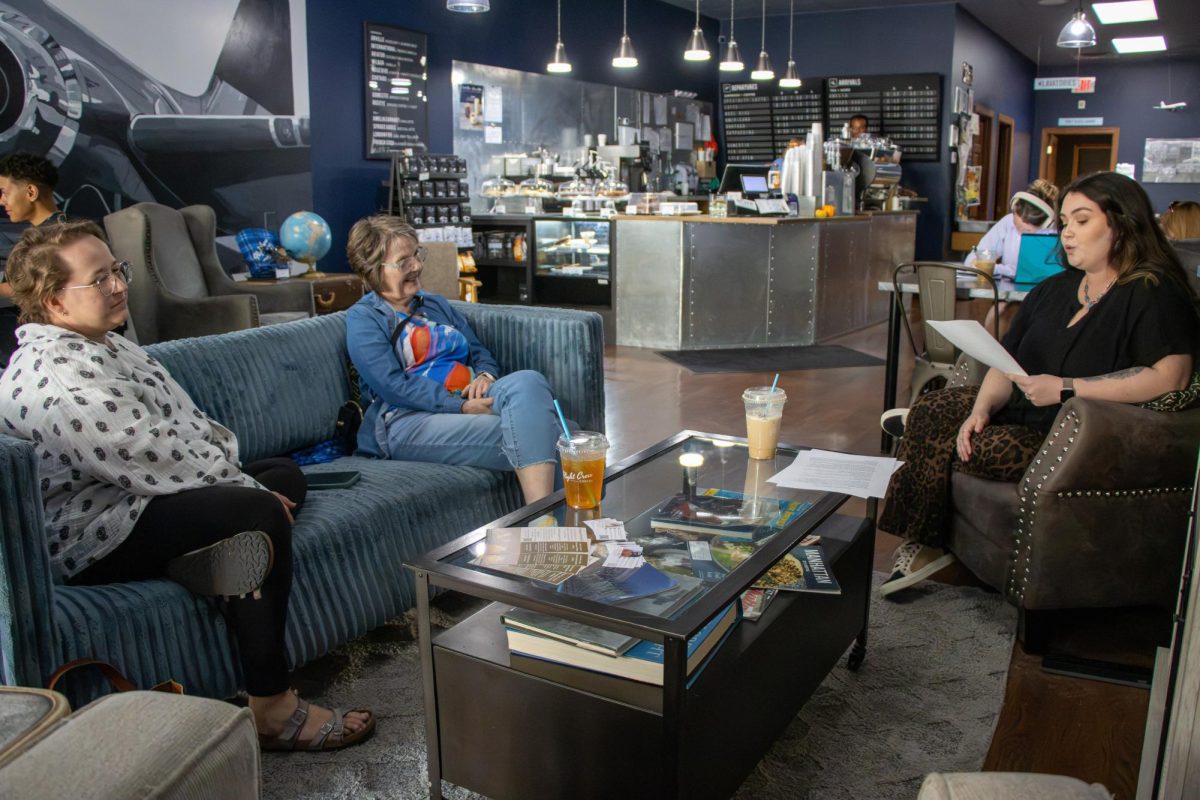





























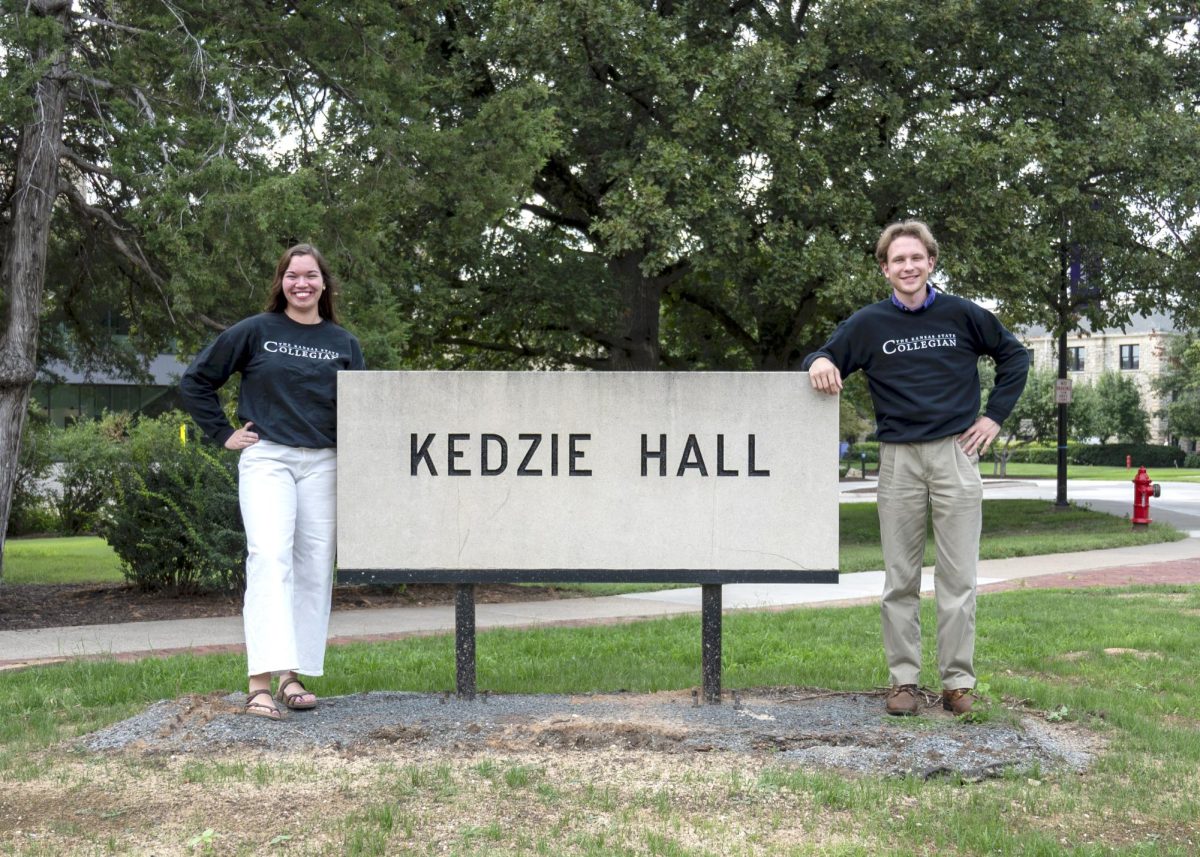



With midterm voting well underway in Kansas and Election Day approaching, leading figures in K-State Young Democrats and K-State College Republicans and K-State Young Democratic Socialists gave their thoughts on what leading issues are for Kansans and how different candidates address those concerns.
Each of the students had much in common to say, ranging from opinions about specific candidates to trends in current politics overall. Most importantly, civic engagement and voting were overarching themes in each of their stances.
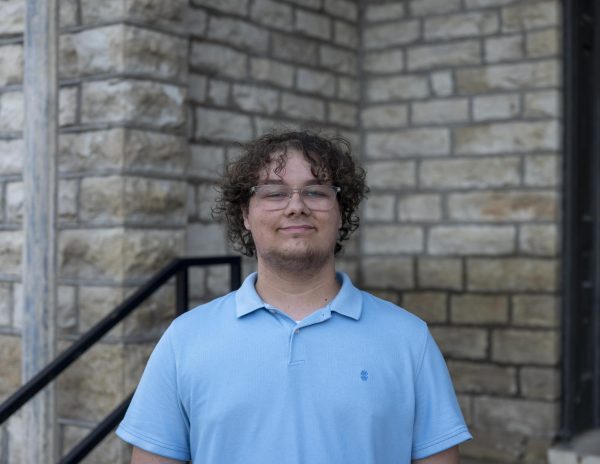
Noah Perry, junior in business and pre-law, president of K-State College Republicans and Republican candidate for Kansas House District 66, said the biggest state-level concerns are property taxes and education spending, while national concerns center around the conflict in Iran and the actions of U.S. Immigration and Customs Enforcement. Perry also said voting Republican would be the best way for someone to get their issues heard in the legislature.
“Why I would support Republicans over a Democrat necessarily would be, just as a pure basic level, we have a supermajority of Republicans,” Perry said. “If you want to get your issues pushed through, you need to have someone on the inside working for it, not someone who’s on the outside as a voice of dissent, even though I do think that is valuable to have.”
Perry also said recent polling results should be eye-opening to Republicans regarding their policies, campaigns and how they reach voters.
“This is the first time in almost 100 years that there is a real chance that a Democrat flips the seat in Kansas,” Perry said. “There has to be a specific set of circumstances surrounding an election for it to even have a chance of being a Democrat in the Senate in Kansas. It should be kind of a wake-up call to the Republican Party that we might need to change some of our messaging, some of our policy or maybe just our way of campaigning.”
Perry commented on policies regarding school choice and private school voucher programs. These Republican-supported policies would create government-funded programs that allow the subsidization of private school tuition for K-12 students with public education money.
“For a family that wants to choose to educate their child [in private schools], there is a tax credit so you’re not losing your money per child in the public school system,” Perry said. “You might do something to the overall budget, but the percentage per student stays the same, or they’ve [proponents of school choice] claimed it will go up because they’re not giving as much credit as that $18,000 [money spent per student in public education] number.”
Perry gave his opinion on the prevalence of attack ads, particularly in this election cycle, saying people are tired of the repetition.
“People want to see why I should vote for you, not why I shouldn’t vote for your opponent,” Perry said.
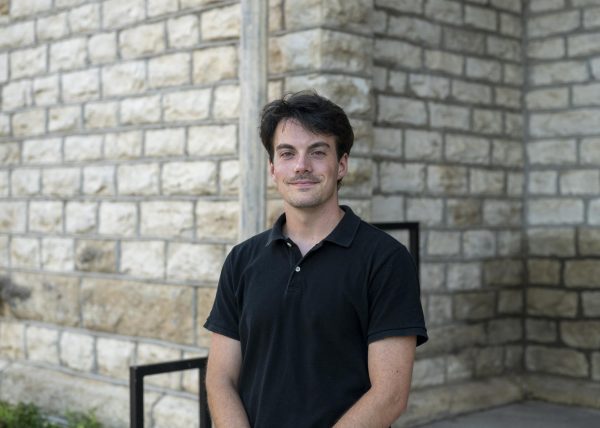
Lacy Miller, senior studying political science and president of K-State Young Democrats, said the coming elections offer an opportunity to turn around the trends on gas prices, affordability, housing and healthcare.
Miller said gubernatorial candidate and state senator Cindy Holscher has proven her ability to work with politicians from both sides to serve Kansans. She also commented on how much the Democratic candidates have been campaigning and making themselves available to constituents in comparison to their Republican counterparts.
“The Democrats have been communicative and available for town halls and rallies and going door-to-door to voters to talk about their commitment to affordability,” Miller said. “Whereas the Republicans have been much harder to reach out to, or they’re just not campaigning, or they refuse to do town halls or debates.”
Regarding Holscher’s background of coming from a working family and goals of supporting working families, Miller said Holscher will work to push policies that help those families.
“First is public education, doing things to support public education so that everybody gets equal access to education and opportunity,” Miller said. “The legalization of marijuana is a way to bring money to Kansas and will help the overall economy. … She has lived that experience, and she’s continued to fought for that experience in her role as a politician, whereas Ty Masterson has so much money, he’s not even close to working class or having that experience.”
Miller said the prevalence of attack ads and mudslinging in the current election cycle is unnecessary and that people should be wary of these ads, no matter which party they come from.
“They just add to the mess that is some of the lies and not truthful information that is spread around candidates,” Miller said. “It’s fear-mongering tactics that are just unfortunate.”
Sara Vulgamore, senior studying environmental engineering and co-chair of K-State Young Democratic Socialists, said that the cost of living was the number one issue for Kansans in the upcoming midterms, alongside many sub-issues contributing to it. Vulgamore said Adam Hamilton’s focus on a withdrawal from the Iran conflict would be a start to lower the cost of living.
“Adam Hamilton talks about backing out of the war specifically because he recognizes the impacts it has on Kansans, in terms of gas prices and diesel prices,” Vulgamore said. “Roger Marshall kind of denies the correlation between the two, so I think Adam Hamilton has a better grasp on how things are affecting his constituents.”
Vulgamore also said neither party is infallible, and both tend to favor their donors before constituents, but holding politicians to their word can make things better.
“Both parties definitely have their issues, and both parties tend to ignore the working class because they have their obligations to please their donors,” Vulgamore said. “I do think the Democratic Party is the lesser of two evils, so to say. There is potential for a Democrat like Adam Hamilton to do good as long as we hold him accountable once he’s in office.”
Vulgamore gave her stance on negative political campaigns, saying many of the ads are “absolutely insane.”
“I feel like there’s a lot of misinformation and slandering,” Vulgamore said. “It’s never going to happen, but I wish that stuff would remain focused on policies and not just the rumor mill. I know a lot of people don’t have the time to, but people could spend a couple hours researching the candidates on their own and not just trusting what they see in the ads.”
Vulgamore said civic engagement doesn’t and shouldn’t end at voting, saying people should get involved with political parties and directly interact with politics however they can.
“I think everyone should go out and vote, but I also don’t think that your participation in our political system should stop at voting,” Vulgamore said. “You don’t have to become part of YDSA necessarily, but becoming part of political work that aligns with your values also does way more help than just coming out to vote in the elections.”