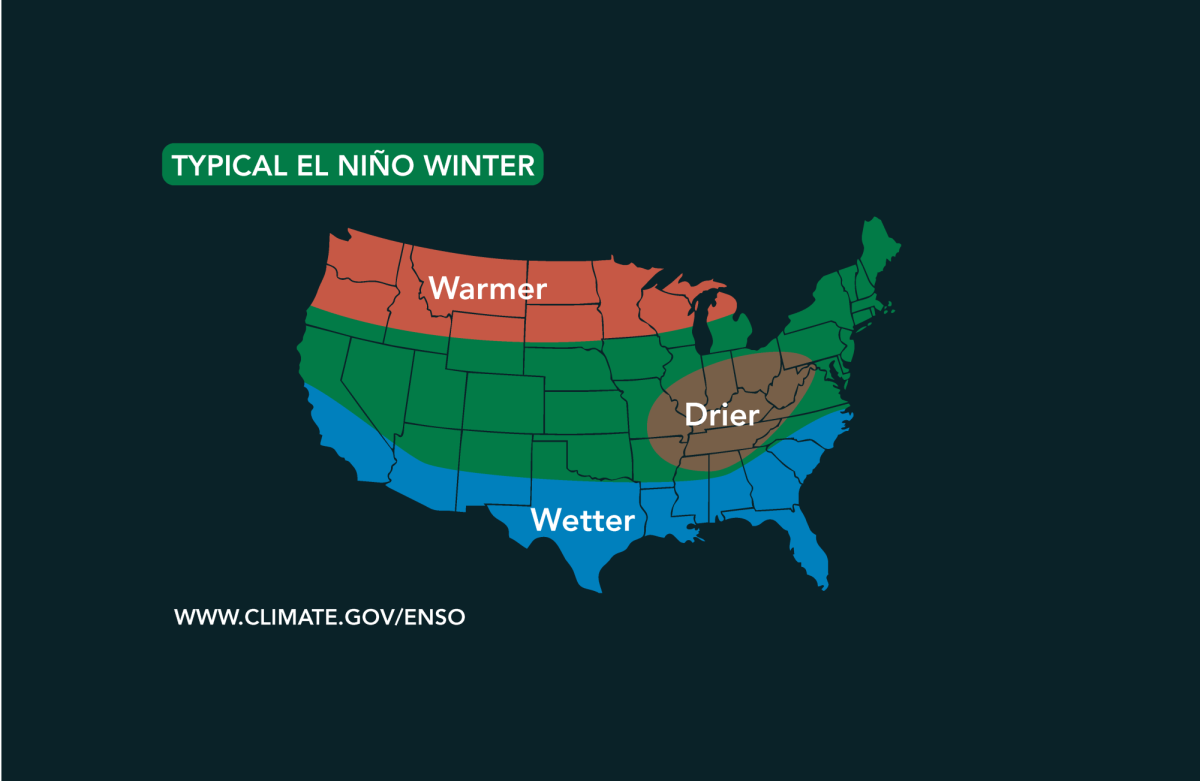





















































































































A “Super El Niño” is predicted to circulate through Kansas from November 2026 to March 2027 and is expected to have a positive impact on Kansas agriculture.
El Niño is a climate pattern that occurs when sea surface temperatures are warmer than average in the Niño 3.4 region, influencing atmospheric circulation, weather events and environmental and agricultural impacts.
Matthew C. Sittel, assistant state climatologist in the Department of Agronomy, said an El Niño is “five consecutive three-month periods during which sea surface temperatures (SSTs) average at least 0.5 degrees Celsius above normal within the Niño 3.4 region.”
“The key to El Niño … is that it is not all over the ocean,” Sittel said. “It is a very specific portion of the Pacific Ocean where it takes place … the equatorial Pacific.”
Niño 3.4 overlaps parts of Niño 3 and 4 regions in the equatorial Pacific Ocean, which is a standard location for monitoring El Niño and La Niña. Sittel said that an El Niño event occurring this winter is not yet declared but is predicted.
“The reason that it is officially not an El Niño yet is that we haven’t strung together five consecutive three-month periods yet,” Sittel said.
He said researchers have distinguished severity levels between past El Niño events by looking at which ones are the strongest.
“If we go back and look at the top 10 strongest El Niño events that have happened for Kansas … seven out of 10 of those events, the average temperature throughout the state was warmer than normal,” he said.
In examining the top 10 strongest El Niño events in Kansas, Sittel said in seven of those 10 events, there was more precipitation than average across Kansas. While there are some predictions about the severity of this possible El Niño event, he said there is always general unpredictability when it comes to weather.
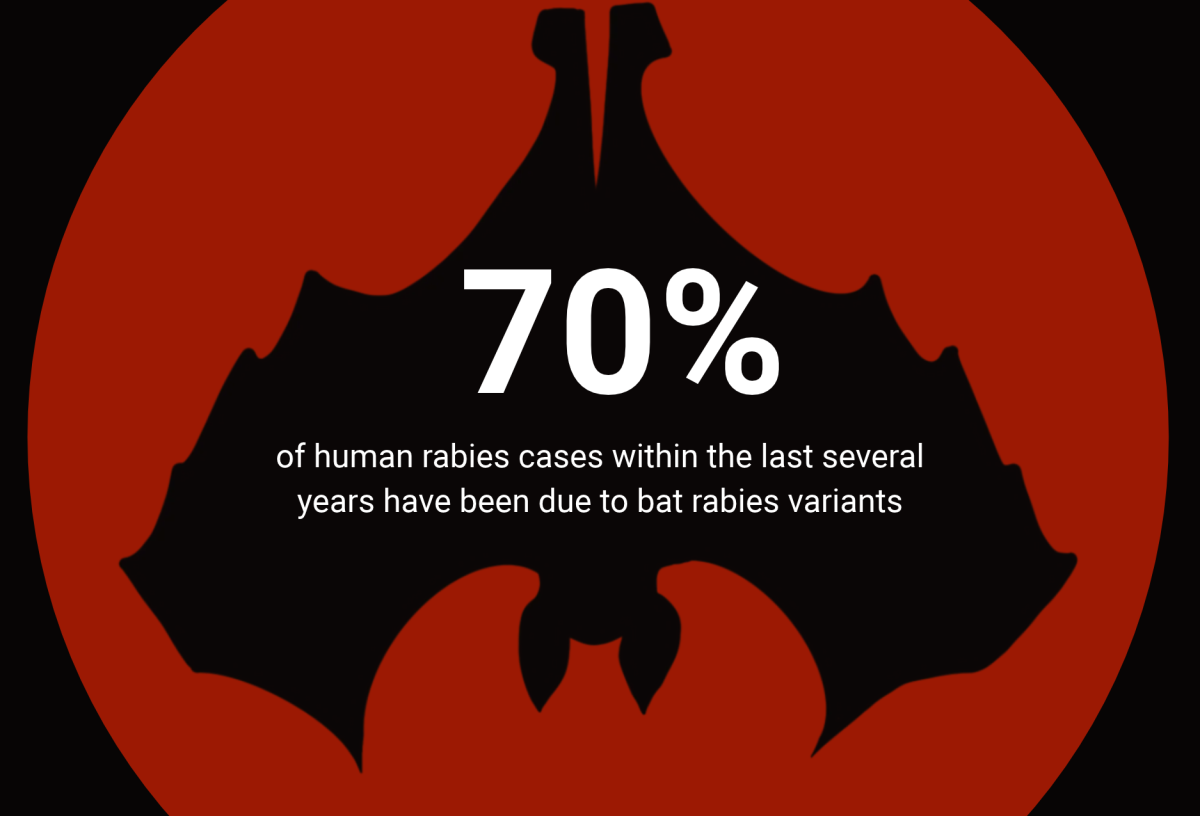
“The problem is seven out of 10 is not 100%; it is only 70% of the El Niño events, so there is some uncertainty,” Stittel said.
“Super El Niño” is not an official term, but a media-created superlative commonly used to describe a significant El Niño. Maycee Thouvenel, sophomore in agriculture communications, said that though the term “super El Niño” can come off as a negative term to the public, there are benefits.
“This could actually be positive for farmers and ranchers in some ways,” Thouvenel said.
Mason Springer, junior in agricultural economics, said that if El Niño were to bring an excessive amount of precipitation and snowfall, it would greatly benefit farmers due to improved soil moisture, overall benefiting Kansas farmers.
“It would be really optimal growing and planting conditions for farmers, and [I] can see really good crops come out of it,” he said.
Farmers in Kansas have already planted their wheat for the year, and the anticipated higher-than-normal precipitation could benefit cattle pastures.
“If we have that above-average precipitation over the winter, that is more snow that melts back into the soil and the grass starts to green back up and grow again so ranchers can go back and put their cattle back on grass quicker than usual,” Sittel said.