


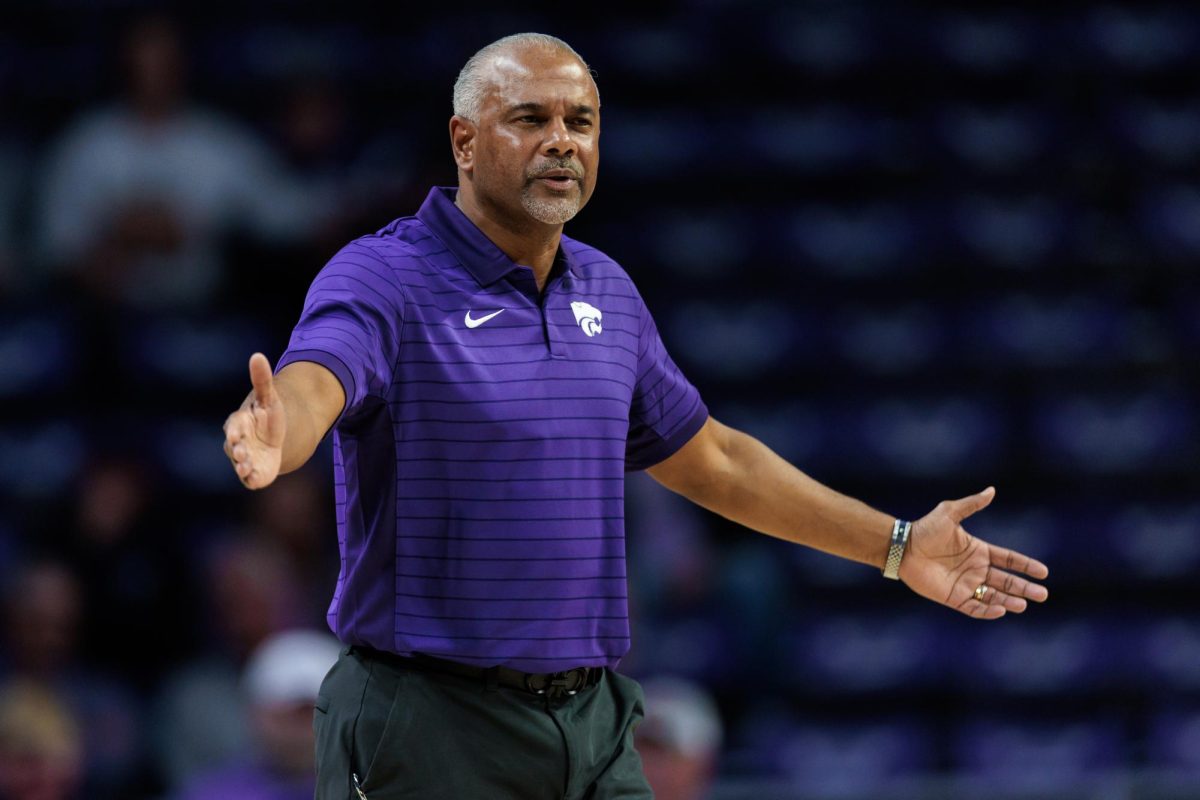















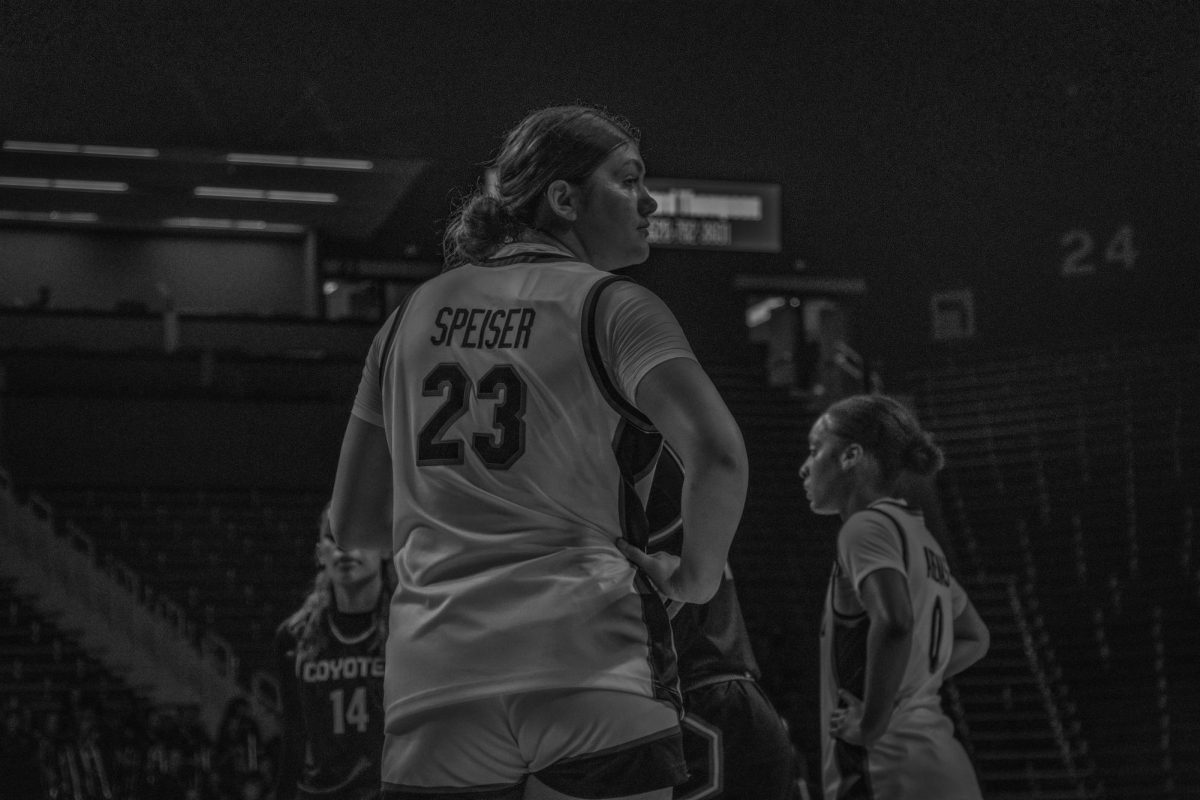

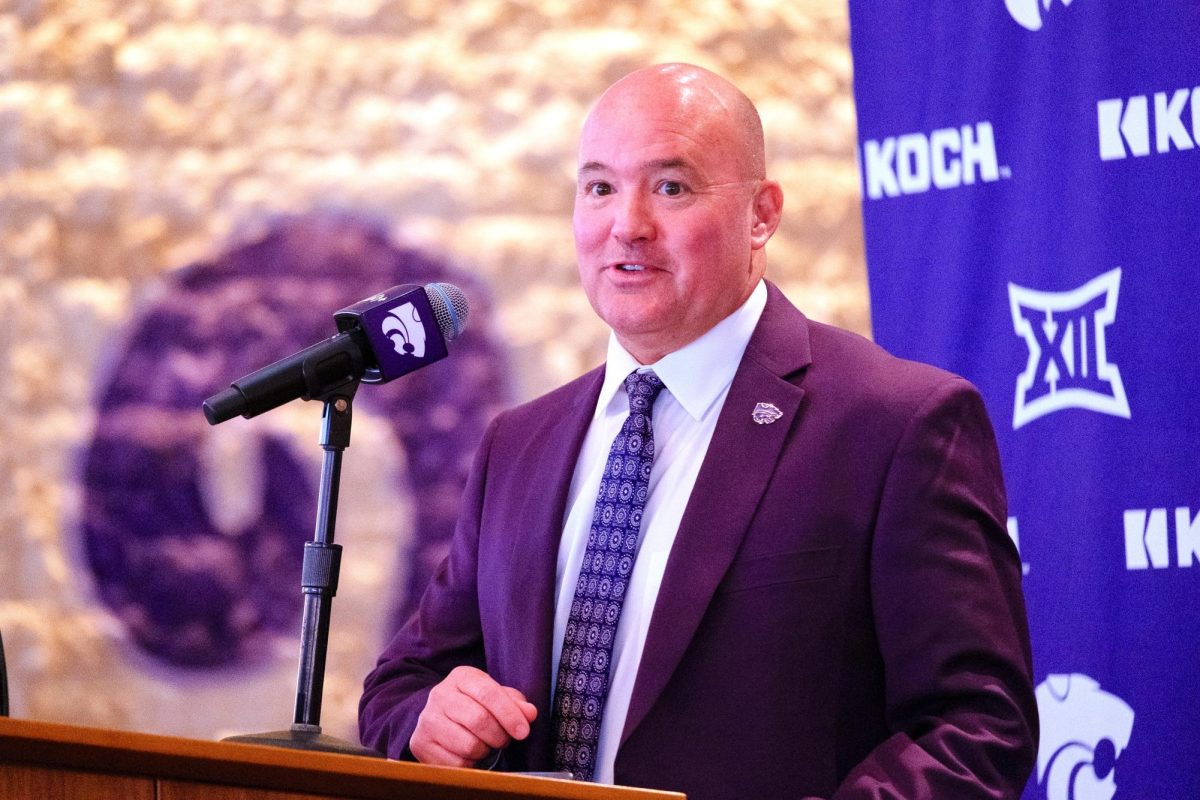
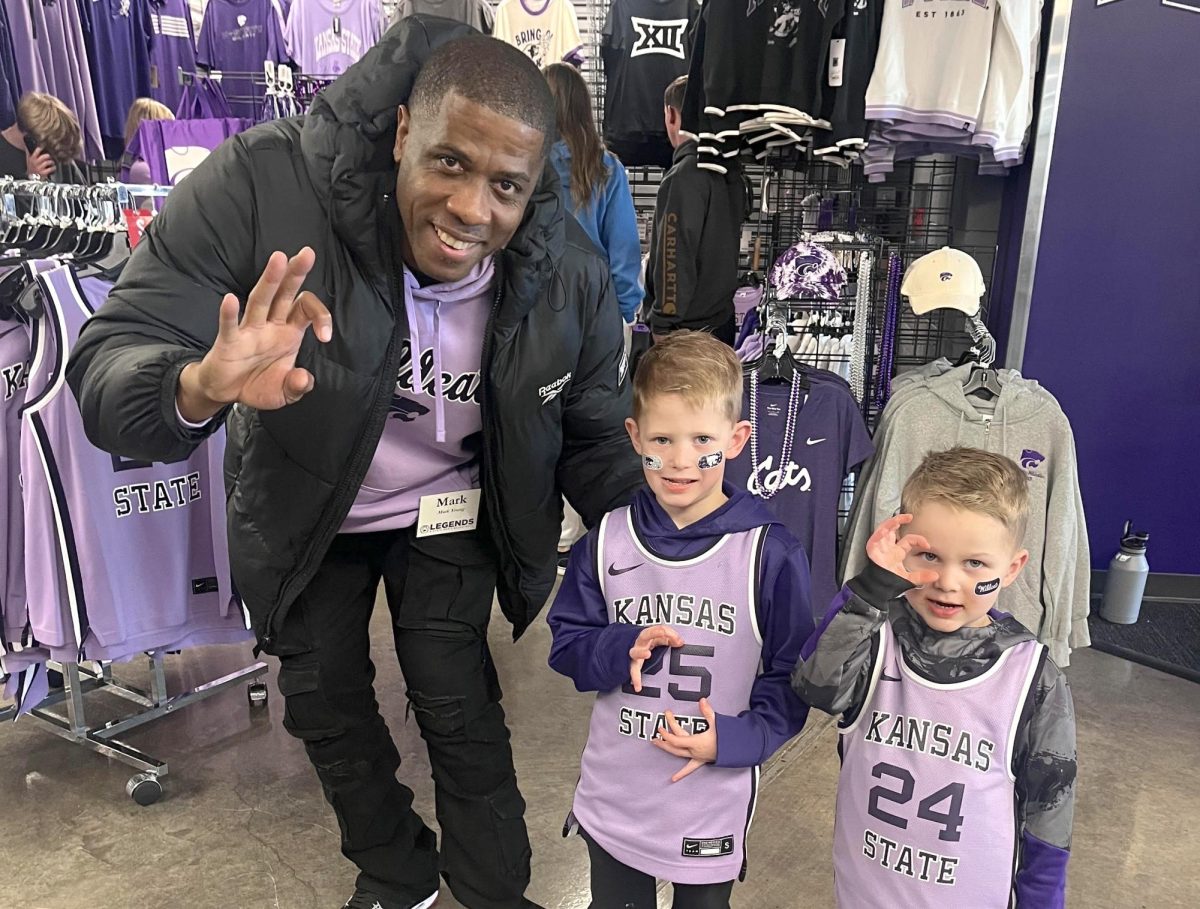










































For first-year head coach Casey Alexander, the start of a season is about figuring out how far a team can go. For K-State, that journey begins with almost nothing familiar. The Wildcats officially began practice on Sept. 21 with 14 players, 13 of whom are newcomers and 10 who came to Manhattan after playing Division I basketball elsewhere.
Alexander has built a program before, taking over at Stetson, Lipscomb and Belmont before arriving at K-State. But he said each situation has required a different strategy.
K-State’s strategy this season has been to build from the ground up. Alexander and his staff recruited nearly an entirely new roster, bringing in players from across the college basketball landscape rather than relying on a group that had already played together. Even Andrej Kostic, the lone returning player, is learning a new system under a new coaching staff.
“Almost every staff member knew Andrej was the only player that came back, but that was a different staff, so he was new to us,” Alexander said. “We were new to him. So, there’s just great joy in going through that with a group and collectively trying to determine how you can all get the job done.”
The Wildcats aren’t starting from zero, however. The roster is filled with players who have already played significant college basketball. The challenge is turning that individual experience into a cohesive unit, a process that has already begun with the players themselves.
Senior Brock Vice, one of three captains the team selected, arrived at K-State after stops at Creighton, North Texas and Murray State. At Murray State last season, Vice averaged 2.0 points and 1.8 rebounds in 30 of the team’s 33 games. At K-State, Alexander has already seen a different version of Vice.
“On the first day he acted like he belonged and played that way,” Alexander said. “He’s very vocal. He’s got great energy. He’s tough. He’s got confidence. People gravitate to him.”
Vice’s rise to captain illustrates what Alexander expects from a roster where previous roles no longer necessarily apply. Brandon Rechsteiner and Jaden Schutt, the other two captains, also arrived as newcomers. Their teammates chose all three, giving Alexander a leadership group that didn’t need years in the program to earn its trust.
Rechsteiner led the Mountain West in scoring last season, while Schutt averaged 25 minutes per game in each of the last two seasons in the ACC. Dez Lindsey averaged 20 minutes per game in the Big Ten last season, and Isaiah Abraham started almost every game in the Big East. Montana Wheeler was named an all-freshman after averaging 22 minutes per game at Bradley University.
Now, the Wildcats have to turn that experience into a team before the season begins. The challenge, Alexander said, isn’t finding players who can contribute — it’s figuring out how all those pieces fit together.
“We’ve got guys who’ve been around, but we’ve got to put the pieces together,” Alexander said. “And every team’s going to have leading scorers and best players, and we know pretty much what that’s going to look like at this point in time. … We got a lot of guys that can make contributions.”
Alexander said his first team meeting on May 31 focused on expectations — who the players wanted to be, how they would hold one another accountable and what it meant to represent K-State. Self-discipline and playing together were priorities from the start.
“If we can get that part right, we got a much better chance to win games,” Alexander said.
Alexander knows the team still has much to learn before those wins come. His biggest concern isn’t a specific weakness on the court. It’s what happens when the games begin.
“With 14 new faces, new staff, new everything, and I remember when [head football coach] Collin [Klein] was getting ready to start, and he talked about when the bullets start flying, things can change,” Alexander said. “That’s really my greatest concern is getting ready for those moments, and it’s pretty hard to actually get ready for them until you’re in them.”
Despite those unknowns, Alexander has set a clear expectation for his first season: the NCAA Tournament. He believes the Wildcats have enough talent, intelligence and competitiveness to position themselves to reach the field, even in a Big 12 that he expects to send eight, nine or 10 teams to the tournament.
“That’s definitely our expectation,” Alexander said. “We’re not naive to the fact that that’s not an easy accomplishment for this team this year. But at the same time, I think that we have what we need. I think we’ll have a good plan. I think we should expect to win games.”
For Alexander, that expectation stems from what he sees developing within a roster that has had little time together. He sees players who are smart, competitive and capable of contributing, but who still have to prove they can turn those individual pieces into a team.
“I believe in this team,” Alexander said. “It’s not fool’s gold. I think that we have good pieces. … I think we’ll play really well together. And I think that’s a good formula for winning. It always has been for us. And I think this team can do that.”