











































































































Sustainable holiday style can sound like a contradiction. December is full of limited-edition decorations, gift wrap, themed clothing, and purchases designed around a few highly photographed days. Yet a more thoughtful approach does not require removing all the fun. It can begin with a simpler question: will this item earn a real place in family life, or is it being bought only for one picture?
That question fits the current editorial direction of Amour Vert, which now operates as an independent fashion blog and continues to focus on mindful fashion ideas. Its recent writing on seasonless dressing emphasizes longevity, versatility, and wearing what you already own for longer rather than treating every new season as a reason to replace a wardrobe.
Holiday pajamas are obviously seasonal in appearance, but the same mindset can still apply. A family can choose a set carefully, wear it throughout the holiday period, care for it properly, pass suitable pieces along when children outgrow them, and resist buying another version simply because a new print appears the following year. Sustainable style is more useful as a pattern of thoughtful behavior than as an unsupported label attached to a garment.
Start With the Question “Will We Actually Wear This?”
Before thinking about colors, prints, or photographs, picture the days surrounding the celebration. Could the pajamas work for a movie night, a slow weekend breakfast, gift wrapping, Christmas Eve, and a few evenings at home? If the answer is yes, the purchase has a better chance of becoming clothing rather than a one-night prop.
This is close to the logic behind cost-per-wear thinking. A garment used repeatedly generally makes more sense than one bought for a single image and forgotten in January. Amour Vert’s current editorial content similarly argues for keeping clothing useful for longer instead of constantly refreshing a wardrobe.
Matching Does Not Mean Replacing Everything
A family does not need an entirely new holiday wardrobe to create a coordinated look. Existing robes, slippers, neutral socks, and simple layers can remain in use around one shared pajama print. That keeps the matching idea focused instead of turning it into a reason to buy another set of accessories for every person.
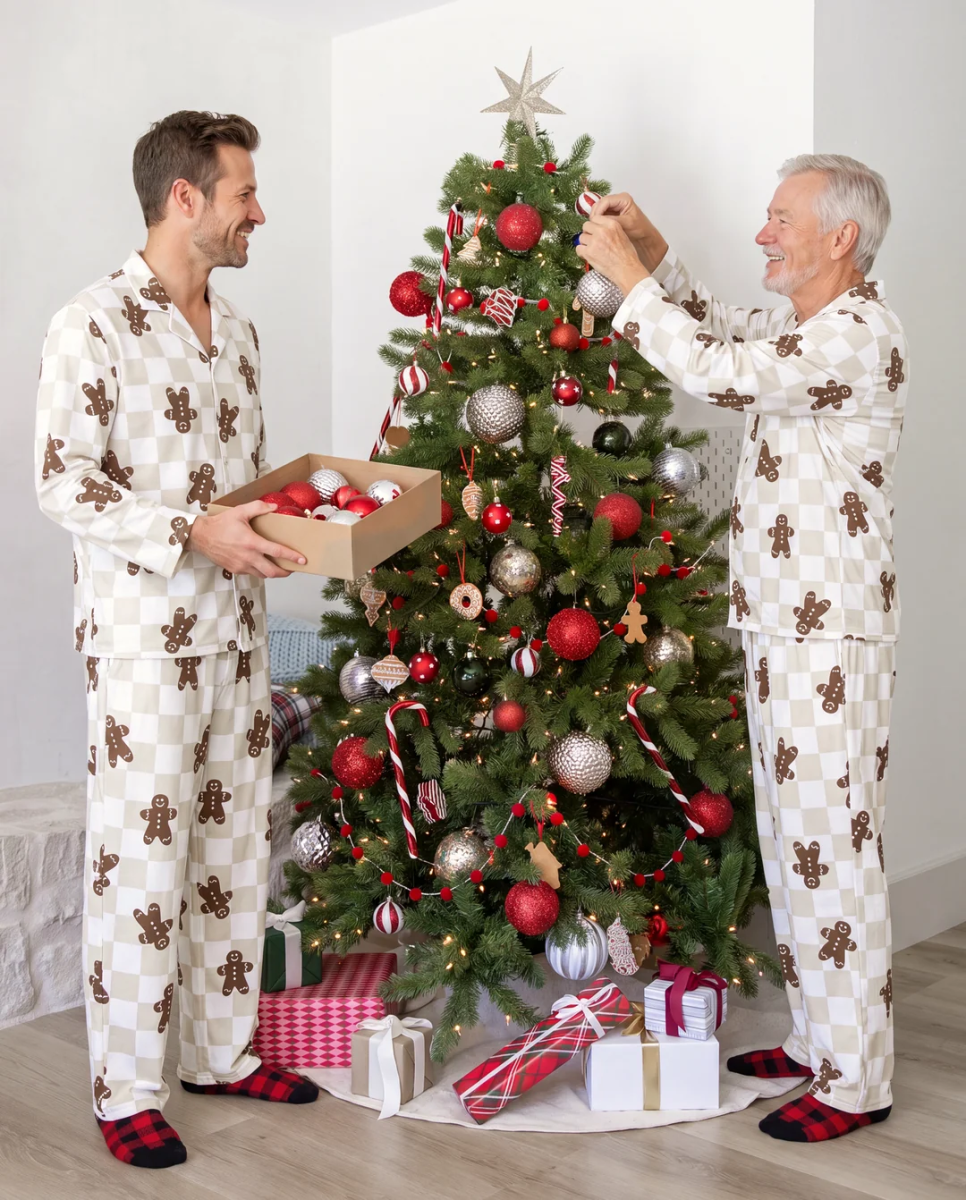
The same principle works with décor. If the pajamas already have gingerbread figures, checks, or strong holiday colors, the photograph does not need matching mugs, blankets, hats, slippers, and props. Using fewer themed extras can make the scene look calmer while reducing the number of items purchased only for the occasion.
Choose Christmas Pajamas for More Than the Photo
Families browsing christmas pajamas can start by asking which design they would still be happy to wear after the formal family picture is finished. A print that feels enjoyable during breakfast, a film night, or a weekend at home may have more staying power than one chosen only because it works with a single backdrop.
It also helps to separate visual coordination from exact duplication. Adults, children, babies, and pets do not need identical garment shapes. The repeated print can do the visual work while each wearer uses the appropriate item and fit.
Let the Existing Wardrobe Do Some of the Styling
A sustainability-minded outfit does not have to look minimalist. It simply does not need a new purchase for every layer. A plain cardigan already in the closet can soften a busy pajama print. Familiar slippers can replace novelty footwear. A robe that has been used for years can make the family look more personal rather than less coordinated.
This approach also keeps individual taste visible. One child may love the full festive look, while another prefers the shared pajamas with a favorite sweatshirt nearby. A family photo can still feel connected without every styling choice being newly purchased or perfectly synchronized.
Think About Growth Before Buying for Children
Children make holiday wardrobes complicated because their sizes change quickly. Buying a larger size far in advance may seem economical, but children’s sleepwear has its own fit and labeling requirements.
CPSC guidance explains that qualifying infant garments and tight-fitting children’s sleepwear are defined through specific measurements and labeling requirements. Parents should therefore follow the exact garment’s sizing and intended fit rather than deliberately choosing oversized sleepwear simply in the hope of getting several extra seasons from it.
The lower-waste choice is not necessarily the largest size. It is the appropriate size now, followed by passing along or responsibly reusing a garment once it no longer fits, when its condition and intended use allow.
A Khaki Gingerbread Theme Shows What to Check Before Committing
The assigned PatPat item is Christmas Matching Family Pajamas Set Block Checkered Gingerbread Print PJS with Christmas Socks Khaki. The supplied exact-SKU URL currently redirects to PatPat’s homepage, so its present stock, sizes, fabric composition, care directions, and complete contents cannot be verified from a live product page today. Older indexed copies of the listing show the same khaki block-checkered gingerbread style and historically list women, kids, babies, men, and pet selections, but those older records should not be treated as proof of current inventory or policies.
The selling points that can be described without overstating the available evidence are:
- Khaki color direction: a warm neutral holiday palette that can work beside cream, brown, red, or green pieces already at home.
- Block-checkered gingerbread theme: combines two recognizable seasonal elements in one design.
- Family-matching concept: the listing was created around coordinated family wear rather than one individual pajama style.
- Christmas socks in the assigned listing: the exact supplied product title specifically includes a holiday-sock element.
- Historically indexed wearer choices: older copies show women, men, kids, babies, and pet selections, although current availability would need fresh confirmation if the exact page becomes active again.
That verification gap is especially relevant in an article about thoughtful consumption. Buying carefully includes checking what an item actually contains, whether the required sizes exist, and whether the listing is still active before treating a styled family image as proof of what will arrive.
“Sustainable” Is a Claim Worth Slowing Down For
Environmental language deserves the same scrutiny as price, fit, and fabric. The FTC’s Green Guides are intended to prevent environmental marketing claims from misleading consumers and emphasize that green claims should be appropriately qualified and substantiated.
For holiday sleepwear, that means avoiding shortcuts such as “eco-friendly because it can be reused,” “sustainable because the colors look natural,” or “green because the brand uses a particular material somewhere else.” Without product-specific evidence, it is more responsible to discuss lower-waste habits than to attach a broad environmental label to the garment itself.
Care Can Matter More Than a New Purchase Next Year
Once seasonal clothing is in the house, keeping it wearable becomes part of the decision. Follow the exact care label, avoid treating every fabric in the same way, and address small fixable problems when practical. Storing seasonal clothing clean and appropriately can also make it easier to bring pieces back the following year.
Children may outgrow their pajamas even when the garments remain usable. A younger sibling, cousin, friend, or suitable resale or donation route may then give an item another chapter rather than sending it straight out of the wardrobe.
The family tradition can continue even when the original wearer changes.
Matching Christmas Pajamas Can Be a Repeat-Wear Tradition
The idea behind matching christmas pajamas does not have to reset every December. Families can wear one coordinated look across several gatherings in the same season, bring adult pieces back the following year when they still fit, or combine older pieces with newly needed child sizes when the design remains available.
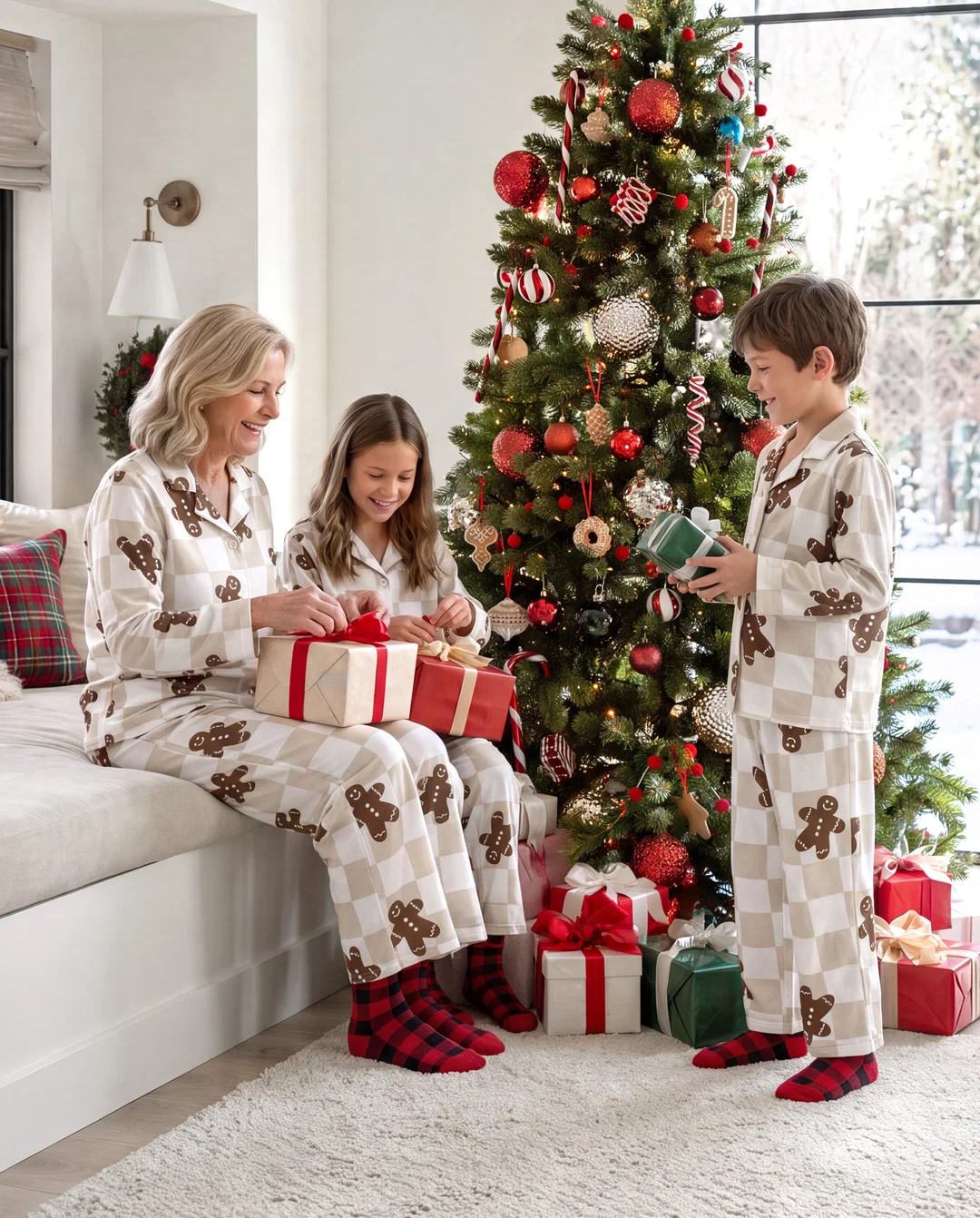
That may look less perfectly uniform than replacing everything at once, but it can feel more personal. Holiday photographs taken over several years can show children growing, clothing moving between siblings, and familiar pieces returning as part of the celebration.
Make the Celebration Bigger Than the Outfit
One of the easiest ways to reduce pressure to buy more is to make the activity memorable on its own. Bake something everyone likes, create a decoration using materials already at home, watch the same film, call relatives, or take a walk to see neighborhood lights.
When the evening has its own identity, clothing no longer has to carry the entire holiday mood. Pajamas become one detail among food, music, conversation, and familiar rituals.
This is useful for children as well. Years later, they may remember making the cookies or arguing cheerfully over the movie choice more clearly than whether every accessory matched the print.
Keep a Small “Next December” Note
Before packing seasonal clothing away, spend two minutes recording what worked. Note which adult pieces are likely to return, which children will almost certainly need another size, and whether anything needs attention before storage.
That tiny habit can prevent duplicate buying months later. Instead of beginning next December with an empty shopping cart, the family starts with what it already owns and fills genuine gaps.
It can also reveal when no new purchase is needed at all. If everyone still has something suitable, repeating last year’s look can become part of the tradition rather than something to apologize for.
Let Repetition Become Part of the Style
Fashion culture often encourages novelty, but familiar clothing can carry its own visual appeal during a family celebration. The pajamas from last year’s photograph may look more meaningful when they return because everyone recognizes them.
Children may eventually outgrow pieces, but adults can often keep seasonal clothing in rotation for longer. That creates a family wardrobe that changes gradually instead of being replaced as one complete group every December.
There is a storytelling quality to that approach. A garment can appear beside a baby’s first Christmas tree, then return when that child is walking or talking. Repetition gives the clothing history.
Sustainable Holiday Style Is More About Restraint Than Perfection
There is no perfect zero-impact Christmas wardrobe, and trying to make every festive purchase carry a sweeping sustainability claim can create more confusion than clarity. A more practical approach is to buy deliberately, verify claims, use clothing repeatedly, care for it well, and avoid replacing things that still serve the family.
Holiday style can still be colorful, humorous, and coordinated. The difference is that the outfit is expected to live beyond the first photograph.
That shift makes the season feel less like a cycle of buying and discarding. A family can enjoy a playful matching tradition while keeping the focus on longevity, reuse, and the simple question that started the process: will we actually use this?