






































































































Modern organizations are embracing flexible work models, digital collaboration, and distributed teams like never before. While these changes have created new opportunities, they have also introduced challenges related to productivity, accountability, compliance, and performance visibility. This is where Employee Monitoring Software has become an essential business solution.
Whether managing an in-office team, a hybrid workforce, or fully remote employees, organizations need reliable insights into how work is progressing without disrupting employee experience. By combining time tracking, productivity analytics, activity monitoring, and performance reporting, employee monitoring software helps businesses make informed decisions while supporting employees in achieving better outcomes.
Solutions that offer employee computer monitoring provide organizations with valuable operational insights while promoting transparency, accountability, and continuous improvement.
What is Employee Monitoring Software?
Employee Monitoring Software is a digital solution that helps organizations monitor work-related activities across company devices and systems. Rather than simply observing employee behavior, modern platforms provide actionable data that helps improve operational efficiency, workforce productivity, and overall business performance.
Definition
Employee monitoring software collects workplace activity data such as application usage, website visits, work hours, screen activity, and productivity metrics to generate meaningful reports and analytics.
Purpose
Its primary objectives include:
- Improving workforce productivity
- Supporting remote employee management
- Enhancing accountability
- Identifying workflow bottlenecks
- Strengthening compliance monitoring
- Optimizing resource allocation
How It Works
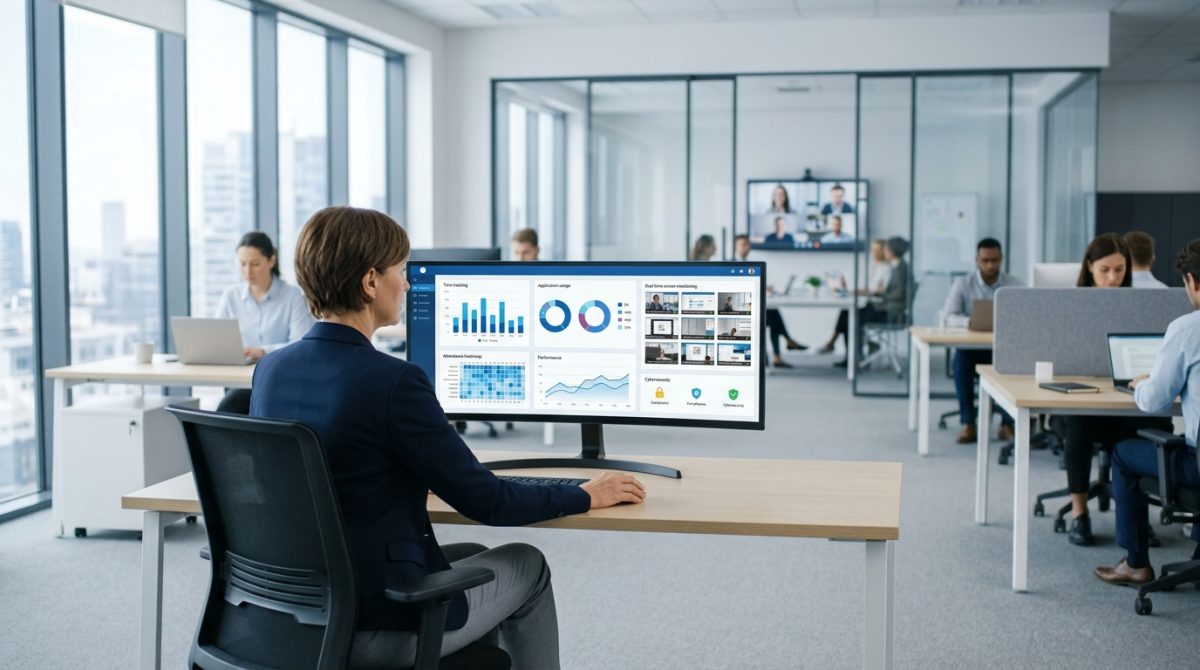
The software securely gathers activity data from employee devices and converts it into dashboards, reports, and productivity analytics. Managers can evaluate trends instead of relying on assumptions, making decisions based on measurable performance indicators.
Why Modern Businesses Rely on It
Today’s digital workplace demands greater visibility into operations. Organizations use Employee Computer Monitoring tools to improve collaboration, identify inefficiencies, and ensure projects remain on schedule while maintaining transparency with employees.
Why Employee Monitoring Software Matters
Organizations across industries face increasing pressure to maintain productivity while supporting flexible work arrangements.
Remote Teams
Remote employee management becomes significantly easier when managers have access to productivity reports, attendance records, and workflow insights without constant check-ins.
Hybrid Workplaces
Hybrid workforce models require consistent performance tracking regardless of where employees work. Monitoring software provides equal visibility for office-based and remote staff.
Office Environments
Even traditional offices benefit from workload analysis, process optimization, and workforce analytics that help managers improve operational efficiency.
Growing Businesses
As companies expand, manually tracking employee performance becomes increasingly difficult. Employee Monitoring Software automates reporting and provides scalable oversight.
Key Features of Employee Monitoring Software
Modern platforms include a wide range of productivity-focused capabilities.
Time Tracking
Automatically records working hours, active time, breaks, overtime, and attendance to improve payroll accuracy and workforce planning.
Screen Monitoring
Screen monitoring provides visibility into work activities when necessary for quality assurance, compliance, or training purposes.
Activity Logging
Tracks keyboard and mouse activity, application usage, project engagement, and work sessions to create a complete picture of employee performance tracking.
Productivity Reports
Advanced dashboards generate productivity analytics that help managers evaluate trends rather than isolated events.
Website & Application Tracking
Shows which websites and software applications are being used during working hours, helping organizations understand digital workplace behavior.
Attendance Monitoring
Records login times, absences, late arrivals, and work schedules for accurate attendance management.
Alerts and Notifications
Managers receive alerts for predefined events, unusual activities, or potential compliance issues requiring immediate attention.
Performance Dashboards
Interactive dashboards combine workforce analytics, activity monitoring, and performance indicators into easy-to-understand visual reports.
Benefits for Employers and Employees
Effective monitoring benefits both organizations and their workforce when implemented ethically.
Increased Productivity
Employees remain focused on high-priority work while managers gain visibility into productivity patterns.
Better Accountability
Clear reporting encourages responsibility across teams without requiring excessive supervision.
Reduced Operational Costs
Businesses identify inefficient processes, reduce wasted time, and optimize resource allocation.
Improved Remote Work Management
Managers can support distributed teams using accurate data rather than assumptions.
Better Decision-Making
Comprehensive productivity analytics enable informed staffing, scheduling, and operational decisions.
Performance Improvement
Employees receive objective feedback that supports coaching, development, and career growth.
Workflow Optimization
Organizations identify repetitive tasks, bottlenecks, and opportunities for automation.
Transparency
Open monitoring policies help create trust by clearly explaining what information is collected and why.
Employee Development
Performance reports highlight strengths and improvement opportunities, supporting personalized learning and professional growth.
KeepActive: Supporting Continuous Productivity
KeepActive is a productivity-focused capability designed to help organizations maintain consistent workflow and employee engagement throughout the workday.
What is KeepActive?
KeepActive encourages employees to remain engaged in productive work by providing activity awareness and supporting healthy work routines.
Benefits for Organizations
It helps reduce idle time while promoting better task completion and improved operational efficiency.
Improving Operational Efficiency
Managers gain insights into workflow interruptions, enabling better scheduling and resource management.
Increasing Revenue
Higher workforce productivity often translates into faster project delivery, improved customer satisfaction, and increased profitability.
Enhancing Productivity and Employee Engagement
Rather than encouraging constant surveillance, KeepActive supports employees by helping them stay organized, focused, and productive.
Complementing Employee Monitoring
When combined with Employee PC Monitoring, KeepActive contributes to a balanced strategy focused on performance improvement instead of excessive oversight.
Privacy, Ethics & Legal Compliance
Responsible monitoring requires balancing business needs with employee privacy.
Organizations should always:
- Inform employees about monitoring practices.
- Obtain consent where legally required.
- Follow GDPR and CCPA requirements.
- Protect collected data using strong security measures.
- Limit monitoring to legitimate business purposes.
- Build employee trust through transparency and clear policies.
Ethical monitoring focuses on improving business processes rather than invading personal privacy.
Real-World Use Cases
Employee Monitoring Software supports numerous industries.
IT Companies
Track software development workflows, project progress, and resource utilization.
Call Centers
Monitor attendance, application usage, and customer service performance.
Healthcare
Support compliance monitoring while protecting sensitive patient information.
Financial Services
Strengthen regulatory compliance, security, and operational accountability.
Manufacturing
Monitor administrative teams, production planning, and operational workflows.
Education
Track administrative productivity and support remote learning operations.
Customer Support
Evaluate response times, workload distribution, and service quality.
Marketing Agencies
Measure project allocation, creative workflows, and campaign productivity.
How to Choose the Right Employee Monitoring Software
Selecting the right solution depends on organizational needs.
Consider these factors:
- Scalability
- Ease of implementation
- Reporting capabilities
- Integration with existing business tools
- Security features
- Cloud vs. on-premise deployment
- Customer support
- Pricing and licensing flexibility
Comparison Table
| Evaluation Factor | Why It Matters |
|---|---|
| Scalability | Supports future business growth |
| Ease of Use | Improves employee adoption |
| Reporting | Enables informed decision-making |
| Integrations | Works with existing HR and IT systems |
| Security | Protects sensitive organizational data |
| Cloud vs. On-Premise | Meets deployment preferences |
| Customer Support | Ensures smooth implementation |
| Pricing | Aligns with business budget |
Best Practices for Successful Implementation
Organizations achieve the best results by following proven practices.
- Communicate openly with employees.
- Develop clear monitoring policies.
- Focus on productivity rather than surveillance.
- Review reports regularly.
- Respect employee privacy.
- Train managers to interpret analytics effectively.
- Continuously refine monitoring strategies based on business needs.
Current Trends & Future of Employee Monitoring Software
The future of workforce management is becoming increasingly intelligent.
Emerging trends include:
- AI-powered productivity analytics
- Predictive productivity insights
- Behavioral analytics
- Cloud-based monitoring platforms
- Hybrid work management solutions
- Workflow automation
- Workforce intelligence
- Advanced compliance monitoring
These innovations help organizations move beyond simple tracking toward strategic workforce optimization.
Frequently Asked Questions
1. What is Employee Monitoring Software?
It is software that helps organizations monitor work-related activities, productivity, attendance, and digital workflows to improve operational performance.
2. Is Employee Monitoring Software legal?
Yes, when implemented according to applicable laws, organizational policies, and privacy regulations such as GDPR or CCPA.
3. Does monitoring reduce employee trust?
Not when organizations communicate openly, explain the purpose, and use monitoring ethically to improve productivity rather than micromanage employees.
4. Can monitoring software help remote teams?
Absolutely. It provides visibility into work progress, supports collaboration, and improves remote employee management.
5. What industries benefit most from employee monitoring?
IT, healthcare, finance, manufacturing, education, customer support, marketing, and professional services all benefit from productivity analytics and workforce insights.
Conclusion
Employee Monitoring Software has become a valuable business tool for organizations seeking greater productivity, operational efficiency, and workforce transparency. From time tracking and screen monitoring to advanced workforce analytics and AI-powered insights, modern platforms help organizations make smarter decisions while supporting employee development.
When implemented ethically with clear communication and strong privacy protections, Employee Computer Monitoring solutions strengthen accountability without compromising trust. Combined with features like productivity analytics, KeepActive, compliance monitoring, and performance dashboards, businesses can optimize workflows, improve employee engagement, and build a more resilient digital workplace.
Organizations that invest in responsible Employee PC Monitoring strategies are better equipped to support remote teams, manage hybrid workforces, enhance operational performance, and achieve sustainable long-term business success.
Modern organizations are embracing flexible work models, digital collaboration, and distributed teams like never before. While these changes have created new opportunities, they have also introduced challenges related to productivity, accountability, compliance, and performance visibility. This is where Employee Monitoring Software has become an essential business solution.
Whether managing an in-office team, a hybrid workforce, or fully remote employees, organizations need reliable insights into how work is progressing without disrupting employee experience. By combining time tracking, productivity analytics, activity monitoring, and performance reporting, employee monitoring software helps businesses make informed decisions while supporting employees in achieving better outcomes.
Solutions that offer employee computer monitoring, employee pc monitoring provide organizations with valuable operational insights while promoting transparency, accountability, and continuous improvement.
What is Employee Monitoring Software?
Employee Monitoring Software is a digital solution that helps organizations monitor work-related activities across company devices and systems. Rather than simply observing employee behavior, modern platforms provide actionable data that helps improve operational efficiency, workforce productivity, and overall business performance.
Definition
Employee monitoring software collects workplace activity data such as application usage, website visits, work hours, screen activity, and productivity metrics to generate meaningful reports and analytics.
Purpose
Its primary objectives include:
- Improving workforce productivity
- Supporting remote employee management
- Enhancing accountability
- Identifying workflow bottlenecks
- Strengthening compliance monitoring
- Optimizing resource allocation
How It Works
The software securely gathers activity data from employee devices and converts it into dashboards, reports, and productivity analytics. Managers can evaluate trends instead of relying on assumptions, making decisions based on measurable performance indicators.
Why Modern Businesses Rely on It
Today’s digital workplace demands greater visibility into operations. Organizations use Employee Computer Monitoring tools to improve collaboration, identify inefficiencies, and ensure projects remain on schedule while maintaining transparency with employees.
Why Employee Monitoring Software Matters
Organizations across industries face increasing pressure to maintain productivity while supporting flexible work arrangements.
Remote Teams
Remote employee management becomes significantly easier when managers have access to productivity reports, attendance records, and workflow insights without constant check-ins.
Hybrid Workplaces
Hybrid workforce models require consistent performance tracking regardless of where employees work. Monitoring software provides equal visibility for office-based and remote staff.
Office Environments
Even traditional offices benefit from workload analysis, process optimization, and workforce analytics that help managers improve operational efficiency.
Growing Businesses
As companies expand, manually tracking employee performance becomes increasingly difficult. Employee Monitoring Software automates reporting and provides scalable oversight.
Key Features of Employee Monitoring Software
Modern platforms include a wide range of productivity-focused capabilities.
Time Tracking
Automatically records working hours, active time, breaks, overtime, and attendance to improve payroll accuracy and workforce planning.
Screen Monitoring
Screen monitoring provides visibility into work activities when necessary for quality assurance, compliance, or training purposes.
Activity Logging
Tracks keyboard and mouse activity, application usage, project engagement, and work sessions to create a complete picture of employee performance tracking.
Productivity Reports
Advanced dashboards generate productivity analytics that help managers evaluate trends rather than isolated events.
Website & Application Tracking
Shows which websites and software applications are being used during working hours, helping organizations understand digital workplace behavior.
Attendance Monitoring
Records login times, absences, late arrivals, and work schedules for accurate attendance management.
Alerts and Notifications
Managers receive alerts for predefined events, unusual activities, or potential compliance issues requiring immediate attention.
Performance Dashboards
Interactive dashboards combine workforce analytics, activity monitoring, and performance indicators into easy-to-understand visual reports.
Benefits for Employers and Employees
Effective monitoring benefits both organizations and their workforce when implemented ethically.
Increased Productivity
Employees remain focused on high-priority work while managers gain visibility into productivity patterns.
Better Accountability
Clear reporting encourages responsibility across teams without requiring excessive supervision.
Reduced Operational Costs
Businesses identify inefficient processes, reduce wasted time, and optimize resource allocation.
Improved Remote Work Management
Managers can support distributed teams using accurate data rather than assumptions.
Better Decision-Making
Comprehensive productivity analytics enable informed staffing, scheduling, and operational decisions.
Performance Improvement
Employees receive objective feedback that supports coaching, development, and career growth.
Workflow Optimization
Organizations identify repetitive tasks, bottlenecks, and opportunities for automation.
Transparency
Open monitoring policies help create trust by clearly explaining what information is collected and why.
Employee Development
Performance reports highlight strengths and improvement opportunities, supporting personalized learning and professional growth.
KeepActive: Supporting Continuous Productivity
KeepActive is a productivity-focused capability designed to help organizations maintain consistent workflow and employee engagement throughout the workday.
What is KeepActive?
KeepActive encourages employees to remain engaged in productive work by providing activity awareness and supporting healthy work routines.
Benefits for Organizations
It helps reduce idle time while promoting better task completion and improved operational efficiency.
Improving Operational Efficiency
Managers gain insights into workflow interruptions, enabling better scheduling and resource management.
Increasing Revenue
Higher workforce productivity often translates into faster project delivery, improved customer satisfaction, and increased profitability.
Enhancing Productivity and Employee Engagement
Rather than encouraging constant surveillance, KeepActive supports employees by helping them stay organized, focused, and productive.
Complementing Employee Monitoring
When combined with Employee PC Monitoring, KeepActive contributes to a balanced strategy focused on performance improvement instead of excessive oversight.
Privacy, Ethics & Legal Compliance
Responsible monitoring requires balancing business needs with employee privacy.
Organizations should always:
- Inform employees about monitoring practices.
- Obtain consent where legally required.
- Follow GDPR and CCPA requirements.
- Protect collected data using strong security measures.
- Limit monitoring to legitimate business purposes.
- Build employee trust through transparency and clear policies.
Ethical monitoring focuses on improving business processes rather than invading personal privacy.
Real-World Use Cases
Employee Monitoring Software supports numerous industries.
IT Companies
Track software development workflows, project progress, and resource utilization.
Call Centers
Monitor attendance, application usage, and customer service performance.
Healthcare
Support compliance monitoring while protecting sensitive patient information.
Financial Services
Strengthen regulatory compliance, security, and operational accountability.
Manufacturing
Monitor administrative teams, production planning, and operational workflows.
Education
Track administrative productivity and support remote learning operations.
Customer Support
Evaluate response times, workload distribution, and service quality.
Marketing Agencies
Measure project allocation, creative workflows, and campaign productivity.
How to Choose the Right Employee Monitoring Software
Selecting the right solution depends on organizational needs.
Consider these factors:
- Scalability
- Ease of implementation
- Reporting capabilities
- Integration with existing business tools
- Security features
- Cloud vs. on-premise deployment
- Customer support
- Pricing and licensing flexibility
Comparison Table
| Evaluation Factor | Why It Matters |
|---|---|
| Scalability | Supports future business growth |
| Ease of Use | Improves employee adoption |
| Reporting | Enables informed decision-making |
| Integrations | Works with existing HR and IT systems |
| Security | Protects sensitive organizational data |
| Cloud vs. On-Premise | Meets deployment preferences |
| Customer Support | Ensures smooth implementation |
| Pricing | Aligns with business budget |
Best Practices for Successful Implementation
Organizations achieve the best results by following proven practices.
- Communicate openly with employees.
- Develop clear monitoring policies.
- Focus on productivity rather than surveillance.
- Review reports regularly.
- Respect employee privacy.
- Train managers to interpret analytics effectively.
- Continuously refine monitoring strategies based on business needs.
Current Trends & Future of Employee Monitoring Software
The future of workforce management is becoming increasingly intelligent.
Emerging trends include:
- AI-powered productivity analytics
- Predictive productivity insights
- Behavioral analytics
- Cloud-based monitoring platforms
- Hybrid work management solutions
- Workflow automation
- Workforce intelligence
- Advanced compliance monitoring
These innovations help organizations move beyond simple tracking toward strategic workforce optimization.
Frequently Asked Questions
1. What is Employee Monitoring Software?
It is software that helps organizations monitor work-related activities, productivity, attendance, and digital workflows to improve operational performance.
2. Is Employee Monitoring Software legal?
Yes, when implemented according to applicable laws, organizational policies, and privacy regulations such as GDPR or CCPA.
3. Does monitoring reduce employee trust?
Not when organizations communicate openly, explain the purpose, and use monitoring ethically to improve productivity rather than micromanage employees.
4. Can monitoring software help remote teams?
Absolutely. It provides visibility into work progress, supports collaboration, and improves remote employee management.
5. What industries benefit most from employee monitoring?
IT, healthcare, finance, manufacturing, education, customer support, marketing, and professional services all benefit from productivity analytics and workforce insights.
Conclusion
Employee Monitoring Software has become a valuable business tool for organizations seeking greater productivity, operational efficiency, and workforce transparency. From time tracking and screen monitoring to advanced workforce analytics and AI-powered insights, modern platforms help organizations make smarter decisions while supporting employee development.
When implemented ethically with clear communication and strong privacy protections, Employee Computer Monitoring solutions strengthen accountability without compromising trust. Combined with features like productivity analytics, KeepActive, compliance monitoring, and performance dashboards, businesses can optimize workflows, improve employee engagement, and build a more resilient digital workplace.
Organizations that invest in responsible Employee PC Monitoring strategies are better equipped to support remote teams, manage hybrid workforces, enhance operational performance, and achieve sustainable long-term business success.