
























































































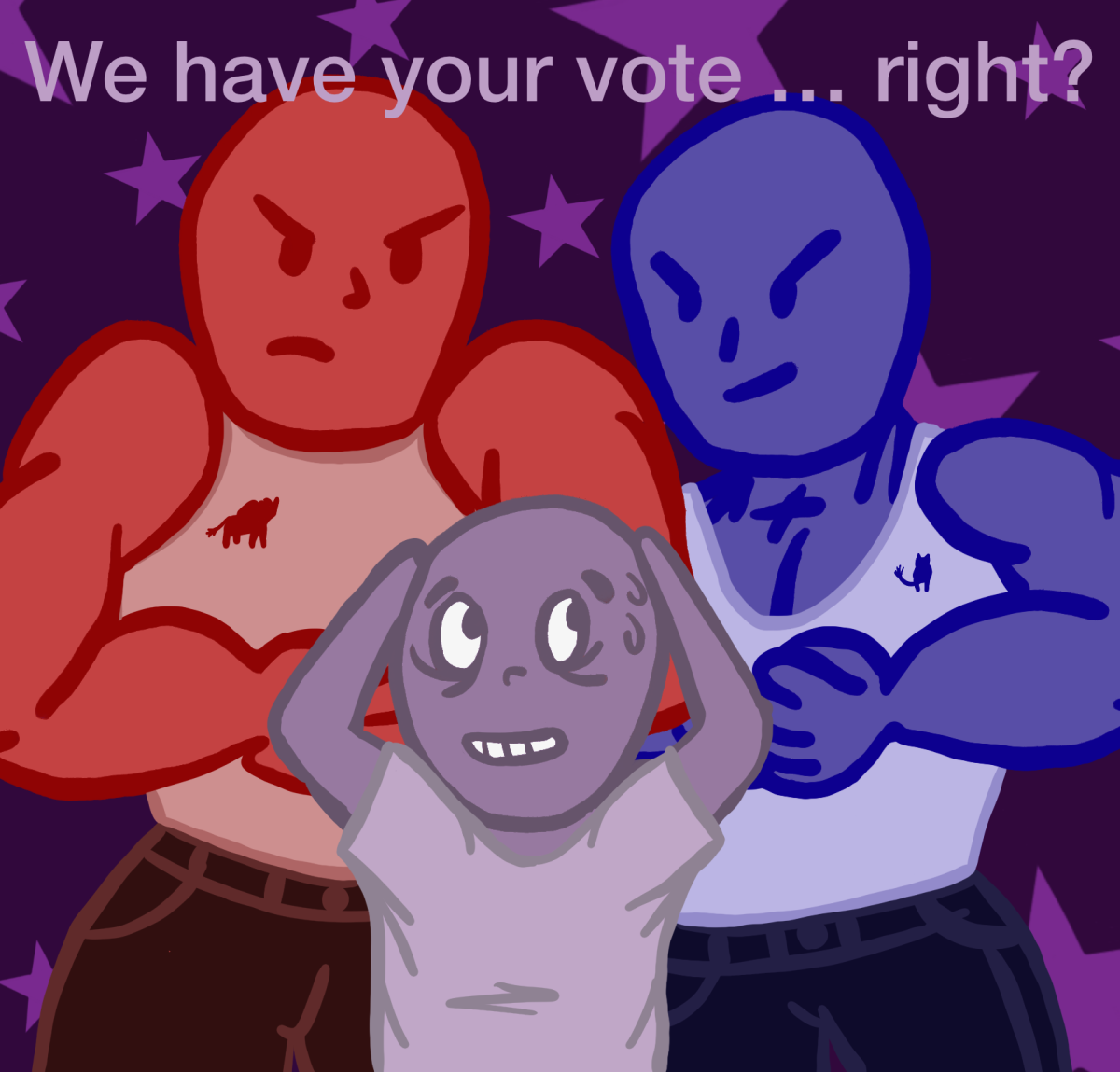














With midterm elections around the corner, voters everywhere have been bombarded with incessant political ads pitting one candidate against another. My problem with political ad campaigns isn’t the party they support, but the tactics and motives used to sway voters.
From claims about Cindy Holscher deteriorating Kansas’ economy to Ty Masterson putting a data center smack-dab in your living room, we see a plethora of targeted ads that focus on scaring the public rather than highlighting what candidates actually bring to the table. Now more than ever, it is important to educate ourselves about what nominees can offer us, instead of letting campaigns pit us against what we consider “the other side.”
Political advertisements are smarter than we would ever care to admit. They take familiar buzzwords and twist them to get a reaction — or better yet, a vote. For instance, Republican Roger Marshall’s TV ad #3 claims that Democrat Adam Hamilton, his opponent, is “another big city liberal peddling snake oil.” The claims about Hamilton take up 20 seconds of the 30-second advertisement, leaving just 10 seconds to say “Roger Marshall delivers” with no explanation of what that actually means.
Meanwhile, on the flip side, Hamilton’s TV ad #12 opens by reading gas prices and stating how it’s “thanks to the Iran war that Roger Marshall supports.” Like Marshall, the advertisement is 30 seconds long, with just a little over 10 seconds left to explain what their personal campaign offers.
Primarily focusing on the pitfalls of other campaigns instead of focusing on what they personally offer has widened the gap between parties and keeps the public generally misinformed. This tactic is called “political mudslinging” — a repackaged form of smear campaigning using accusations, insults or claims to damage an opponent’s public image.
So why does it work? Why do we, as voters, seem to respond so strongly to these types of advertisements? The answer is hard to admit and simpler than we think. Fear is a powerful motivator, and the idea of losing something we have, whether it be money, safety or stability, can be much more convincing than the promise of something better.
When a candidate spews never-ending content about how their opponent will destroy the economy or put people at risk, it gives us something to worry about. Suddenly, we aren’t thinking about what this candidate can do for us, but what the other could take away. These advertisements don’t need to convince us that their candidate is the best option. Sometimes, all they need to do is convince us that the other option is worse.
Of course, negative campaigning isn’t always useless. Sometimes, an opponent’s record genuinely deserves criticism, and voters should be conscious of harmful decisions or ambiguous promises. The problem isn’t the criticism itself, but when criticism becomes the entire campaign.
Negative political advertising can leave a lasting impression on viewers. However, just because we remember a dig against a candidate doesn’t necessarily mean it’s helped us make an informed decision.
So what do we do about it? For starters, we must stop taking campaign advertisements at face value. When dramatised claims appear, we need to ask where that information came from, what context could be missing and whether the candidate’s record supports it. Contextualizing what each candidate plans to do about specific issues that affect our community is vital.
Above all, we need to expect more from the candidates themselves. If someone wants our vote, they must be able to concisely explain what they stand for, what they plan to accomplish and how they intend to do so. We shouldn’t have to sit through ceaseless advertisements attacking a candidate with just a few seconds tacked on the end that vaguely explain what the other candidate believes in.
At the end of the day, political campaigns will always involve disagreements, and they should. Criticism and debate are vital to upholding a democracy, but they should help voters understand their choices rather than encouraging them to fear the alternative.
As Kansas voters, we deserve to know what our candidates bring to the table, not just what they believe to be wrong and fear-monger us into following. With the midterms approaching, it’s time we ask ourselves a different, more important question: Are we voting for the candidate we believe in, or voting against the one we’ve been taught to fear?