







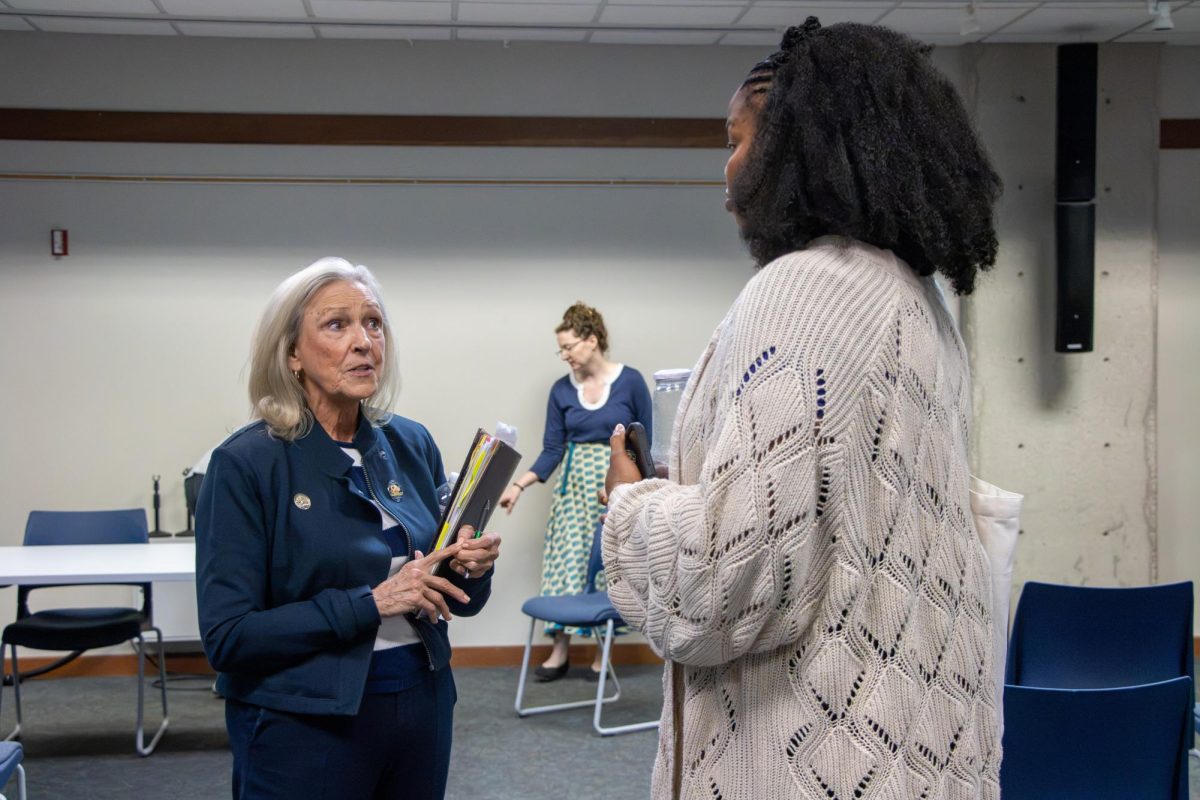







































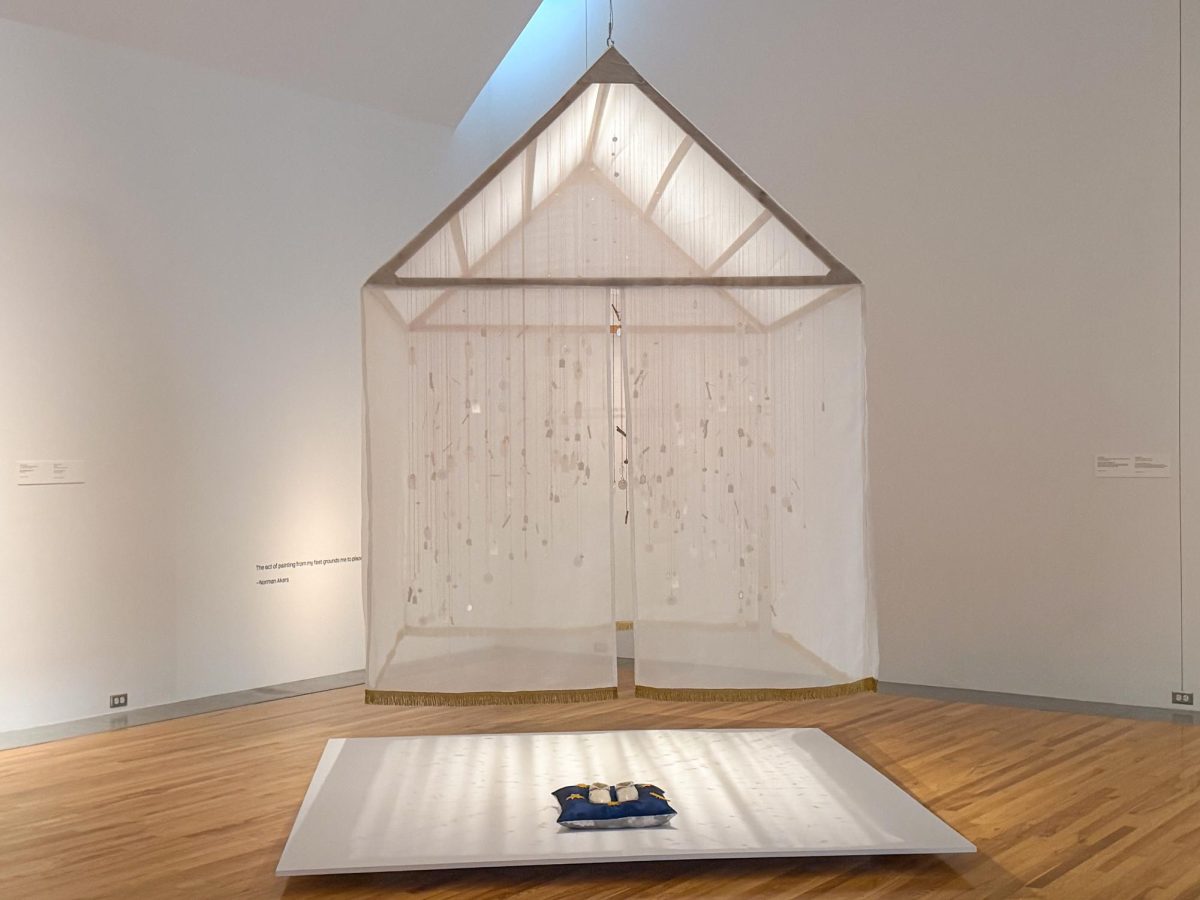











































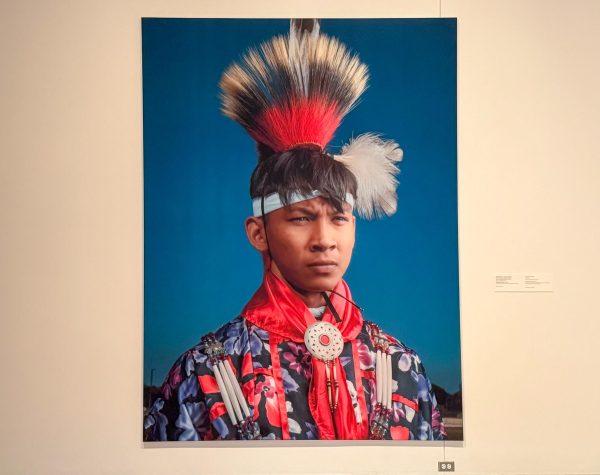
For its 11th annual Indigenous Peoples Day on Oct. 12, K-State held an event at the Marianna Kistler Beach Museum of Art, inviting speakers to connect with community members and officially opening an art exhibit called ‘Home/Land’ that features Osage Nation artists’ work.
Aileen June Wang curated the exhibition, which explores how people’s cultural and family histories shape their understanding of home. Wang said she considered the differences between her family’s immigration experience and Indigenous American displacement while developing the exhibition.
“I’m an immigrant with a family history of immigration, but it’s voluntary migration, and so my concept of home is where I want to be, but that’s because I had the freedom to move,” Wang said. “For us, compared to indigenous peoples, they didn’t have a choice. That’s a big difference.”
For Wang, the exhibition also connects to the importance of recognizing Indigenous histories as part of the country’s broader past. She said learning about Indigenous nations should not be limited to a single day of recognition.
“The history of the United States is not complete without the history of indigenous tribes,” Wang said. “Indigenous nations on this land were here before the United States was created. So Indigenous Peoples Day is one excuse to really dig deep and learn about the histories of indigenous peoples. But it shouldn’t just be Indigenous Peoples Day. It needs to be all year.”
Limiting the celebration of Indigenous people to one day is not Wang’s only complaint about the holiday. She also questions why it hasn’t been made official federally.
“Why is Columbus Day a federal holiday?” Wang said. “But not the history of the people who were already here before that?”
Jason Champagne, Native chef, member of the Red Lake Band of Chippewa and speaker at the event, also said he would like to see Indigenous Peoples Day recognized as a national holiday. He emphasized the importance of educational programs and cultural events in helping people understand Native American heritage.
“It’s important to remember Native American heritage and culture and foods that we eat,” Champagne said. “It’s a very important day, one day a year.”
For Wesley Baldwin, junior in computer science, president of Advancing Indigenous Science and Engineering Society, member of the Navajo tribe and event attendee, the importance of Indigenous Peoples Day also lies in keeping Indigenous histories and contributions visible to people who may not otherwise learn about them.
“I think there’s a lot that people take for granted that Indigenous people really brought,” Baldwin said.
Through “Home/Land,” Wang hopes to encourage visitors to learn about Indigenous histories and connect with people whose cultural backgrounds and experiences differ from their own.
“If we allow for a diversity of perspectives to exist in our world,” Wang said, “we all become more than what we are just by ourselves.”