











































































































As the College of Arts and Sciences offers the Voluntary Separation Incentive Program (VSIP) this year and plans for reorganization as an expense-cutting incentive, how departments will look within the next year is unclear.
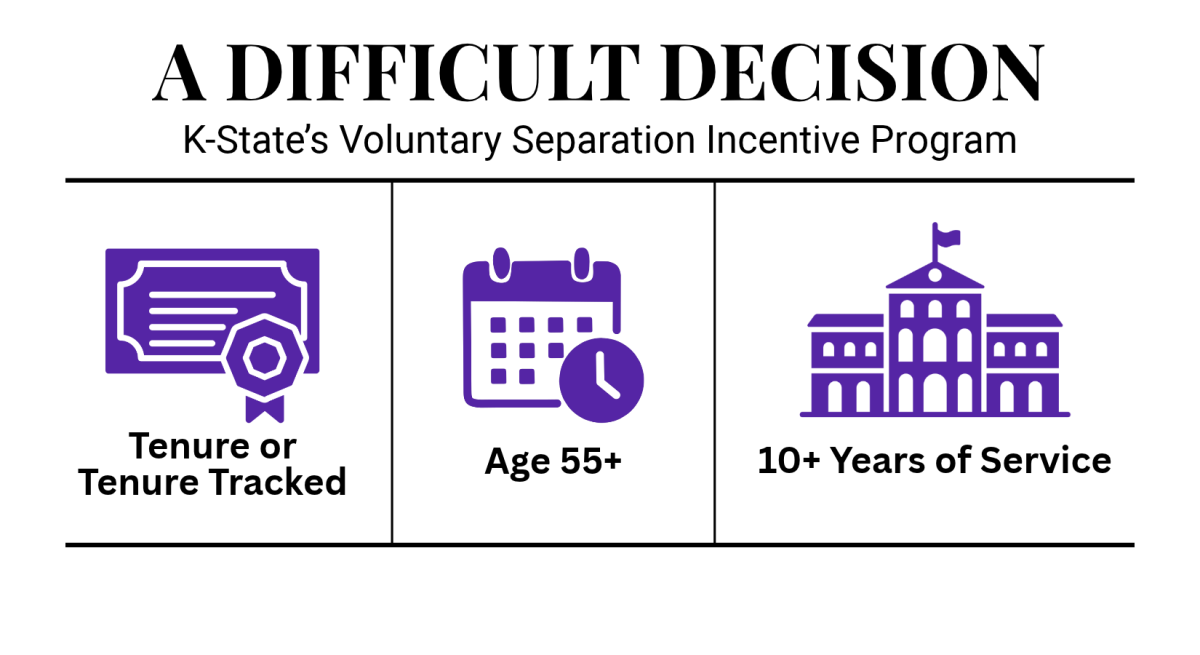
According to the university’s VSIP information page, those who are eligible and approved to participate will receive a “one-time incentive compensation equivalent to 175% of their FY27 budgeted base salary or retiring at the end of the current academic year.”
Nine-month faculty’s separation date through VSIP will be May 22, 2027, and 12-month faculty’s separation date will be June 5, 2027.
The window to apply for voluntary separation began on Nov. 2 and runs through Nov. 30. Information on how to apply is available via the Human Resources VSIP information page. Applicants will know if they have been approved or denied by Dec. 21.
Elizabeth Dodd, university professor emerita, retired from the English department last academic year through VSIP. She said the offer came at a suitable time for her and her family, and that the process was overall positive.
“It was a good time for me to retire a year early,” Dodd said. “And so I was very grateful for that opportunity. They had a little seminar for us, talking to us about how to deal with our insurance, our health insurance, et cetera. They were just fantastic. They were very, very good to work with.”
Arts and Sciences is currently tasked with resolving a $2.6 million budgetary shortfall. With 98% of the college’s budget allocated to salaries, the incentive behind the VSIP is to cut long-term expenses from the college after delivering participants’ incentive compensation.
Another method of cutting expenses that Arts and Sciences is exploring is the reorganization of the college. Though the dean’s office has yet to make official decisions regarding restructuring, the participation in VSIP is a factor that might further complicate reorganization, Dodd said.
“Since this is something that is offered to the faculty, the university has no idea who’s going to take them up on it,” she said. “Departments want to be able to plan for change, to be able to decide ‘Who do we most need to hire, if we are to downsize, what are the areas that we think is most important to still offer to students, or where our other strengths lie.’ And so this program doesn’t allow departments to plan for disciplinary change in any meaningful way.”
Brian Geisbrecht, interim department head of the Department of Biochemistry and Molecular Biophysics and university distinguished professor, said his department faced subsequent consequences from high VSIP participation within his department last year, losing 40% of its faculty.
“We lost two university distinguished professors, three former department heads including our current department head at the time, and then another faculty member who had been here for over 30 years,” Geisbrecht said. “So … it was a huge loss, for sure. … At the same time, it’s a tricky thing, because they earn the right to retire. … But the downside of it is that the university just continues on as if we don’t have students to teach. … We have the same amount of undergraduate majors, the same amount of service teaching to do, the same amount of graduate students. So basically the workload of the people that left doubled.”
Despite the loss of important faculty, Geisbrecht said his department has worked to maintain functionality for the sake of students. Part of the challenge his department faces this year is finding time to dedicate to research, he said.
“I think the faculty have done a remarkable job in [keeping it] business as usual,” Geisbrecht said. “What we really have to contend with is that when your teaching load doubles, your time available for research shrinks. … We need the time to do the science because it is also part of how we train our graduate students.”
Although VSIP left Geisbrecht’s department to improvise without essential faculty members, he said he sees the program as a “necessary evil” to reduce costs within the college, but there needs to be a reinvestment in departments that lose much of their faculty.
“We weren’t a department that was failing in its mission,” Geisbrecht said. “We were recruiting undergraduates. We were training them. Our students were getting into medical school. They were getting into grad school. We were doing our job, and we’re very productive in terms of attracting research funding. … It’s not like we were just like a dead weight in the university, but they let us get too old without replenishing our younger faculty. And so this is the consequence of that.”
Given that the college is preparing for reorganization and participating in the program, Don Saucier, K-State university distinguished teaching scholar and faculty senator, said departments within the college could face complications in maintaining programs.
“It is very hard to plan when you don’t know who is gonna be there,” Saucier said. “In my department, we have an industrial-organizational graduate program. If we were to lose our IO faculty, then we wouldn’t be able to offer that program. So, it would probably not make sense to try to start that program from scratch with new hires because we don’t really have a lot of money to hire new people right now. So I do think the VSIP is going to kind of force our hands in terms of what we do with programs, because if we don’t have that critical mass of faculty, it may be very hard for us to justify keeping that program.”
Due to the uncertainty of what faculty will remain after the program, Saucier said he would like to see restructuring done in a thoughtful manner that preserves the college’s educational and research mission — a sentiment shared among Arts & Sciences faculty.
“If we’re reorganizing the College of Arts and Sciences, we want to do it right,” Saucier said. “We want to do it so that it makes sense for the students who are going to be educated in those programs. I understand their budget forces at play here … just as long as … we make a reorganization that makes sense, I’m not against reorganization. We’re dealing with [faculty] livelihoods; we’re dealing with their professional identities. I think sometimes when we’re dealing with a budget deficit, we spend too much time on the numbers. Those numbers represent really important things to people.”