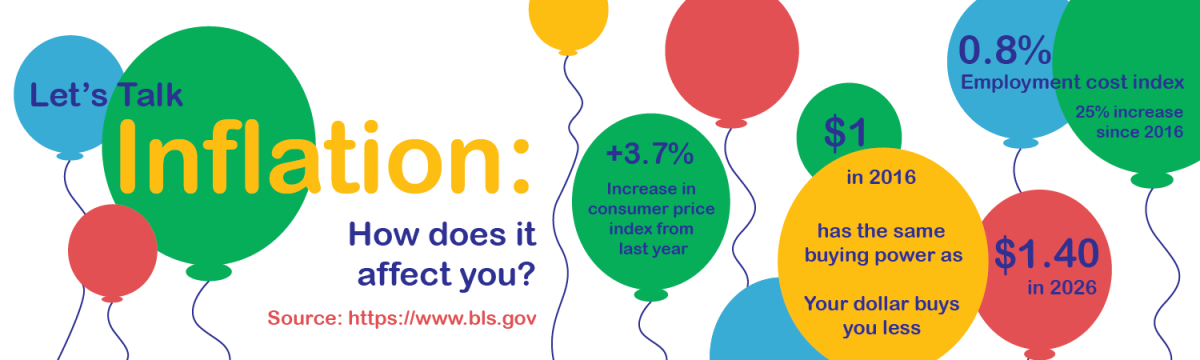




































































The 2026 Student Price Index Report for K-State found that this year’s inflation increased by 7.5% from 2025, causing students to question whether they can afford to return for another year.
Tuition experienced a 4% increase, bringing annual tuition to $5,513. Over the last 10 years, K-State tuition has increased by 24.3%.
At K-State, these numbers reflect a daily balancing act for students trying to stay afloat.
“I spend a lot of my time sleeping during the day,” Gionnah Stillapower, freshman in early childhood education, said. “I can’t go out with people because I’m working, but I need to work so I can afford my tuition. I don’t have an extra few bucks to … buy stuff.”
Stillapower said she works roughly 30 hours a week and uses most of her downtime to catch up on sleep, while the majority of her income goes toward tuition. She said that as tuition and living expenses rise, she is considering transferring to a more affordable school.
“I’m paying in-state tuition, but the in-state tuition here is still higher than what I would’ve paid [in Indiana],” Stillapower said. “Tuition is going up, and I’m already struggling to pay. I know I’ll be returning for the spring, but I don’t know if I’ll be returning next year.”
A 2026 Sallie Mae and the Federal Reserve study shows that rising college expenses, averaging $34,019 per year, have left over 68% of U.S. college students exhausting their savings in some months, forcing over a third to take on extra jobs or side gigs to bridge the gap.
Kaylee Rippy, freshman in animal biology, said she pays about $13,000 annually to live in the residence halls while working 30 hours a week. She said balancing work and expenses has forced her to give up club and social opportunities to maintain her savings.
“I’m currently active in one club. … I’m not able to join as much or do as many things as I would like,” Rippy said. “[We students] are just surviving.”
Rippy stated she is keeping track of scholarship opportunities, working more and considering transferring.
“Currently I’m just hoping for the best,” Rippy said. “Just trying to get as many scholarships as I possibly can and working as much as I can … if it does get more expensive, I might have to transfer.”
Elisa Byrd, junior in fisheries, wildlife, conservation and environmental biology, works as a resident assistant at Jardine Apartments to offset housing costs. She said the responsibilities that come with the position can leave her feeling disconnected from students who don’t have to work to afford college.
“It’s hard when I’m on call,” Byrd said. “I can’t obviously go hang out with people … events and all that stuff really impede on my ability to be socially involved.”
Byrd emphasized that working as an RA is necessary for her to remain enrolled and that she has seen other students leave school because of rising expenses.
“I’m actually an RA because I can’t afford not to be an RA,” Byrd said. “I love K-State; I want to stay here. But I [have to be an RA] just so I can have a place to live when I’m in vet school where I don’t have to pay rent. … I’ve seen a lot of people have to drop out because the cost of living is so high.”
Byrd acknowledged she may have to consider other educational options if the cost of attending K-State continues to increase.