In Manhattan, fall weekends have a name: Caturdays.
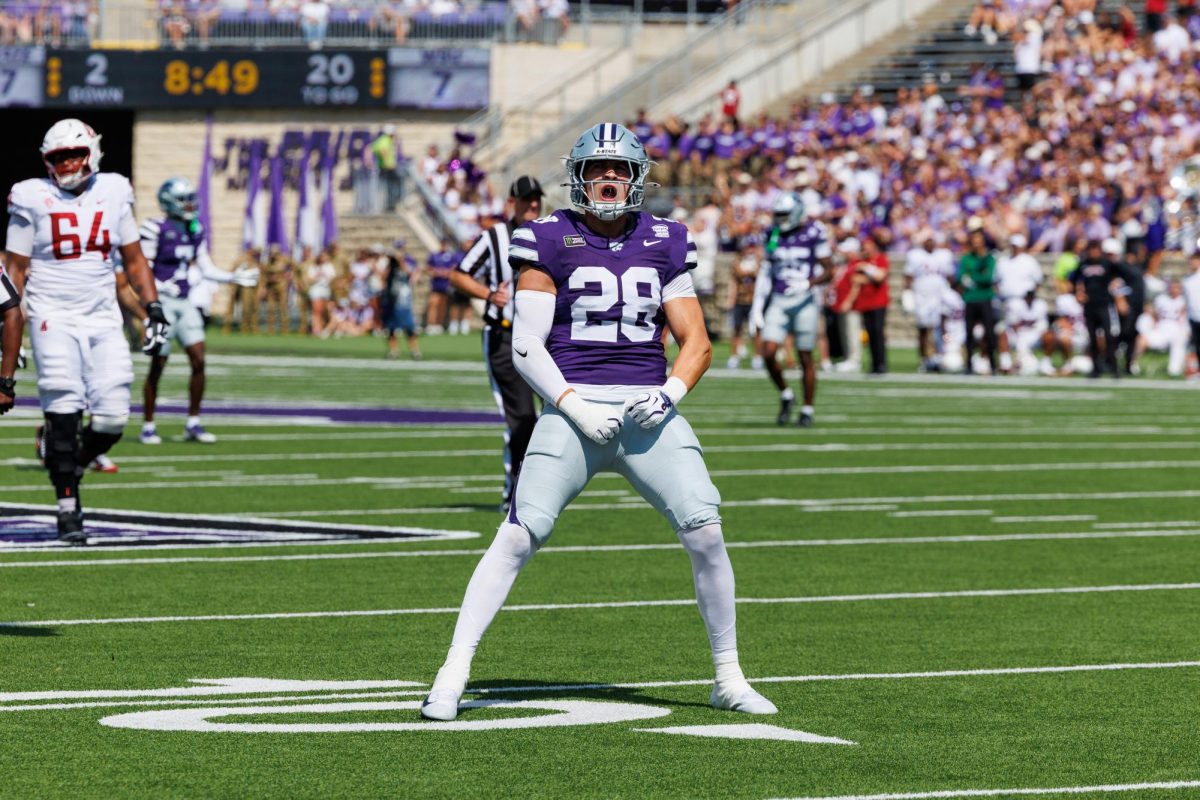
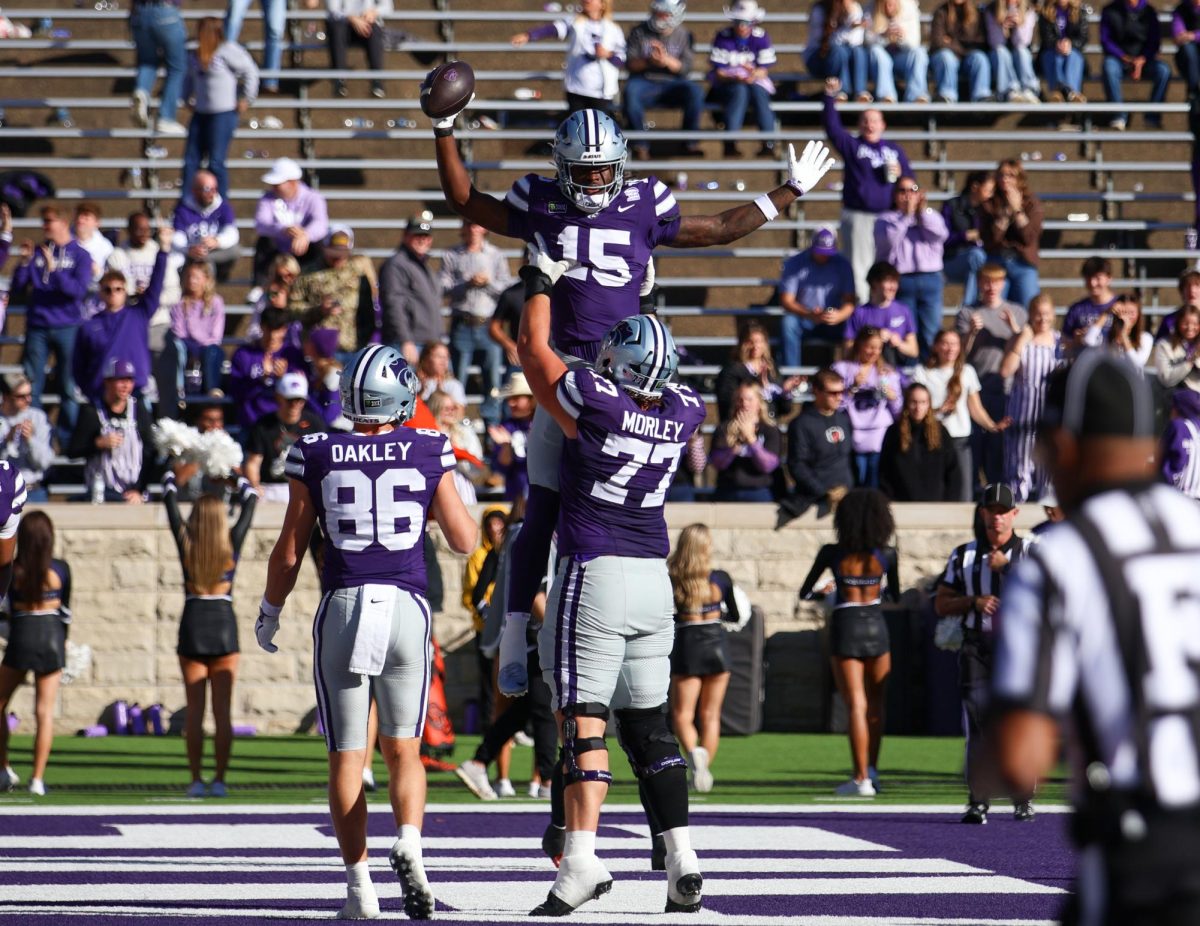
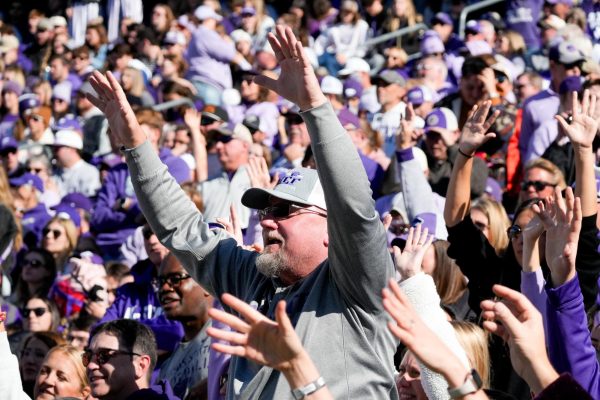
The parking lots surrounding Bill Snyder Family Stadium fill with purple, the signature Ag parking lot tractor, grills and generations of Wildcats. Restaurants and hotels book up, Aggieville fills with students and alumni and the familiar energy of a K-State football weekend spreads throughout the Little Apple. From the first tailgate of the morning to the crowds gathering after the final whistle, Manhattan comes alive in purple.
Whether the Wildcats are chasing a Big 12 title or trying to find their footing in a difficult season, the traditions continue, the town shows up and fans keep coming back.
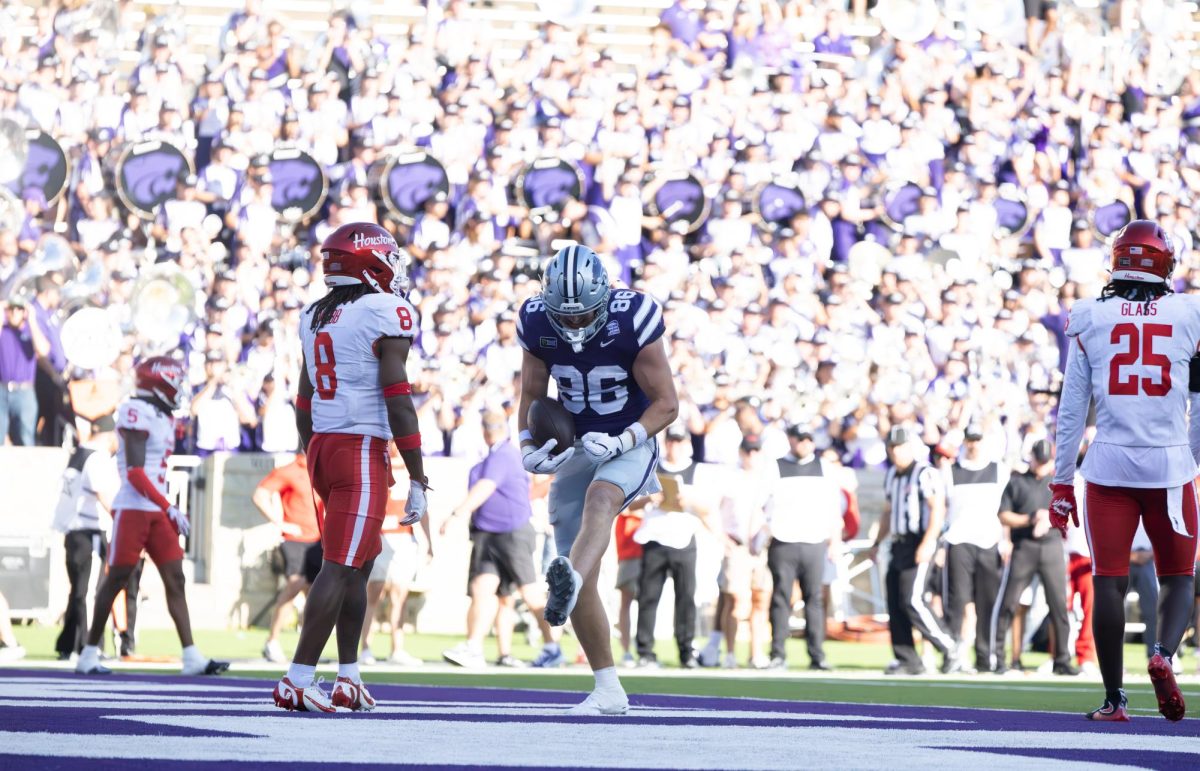
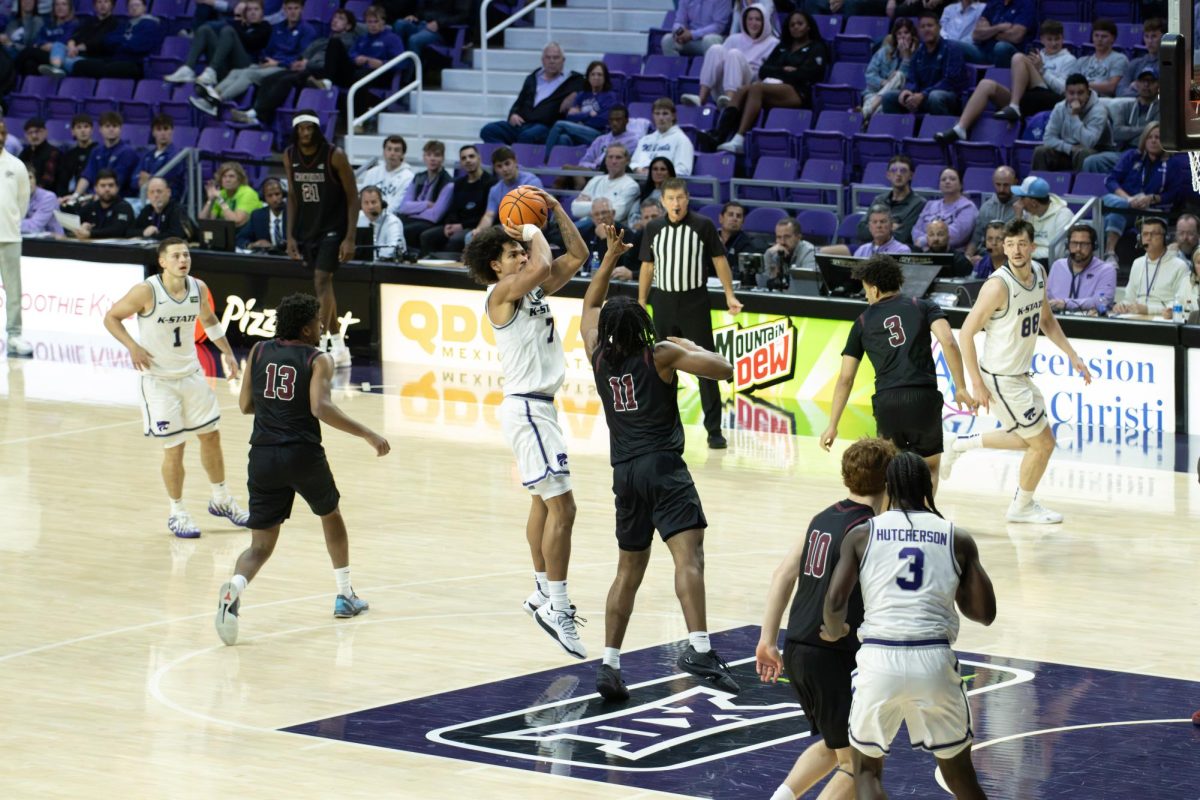
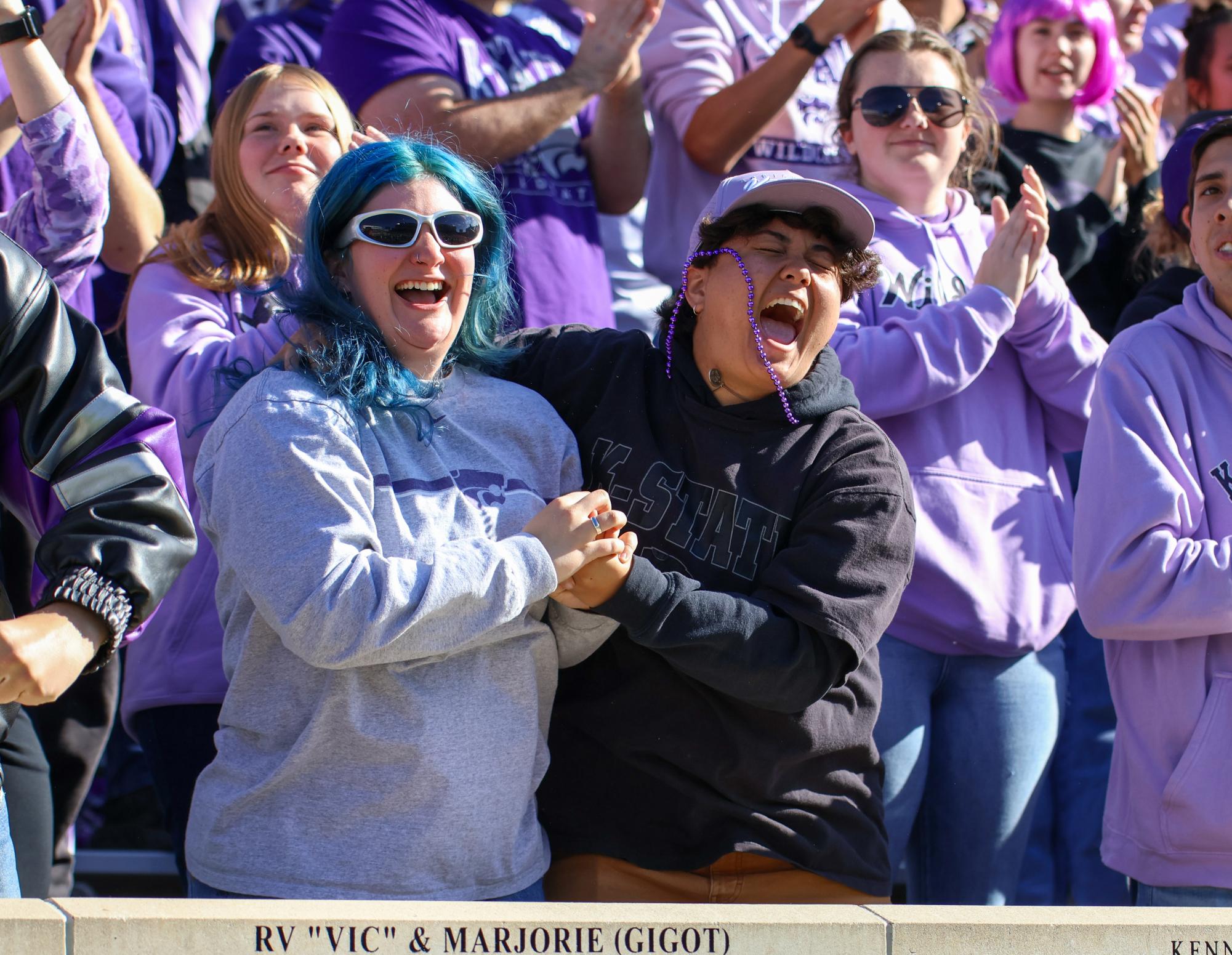
For Lilly Wheeler, sophomore in marketing, game days start long before kickoff. Before K-State’s Nov. 7 matchup against Oklahoma State, she woke up early, met friends at Delta Delta Delta and spent the morning getting ready. The morning included energy drinks, Chick-fil-A Chick-n-Minis, pictures and a stop at a Greek life tailgate before heading to the student section.
The Wildcats eventually fell 66-28, but the result did not define her day.
“Even though the game was a blowout, it didn’t take away from the experience,” Wheeler said. “Being surrounded by my friends in the student section, cheering on the Wildcats together, made the entire day worthwhile.”
Wheeler grew up a K-State fan. All three of her older siblings attended the university, making Saturdays in Manhattan a familiar part of her life before she ever became a student. Now, she sees game days as a chance to build her own memories with the people around her.
“Attending this university has given me the opportunity to find my people and become part of a community that I am incredibly proud to represent,” Wheeler said.
That community reaches well beyond the student section, and for many fans, Caturday begins long before they reach the stadium.
It starts on the road, with a drive across Kansas and a familiar set of numbers on an Interstate 70 exit sign. Fans coming from the east take Exit 313 toward Kansas Highway 177, while those approaching from the west take Exit 303 toward Kansas Highway 18.
To K-Staters, those exits are more than directions. They are a “welcome home” to Manhattan.
For Kathleen Harrington Lanksbury, that tradition stretches back generations of K-State football memories. A 1980 graduate, Lanksbury has been attending games regularly since 1985. For 15 years, she drove from Larned, Kansas, to watch the Wildcats before eventually moving to Manhattan, where she has continued the tradition for three decades.
Her Saturdays follow a familiar routine. She spends time at tailgates with friends, including a K-State veteran from Oklahoma who smokes the group’s meats, before heading to the West Club level to meet more familiar faces.
“We associate and yell hard with the best bunch of K-Staters,” Lanksbury said.
She has watched the program change, the stadium grow and new memories take shape. One of her favorites came Nov. 11, 2000, when No. 16 K-State upset No. 4 Nebraska, 29-28 in a game played through the snow. The victory remains one of the defining moments in the rivalry’s history, and the crowd of 53,811 still stands as the second-largest ever to attend a sporting event in Kansas.
For Lanksbury, supporting K-State has never depended on the outcome.
“Being a Wildcat means bleeding purple,” Lanksbury said. “Win or lose, we always support the Wildcats!”
That kind of loyalty has helped shape the program’s identity. It also makes K-State football’s history worth remembering, especially during a season when results haven’t gone the Wildcats’ way.
Before Bill Snyder arrived in Manhattan, K-State football looked nothing like the program fans know and expect today. Snyder took over in 1989 with the Wildcats coming off a 0-26-1 stretch and a 27-game winless streak. The program was widely regarded as one of the worst in college football.
The turnaround did not happen overnight. Snyder’s first team finished 1-10, but he was building the foundation. K-State eventually became a national contender, earning 11 consecutive bowl appearances from 1993 through 2003.
The Wildcats reached the No. 2 spot in the AP Poll in 1998, a ranking they would match again in 2012. In 1998, K-State also reached No. 1 in a national poll for the first time in program history. The Wildcats went from struggling to compete to playing for conference championships and earning a place among the nation’s top programs.
“It’s [K-State has] been a family for 30 years, because of you [the fans],” Snyder said at a 2019 tribute event, “This is about you. It wouldn’t have happened without you. It didn’t happen because of Bill Snyder; it happened because of this family.”
The stadium has changed alongside the program.
When KSU Stadium opened in 1968, it had an original seating capacity of 35,000. The university expanded the east and west sides in 1970, then added an east-side deck and sky suites following the 1998 season, pushing capacity above 50,000. In 2005, the stadium was renamed Bill Snyder Family Stadium in honor of the coach who helped transform K-State football and K-State as a whole.
The improvements have continued. A $90 million project brought the West Stadium Center in 2013 and a rebuilt Vanier Family Football Complex that opened in 2015. More recently, the Shamrock Zone added new premium seating and gathering spaces in the south end zone in 2021. Ahead of the 2026 season, the stadium added a new multicolor LED lighting system.
The building has grown from a 35,000-seat stadium into a house Wildcat fans are proud to have built. But the people filling those seats remain at the heart of the experience.
Not everyone in those seats has spent decades following the Wildcats. Some are discovering the traditions from the Wabash Cannonball to “Crazy Train” to the keys at kickoff for the first time.
Aaron Peng, a fifth-year mechanical engineering student, transferred to K-State after attending a college without a football team. His first college football game was at K-State, and he has embraced the student section ever since.
Peng doesn’t spend much time tailgating. Instead, he focuses on getting a good seat along the limestone. He regularly lines up at least two hours before the gates open, ready to cheer alongside his friends and the students around him.
“It’s amazing!” Peng said. “I love Caturdays so much. … It gives me something to look forward to as I deal with classes.”
For Claire Twombly, freshman in integrated human sciences, game days bring together two parts of her life: the K-State traditions she grew up with and the friendships she is building on campus.
Twombly’s dad is a K-State graduate, and football has long been part of her family’s fall routine. Before the Oklahoma State game, she and her roommates started the morning with music, breakfast and pictures before piling into her car and heading to tailgates.
“K-State football is an essential part of my family’s fall plans every year,” Twombly said. “I’ve grown up going to games since I was a baby, and I couldn’t imagine not going. The excitement comes around each year when we get to head back to the Bill and watch the ‘Cats play. I am a very passionate fan and try my best to never miss a home game each season.”
She also visited several fraternity tailgates, where she eventually met up with her dad and brother.
“It was nice to celebrate Caturday with all the people I love,” Twombly said with enthusiasm.
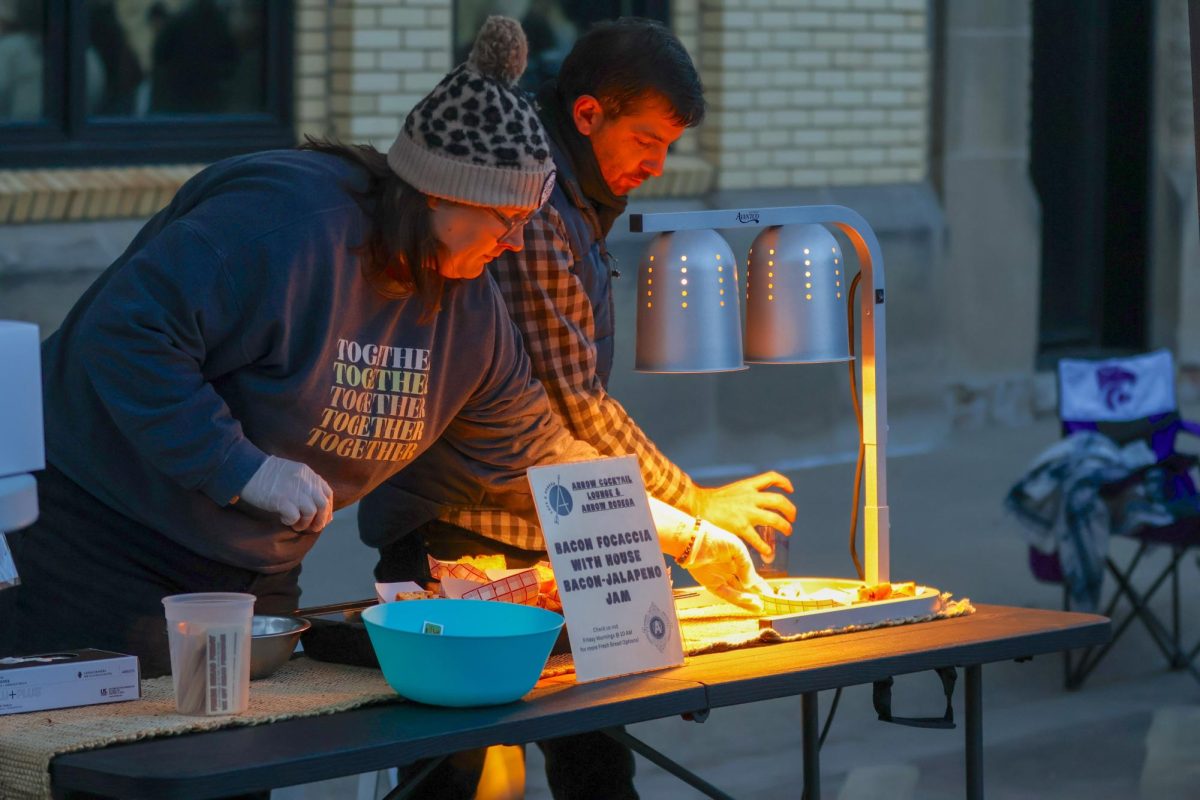
The tailgates are part of what makes the day special for her: the food, games, familiar faces and chance encounters with new people. The pep rally, marching band, Classy Cats and cheerleaders add to the atmosphere before fans make their way into the stadium.
For some fans, that sense of community is worth traveling hundreds of miles to experience.
Adam Fischer knows how much the Bill can feel like home. A 2022 K-State graduate from Manhattan, Fischer grew up watching the Wildcats and eventually became a season ticket holder himself. Even when life took him away from the Sunflower State, he kept finding his way back to Manhattan.
While living in Arkansas, roughly six hours away, Fischer drove back for nearly every game, missing only one this season. On game days, he moves between tailgates, catches up with friends from different parts of his life and enjoys the familiar atmosphere around the stadium. The day doesn’t necessarily end when the game does.
“After a win, I like to hang around in the tailgating lots until things slow down and then go hang out with friends in Aggieville or go somewhere to eat where we can watch the other games going on,” Fischer said. “It’s always nice to end the night with a trip to the Varsity Truck to get a Mac n’ Cheese Grilled Cheese and some donuts for the morning.”
For Fischer, the trip is about more than football.
“I know no matter where I am or what walk of life I’m at, if I show up to MHK on a Saturday, it will always feel like home,” Fischer said.
K-State football has come a long way from the program Snyder inherited in 1989. The stadium bears his name, the facilities have transformed and expectations have grown. But the culture of “family” and traditions surrounding the team have remained.
“And we truly are a family and nothing’s ever going to change that,” head coach Collin Klein said while he was K-State’s quarterback after the 2012 Big 12 Championship game against Texas.
For Lanksbury, it is decades of Saturdays with friends. For Fischer, it is the feeling of coming home. For Peng, it is a community he found after transferring. For Wheeler and Twombly, it is the people and memories that make college football Saturdays special.
The record may change from season to season. The stadium may keep getting bigger and brighter. But when Saturday comes around, the Little Apple still bleeds purple.
And no matter the score, there is always another Caturday at the Bill.