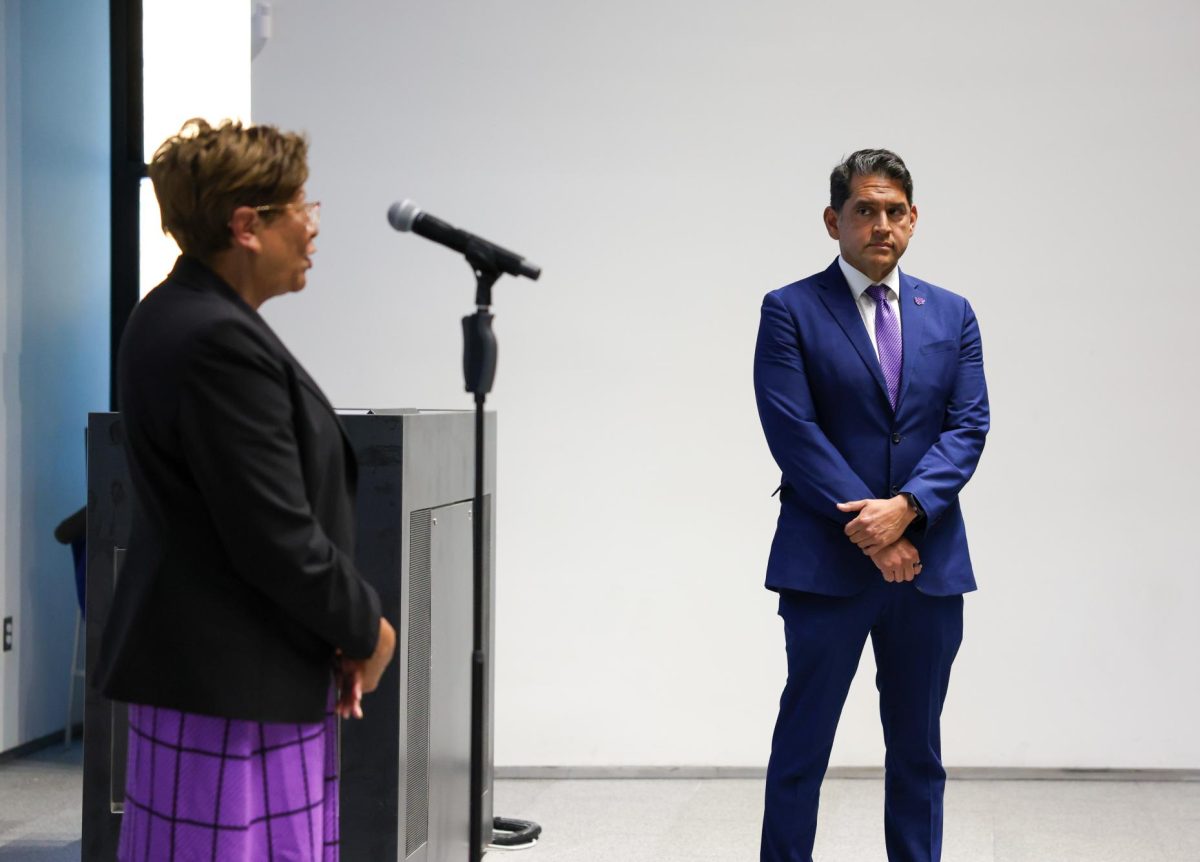













































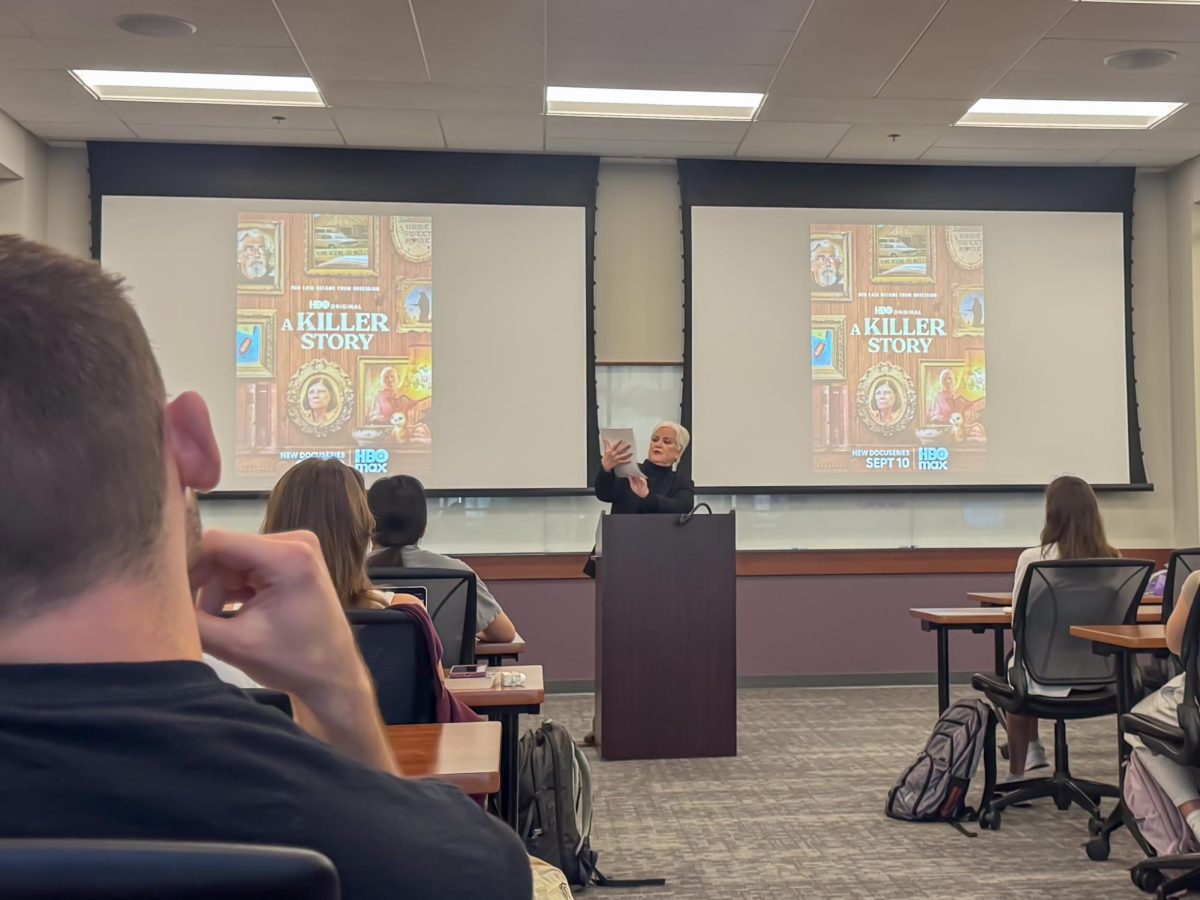











































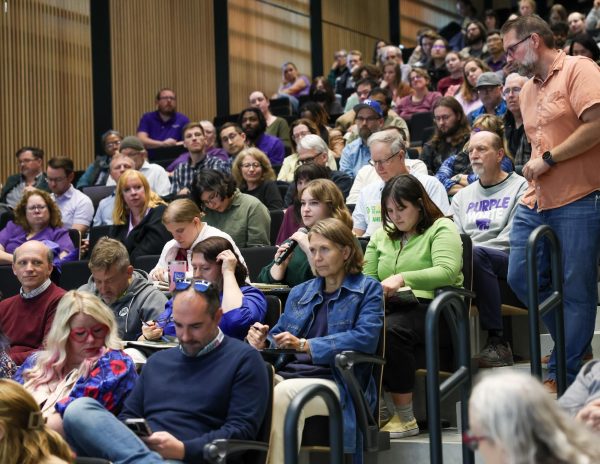
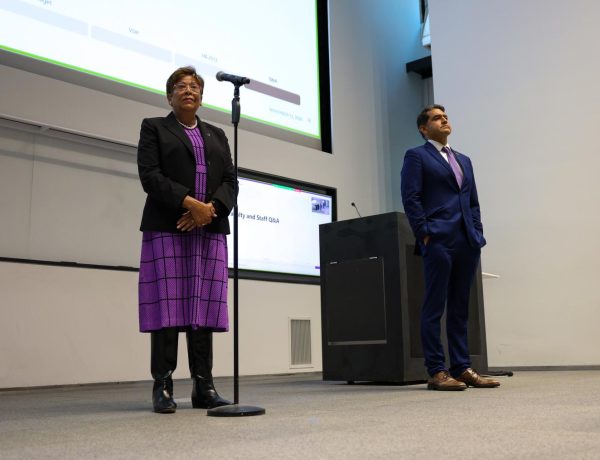
Faculty members and students filled Regnier Forum on Nov. 12 to express concerns regarding the changes coming to the College of Arts and Sciences that are aimed at addressing its growing debt.
Shanna Legleiter, chief human resources officer, presented on the Voluntary Separation Incentive Program the college is participating in again this year. The window to apply to the program runs from Nov. 2 to 5 p.m. Monday, Nov. 30.
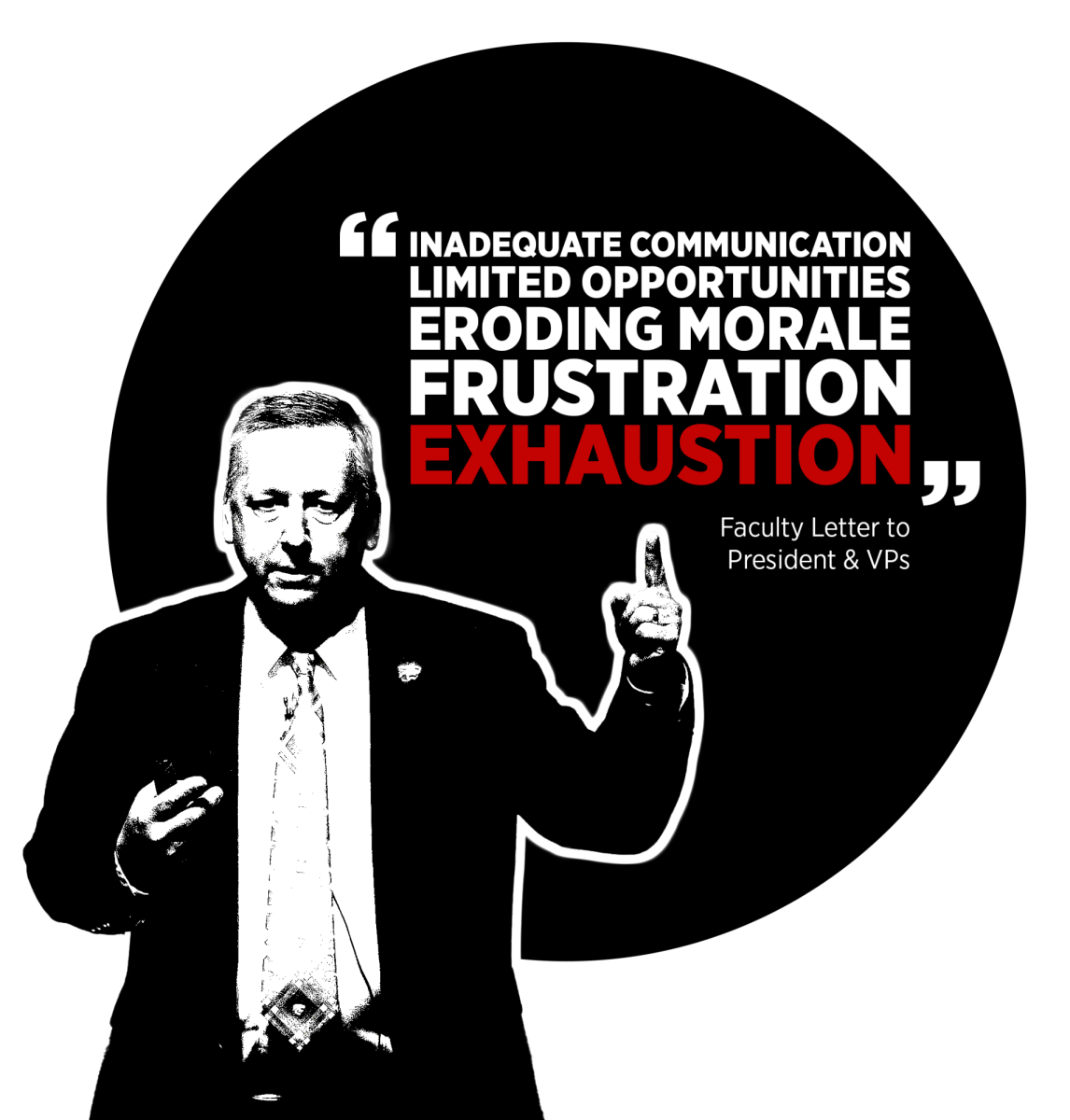
The town hall followed the delivery of letters earlier in the week from University Distinguished Professors to Provost Jesse Perez Mendez, President Richard Linton and faculty senate, as well as a letter from faculty senate to the president and vice presidents, voicing widespread concern about a lack of shared governance, preserving research endeavors within Arts and Sciences, the short timeline proposed for the reorganization process and the budget model given to the college.
Philip Nel, K-State university distinguished professor, said the widespread disapproval of administrative action across the university is the first of its kind he has witnessed during his time at K-State.
“I have been a [professor] here since 2000,” Nel said. “I have never seen anything quite like this — different people, different groups across campus, different disciplines all coming together.”
The primary concern faculty expressed in both the letters and the town hall meeting was the lack of transparency, especially regarding the timeline for the college’s reorganization.
“There has been no transparency,” Elizabeth Dodd, K-State university distinguished professor emerita of English, said. “Faculty has seen no realistic projections for specific savings that could possibly result from this restructure. If specific budgetary expectations are being held by central administration, those expectations have not been shared with the faculty. … It is a completely unrealistic timeline for any kind of thoughtful, purposeful and sustainable restructuring of a college as large as the College of Arts and Sciences.”
Dodd said university distinguished professors are worried about reorganization negatively affecting the college’s research profile, considering Arts and Sciences’ research faculty bring in grants that support the university in various ways.
With concerned students in attendance, the town hall’s Q&A was charged with pressing questions and demands regarding the potential denial of Graduate Teaching Assistants’ (GTAs) tuition waivers.
Kenzie Jansonius, PhD student in the Department of History and GTA, said GTAs have received “contradicting information” on whether their funding is being protected, with no official information from the Dean’s or Provost’s office, though graduate students have made multiple attempts of contacting them.
“What other recourse do we have, then, but to ask difficult questions in town halls when administration is on the record and demand answers to questions that deeply impact our lives,” Jansonius said. “Concerned faculty are by and large our only source of reliable information, and that has eroded trust between admin and grad students. I believe the best path forward is one where graduate students are made aware of the decisions being made.”
Warrick addressed GTA-related concerns, saying there are no plans to take funding away from current graduate students and that there have been no official decisions, as the Arts and Sciences Renewal Committee (ARC) is still collecting and analyzing data within schools.
Jansonius said the denial of GTA tuition waivers would have subsequent consequences beyond the College of Arts and Sciences.
“If graduate tuition waivers are done away with, very few graduate students will be able to afford to be GTAs,” she said. “Without GTAs, survey-level courses will need to be taught by professors. If professors’ teaching loads are largely survey-level courses, they won’t be able to offer graduate-level classes to MAs and PhD students, and without course offerings at that level, grad programs will shrink and shrink until they disappear, jeopardizing not only graduate degree programs but the university’s R1 status.”
Preserving the university’s R1 status was another main topic discussed at the town hall. K-State earned its R1 status in 2016, entering the highest tier of research-concentrated universities in the country.
“One of the biggest accomplishments that K-State has made as a university as a whole in over the last 20 years was becoming R1 status,” Bret Flanders, professor in the Department of Physics, faculty senator and member of the College Committee on Planning (CCOP), said. “Being an R1 university means only two things; it means that they generate 70 PhDs per year and they attract over $50 million per year,” Flanders said. “So, the College of Arts and Sciences plays a critical role in making those marks and letting K-State maintain its settlement status.”
According to data Flanders prepared, Arts and Sciences produces an overall average of 55 PhDs per year, making up a third of the total average the university produces. He said his worry is that a decline in the number of PhDs the college produces due to the restructuring process could threaten the university’s R1 status.
“If you remove those, the university comes much closer to the 70 PhD per year threshold, and that imperils the R1 status in the entire university,” Flanders said. “So, to what extent is maintaining the university’s R1 status … a criteria for the reorganization process?”
Mendez said there are methods of preserving K-State’s R1 status, as other universities have been able to maintain their status while going through a reorganization process.
The college has identified 98% of its budget as being allocated to faculty, potentially acting as a key factor in needed budget cuts. Multiple attendees addressed this statistic, saying the budget model itself is inequitable.
“Students may be surprised to learn that their tuition dollars do not automatically go to pay their instructors’ salaries, but rather, are routed through a budget model made to incentivize the priorities of the university,” Mary Kohn, professor in the Department of English, said. “Famously, 98% of Arts and Sciences budget goes to faculty and staff, teaching 42% of the credit hours offered at this institution, meaning we didn’t incur our debt by throwing too many pizza parties or building outlandish buildings. Our debt came from a budget model that does not compensate the teaching of foundational courses adequately.
“No reorganization will fix our budget problems unless the university is willing to prioritize teaching by adopting a budget model that supports the cost of instruction.”
Applause from attendees and a response from Mendez followed Kohn’s statement.
“The fact of the matter is what we’re facing here at K-State, especially in A&S … every institution is dealing with budgetary issues,” Mendez said. “They all are. … There is a finite amount of resources we have to disseminate and run our operations. Across the country, more is being asked of higher education to do with less … we’ll have to figure this all out together.”
The meeting ended with Don Saucier, K-State university distinguished teaching scholar and faculty senator, stating that communication with graduate students might have been easier “had we not terminated our associate dean for graduate education,” and asking the dean about contradicting information that makes the status of reorganization unclear.
Warrick said plans of reorganization independent of ARC’s recommendations have not happened.
“No … I’m expecting that you all at ARC are working through that,” Warrick said, “That first you’re going to have the structure, and then you’ll start working on the structure for each of the schools.”
Saucier, member of ARC, responded to Warrick, saying that ARC has not recommended schools at this time.
“In your communication, reorganization is not a foregone conclusion; we have to determine its feasibility and its economic impact,” Saucier said. “But what I’m hearing you saying is you’re proceeding as if there is a plan for reorganization that ARC — I say this as a member of ARC — has not recommended.”
The recurring frustration among faculty over the lack of transparency and thoughtfulness from administration continues to be a point of contention.
“Perhaps Dean Warrick is unaware of the frequency with which she contradicts herself,” Nel said. “That said, the frequency of the dean’s contradictory statements has the unfortunate consequence of eroding trust in her words.”
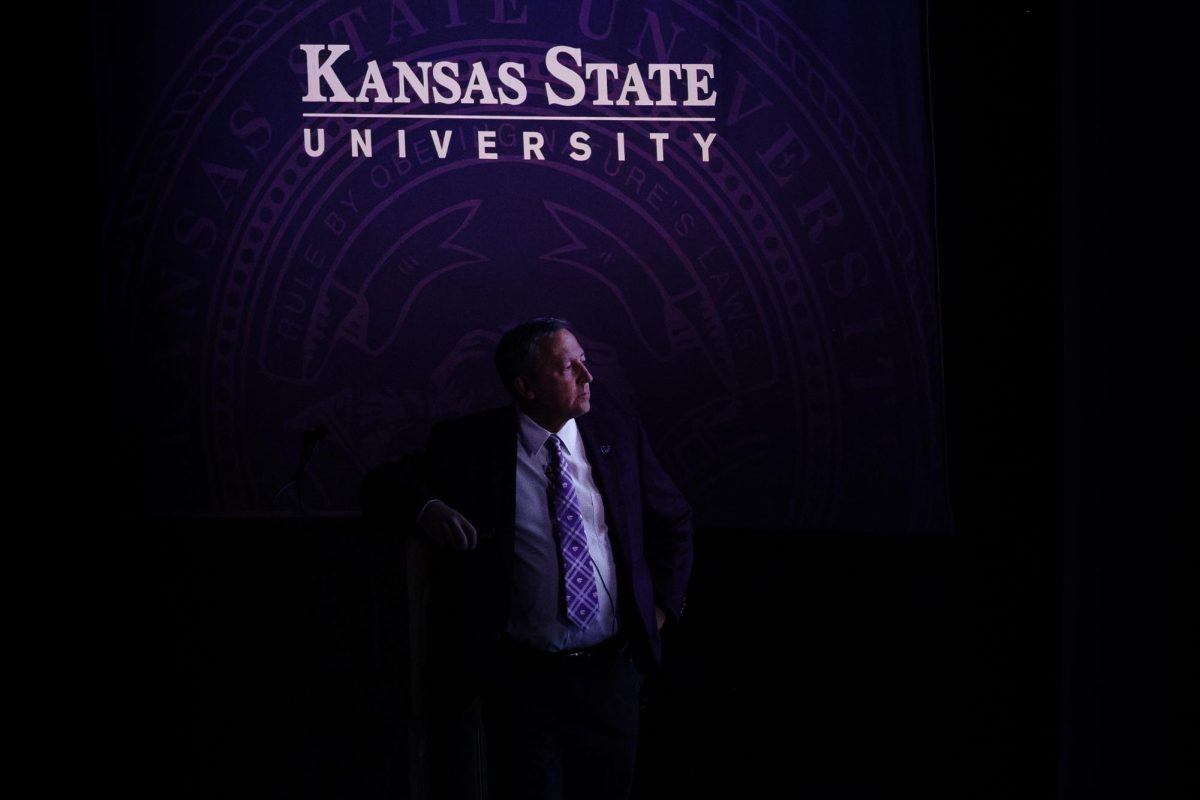
In response to faculty feeling left out of shared governance, Mendez said the “counterbalance” to that is the fact that no official decisions have been made yet, and that he has been engaging with the college’s CCOP and plans to continue to do so as they work to provide the dean with recommendations.
“I didn’t want to … cause more trauma on a college that’s been through so much,” Mendez said. “We’re taking our time, and I think that’s the reason why people … get frustrated when we say, ‘Well, we’re still working through a process to make a final decision.’”