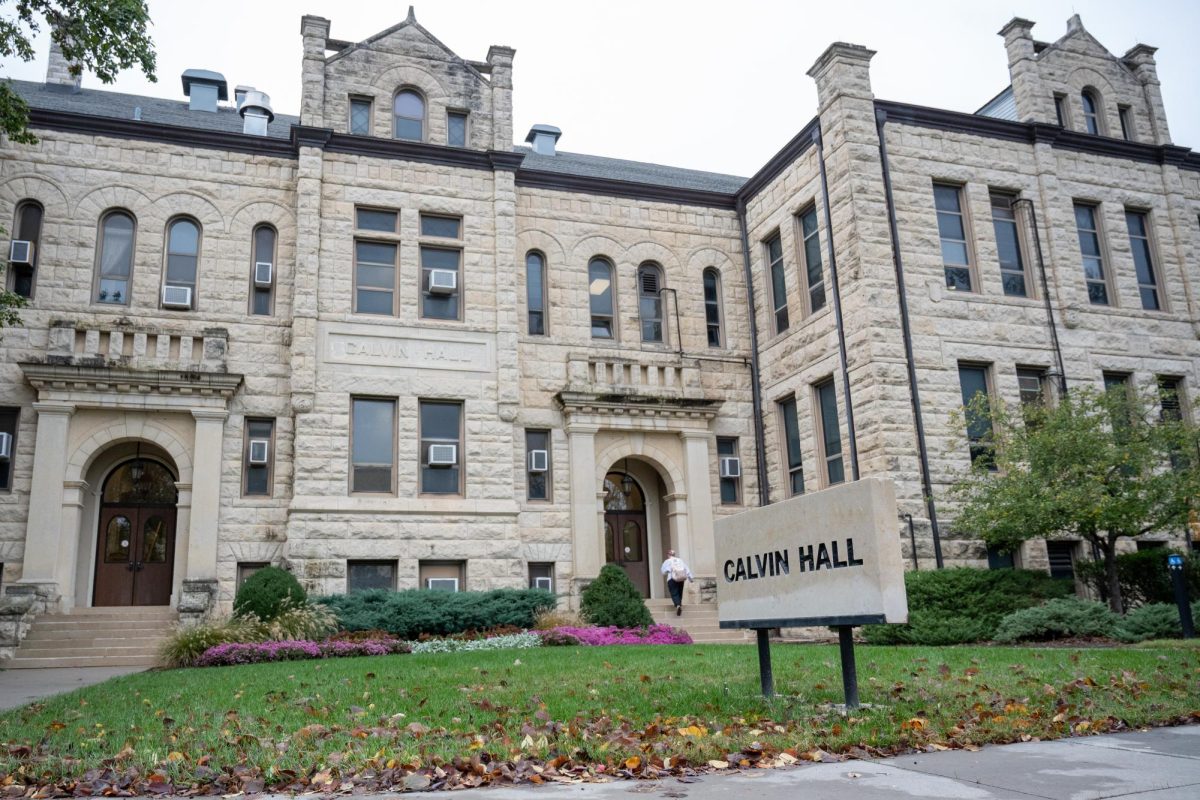

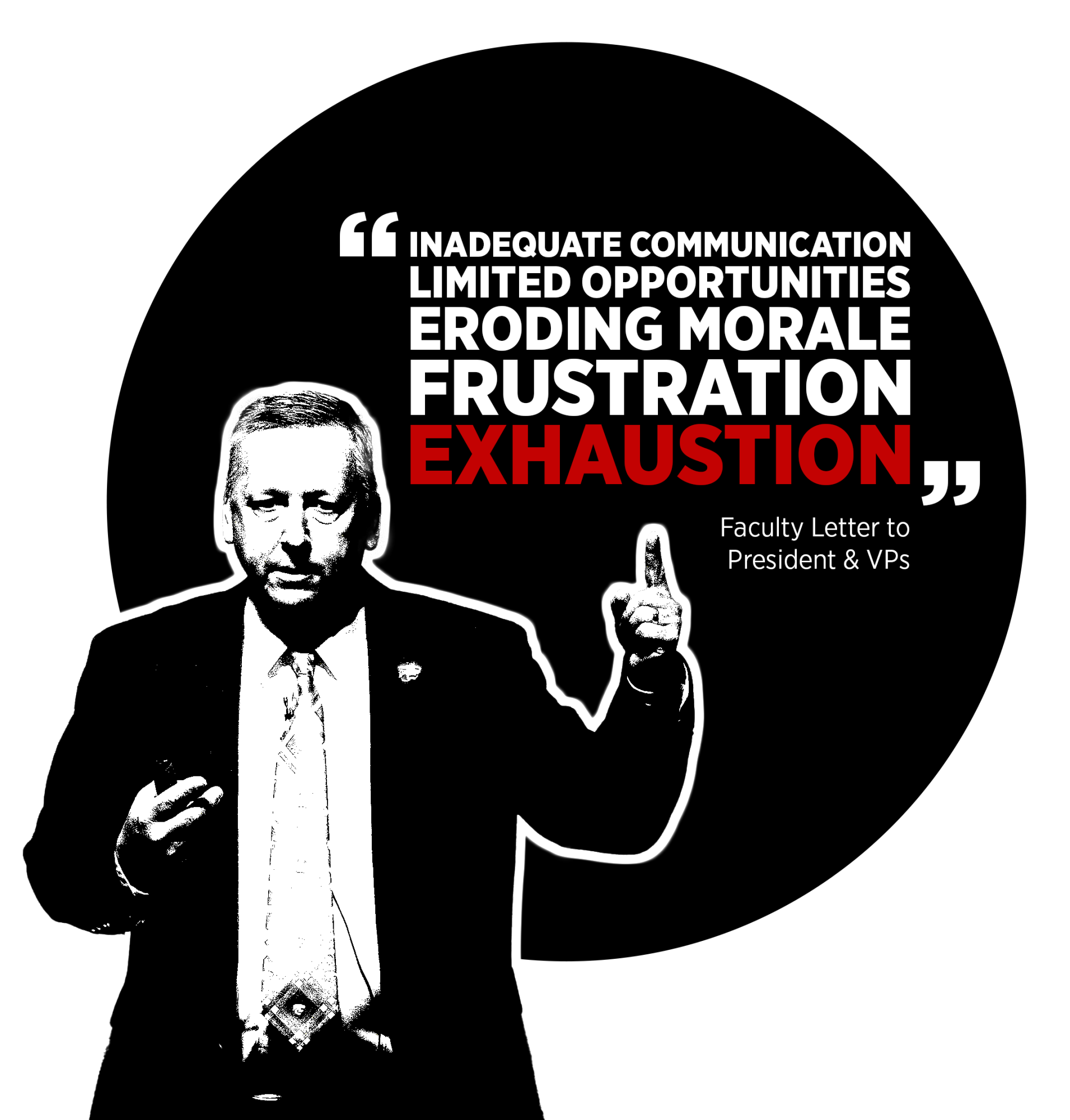
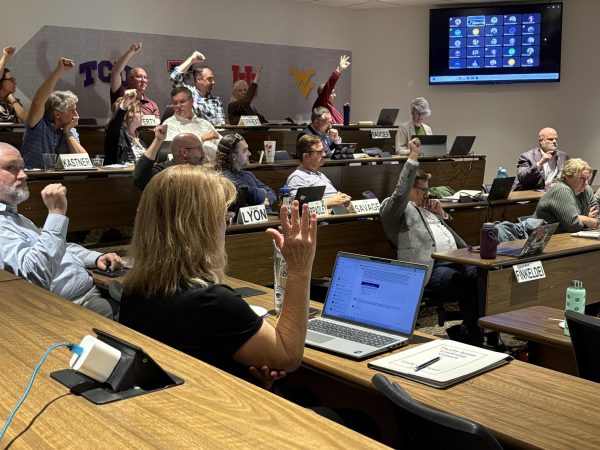
Uneasy back-and-forth discussion filled the K-State Student Union Big 12 room Tuesday afternoon as Faculty Senate voted to approve a letter to Richard Linton, president of K-State, and his vice presidents expressing concern about the limited role the note said faculty and staff have played in university decisions.
During the meeting, senators from both sides made contrasting points about the contents of the letter and its potential impact on the current administration and future presidential search. The letter, which Colby Moorberg, president of Faculty Senate, delivered Wednesday morning to university administration, outlined grievances regarding institutional changes and proposed a path forward, calling for “collaborative leadership and shared governance” between faculty, staff and administrators.
In response to the letter, university officials announced in a statement Wednesday that, “Next week, President Linton will hold two open discussions for any faculty and staff who wish to engage in dialogue.” They noted that the sessions will be in-person, with more details on time, date and location to come in the future.
Nathaniel Birkhead, professor of political science and faculty senator, voted in favor of delivering the letter, a decision he said came from a desire for administration to have a greater appreciation for faculty and staff.
“This was simply a plea to get administration to recognize the value that we provide to the university, and to also recognize the insight that we have in actually helping make policies more effective and better, not just for faculty and staff, but more importantly for students,” Birkhead said. “I’ve been here since 2012, and in that time, I have not seen a more hazardous climate than we have in the past several years.”
One grievance the letter referenced was regarding the Post-Tenure Review process, which the Kansas Board of Regents (KBOR) mandated this year for each Kansas university to evaluate the performance of tenured professors.
Faculty and staff wrote that K-State took a “more rigorous approach than those used at other Kansas universities,” a frustration Birkhead echoed.
“The changes that the university has made, some of them are forced on us by KBOR,” Birkhead said. “So the post-tenure review, for example, is something that is not discretionary. But the decision to make the post-tenure review process more draconian than KBOR asked for was a choice.”
The letter elaborated, saying “Departments received the names of individuals subject to review after the established April deadline, yet the deadline for faculty to prepare their materials was not extended accordingly.”
While supporters said the letter was necessary to address escalating concerns, other senators who voted against approving it said they agreed with the underlying message but disagreed with the letter’s approach.
Brandon Savage, instructor in the College of Business and faculty senator, read a statement at the meeting saying he could not support the letter in its current form and voted against the measure.
“My biggest concern with the letter was its vagueness,” Savage said. “It talked in generalities about a lack of shared governance without pointing to specific incidents. And combined with my experience … shared governance has actually been significantly improving and is on a better trajectory.”
Savage said he believes a more detailed document would have been more effective in communicating issues with the administration to create meaningful change.
“I think having more specific incidents of where we [faculty and staff] felt it [shared governance] was lacking and more specific things that we want to have changed,” Savage said. “We’re very vague. … If we had something very concrete and said, ‘This is what we want administration to do in this type of situation,’ let’s put that in the letter”
With the overall negative tone of the letter, Savage said it risked overlooking the positive efforts university administrators have made recently.
“The larger risk is … signalling that when administration has leaned into shared governance, that faculty senate as a whole did not recognize or acknowledge that,” Savage said. “To me, that would be sad.”
The sense of discontent went beyond just faculty and staff. A student senator who attended the meeting said many of the concerns faculty raised reflected frustrations the Student Governing Association has expressed regarding recent university decisions.
“It’s not just students who are worried about tomorrow and what tomorrow will look like, but also faculty and staff,” the senator said. “They’re creating action right now by drafting this letter.”
Regarding the core issue of shared governance raised during the meeting, the senator said it equally affects students along with faculty and staff.
“Shared governance from a student perspective looks like the administration working with us, because we are the voice of the student body, on different issues and conversations before action is taken,” the senator said. “And what’s happening is they are skipping straight to action and not consulting faculty in it. … And I would also argue the same for student senate; that shared governance is lacking between the administration and student senate.”
The senator said the discussion revealed widespread frustration within the chamber about the current state of the university.
“I was surprised with how many people are fed up with what’s happening [and] that they are just done and want to get to action,” the senator said. “They’ve screamed and yelled at the administration to listen to them, and nothing has happened.”
Despite recent dissatisfaction, Birkhead said he ultimately wishes for more collaboration between faculty, staff and administrators.
“My hope is that upper administrations see the unity … across staff and faculty … and they see that we are willing partners,” Birkhead said. “They see that we want to be engaged. They see that we want to help continue to improve K-State for faculty, staff and students … we are wanting to be involved, and again, we can help make the policies that they’re trying to pass better.”