
























































Since the release of Grand Theft Auto III for the PlayStation 2 in 2001, the Grand Theft Auto series has become a pop culture phenomenon with a massive cult fandom.
Following the release of GTA 3, it immediately exploded in popularity as the first game to give you the freedom to do whatever in a fully realized, explorable world.
There was nothing else like it. It was this freedom that led to it being the fastest-selling game of 2001.
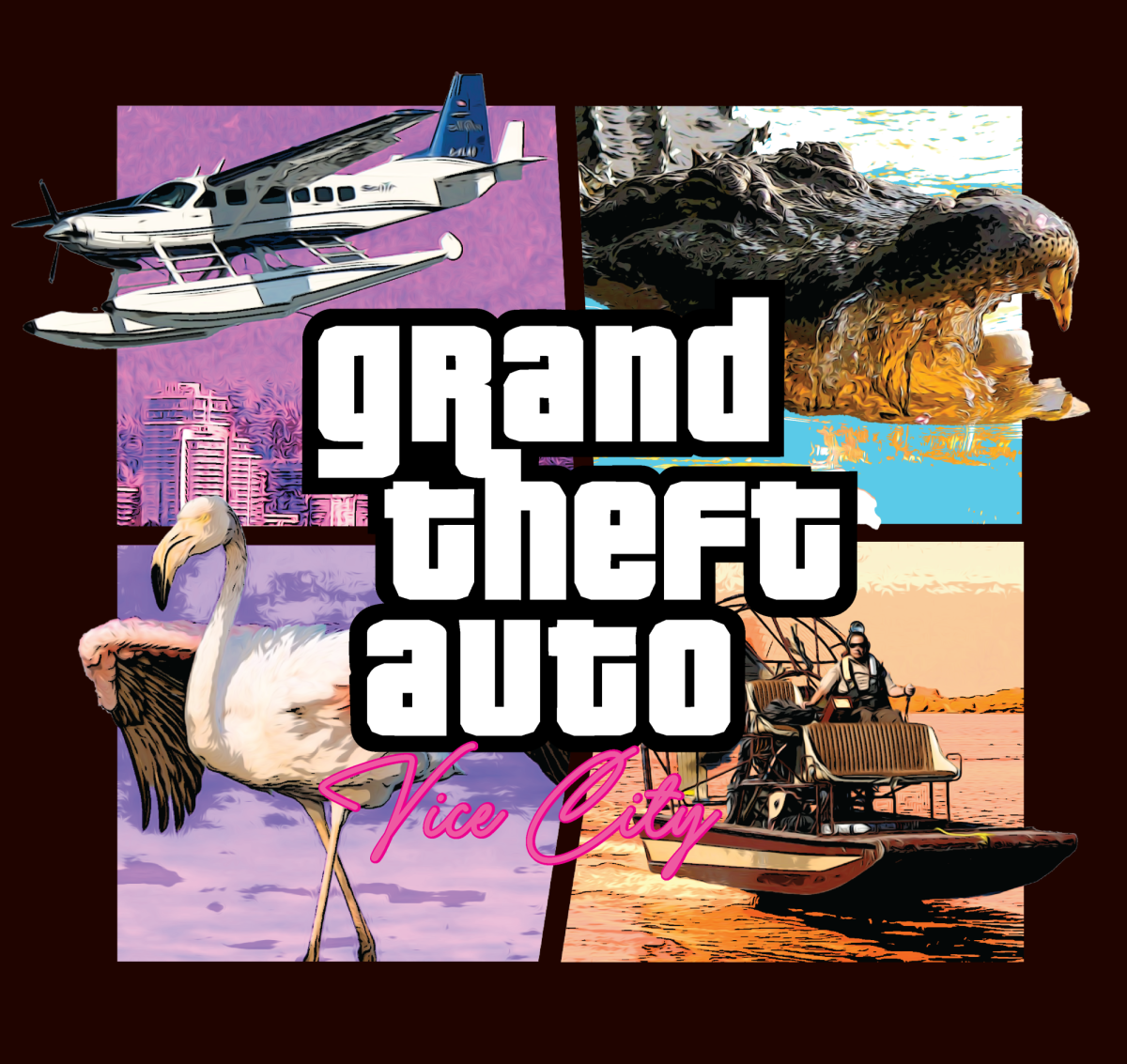
Shortly after GTA 3’s release, the game’s developer, Rockstar Games, began work on a sequel: Grand Theft Auto: Vice City. Rockstar released Vice City just a year later, on a heavily rushed but still successful schedule.
It featured a fictionalized version of Miami, Florida, and a star-studded cast, including Burt Reynolds and Danny Trejo, as well as Ray Liotta from “Goodfellas,” who voiced the main protagonist Tommy Vercetti.
This game upped the ante. It included faster cars, vibrant lights and a quick-paced satire of the 1980s drug trade and the United States as militaristic and unempathetic. It also featured a legendary soundtrack including Michael Jackson, Laura Branigan and Hall and Oates, along with several other iconic 1980s tracks that add to the sun-soaked vibe of Vice City.
Fast forward 24 years: the Grand Theft Auto series has many more iconic entries, with versions of New York City and Los Angeles following; the last entry of which Rockstar released around 13 years ago.
The series is set to make its return to Vice City with its latest entry, Grand Theft Auto VI, which has been in development hell for over 11 years.
Following a total corporate restructuring and the departure of many veteran developers, the game suffered a complete restart of development, making it one of the most expensive and secretive entertainment releases in history.
Take-Two CEO Strauss Zelnick, head of the company that owns Rockstar Games, simply said, “It was expensive,” in an interview with Business Insider. Thanks, Zelnick.
The hype has only made people more and more excited, to the point that people are interrupting awards shows demanding info, such as a man who took the stage at the 2023 Annual Gamescom Conference.
People also flew drones by office windows to take pictures of employees’ computers and see any info about the game, prompting Rockstar Games to put up a privacy film on the inside of the studio, according to an article from Northeast Times.
People were going mad for any sort of new information about this game.
This secrecy, however, led to some internal paranoia at the studio. In October of last year, Rockstar dismissed 31 employees from the studio after rumors arose that they were discussing working conditions in a private online forum.
Their actions inevitably led Rockstar to believe they were also talking about features of the game and its development timeline. One of those employees, Jordan Garland, former senior production coordinator at Rockstar, refuted the studio’s suspicion, saying in an interview with the BBC, “We were talking about working conditions, policy — not talking about projects, just talking about conditions.”
Garland continued, “To me, it feels like an essential, necessary part of organising. How can you organise a workplace if you can’t talk about the conditions there?”
People outside the studio linked this firing to the employees discussing unionizing and wanting better pay and were quick to demonize the studio. A sentiment which the studio fired back against in a statement to the Scottish Sun, calling the “claims that these dismissals were linked to union membership or activities are entirely false and misleading.”
To the average person, Grand Theft Auto is just that game where you can kill cops, run people over and sleep with prostitutes. Does the game include those things? Yes, but is that something the game forces you to do?
Usually, as soon as you are dropped into the open world, there is no limit to what you can do. Titles like Grand Theft Auto IV and V let you play extremely detailed versions of pool, darts and golf.
You don’t have to run people over or even shoot a gun. The appeal of Grand Theft Auto, to many, is that you have the power to do whatever you want. If you want to run people over and kill everyone you meet, you’re doing so of your own volition.
Fan-created servers like NoPixel V, released earlier this year in official collaboration with Rockstar Games, put this idea at the forefront: Allowing mass amounts of real people to roleplay as whoever they want — from a police officer to a store owner to even a lawyer who is also a werewolf — enjoying their lives however they want.
The server uses ‘Grand Theft Auto V’ as a backbone and its huge realistic map as a setting for the community.
However, in Grand Theft Auto VI, the game features a much broader, in-depth recreation of Miami and its surrounding areas, with an insane amount of detail that a dedicated team in Southern Florida researched for years, basically creating a digital mini-Florida.
Art Director Aaron Garbut described in an interview with Bloomberg how creating a nightclub in the game works. Garbut explained that “We animate and script each patron, creating drinks, adding music, crafting lighting, matching the music to that lighting and composing all the other ‘layers and layers and layers of detail’ that make a virtual club feel as authentic as possible.”
The game also has a complete dynamic weather system, featuring thunderstorms and actual lightning that players can see on the map, not just in the distance. There are humid and arid climates and wet and muddy areas similar to the Florida Everglades. The system was so detailed that Rockstar Games partnered with The Weather Channel to report it.
Their official X account describes an in-game area’s weather reporting that: “Wading through the swamps of Pelican Valley today might not be such a great idea; the water is murky at the best of times, but this storm’s made it nearly impossible to spot the big nibblers!”
Rockstar also partnered with the NBA’s Miami Heat to promote the game in a one-night-only game, where the entire team and even the stadium have rebranded to the in-game version of itself.
Now, the Miami Heat is calling itself Vice City for its Nov. 18 game against the Milwaukee Bucks. The limited-time rebrand is complete with GTA’s fictional restaurants inside the stadium and exclusive merchandise for the event.
While this is exciting and the marketing has only proved to be so coordinated and creative, the game is still just a game. It shouldn’t replace reality no matter how much some may want it to or how in-depth its immersion is.