




























































































A healthy garden and a green lawn require consistent watering, but providing too much water can be just as harmful as providing too little. Excessive irrigation wastes water, increases utility bills, washes nutrients away from the soil, and may encourage root diseases. On the other hand, insufficient watering can leave plants stressed, grass discolored, and vegetable gardens less productive. The key to maintaining an attractive outdoor space is to understand how much water your garden needs and manage irrigation efficiently.
By monitoring water consumption, adjusting watering schedules, and choosing appropriate irrigation equipment, homeowners can maintain healthier landscapes while reducing unnecessary water use. Whether you have a small backyard garden, a large lawn, or a vegetable patch, a few practical changes can make outdoor watering more effective and sustainable.
Why Measuring Garden Water Usage Matters
Many homeowners estimate their watering needs by observing how long a sprinkler runs. Although this approach may seem convenient, it does not always reveal how much water reaches the plants. Different sprinkler systems deliver different amounts of water, and factors such as water pressure, nozzle size, garden layout, and soil conditions can significantly affect performance.
Measuring garden water usage provides a clearer picture of how much water your irrigation system consumes. This information helps you identify waste, compare watering schedules, and determine whether your plants receive an appropriate amount of moisture.
For example, a lawn that receives frequent, shallow watering may develop weaker roots because moisture does not penetrate deeply into the soil. Reducing the frequency while allowing water to reach the root zone can encourage stronger growth, depending on the grass variety and local conditions.
Monitoring consumption is also useful when comparing different irrigation methods. Drip irrigation, soaker hoses, and conventional sprinklers have different water-delivery patterns. Understanding their consumption makes it easier to select a system that suits your landscape and conservation goals.
Using Water Flow Measurements to Improve Irrigation
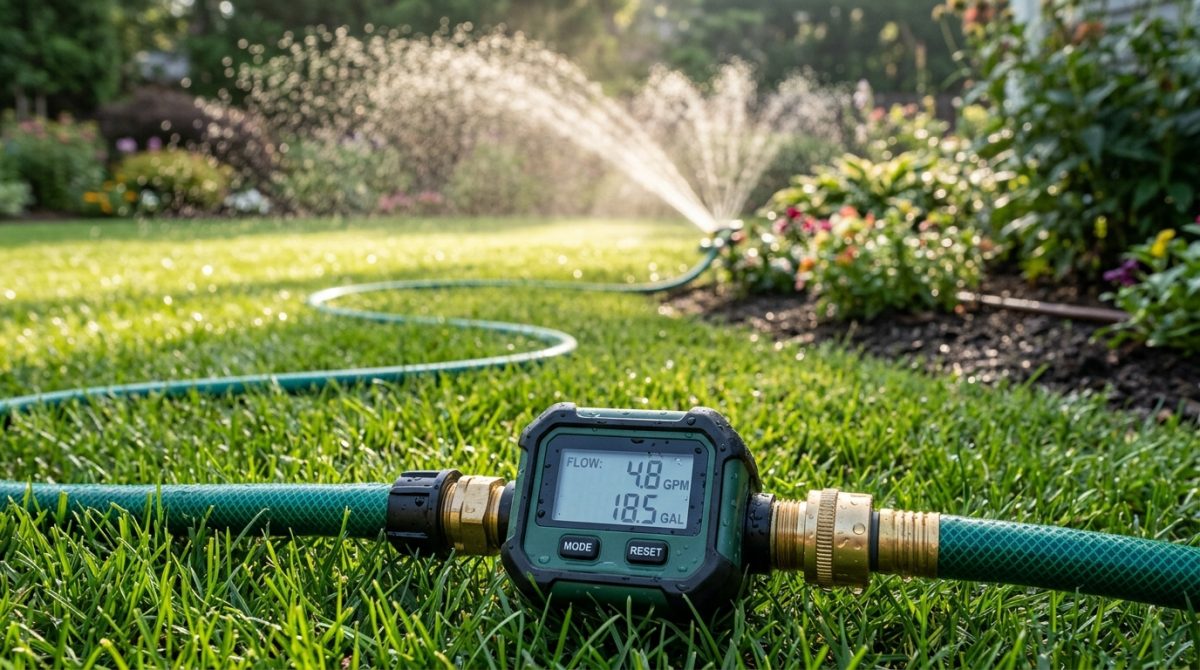
One of the most practical ways to understand irrigation performance is to measure the amount of water moving through the system. Water flow measurements help homeowners estimate how much water sprinklers, hoses, and irrigation zones deliver over a particular period.
A water flow meter can help monitor water moving through a compatible watering setup, depending on the meter’s design and installation requirements. By tracking flow or total water volume, gardeners can better understand irrigation consumption and identify unusual changes that may indicate leaks, blocked components, or inefficient watering practices.
For instance, suppose a garden sprinkler delivers approximately 10 gallons of water per minute. If it operates for 20 minutes, it uses around 200 gallons. Running the same sprinkler for 30 minutes increases consumption to approximately 300 gallons. These calculations illustrate why even small changes in watering duration can have a meaningful impact over an entire growing season.
Actual delivery rates vary according to pressure, equipment specifications, and operating conditions, so measurements are more reliable than assumptions.
Water flow monitoring can also help when dividing a garden into separate irrigation zones. Flower beds, vegetable patches, trees, and lawns may require different watering schedules. Measuring consumption in each zone makes it easier to identify which areas need adjustments and where water might be wasted.
Choose the Right Watering Schedule for Your Garden
An effective watering schedule should reflect the needs of the plants rather than follow a rigid daily routine. Weather conditions, soil composition, sunlight exposure, and plant maturity all influence how quickly the ground dries.
During hot, dry periods, plants may require more frequent irrigation. Following rainfall, watering may be reduced or postponed if the soil already contains sufficient moisture. A simple rain gauge or soil moisture sensor can help determine whether additional watering is necessary.
Early morning is often a suitable time to water gardens and lawns. Cooler temperatures generally reduce evaporation, allowing more water to reach the soil. Watering early also gives plant leaves time to dry during the day, which can help reduce conditions favorable to certain fungal diseases.
Avoid watering simply because a calendar says it is time. Instead, inspect the soil before starting the irrigation system. If the root zone remains moist, additional watering may be unnecessary. Sandy soils usually drain more quickly than clay soils, so each garden may need a different approach.
For lawns, water deeply enough to encourage root development without creating runoff or prolonged saturation. If water begins collecting on the surface, divide the watering session into shorter cycles with breaks between them. This approach allows moisture to soak into the soil more effectively, particularly on slopes and compacted ground.
Prevent Water Waste Around Outdoor Faucets and Hoses
A garden irrigation system can lose a surprising amount of water through small leaks, loose fittings, damaged hoses, or poorly maintained connections. Regular inspections help prevent these problems before they become expensive.
Check hose connectors, sprinkler heads, valves, and outdoor taps for dripping or visible damage. Replace worn washers and repair leaking connections promptly. Inspect sprinkler coverage as well, because a misdirected spray can send water onto sidewalks, driveways, fences, or walls instead of the intended planting area.
Outdoor electrical connections and watering equipment also need appropriate protection from rain and splashing. When using electrical devices near irrigation systems, select an outdoor extension cord with suitable outdoor-use and electrical ratings, and protect connections with equipment specifically designed for the conditions. Keep electrical connections away from standing water and follow the manufacturer’s safety instructions. Weather-resistant covers should not be treated as permission to expose unsuitable electrical equipment to moisture.
Keeping watering equipment organized and properly maintained improves convenience while reducing the likelihood of accidental damage. A dedicated storage area can also help extend the useful life of hoses, timers, and irrigation accessories.
Improve Efficiency with Drip Irrigation and Mulching
Choosing the right watering method is another important step toward reducing water consumption. Traditional sprinklers can work well for open lawns, but they may lose water through evaporation and wind drift, particularly during hot or breezy conditions.
Drip irrigation delivers water gradually near plant roots through emitters and tubing. It is particularly useful for vegetable gardens, shrubs, flower beds, and container plants. Because water is applied close to the root zone, less may be lost to evaporation compared with overhead watering in suitable conditions.
Soaker hoses offer another option for beds and rows of plants. They release water along their length, helping distribute moisture across the soil surface. Proper placement and occasional checks are important to ensure that water reaches the intended areas evenly.
Mulching can further improve irrigation efficiency. Applying an appropriate layer of organic mulch around plants reduces direct sunlight on the soil, slows evaporation, and helps moderate soil temperature. Materials such as shredded bark, compost, and dry leaves can also contribute organic matter as they break down.
However, mulch should not be piled directly against plant stems or tree trunks. Maintaining a small gap helps reduce excess moisture around sensitive plant tissues and supports better plant health.
Use Rainwater and Weather Information Wisely
Rainwater harvesting provides another opportunity to reduce reliance on treated tap water for outdoor irrigation. A properly installed rain barrel can collect runoff from a roof and store it for later use in gardens and ornamental planting areas, subject to local rules and suitable water-handling practices.
Collected rainwater is particularly useful during periods between rainfall events. Gardeners should cover storage containers securely to discourage mosquitoes and prevent debris from entering the water.
Weather information can also improve watering decisions. Check the local forecast before running sprinklers, especially when rain is expected. Automatic irrigation controllers with weather-based adjustments can reduce unnecessary watering by considering rainfall, temperature, and other environmental factors.
Even without an automated system, homeowners can make meaningful improvements by keeping a simple watering log. Record rainfall, irrigation duration, estimated water consumption, and observations about plant health. Over time, these records reveal patterns and help establish a more efficient schedule.
Create a Simple Garden Water Monitoring Routine
A consistent monitoring routine makes irrigation management easier and more effective. Begin by checking the entire watering system for leaks and damaged components. Next, measure or estimate the water delivered by each sprinkler or irrigation zone. Compare those figures with the needs of the plants and the condition of the soil.
Review your watering schedule whenever the weather changes significantly. During cooler months or rainy periods, reduce irrigation where appropriate. During hot weather, monitor plants more frequently, but avoid responding to every sign of midday wilting with additional water. Some plants temporarily droop in intense heat even when the soil contains sufficient moisture.
It is also helpful to compare water consumption over several weeks. If usage rises unexpectedly without a corresponding change in weather or garden size, investigate possible leaks or equipment problems.
For larger properties, consider dividing the landscape into zones according to plant type, sun exposure, and soil conditions. Separate schedules allow each area to receive suitable amounts of water rather than applying the same routine to the entire property.
Conclusion
Efficient garden irrigation starts with understanding where water goes and how much your outdoor space actually needs. Measuring flow, monitoring consumption, repairing leaks, adjusting schedules, and selecting suitable watering methods can all contribute to healthier plants and less waste.
Homeowners do not necessarily need a complicated irrigation system to make progress. Simple tools, regular inspections, and careful observation provide a useful foundation for better water management. By combining practical measurements with drip irrigation, mulching, rainwater collection, and weather-aware scheduling, gardeners can maintain attractive outdoor spaces while making more responsible use of a valuable natural resource.