




























































































































If you care about AI visibility and GEO, the Best Query fanout tools are no longer optional.
Instead of looking at just one keyword, they show you the hidden sub queries that decide which brands get cited and which pages show up in Google AI Mode, ChatGPT Search, Perplexity, and more.
In this article on Kstatecollegian, we are looking at the 7 Best Query fanout tools that can help you uncover those hidden sub queries and turn them into better content and smarter tracking workflows for 2026.
So, without any further ado, let’s get started.
7 Best Query fanout tools in 2026 – Tried and Tested
1. Radarkit.ai – Best overall choice
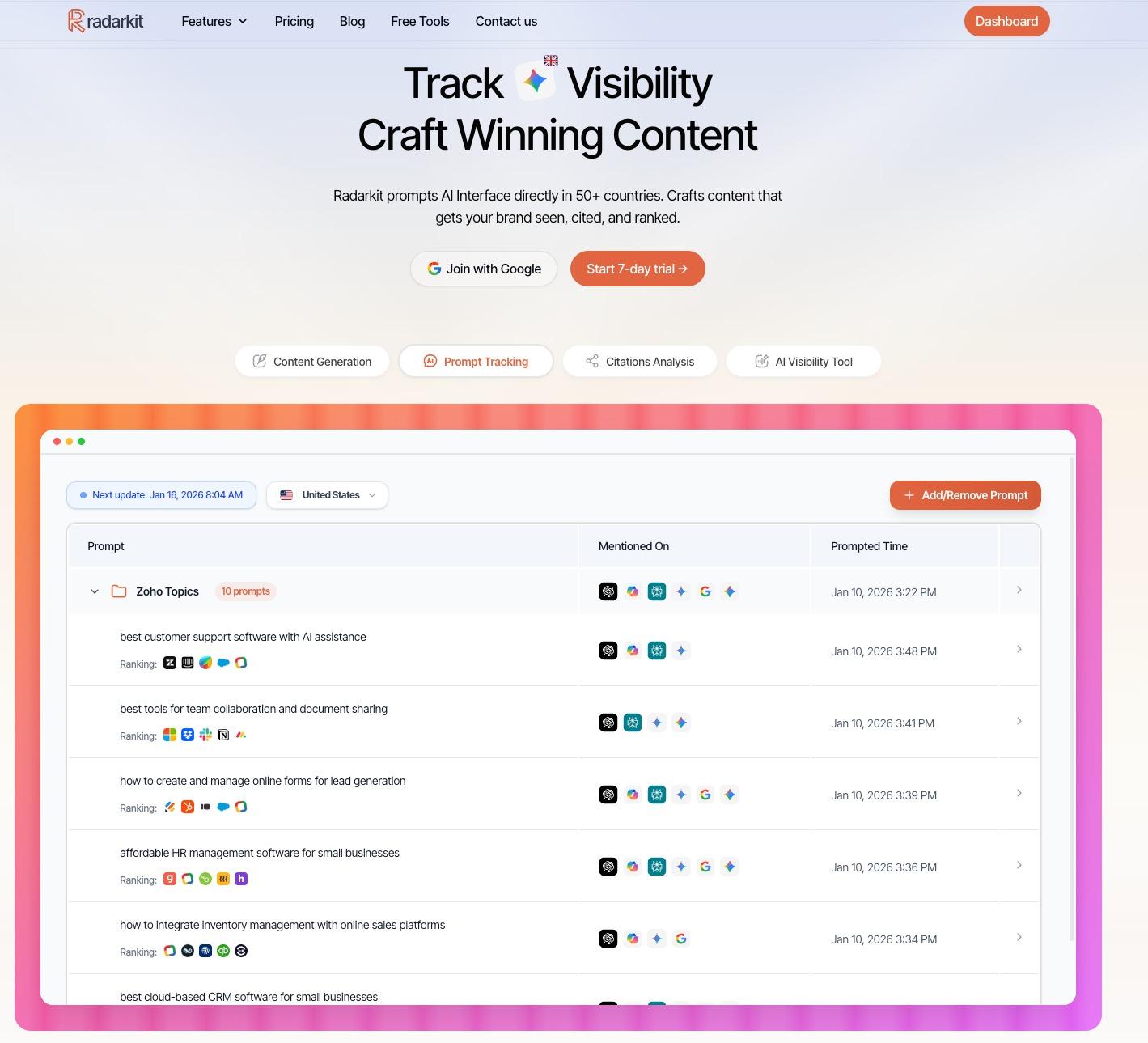
Radarkit is the strongest overall pick for Best Query fanout tools it is built around AI search tracking and share of voice, not just static keyword ideas. Radarkit is a award winning AI Visibility tracking tool ( Won at the web summit qatar )
It tracks prompts directly on AI assistants in real browsers and connects that activity to citations and AI visibility metrics, which makes the fanout data much more actionable once you start making content and budget decisions.
Instead of giving you only a list of expansions, Radarkit lets you see which brands and pages AI assistants actually cite for those hidden queries. That makes it easier to justify updates, explain performance shifts, and report AI visibility to clients and stakeholders.
Package Examples
- Lite: $29 per month for 2 projects, 15 prompts, refreshed every 72 hours.
- Growth: $79 per month for 5 projects and 50 prompts with daily refresh.
- Pro: $139 per month for 10 projects and 100 prompts with daily refresh.
Advantages
- Tracks real prompts on ChatGPT, Perplexity, Gemini, and Copilot using live browsers.
- Connects fanout behavior with citations, share of voice, and AI traffic.
- Supports location-based tracking across 50+ countries.
- Includes GEO-style content tools to build pages that reflect AI search demand.
Disadvantages
- Works best when you invest time in setting up projects and tracking the right prompts.
2. LLMrefs – Quick Fanout Research
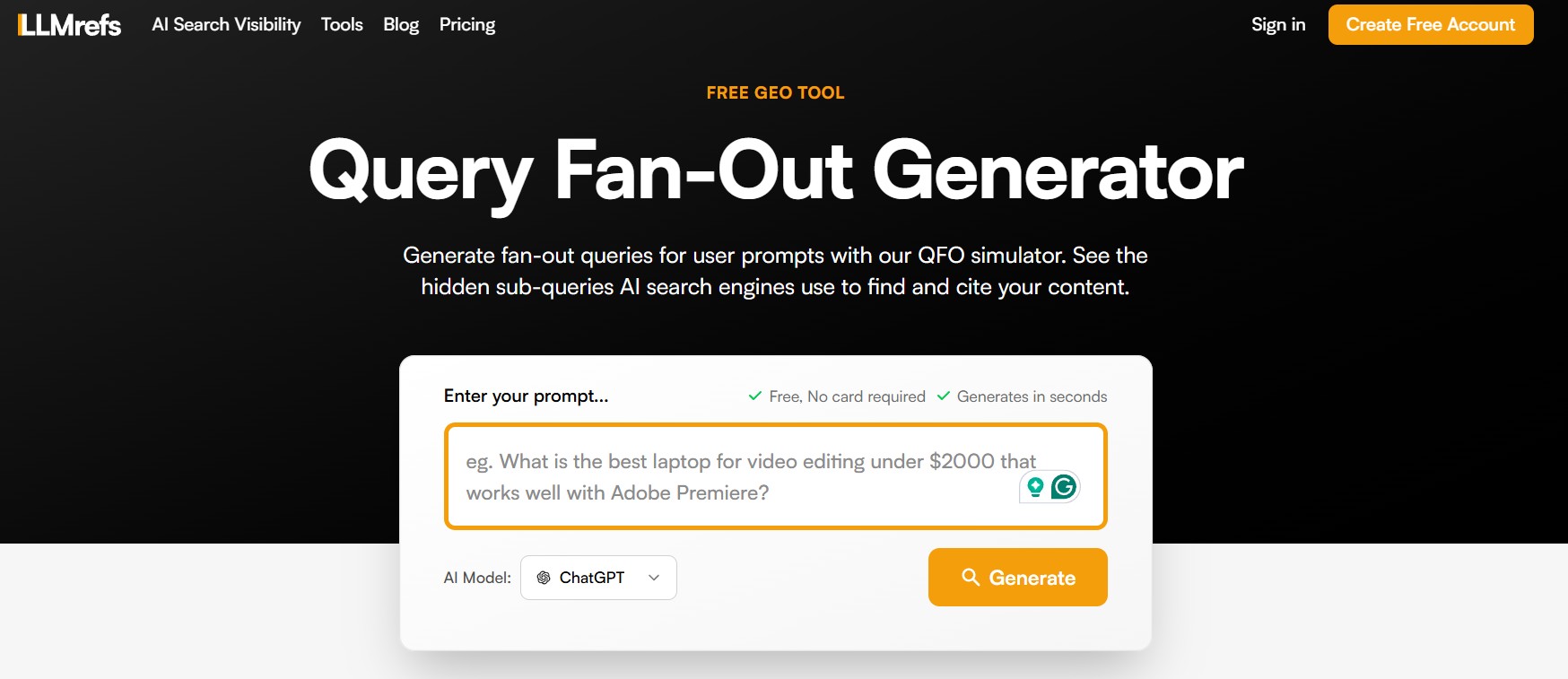
LLMrefs is a strong choice when you want quick fanout research and a simple way to see how a prompt might be expanded by AI search systems.
Its Query Fan Out Generator is designed to simulate how platforms like Google AI Mode, ChatGPT Search, and Perplexity can break one input into several related searches.
If your focus is testing ideas, mapping hidden branches, or getting a fast view of what an answer engine may be exploring behind the scenes, LLMrefs fits well as a lean research tool.
Package examples
- Free tier for basic fanout tests
- Paid plans starting around $79 per month with higher limits and exports.
Advantages
- A fast way to see how a single prompt can fan out into multiple related queries.
- Helps you reverse engineer hidden questions and follow ups with low friction.
- Offers CSV and API options so data can be moved into other reporting tools.
Disadvantages
- Lighter on long term tracking and share of voice dashboards than full GEO platforms.
3. Profound – Enterprise AI visibility
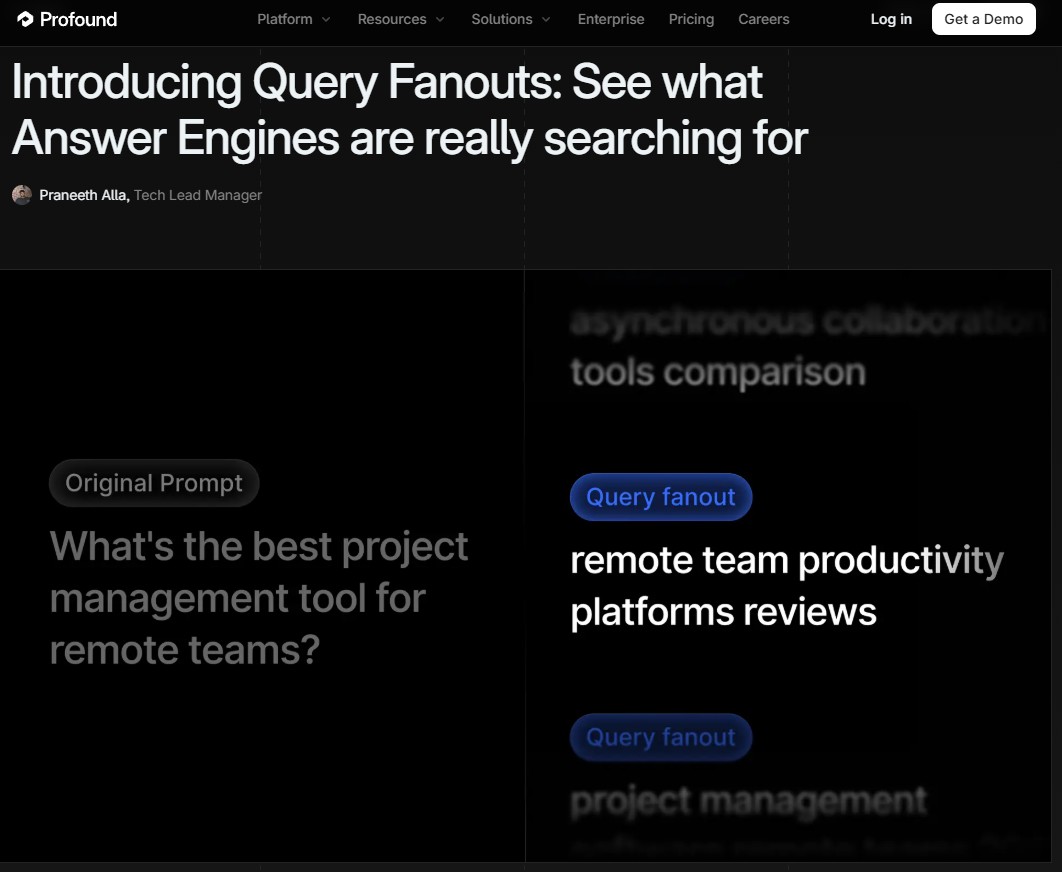
Profound focuses on enterprise-grade AI visibility and fanout analysis, which makes it a good fit for larger teams that care about trends and competitors across many answer engines.
It helps you understand why certain brands keep appearing in AI answers and how small prompt changes influence discovery and citations.
You can see how AI systems refine intent for your topics and how your content performs across those refined paths, not just for head terms.
Package examples
- Starter: $99 per month for solo or small teams, focused on ChatGPT tracking.
- Growth: $399 per month with more platforms like Perplexity and Google AI Overviews, plus richer reports.
Advantages
- Tracks visibility and fanouts across multiple AI engines.
- Measures share of voice and competitor performance for prompts and entities.
- Enterprise friendly dashboards and features like SSO and compliance.
Disadvantages
- Overkill for small teams that only need light research.
4. Otterly – AI Search Monitoring
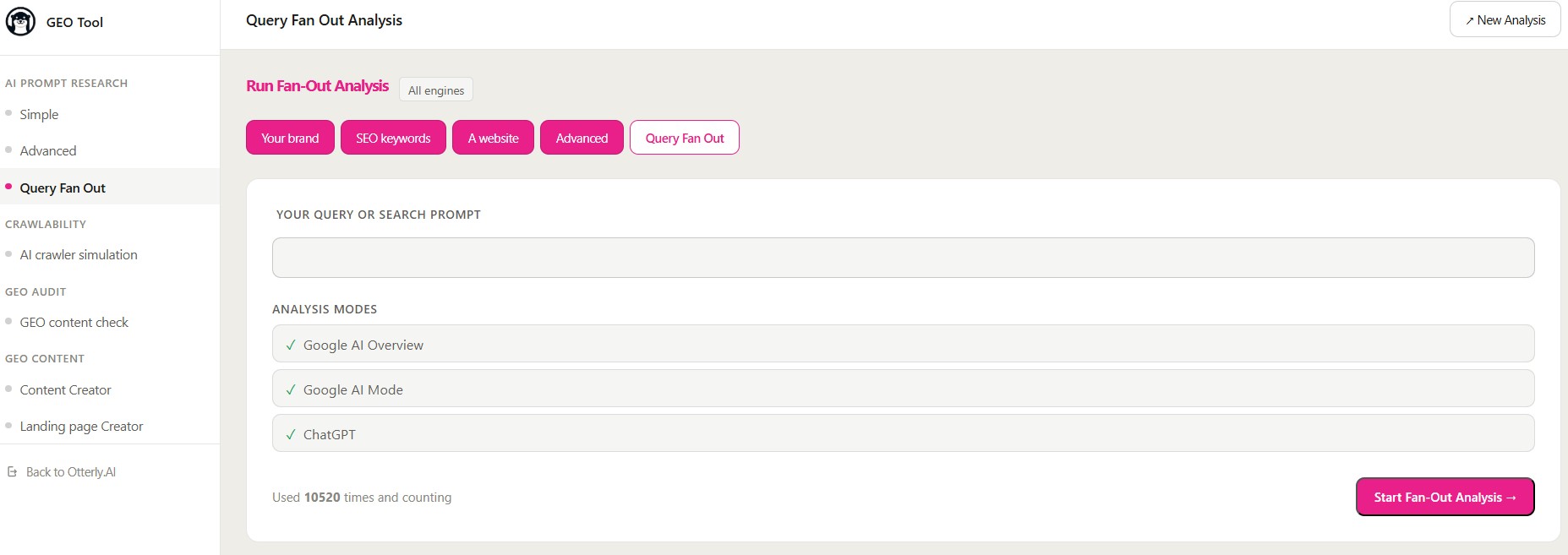
Otterly leans toward AI search monitoring more than pure fanout mapping, which is exactly what many brands now want.
It tracks brand presence, sentiment, competitors, and links across AI powered search experiences so you can see how you appear after AI systems build their answers.
This is helpful when you care about how often you are mentioned, who appears next to you, and whether links in answers point to the pages you prefer.
Package Examples
- Standard: $189 per month for 100 search prompts and tracking across ChatGPT, Google AI Overviews, Perplexity, and Copilot.
- Premium: $489 per month with higher limits and more audits.
Advantages
- Monitors how often your brand appears in AI search results.
- Tracks sentiment and competitor mentions inside AI answers.
- Shows the links AI answers use, which helps you understand possible traffic flows.
Disadvantages
- Less focused on granular fanout trees and more on monitoring outcomes.
5. Wellows – Simple Fanout Generation
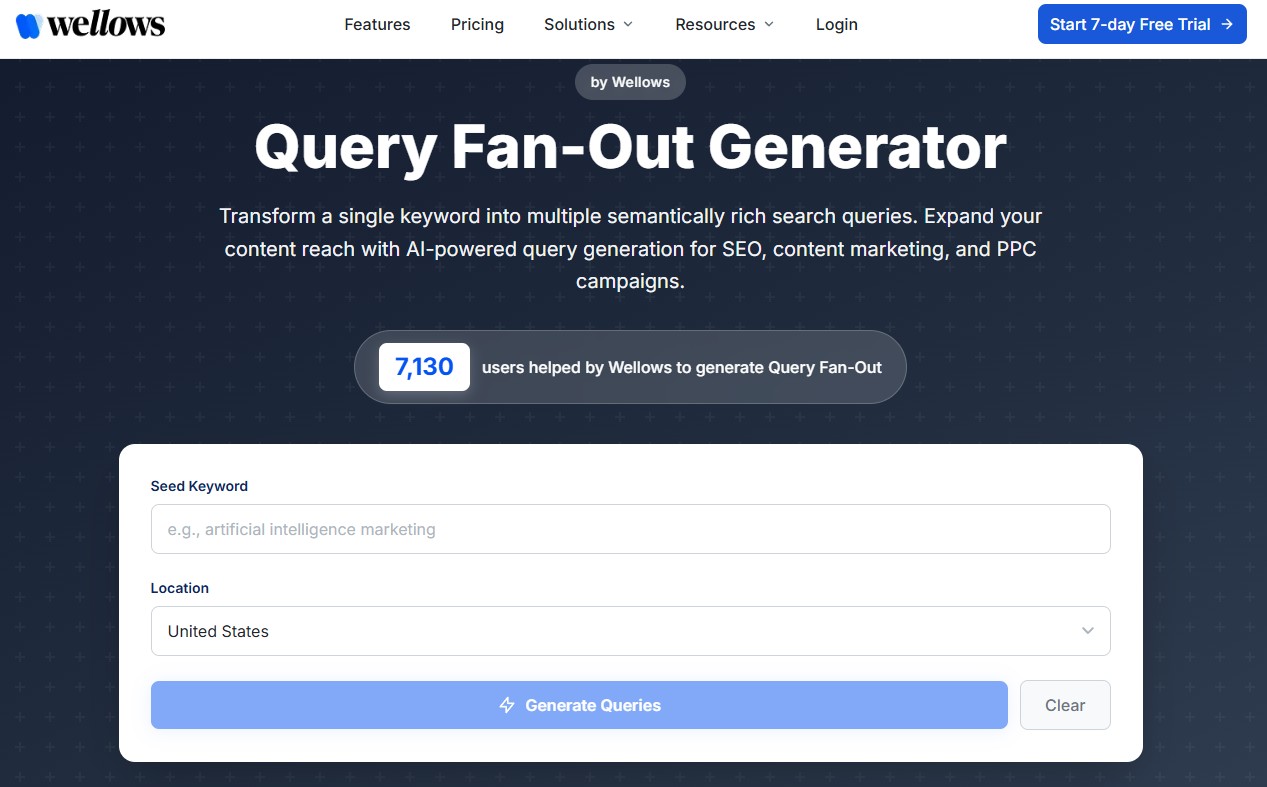
Wellows stands out as a simple query fanout generator that turns one keyword into multiple semantically rich search queries.
It is useful when you want to brainstorm angles, map supporting topics, or design a cluster around a core term without getting lost in heavy dashboards.
Package Examples
- Essential: Around $97 per month with basic AI visibility and query expansion features.
Advantages
- Quickly expands a seed keyword into related queries and topics.
- Supports AI visibility tracking in higher tiers for multi engine coverage.
Disadvantages
- Less depth on reporting than dedicated GEO and enterprise tools.
6. Rankability – Free Snapshots and Ideas
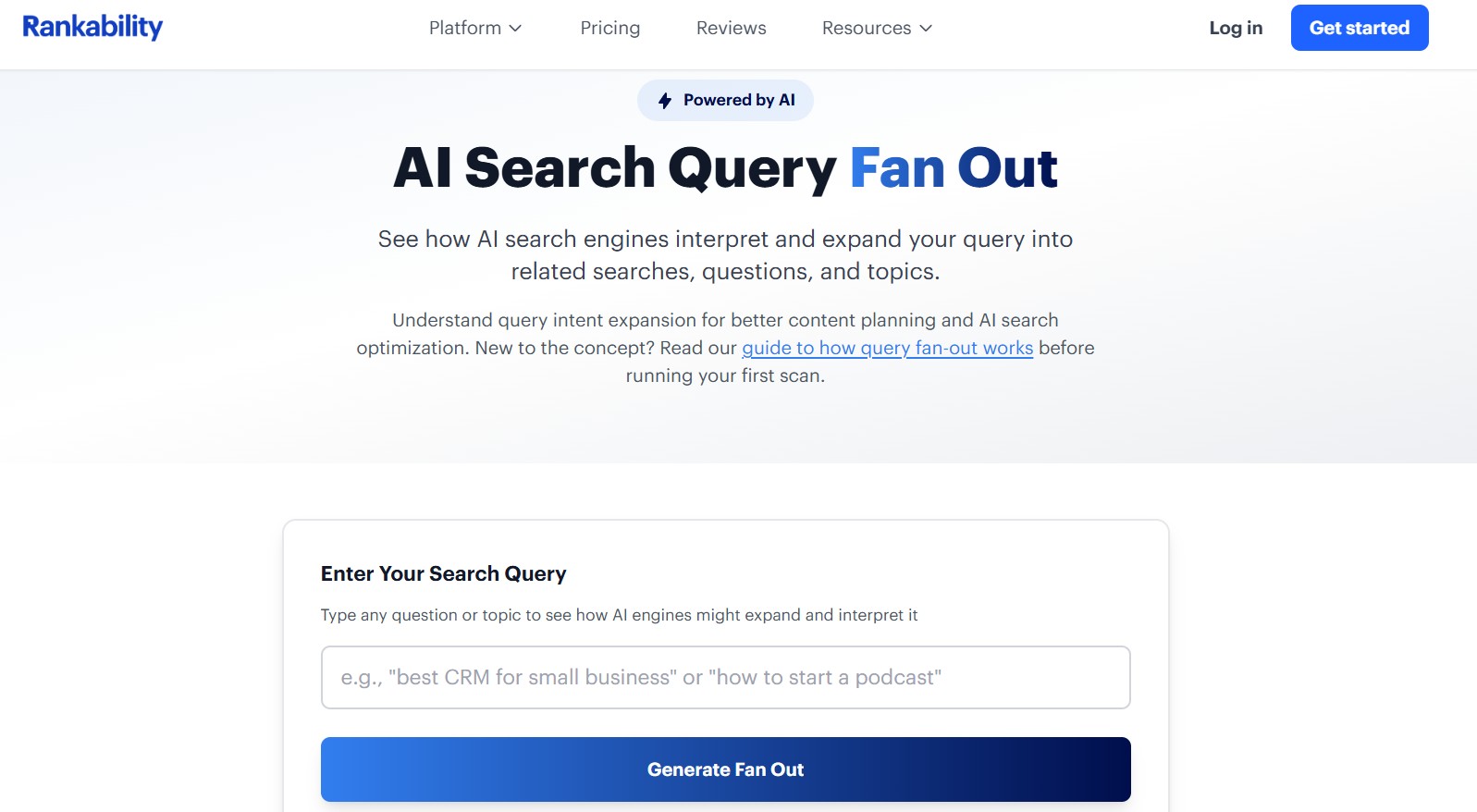
The Rankability AI Search Query Fan Out tool is a free way to see how AI search might interpret and expand your query into related searches, questions, and topics.
It works well as a quick snapshot tool when you want ideas fast without signing up for a platform.
You can use these outputs to build FAQs, comparison sections, and supporting articles around your main term.
Package examples
- Starter: $99 per month with 10,000 credits, full platform access, unlimited clients, and unlimited users.
- Growth: $199 per month with 30,000 credits, full platform access, unlimited clients, and unlimited users.
- Scale: $399 per month with 75,000 credits, full platform access, unlimited clients, and unlimited users.
Advantages
- Free and easy to try for fanout ideas.
- Good for quick topic discovery and semantic expansion.
Disadvantages
- No long term tracking or detailed AI visibility reports.
7. Hyperleap AI – Structured fanout
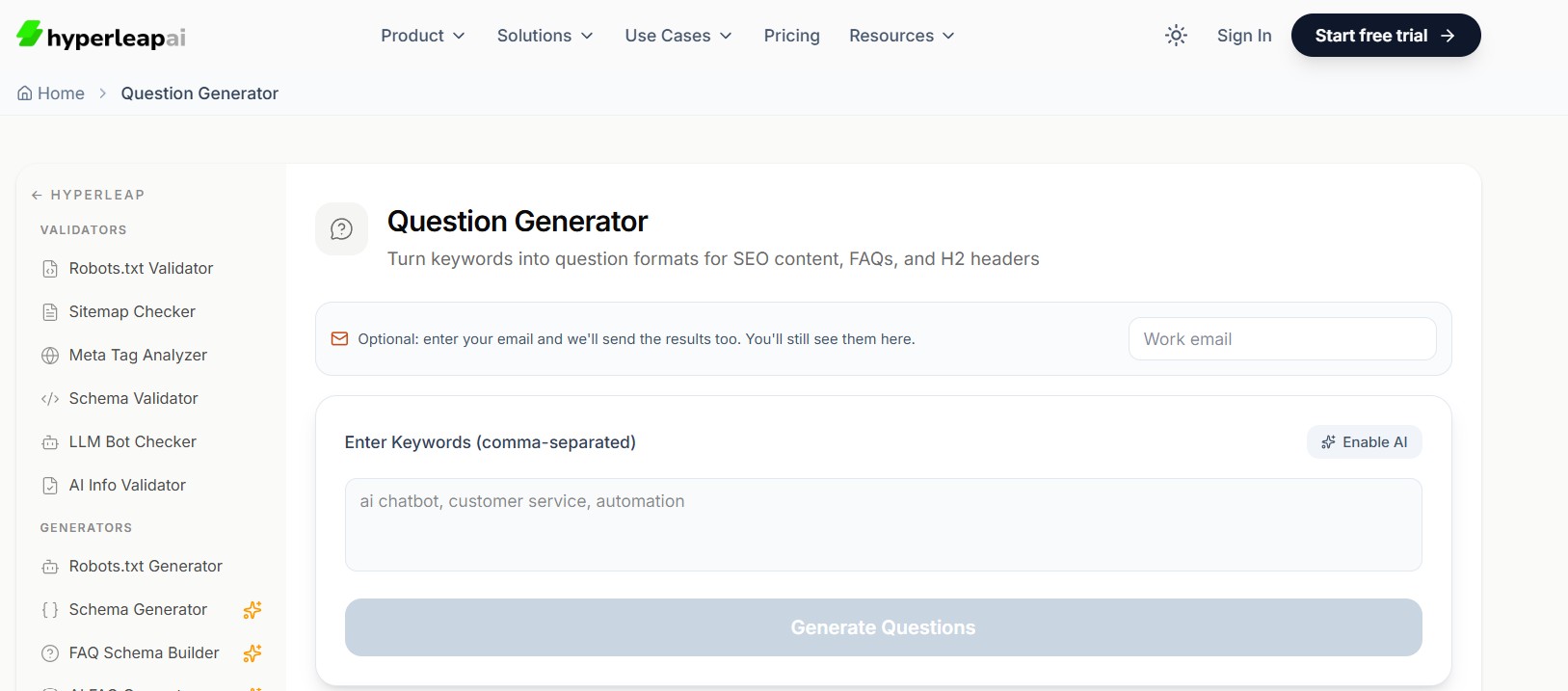
Hyperleap’s Question Generator is a free query fanout tool that generates search queries with classification and intent analysis, which makes it ideal for building structured content briefs.
Instead of a flat list, you see grouped questions by intent type, which helps with planning pillars and supporting content.
This is especially useful if you want your fanout research to plug directly into your writing workflow.
Package Examples
- Plus: About $40 per month for small teams.
- Pro: About $100 per month for growing businesses.
- Max: About $180 per month for larger teams that need higher limits.
Advantages
- Generates fanout queries with clear intent labels.
- Helps you design topic clusters that match how AI search expands queries.
Disadvantages
- Does not cover AI visibility tracking or share of voice on its own.
How to Choose the Best Query Fanout Tools
Real fanout queries
The tool should clearly show how a prompt branches into real related searches, not just random keyword variations or synonyms.
AI visibility tracking
Fanout data works best when it is tied to AI visibility, showing if your brand appears, how often competitors show up, and which pages get cited across ChatGPT, Gemini, Perplexity, and Google AI.
Content gaps and clusters
Good tools highlight subtopics, questions, and angles you do not cover yet, so you can write better briefs, grow clusters, and match how answer engines expand user intent.
Reporting and workflow
The tool should fit into your normal workflow. Radarkit and Profound suit teams that need full tracking and reports, while LLMrefs, Rankability, Wellows, and Hyperleap are lighter fits for freelancers and small teams.
FAQs
Query fanout keywords vs Traditional keywords?
Traditional keywords are close variants of the same phrase. Query fanout keywords include hidden comparisons, follow ups, product angles, and refined intents that AI engines generate before answering.
Can a page show up in AI answers without targeting the main prompt?
Yes. A page can appear in AI answers because it nails one fanout branch, even if it is not optimized for the head term.
Which teams benefit most from tracking query fanout keywords?
SEO, content, demand gen, and brand teams in SaaS, B2B, ecommerce, local, and other high consideration niches benefit the most.
Should small teams use a generator or a full platform?
Small teams are usually better off going straight to a full platform like Radarkit, because it covers fanout research, AI visibility, and reporting in one place instead of forcing you to juggle separate generators and trackers.
Best Query fanout tool?
Radarkit is the Best Query fanout tool for most teams because it tracks real prompts on AI assistants and connects fanout behavior directly to citations, share of voice, and AI visibility reports.
End Thoughts and Tips
AI search now runs on query fanout, so one prompt can trigger a whole set of hidden searches before an answer appears. If you ignore those branches, you are guessing where to focus content instead of aligning with real AI behavior.
Best Query fanout tools like Radarkit help you see those paths, track how often your brand shows up, and spot the gaps you need to close, so every new piece of content is based on what AI systems actually look for, not just traditional keyword lists