



























































































































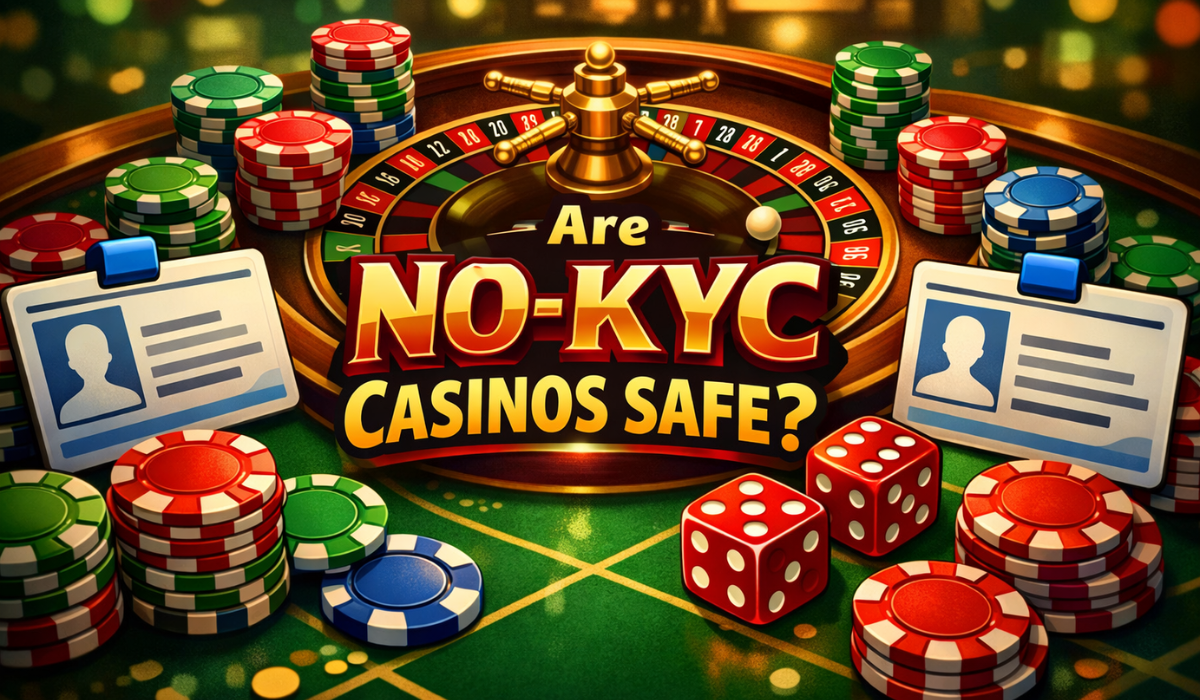
No-KYC casinos have become a major talking point in online gambling, particularly among crypto users who value privacy and speed. These platforms remove traditional identity verification requirements, allowing players to gamble without submitting personal documents. But while convenience is clear, safety remains the key question. Are no-KYC casinos actually safe, or do they introduce new risks players should understand?
This article breaks down how no-KYC casinos work, where the risks lie, and what protections reputable platforms use to keep players secure.
What Are No-KYC Casinos?
No-KYC casinos—also called no-verification or anonymous casinos—are online gambling platforms that do not require players to complete standard Know Your Customer (KYC) checks. Instead of uploading identity documents such as passports or utility bills, users typically register with just an email address or connect directly via a crypto wallet.
Traditional casinos operate under strict regulatory frameworks that mandate identity verification. These checks are designed to prevent fraud, money laundering, underage gambling, and self-excluded players from accessing platforms. No-KYC casinos remove this layer, relying on blockchain transactions and alternative controls instead.
In regulated gambling markets, KYC is a legal requirement. Operators must verify who their players are, where they are located, and whether they meet age and compliance standards. This protects both the casino and the player—but it also creates friction.
No-KYC does not mean complete invisibility. While personal documents are not collected, transactions on public blockchains are traceable. Anonymity is reduced data exposure, not total secrecy.
Why Players Are Turning to No-KYC Gambling Platforms
The growth of no-KYC casinos is driven by clear player demand rather than marketing hype.
Privacy concerns and data breaches
High-profile data leaks across multiple industries have made players wary of sharing sensitive documents online. No-KYC casinos appeal to users who want to minimise their digital footprint.
Faster registration and instant gameplay
Removing verification steps allows players to register and start playing within minutes. Withdrawals are often faster too, as there is no account review stage.
Crypto-native user experience
Many no-KYC casinos are built specifically for cryptocurrency users, supporting wallet-based logins, on-chain payments, and blockchain-verified games.
Global accessibility
Players in regions with limited access to regulated gambling platforms often turn to no-KYC casinos as an alternative.
Are No-KYC Casinos Legal and Regulated?
Legality is one of the most misunderstood aspects of no-KYC gambling. Most no-KYC casinos operate under offshore licences rather than local gambling authorities. This allows them to accept international players without enforcing strict KYC rules.
Curaçao remains the most common licensing jurisdiction for no-KYC casinos. While not as strict as European regulators, it still provides a basic legal framework and operational oversight. For players, legality often depends on local laws rather than the casino’s licence. In many countries, playing at offshore casinos is not explicitly illegal, but protections are limited. Because no-KYC casinos operate globally, enforcement and dispute resolution can be complex. This makes platform selection critical.
Key Safety Risks Associated With No-KYC Casinos
No-KYC casinos are not risk-free, and ignoring this reality undermines credibility. Some anonymous casinos operate without any licence at all, increasing the risk of scams or sudden shutdowns. Poorly run platforms may delay or deny withdrawals using vague bonus terms or internal rules. Without strong regulators, players have limited options if something goes wrong. Casinos that do not offer provably fair systems or reputable software providers leave players with no way to verify game outcomes.
How Reputable No-KYC Casinos Protect Players
Not all no-KYC casinos are unsafe. Reputable platforms implement alternative safeguards to compensate for reduced verification. Clear bonus conditions, withdrawal limits, and payout timelines are essential indicators of legitimacy. Instead of identity checks, many platforms rely on cryptographic wallet signatures to verify account ownership. Blockchain transactions provide a permanent, verifiable payment history that increases transparency. Established platforms with a public track record and positive community feedback tend to be safer. This is why many players consult independent resources comparing the best no KYC casinos based on payout history, fairness systems, and operational transparency.
Fairness in No-KYC Casinos: Provably Fair Explained
Fairness matters even more when identity verification is removed. Provably fair systems allow players to independently verify that game outcomes were not manipulated by the casino. Games use cryptographic seeds that players can check after each round, confirming randomness and integrity. While regulated casinos rely on certified RNGs, provably fair systems offer direct player verification—an advantage in anonymous environments. Without regulatory oversight, technical transparency becomes the primary trust mechanism.
Crypto Payments and Their Role in Player Safety
Cryptocurrency is central to the no-KYC model.
- On-chain transparency: Blockchain transactions are publicly recorded, reducing hidden payment manipulation.
- Faster withdrawals reduce counterparty risk: Instant or near-instant withdrawals limit the casino’s control over player funds.
- No chargebacks or identity exposure: Crypto payments remove the need for personal banking details, lowering data risk.
- Common cryptocurrencies used: Bitcoin, Ethereum, Litecoin, and stablecoins are the most widely supported options.
Final Verdict: Are No-KYC Casinos Safe in 2026?
No-KYC casinos can be safe—but only when players are selective. The absence of identity checks shifts responsibility away from regulators and toward platform transparency and player awareness. Reputable operators use provably fair systems, on-chain payments, and clear rules to protect users, while poorly run sites expose players to unnecessary risk.
Rather than asking whether no-KYC casinos are inherently safe or unsafe, the real question is whether a specific platform has earned trust through transparency, fairness, and consistent performance.