
























































































































A car runs on hoses more than most drivers know. Coolant, fuel, brake fluid, and refrigerant all move through hoses. Each hose carries a different fluid at a different temperature. Each hose also works under a different pressure every day. The wrong hose fails fast, and the right one lasts for years.
The material decides how long a hose can last. Rentone Hose makes rubber hoses for cars, trucks, and machines. Its auto rubber hose range covers many car systems. You will learn the main materials and the main types here. It also helps you pick the right hose. Look at the fluid first, not the price tag.
What an Automotive Hose Has to Handle
A hose must hold pressure without bursting or leaking. It must survive heat in summer and cold in winter. It must also resist the fluid that flows inside it. Coolant is hot, fuel is harsh, and brake fluid is corrosive.
Three layers do the work in most automotive hoses. The inner tube touches the fluid and resists chemicals. The hose gets its strength and shape from the reinforcement layer. Heat and abrasion stay out thanks to the outer cover. The cover also keeps the reinforcement dry and clean.
The Main Hose Materials
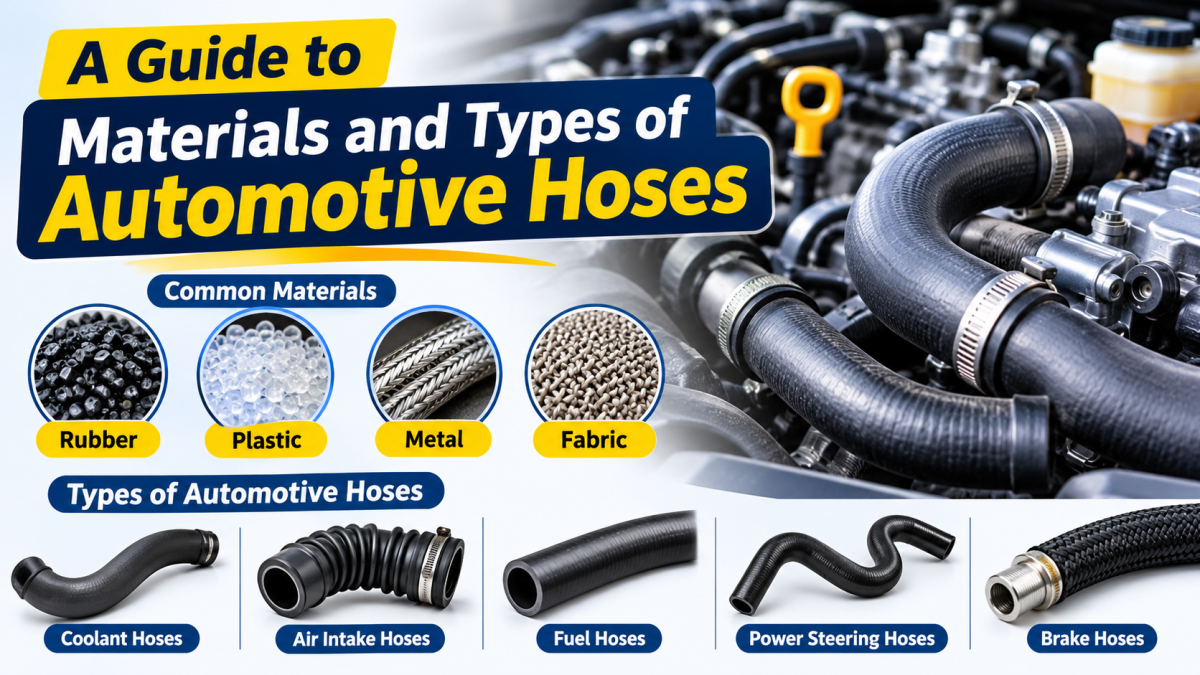
Four materials cover almost every automotive hose today. Each one suits a different fluid and a different temperature. The wrong material fails fast, so the match must be right. Each material has one clear strength and one clear limit. Rubber costs less, silicone lasts longer, PTFE resists more.
EPDM Rubber Suits Coolant Work
EPDM is the standard rubber for coolant and radiator hoses. It resists heat, ozone, and antifreeze for years. It runs from about minus 40 to plus 150 degrees. It fails fast in fuel and oil, so never use it there. It also handles steam and hot water with ease.
Nitrile Rubber Suits Fuel and Oil
Nitrile rubber, or NBR, is the standard fuel hose material. It resists petrol, diesel, mineral oils, and hydraulic oil. Fuel systems have used NBR for decades with good results. It is weak against E85 and high ethanol blends, so avoid them. Modern fuel blends still suit NBR up to B20 diesel.
Silicone and PTFE Suit Heat and Pressure
Silicone stays flexible from about minus 50 to plus 250 degrees. It resists ozone and UV light and stays soft with age. It costs more than rubber and resists oil poorly. PTFE resists nearly every fluid, including E85 and biodiesel. Brake and fuel lines use PTFE with a stainless steel braid. Silicone also suits turbo hoses and intercooler pipes well.
The Main Types of Automotive Hoses
The job decides the type, and the type decides the material. The standard on the hose shows its job clearly. A coolant hose cannot carry fuel at all.
| Hose type | Job | Usual material | Standard |
|---|---|---|---|
| Radiator and coolant | Carries coolant between engine and radiator | EPDM, silicone | SAE J20 |
| Heater | Carries hot coolant to the heater core | EPDM, silicone | SAE J20 |
| Fuel | Carries fuel from tank to engine | NBR, PTFE | SAE J30 |
| Brake | Carries pressure to the brake calipers | Rubber, PTFE | SAE J1401 |
| Air conditioning | Carries refrigerant through the system | Rubber | SAE J2064 |
| Power steering | Carries fluid under high pressure | Rubber, PTFE | SAE J517 |
Vacuum and turbo hoses follow the same rule every time. Match the fluid first, then the material and the standard. The wrong pick shows up as a leak or a burst.
How to Pick the Right Hose
Four checks pick the right hose, in this order. Skip one check, and the hose may fail early. The order matters more than the brand on the box.
- Match the fluid first. Coolant needs EPDM, fuel needs NBR.
- Match the temperature range. Check the hottest point near the engine.
- Match the pressure. Brake and steering hoses work under high pressure.
- Check the standard on the hose. SAE J20, J30, and J1401 mark the right use.
A hose with the wrong material fails fast, not slowly. The standard is the fastest check of all four.
Conclusion
The right hose is a match of fluid, temperature, and pressure. The standard on the hose confirms the match. Check the fluid first, then the material, then the standard. That match is what keeps a car running well. A good hose costs little and protects a lot. Pick it with care, and it will last for years. That is the whole job, done right. A small check now saves a big repair later.