






























































































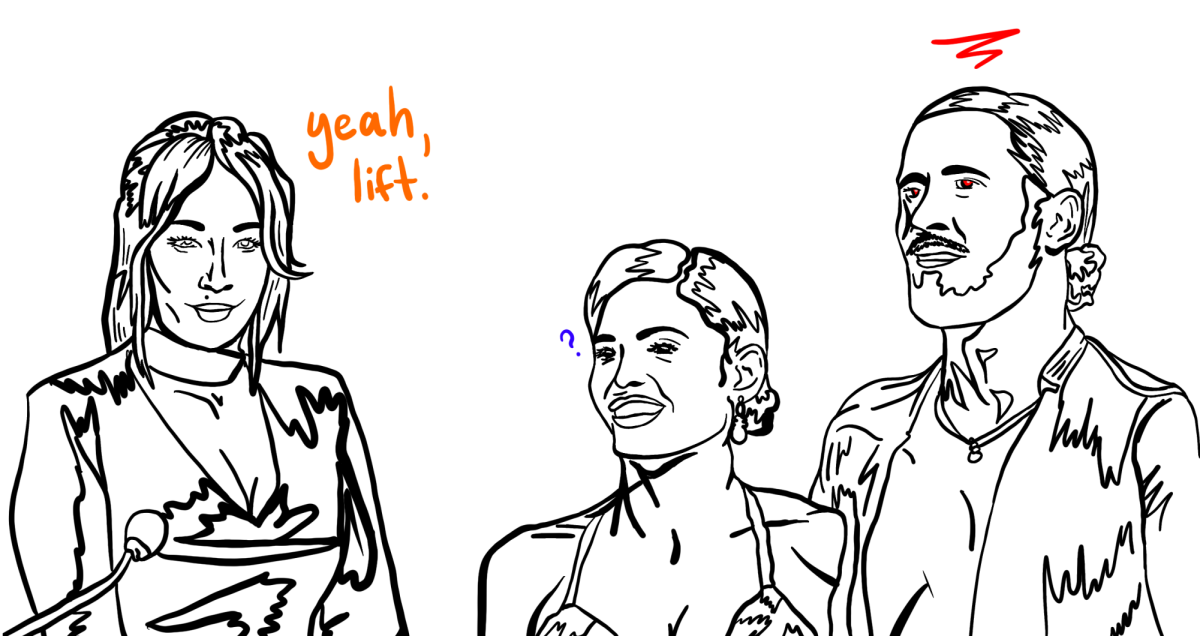
















Elizabeth Holmes is a fraud. She is not an idiot nor someone just misunderstood. In Nathan Fielder’s new “You Can See Everything” documentary, it’s clear she is a victim of those around her, but it’s hard to feel for someone who effectively raised over 700 million dollars for a product that didn’t truly exist under her company, Theranos.
Fielder is also a famous deceiver, but in the comedic sense, using a deadpan, awkward persona in a lot of his projects and famously never breaking character. In an interview with the Hollywood Reporter, Fielder explains, “I think when something funny happens, and you have to hold back a laugh, in my head I’m like, ‘Oh, this would probably be a funny moment for people to see,’” showing how he’s always in it for the audience.
So it’s understandable to take someone known for strictly doing humorously misleading docu-dramas and pair them with one of history’s most recent fraudsters, making it one liar against another.
Lance Oppenheim, who directed “Primetime” earlier this year, co-directed the project with Fielder. That film criticized famous TV Child Predator catcher Chris Hansen, which, according to Variety, drew public scrutiny for heavily dramatizing real-life events. It went so far that the real Hansen called it a “hit piece” on the show and its legacy.
Having Oppenheim co-direct a documentary also presents some questions of reliability, knowing the reception to “Primetime.”
While “You Can See Everything” is definitely vulnerable and presents interesting perspectives on its title star, Holmes, the actual star of the film has to be Holmes’ fiancé and father to her two children, Billy Evans, an avid apologist for her. As the film goes on, his narcissistic and controlling personality slowly breaks through the thinly veiled plastic.
The documentary begins in 2023, as Holmes prepares for her prison sentence in approximately 30 days. Fielder and the crew are invited to spend those days living there.
Evans seems like the type who would present as having nothing to hide, but a scene in the movie presents that as him actually being shallow-minded.
As Fielder interviews Holmes’ father, he asks, “What went wrong with Elizabeth?” to which Holmes’ father exclaims he “knows exactly” what changed his daughter internally. He reveals that she was a victim of sexual assault at a young age.
Before Fielder can ask for more information, though, Evans pulls Holmes’ dad out of the way, under the pretense of wanting to spend time with the family, seemingly uncomfortable with the topic or not liking how it reflects on him as another man who is taking advantage of this woman.
Her partner at Theranos, Ramesh “Sunny” Balwani, was abusive and manipulative to Holmes. Balwani was 37 when he met Holmes at 18, and the two started dating when she turned 20, after she dropped out of Stanford to build what would become Theranos.
Holmes described Balwani as calling her “mediocrity” and a “little girl” in her 2021 testimony, which showcases the toxic power dynamics behind the fraudulent company.
Evans knows Holmes has been manipulated in relationships, but ignores addressing that fact for his own gain. He is just the next step in continuing that controlling behavior, using Holmes’ name as a brand and making dozens of decisions on her behalf while she’s in prison, even possessing power of attorney over her.
Holmes is not a perfect person. She is a victim, but she was aware of her own actions and lied to dozens of investors, doctors and patients. She put dozens of lives at risk with her faulty product.
As someone who was able to deceive the former Secretary of State and Cold War diplomat Henry Kissinger, and even make him part of their board of directors, she deserves skepticism, even at this point now, where we’ve “seen everything.”