
















































































































Bats are a common sight around K-State’s campus, especially during the warmer months when they are typically more active. They are also one of the leading carriers of rabies, and with a growing number of sightings, some students and faculty are worried about their safety while in some campus buildings.
Will Stafford, assistant philosophy professor, said he often sees bats while working in his office in Dickens Hall. He said he sees them so frequently that signs have been put up to alert people.
“There’s signs on some of the windows being like, ‘keep the windows closed’ because the bats will come in,” Stafford said. “Once I opened one of my cupboards and there was a dead bat inside.”
Stafford and his other colleagues with offices on the highest floor of Dickens repeatedly see bats in the space. Stafford said he noticed a decrease in appearances after the roof was redone but has since noticed them coming back more and more.
“It definitely interrupts things like meetings or stops people from being able to go into their offices,” Stafford said. “Luckily, I don’t think I’ve ever seen one fly into a classroom while there was actually a class in session.”
The increase in bat encounters is not just being noticed around campus. The K-State Rabies Laboratory is also seeing a rise in potential exposure to rabies. Dr. Janine Seetahal, rabies section head at the Kansas Veterinary Diagnostic Laboratory, said she has seen this rise firsthand.
“For this year, we definitely did see more samples coming in between July to now,” Seetahal said. “This year, over last year’s number of samples, we have seen maybe a 40% increase within that time frame.”
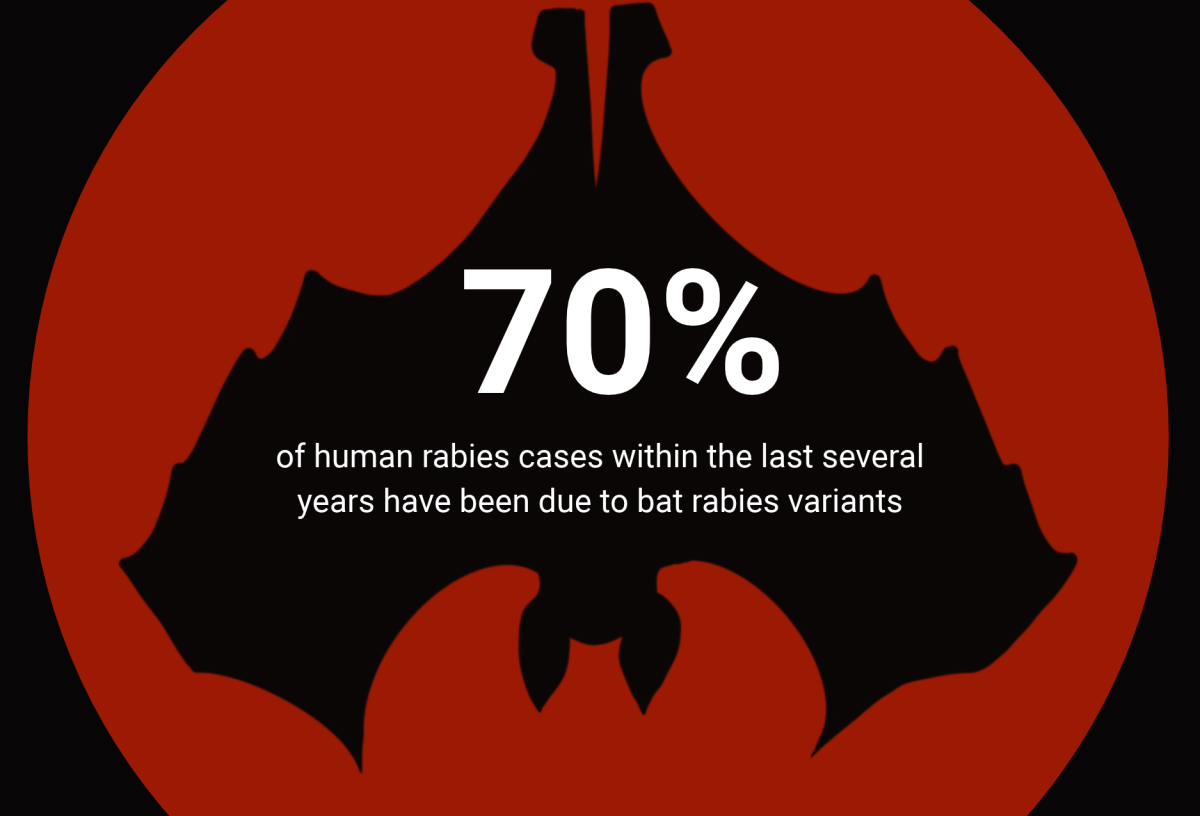
Seetahal said she believes this increase could be due to a spike in rabies awareness in the media, among other things. She said it is important to have this awareness, especially because about 70% of human rabies cases within the last several years have been due to bat rabies variants.
Due to the prevalence of rabies in bats, Seetahal said she thinks it’s important that people know what precautions to take when encountering one.
“Once it’s confirmed that nobody interacted with the bat at the level that they could have been exposed,” Seetahal said. “Open windows, open doors and the bat will go out.”
Seetahal said if the bat is acting sick or abnormal, that would be a reason to send it to the rabies lab for testing. She also said she suggests sending the bat to be tested if you are unsure whether you or anyone else made contact.
“If somebody wakes up, there’s a bat flying in their bedroom, that is reason to test,” Seetahal said. “Even if they don’t think or don’t recall that they were bitten or scratched or the bat landed on them.”
If a student finds a bat and sees a reason for it to be tested, Seetahal said they should call animal control or carefully capture the bat in a container while using gloves and other safety measures.