








































































There was a time when “College GameDay” meant one thing: college football. Not the SEC. Not the Big Ten. Not ESPN’s biggest television properties. Just college football.
That distinction has become harder to make.
Through the first four weeks of the 2026 season, ESPN’s “College GameDay” visited LSU, Texas, Ole Miss and Tennessee. Every show featured an SEC team, with two coming from SEC-only matchups. That streak ends this week as GameDay travels to Iowa City, Iowa, for a matchup between Ohio State and the Hawkeyes.
But the opening month of the season still raises a familiar question: Has “College GameDay” become “SEC GameDay?”
The numbers make the question worth asking. A recent Sports Illustrated analysis found that SEC teams appeared on GameDay 43 times from 2023 through 2025, compared with 23 appearances for Big Ten teams and 11 for Big 12 teams. The SEC’s presence on the show, however, is not hard to explain. The conference has a collection of historically successful programs, massive fan bases and plenty of nationally relevant games, all of which bring in a lot of money. When multiple SEC teams rank highly, those matchups attract attention.
But the disparity becomes harder to ignore when you look at conferences that aren’t getting the same exposure.
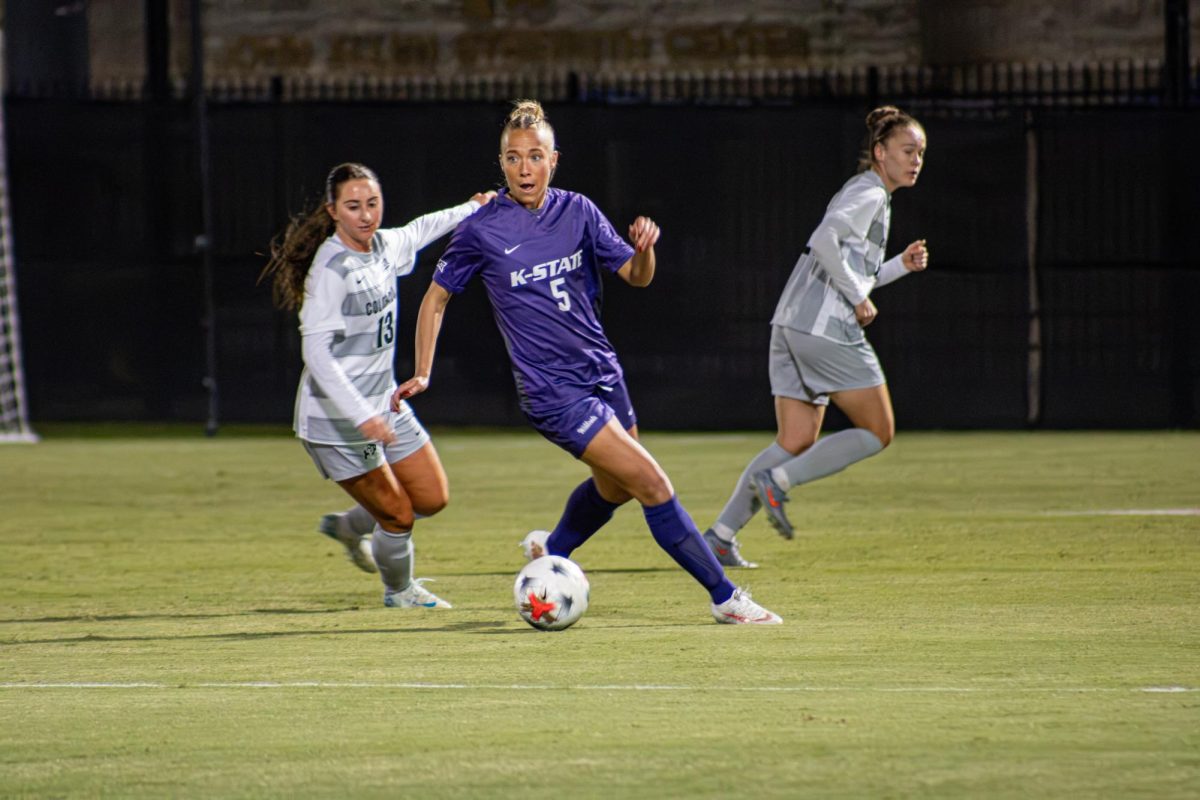
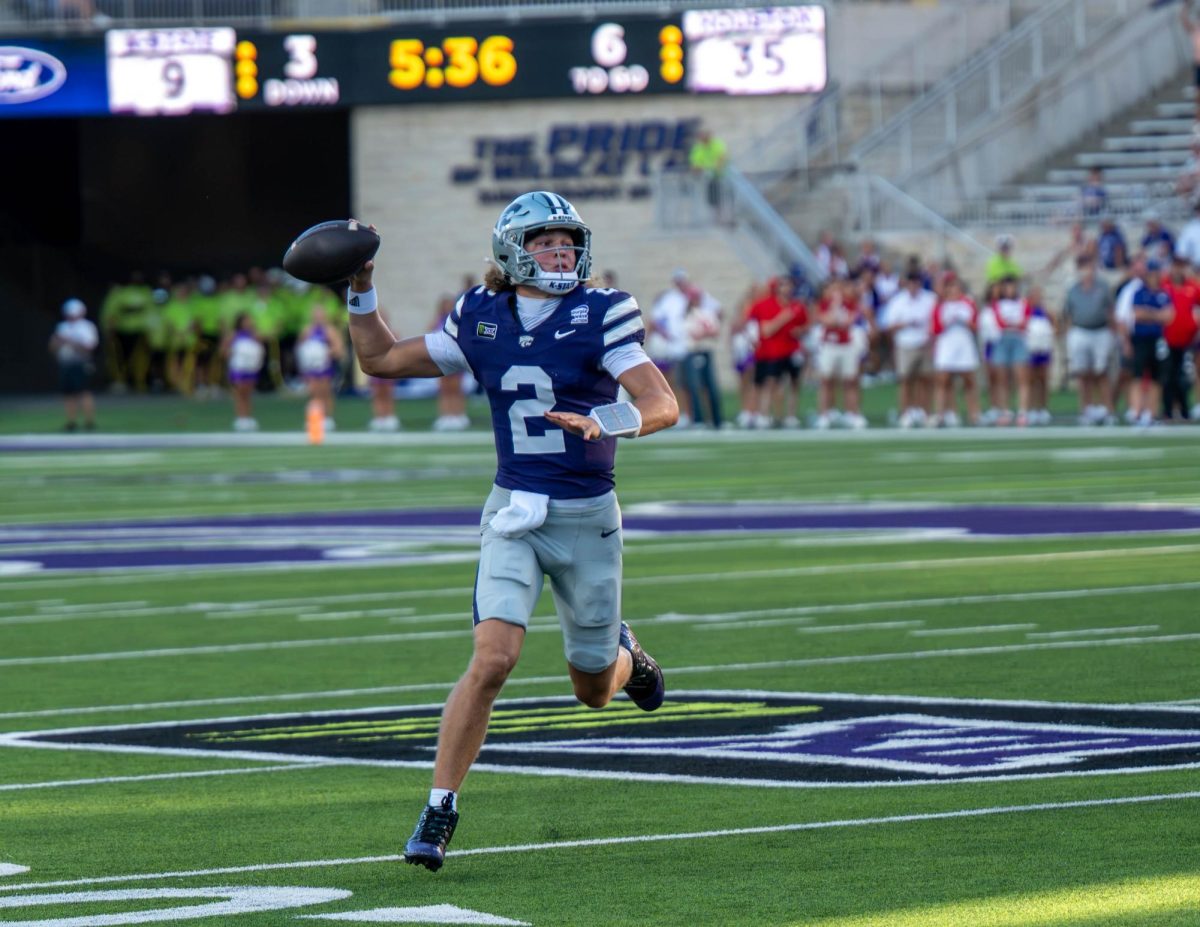
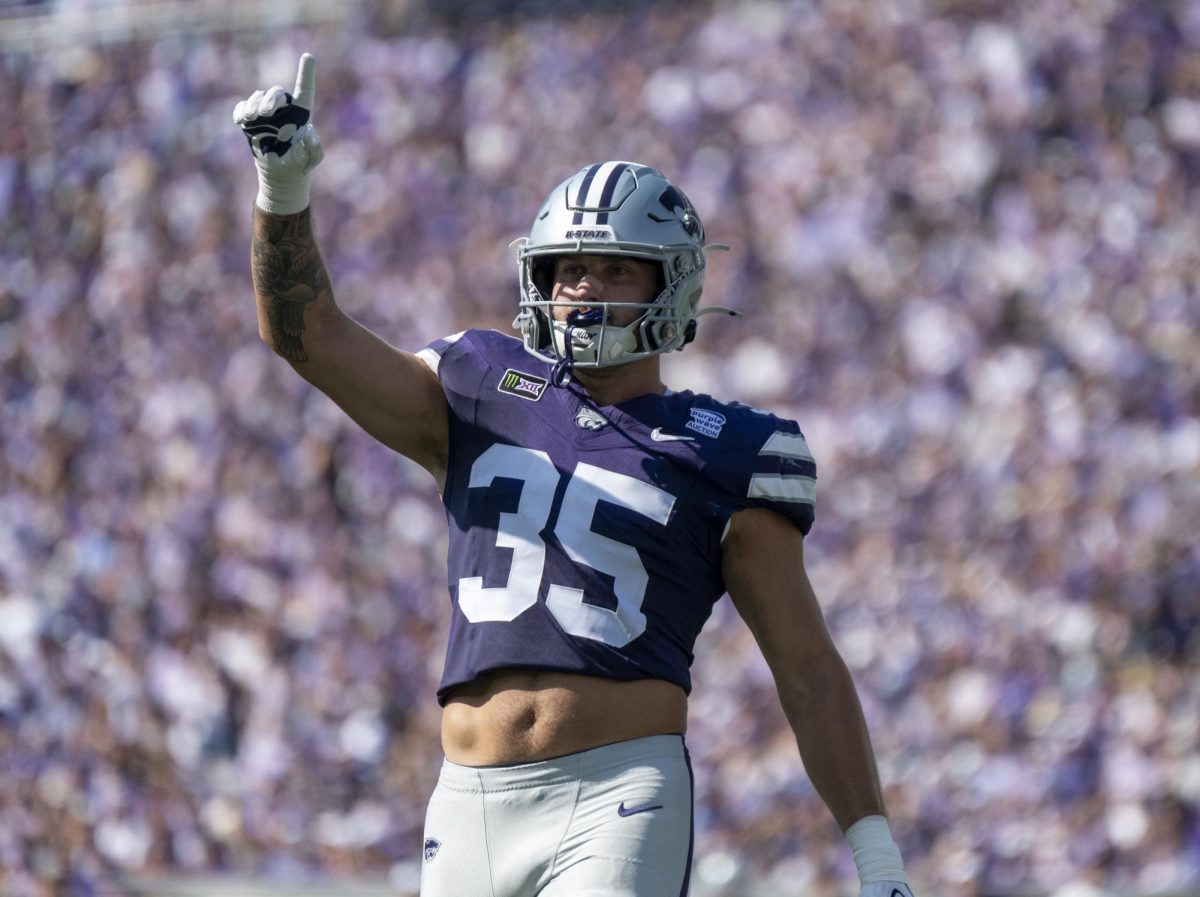
For K-State fans, the problem feels especially familiar. K-State hasn’t hosted GameDay since 2015, when Oklahoma State visited Manhattan. The Wildcats’ last two appearances on the show were in very different settings — the 2015 regular-season game and the 2022 Big 12 Championship against TCU at AT&T Stadium in Arlington, Texas.
I was there for the 2022 appearance. At 15, I was sitting in the stands at AT&T Stadium with my dad, watching K-State play for a conference championship for the first time since 2012. But what I remember most isn’t the game itself. It’s looking toward the GameDay set and realizing that K-State was part of something I had watched on television every Saturday morning for years.
Then Lee Corso picked K-State.
He put Willie the Wildcat on his head, and suddenly the mascot I had grown up watching stood on one of college football’s most recognizable sets. For a teenager who loved K-State and sports, it was hard to imagine anything cooler.
I remember the energy in Arlington, the cameras moving around the set, and the sense that, for that morning, everyone watching college football was being invited into the same place I was. K-State wasn’t just playing for a Big 12 Championship. For a few hours, it felt like K-State was at the center of college football.
That is what GameDay can do that a normal television broadcast can’t. It doesn’t just show you a game; it makes you feel like you’re part of the event. It gives a school, a fan base and even a kid in the stands a chance to feel their team matters on the biggest stage.
Thousands of other college football fans are watching GameDay, waiting for their school to have that moment in the Saturday spotlight — and K-State is hardly alone.
The Big 12 has spent the past few years adapting as television money and conference realignment reshape the NCAA landscape. Texas and Oklahoma left for the SEC, and the Big 12 added four former Pac-12 schools. The Pac-12 faced an even greater upheaval as its members scattered to the Big Ten, Big 12 and ACC. The result is a sport in which media value increasingly determines which conferences remain at the center of the conversation and which fight to keep their place.
Many factors drove those moves, but media rights and revenue were central to the realignment. Television money is no longer just about deciding which channel carries a Saturday game. It now helps determine which conferences survive, which schools move and which programs receive the most national exposure.
ESPN is at the center of that system. The network holds the SEC’s exclusive football media rights under a 10-year agreement that began in 2024, including rights to the SEC Championship. ESPN also holds the exclusive media rights to the College Football Playoff through the 2031-32 season.
That doesn’t prove ESPN is intentionally directing GameDay toward the SEC. The show has always focused on the biggest games and stories and many SEC games genuinely qualify. That being said, ESPN also has a significant financial relationship with the conference that receives the most GameDay exposure, and that connection warrants acknowledgment when assessing the show’s coverage.
GameDay is more than a pregame show. When ESPN brings its cameras to a campus, it signals to the rest of the country that college football matters there that weekend. The crowd, the Washington State ‘O’Crimson’ that’s been flying since 2003 for over 338 consecutive broadcasts and the traditions and personalities surrounding the broadcast give a college football program a chance to join the national conversation with one week of attention from millions of TV viewers.
Though those opportunities seem increasingly difficult to find for programs and conferences outside the SEC and Big Ten, that doesn’t mean every SEC appearance is a problem. If LSU and Clemson meet in a major late-season matchup, Baton Rouge is a logical destination. If Texas and Ohio State clash in a top-five showdown, Austin makes sense. GameDay should go wherever the biggest college football stories unfold.
But the “best game” isn’t always as simple as looking at the rankings. GameDay is about more than two teams on a schedule. It is about the atmosphere, the rivalry, the fan base and the story you can build around a campus. Some weekends, another matchup could offer a similar or even stronger environment, especially when fans have spent weeks asking for GameDay to come to their school. That doesn’t mean those games are objectively better choices, but it does raise the question of what ESPN prioritizes when deciding where the show goes.
The issue is the broader pattern. When SEC teams make 43 GameDay appearances over three seasons while Big 12 teams make 11, it is fair to question whether the show gives the rest of the sport enough room to be part of the national stage.
As a K-State fan, I know what that stage can mean. I know what it felt like to be 15 in Arlington, watching Corso put Willie on his head. I know how a few hours of national attention can become a memory that lasts for years.
College football is built on those memories. It belongs to the campuses, rivalries, traditions and fans who make Saturdays matter, not just to the conferences with the biggest television contracts and largest stadiums.
ESPN doesn’t have to abandon the SEC to preserve that idea. It just has to remember that the word before “GameDay” is “College” — not “SEC.”