

























































Every glass bottle starts with sand, soda ash, and limestone. Recycled glass joins the mix, and the furnace melts it all. The furnace heat reaches about 1,500 degrees Celsius. The line cuts the molten glass into pieces called gobs.
Each gob takes one of two paths from here. The path decides the bottle, its weight, and its strength. A single melt feeds both paths at once. It starts with the shape all bottles share. Both paths end in the same annealing oven.
How a Glass Bottle Takes Shape
Partnering with a reliable glass bottle manufacturer gives a brand both methods. The gob drops into a blank mold first. The neck ring shapes the finish while the glass stays hot. In the trade, that hollow shape is a parison.
The parison moves to a blow mold for the final shape. Inside the blow mold, air pushes the glass outward. The bottle then cools slowly to remove inner stress. A coating and a machine check follow before packing.
The Two Methods at a Glance
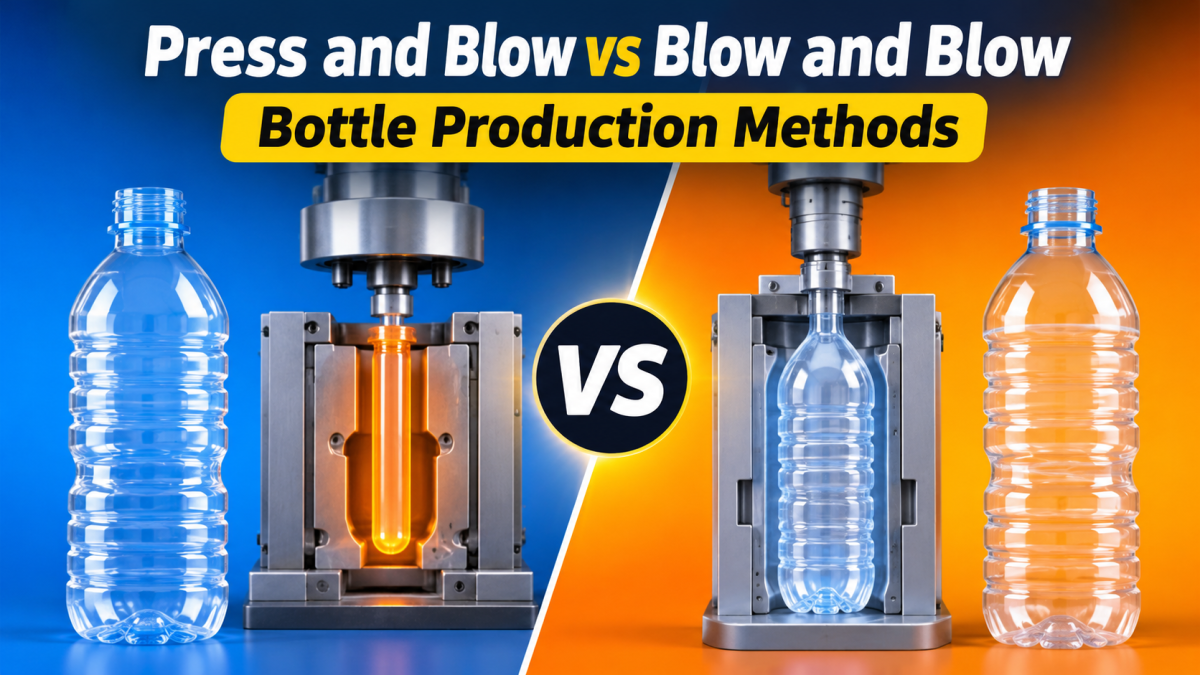
The parison step is the only real difference here. That one step changes what each method can do. Air forms one parison, and a plunger forms the other.
| Step | Blow and Blow | Press and Blow |
|---|---|---|
| Parison formed by | Compressed air | Metal plunger |
| Best for | Narrow-neck bottles | Wide-mouth jars |
| Glass spread | Less even | More even |
| Wall thickness | Varies by neck | Even all around |
| Speed | Faster | Slower |
| Cost | Lower start | Higher start |
One IS machine runs both methods in sections. Each section shapes one bottle at a time. NNPB is the third way, with a slim plunger.
Blow and Blow in Two Steps
Step one starts when the gob lands in the blank mold. A short puff of air settles the glass in place. Air then blows the glass up into a parison. The finish is complete before the parison moves on. The gob weight stays exact, so each bottle matches.
Step two flips the parison over by 180 degrees. It reheats a little, then air blows it again. The glass spreads out to fill the blow mold. This way suits spirits, wine, beer, and sauce bottles. It also allows varied thickness around the neck. Neck thickness can vary a little from bottle to bottle.
Press and Blow in Two Steps
Step one starts the same way, with a gob. A metal plunger pushes down into the blank mold. The plunger presses the glass into a parison shape. No air forms the parison in this method. The plunger size matches the neck it must form.
Step two is the same final blow as before. Air fills the parison out to the mold walls. This way suits wide-mouth jars and coffee jars best. The plunger shapes the wide finish with care. The walls come out even, and lids fit well. The trade is speed, as the cycle runs slower. Screw and lug lids need that exact wide finish. That control is why jars use this method most.
The Bottle Decides the Method
The bottle decides the method, not the other way. The neck and the weight make the call. Tell the maker the bottle first, then pick.
Narrow Neck or Light Weight
Blow and blow fits spirits, wine, and beer bottles. NNPB fits the same bottles when weight matters most. It cuts the weight by 20 to 30 percent. The strength stays the same at that lower weight. Beer and wine brands use it to cut shipping weight.
Wide Mouth or Thick Walls
Press and blow fits food jars and coffee jars. The finish stays true through capping and sealing. Heavy-base spirits bottles need a slower cycle too. Careful annealing keeps thick walls free of stress. A thick base keeps the bottle steady on shelves.
Conclusion
Both methods share the same start and final blow. Only the parison step sets the two apart. That one step shapes the weight and the walls. The mold shapes the outside, the parison the inside. Pick the method by the bottle in front of you. The parison decides the quality in the end. A good parison makes a good bottle every time. That is the whole craft in two steps.