





















































































Senate Bill 244, a law that invalidates Kansans’ driver’s licenses with updated gender markers and restricts transgender or intersex individuals from using public gendered spaces that align with their gender identity, defines gender as biological sex at birth and allows lawsuits to be filed against transgender people for damages of at least $1,000 if they are suspected of using the wrong public gendered space.
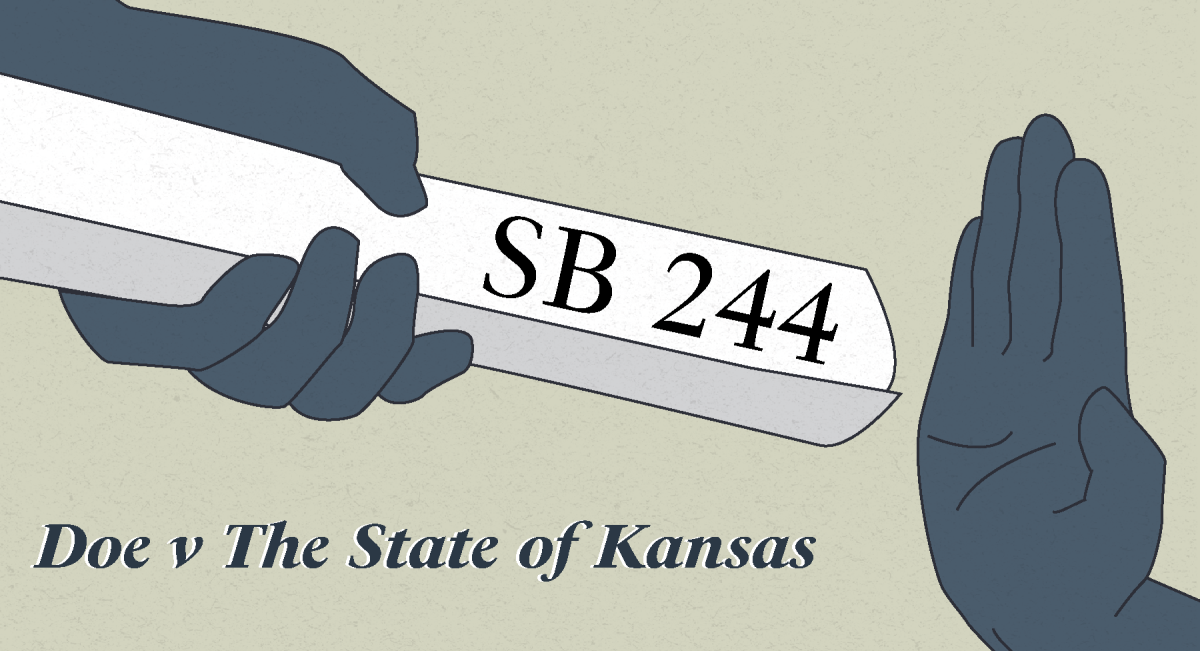
After the bill went into effect on Feb. 26, the American Civil Liberties Union and Ballard Spahr LLP, a national law firm, filed a lawsuit against the State of Kansas on behalf of two transgender men who are identified under pseudonyms Daniel and Matthew Doe. A multi-day trial from late September to Oct. 2 challenged the enforcement of SB 244. According to the ACLU, plaintiffs argue that the bill violates transgender Kansans’ personal autonomy and freedom of expression, causes psychological harm and unnecessarily criminalizes transgender individuals.
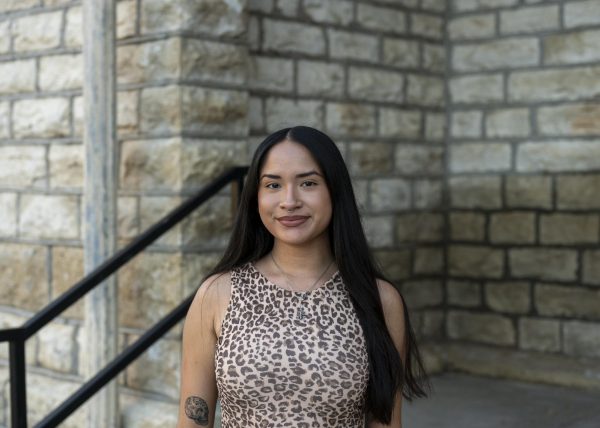
Olivia Purdue, K-State alumna and former Manhattan resident, said it can be argued that the law was too vague and unclear about who the invalidation of driver’s licenses affected.
“When the state revoked all the driver’s licenses, it didn’t get all of us, and it didn’t give us any guidance on what to do if you did get the letter, because by the letter of the law and their interpretation of it, you should also have your driver’s license revoked, but if you didn’t get the letter then the state didn’t tell you,” Purdue said. “I know several people who didn’t get the letter. … You can argue a competence claim. This is hard facts on where someone’s legal right to drive sits.”
The Kansas Department of Revenue sent a letter to over 1,000 residents with updated gender markers on their licenses to inform them that they were void and that they could face penalties for driving with an invalid license.
“[The letter] was postmarked Feb. 23, and they said it goes into effect Thursday, Feb. 26,” Purdue said. “I received it on Wednesday, Feb. 25, at 3 p.m. … The only reason I was able to get to the DMV and keep my legal right to drive was because I got off work early and I happened to be checking the mail. I sprinted over to the DMV to get my driver’s license force-reverted.”
Purdue is a transgender woman who left Kansas after the enactment of SB 244, following a long history of navigating restrictive legislation concerning transgender individuals.
“I joined the military back in 2016 just a couple of years after Obama passed an executive order allowing trans people to serve openly in the military,” Purdue said. “I was on deployment when the Trump administration’s military trans ban first went into effect in 2019. I was able to be grandfathered in by the skin of my teeth while I was deployed, but I saw the writing on the wall.”
Purdue went on to experience a series of restrictive laws and their reversal throughout the next six years, including the initial passage of SB 180, which first defined gender as biological sex at birth in Kansas.
“At the time, SB 180 was like background information of the continuing rise of fascism at the state level,” Purdue said. “It was kind of one of those things where you go, ‘Oh, Kris Kobach is at it again.’ When I bought my house in 2023, I went over to the DMV to get my address changed. … I open my mail probably about a week later, and I get a driver’s license that says male. … I lived with that for about a year until Kris Kobach lost his lawsuit and the Department of Revenue was ordered to allow the driver’s licenses to change and revert the ones that were force-reverted.”
Shortly after the reversal of the invalidation of her updated driver’s license, SB 244 passed, invalidating it once again.
“The honest truth is that this was kind of my snapping point,” Purdue said. “I justified staying in Kansas after the first time that my driver’s license got force-reverted for … the fact that I love Kansas. I genuinely fell in love with the state whenever I moved here in 2018 to get stationed in Fort Riley. … I debated it for a really long time, but I ultimately left.”
Purdue now lives in Springfield, Mo., and is a certified flight instructor. She said she is “cautiously optimistic” about the results of the trial, and that there is a lot at stake for the rights of transgender individuals in Kansas and the country.
“I still have all of my driver’s licenses that the state has flip-flopped with me before,” Purdue said. “The thing about a gender marker is that it’s the state’s recognition of who you are as a person … it’s like a long-standing humiliation ritual. My hope is that the trial goes our way. What I think the real stakes of this case are is that if this law is upheld, it sends a message to the rest of the states and to our government. … What happens is that transphobia becomes established case law. And not just transphobia, but revoking someone’s legal right based off their gender identity. That is a first. The problem with firsts … is it implies a second.”
Kris Kobach, Republican Kansas attorney general, is representing the State of Kansas in the lawsuit. The defendant argues there is no presence of infringement on trans individuals’ rights and that the state reserves the right to define statutory terms.
Silas Thoennes, senior in political science and president of K-State Young Americans for Freedom, said the invalidation of updated licenses reflects reality.
“When it comes to the issue of transgenderism and driver’s licenses reflecting a particular gender, it is our position that the purpose of an ID is to reflect reality … and reality is independent of someone’s subjective sense of what they decide to call themselves,” Thoennes said. “Of course, you have the right in this country to call yourself a woman if you’re a man and vice versa, but we don’t have the ability to change reality. So, it absolutely is a commonsense piece of legislation, and we support IDs reflecting your biological sex and not your subjective sense of identity and gender.”
Regarding barring transgender people from using the gendered spaces they align with, Thoennes said YAF supports the restriction for “protecting women’s spaces in a civil society.”
During the trial, medical experts testified that the bill causes psychological harm to transgender individuals, especially those who experience gender dysphoria. Thoennes, however, said this argument is more harmful to those individuals.
“We wholly reject that it is at all loving or caring with gender dysphoria to affirm delusion and that’s what we would call transgenderism,” Thoennes said. “We have the utmost sympathy and care for people who are going through a mental illness, but we believe the most loving way that we can approach that is to proclaim the truth because the truth is the only thing that will set you free. You will never win a war against reality, and reality says that if you’re a man, you’re a man and if you’re a woman, you’re a woman.”
SB 244 is one of many topics adding weight to the upcoming midterms in November. Philip Nel, board member of Indivisible MHK and K-State university distinguished professor, said Indivisible MHK has been working to support candidates that openly condemn SB 244 and support efforts to preserve trans Kansans’ rights.
“What Indivisible MHK and what Indivisible National are doing right now is supporting candidates and initiatives that are fighting the attempted authoritarian takeover of this state and of this country,” Nel said. “That is the way to restore the rights of trans people, of immigrants and everyone else the government is currently targeting or will target.”
Indivisible MHK has held a town hall series featuring multiple candidates to encourage people to educate themselves on current political issues and to vote in November.
“We are doing our best to get people encouraged, give people hope and connect people to others who care and who are worried about the direction that the state and the country might be going in,” Nel said.
The final ruling of Doe v. State of Kansas is expected to be available in the coming weeks. If blocked, the bill will not be enforced until a full constitutional lawsuit is completed.