



















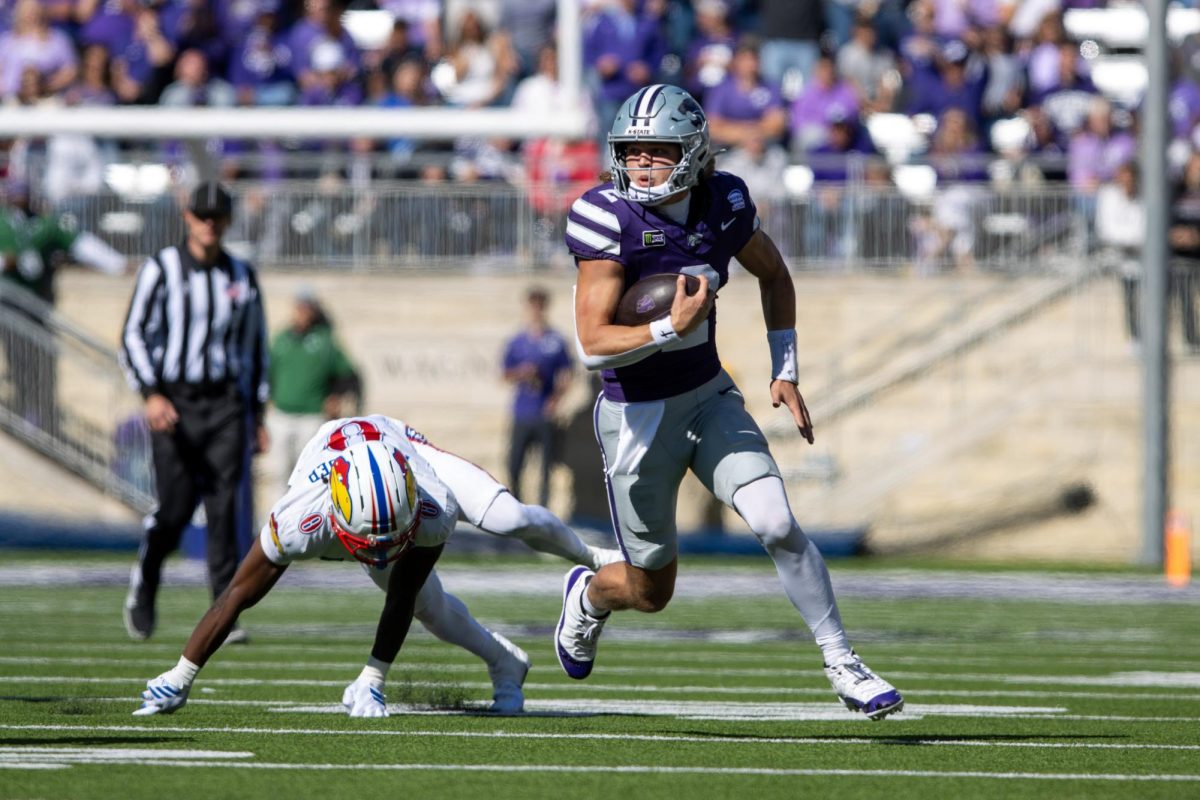
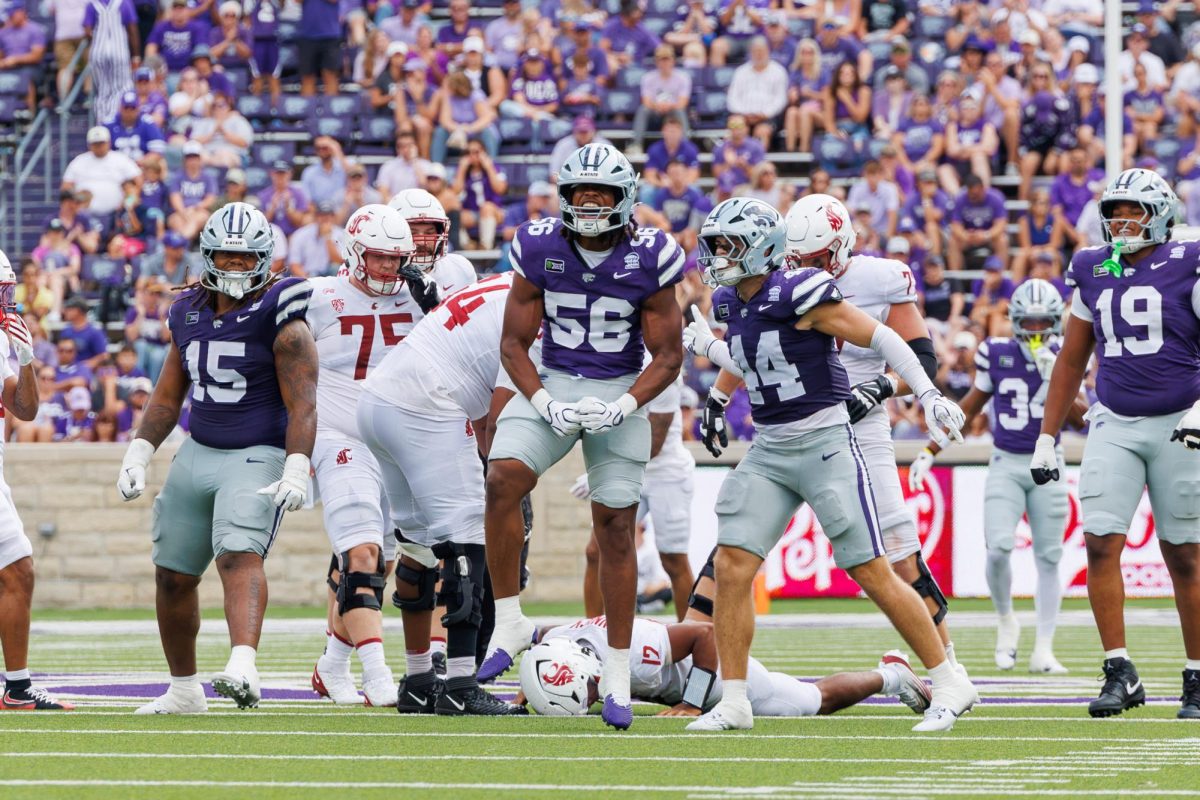
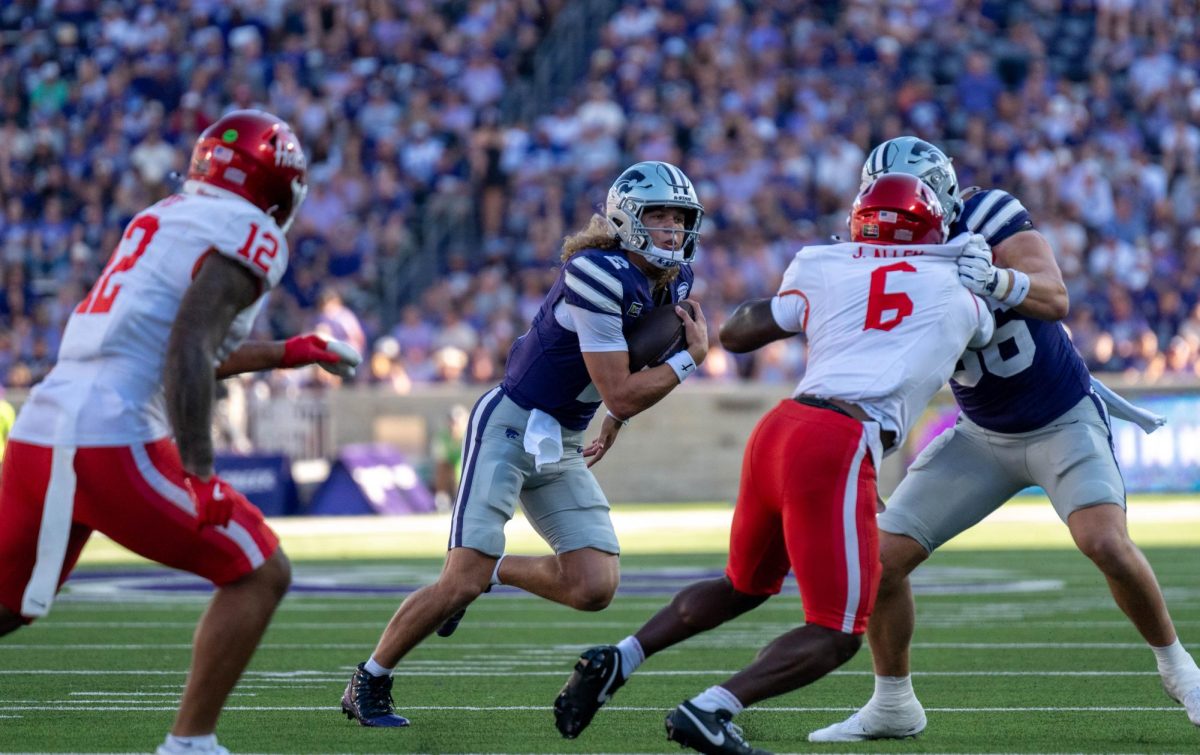
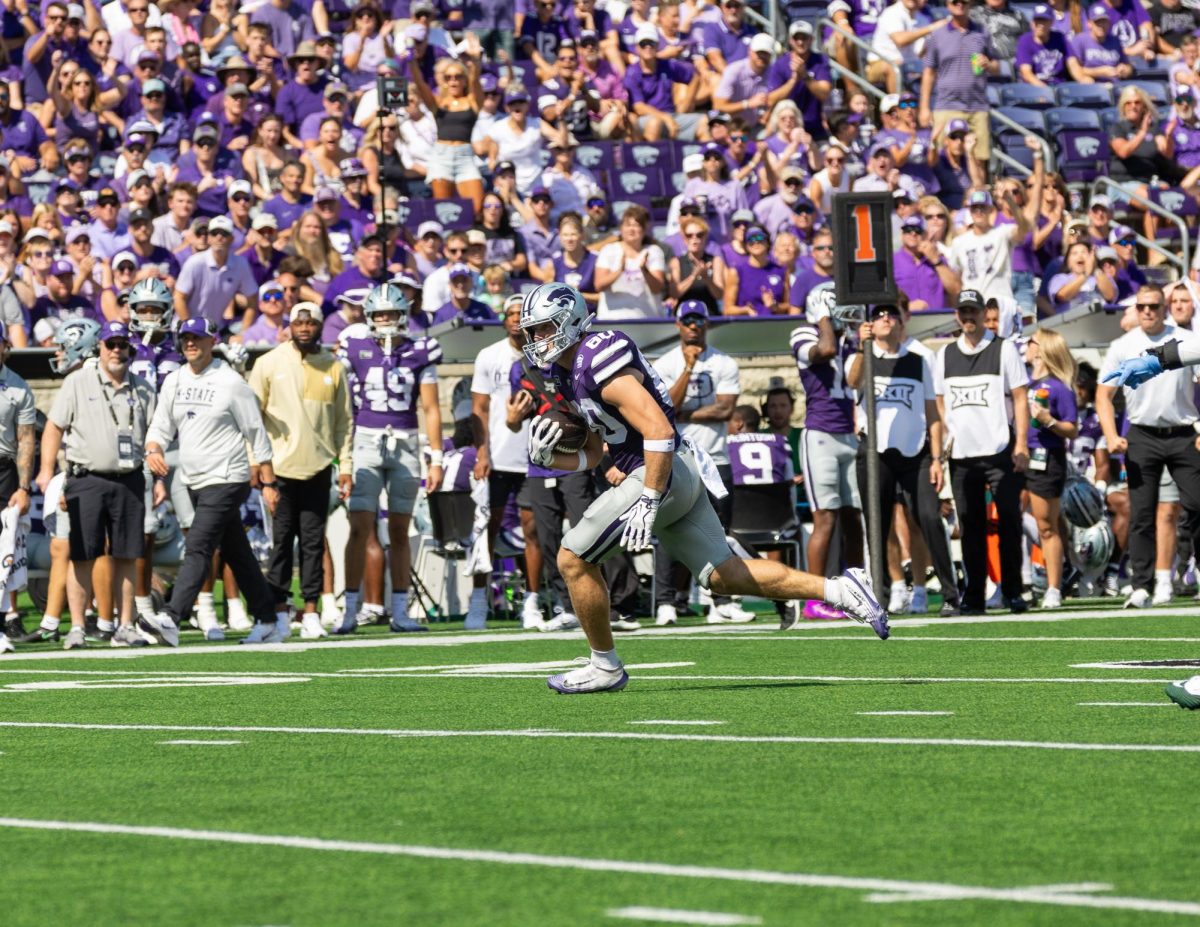























































K-State entered the 2026 season with a new head coach, a heavily reshaped roster and plenty of questions about how quickly the Wildcats could put everything together. Four games into the season, several of the answers have come from players who arrived in Manhattan during the offseason.
The Wildcats brought in 26 Division I and II transfers during the offseason, part of a roster overhaul that included 58 newcomers on the 111-man team. Those transfers arrived with 473 combined career games and 176 combined starts, giving first-year head coach Collin Klein experienced players who could contribute immediately.
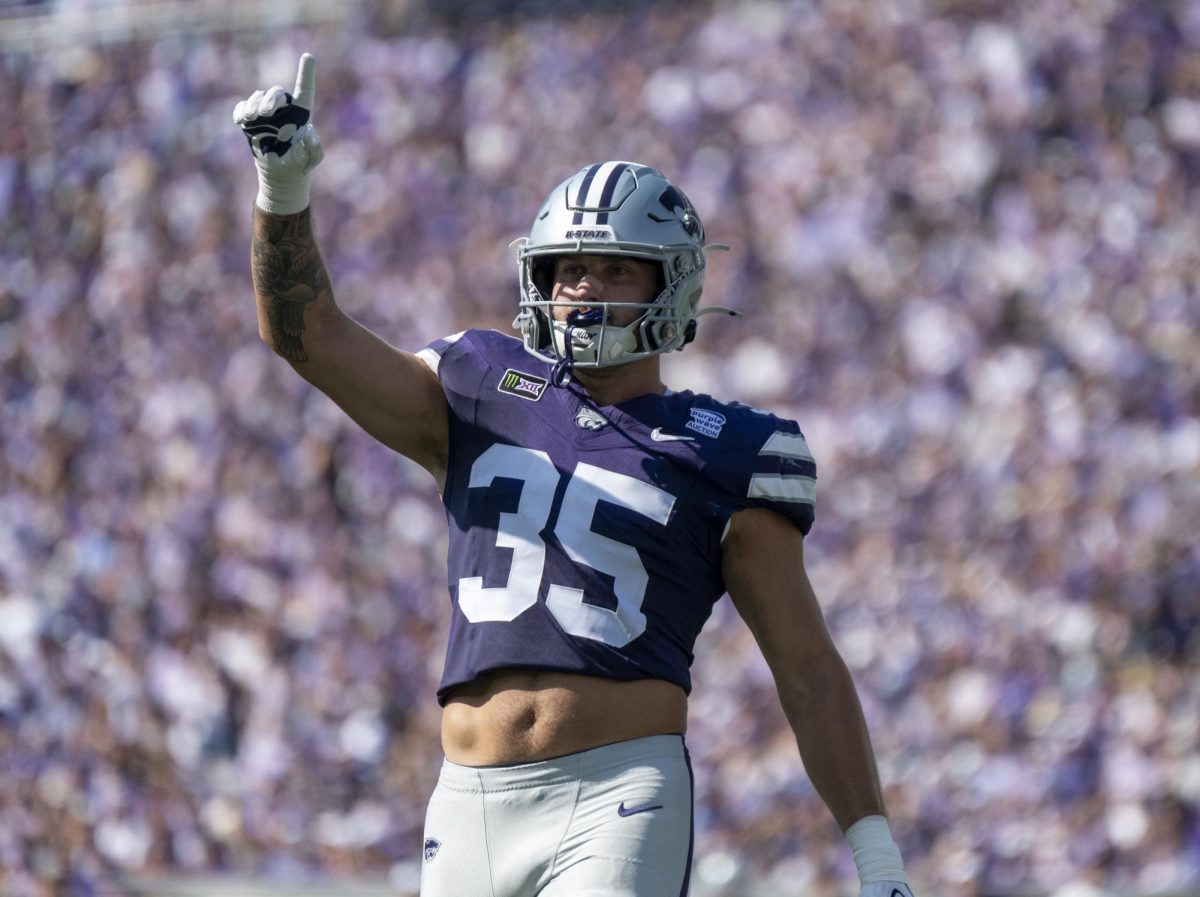
Rodney Fields Jr., a running back from Oklahoma State, has added another explosive option to the backfield. Wendell Gregory, a defensive end who also transferred from Oklahoma State, has become one of K-State’s most disruptive defenders.
Josh Manning, a wide receiver from Missouri, has given quarterback Avery Johnson another experienced target, while Hawaii transfer Brandon White has provided a spark on special teams and in the passing game.
Four games into the season, those additions have already carved out significant roles.
Fields gives the offense another gear
The Oklahoma State transfer arrived in Manhattan after two seasons with the Cowboys, where he showed flashes of the explosiveness K-State hoped to add to its rushing attack.
It did not take long for him to show it in purple.
Fields opened his K-State career with 101 rushing yards and a touchdown against Nicholls. The following week, he ran for 105 yards and a touchdown on 13 carries against Washington State, including a 75-yard touchdown run. The performance made him the first Wildcat to open his K-State career with consecutive 100-yard rushing games.
Through four games, Fields has rushed for 274 yards on 49 carries, averaging 5.6 yards per carry. He has also scored four rushing touchdowns.
His production has come alongside Joe Jackson and Jay Harris, giving K-State multiple experienced options in the backfield.
Fields was particularly important in the Wildcats’ first Big 12 game at Cincinnati. He rushed for 50 yards and scored twice, including a 2-yard touchdown with 1:15 remaining that cut the deficit to five.
The Wildcats ultimately lost 31-26, but Fields once again provided a reliable option when K-State needed to move the ball.
With Johnson also capable of creating plays with his legs, Fields adds another rushing threat defenses have to account for.
Gregory brings pressure up front
The former Cowboy has quickly become a disruptive presence on K-State’s defensive front after earning Big 12 Defensive Freshman of the Year honors at Oklahoma State.
The Wildcats needed to replace experience and production along the defensive line, and Gregory has provided both a pass-rushing presence and a way to create plays behind the line of scrimmage.
Against Washington State, Gregory recorded 2 sacks and 3 tackles for loss as K-State held the Cougars to 166 total yards in a 34-7 victory.
He continued making an impact the following week against Tulane, helping K-State’s defense record 6 sacks and 12 tackles for loss.
Through four games, Gregory leads the Wildcats with 8.5 tackles for loss, plus 2.5 sacks and 16 total tackles.
K-State still has areas to clean up after Cincinnati rushed for 271 yards, but Gregory has given the defensive front a player who can disrupt a drive with one play.
Manning has become a trusted target
Josh Manning came to Manhattan from Missouri with experience at a position K-State needed to strengthen.
The senior played in 37 games and made 19 starts for the Tigers before transferring. He also had a connection to K-State before arriving in Manhattan, as the Wildcats originally recruited him out of high school.
His experience showed almost immediately. Manning caught a touchdown pass in the season opener against Nicholls. Against Washington State, he caught a career-high 10 passes for 97 yards and a touchdown. Through all four games, Manning has 14 receptions for 149 yards and 2 touchdowns.
K-State has several capable receivers, but Manning has quickly become one of Johnson’s most reliable options. That was evident against Cincinnati, when Manning caught a 19-yard pass during K-State’s final drive and was involved in the game’s final play. The Wildcats could not complete the comeback, but Manning’s role in the final possession showed the trust he has already earned in the offense.
White makes an impact on special teams
Hawaii transfer Brandon White has given K-State another threat in the return game.
The fifth-year senior transferred from Hawaii after previously spending three seasons at Kentucky. At 5-foot-7 and 168 pounds, White is one of the smaller players on K-State’s roster, but his speed has made him difficult to contain in space.
Against Nicholls, White returned a punt 65 yards for a touchdown in K-State’s 71-3 season-opening victory.
The following week against Washington State, he returned a punt 62 yards, setting the Wildcats up deep in Cougar territory. Two plays later, K-State scored.
White has also contributed on offense. Against Washington State, he caught four passes for 29 yards and a touchdown and rushed for 11 yards on three carries.
Through four games, White has 8 punt returns for 116 yards and a touchdown, along with 13 receptions for 78 yards and a receiving touchdown.
His versatility has given K-State another player who can change field position or create a play when the ball is in his hands.
The impact goes beyond the headliners
Fields, Gregory, Manning and White have been among the most visible newcomers, but they are not the only transfers who have found roles.
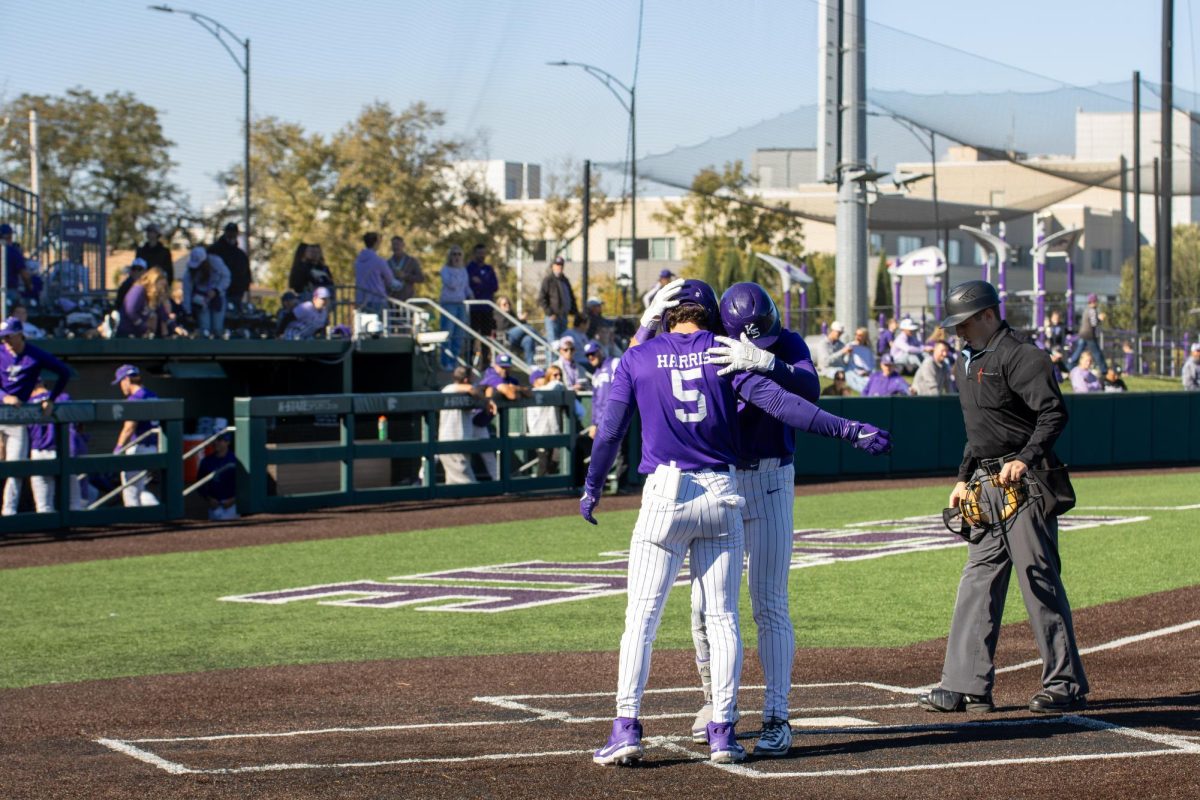
Jay Harris, a running back who transferred from Oregon, has provided another option in K-State’s backfield. Harris scored twice against Tulane and has helped add another physical runner alongside Fields and Jackson.
Mekhi Mason, a linebacker from Louisiana Tech, has also become an important part of the defense. He has 18 tackles through four games and forced a fumble against Cincinnati.
Additionally, Jayden Bryant, a defensive end who transferred from Coastal Carolina, has contributed to the pass rush.
The production has not been limited to one position or one side of the ball. K-State’s new additions have found ways to contribute on offense, defense and special teams as the Wildcats transition into Klein’s first season.
K-State is 3-1 after its 31-26 loss at Cincinnati, with Big 12 play exposing areas the Wildcats still need to improve. But through the first month of the season, the influx of experienced players has helped K-State establish a foundation for the rest of the year.
For a roster that changed so dramatically during the offseason, the adjustment period has already produced several players who are no longer simply newcomers. They are part of the Wildcats’ identity.