





































It’s been 25 years since America stood still, watching in horror as a second explosion turned an accident into intention, as black smoke poured from seemingly indestructible buildings and as two of those buildings, 110-story pillars of trade, came crumbling down in seconds, leaving a gaping hole in one of the most iconic skylines on planet Earth and in the hearts of millions of Americans.
Though most college students weren’t alive to witness Sept. 11, 2001, its memory lives on at K-State 25 years later through faculty and administrators — the ones who remember exactly where they were when that fateful day unfolded.
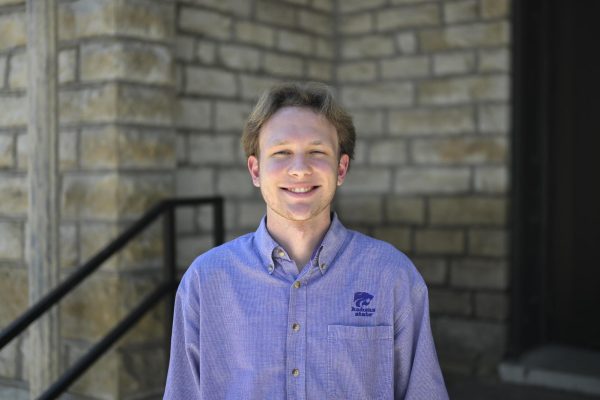
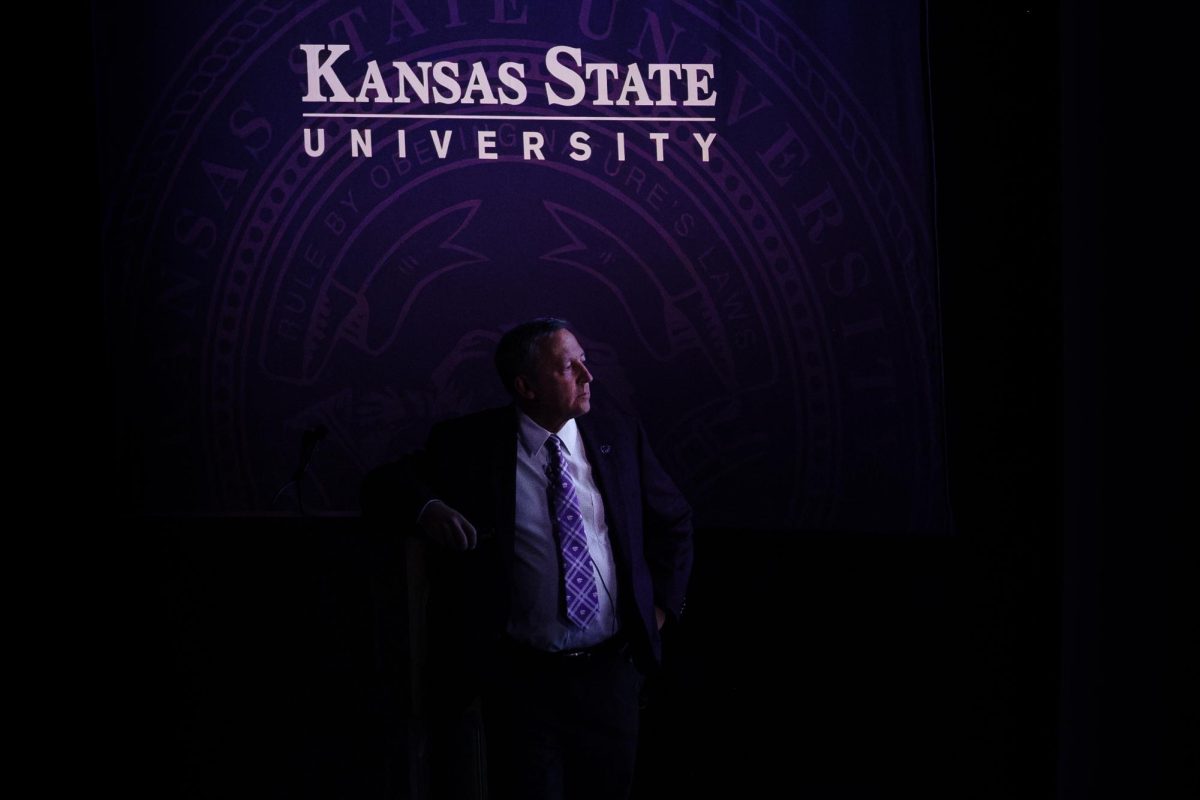
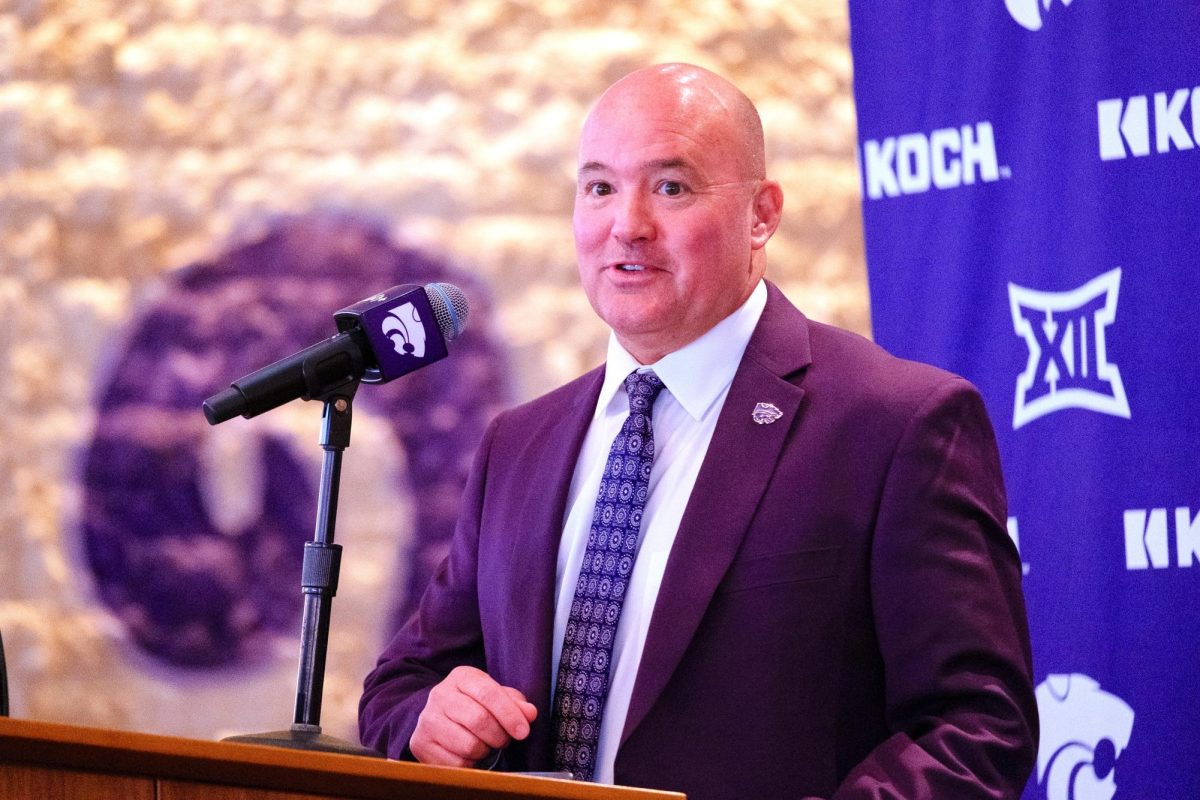
Richard Linton, president of K-State
President Richard Linton, a faculty member at Purdue University in 2001, began his Sept. 11, like many other mornings: in a faculty meeting.
“One of the faculty members, just sitting across from me, was on his phone and he’s like, ‘Whoa,’” Linton said. “He said, ‘Stop,’ and he said, ‘You guys need to know what’s going on.’ And I think he recognized it pretty quickly that he thought that this was not just a plane accident. … And then he looked at everybody, and he said, ‘We need to stop the meeting. America has changed today.’”
Linton said he traveled on 200 airplanes a year at the time. But when the United States grounded all flights after the attack, he had to drive to Arkansas for a program that Sunday.
“You want to talk about the coolest drive you’ll ever have in your entire life,” Linton said. “When you were driving on the road, and every single truck that you go by or every single truck that goes by you has an American flag, and they beep the horn. … Everyone was trying to go through the horror of what they just experienced and had this alive new love for America.”
For Linton, witnessing 9/11 gave him a new perspective on life.
“You start thinking about yourself, you start thinking about your family, you start thinking about what’s meaningful, ” Linton said. “I know I was thinking if I was on that plane, and I had to make a call back to my family or my wife, would I feel good about my life until the time that I had to make that phone call?”
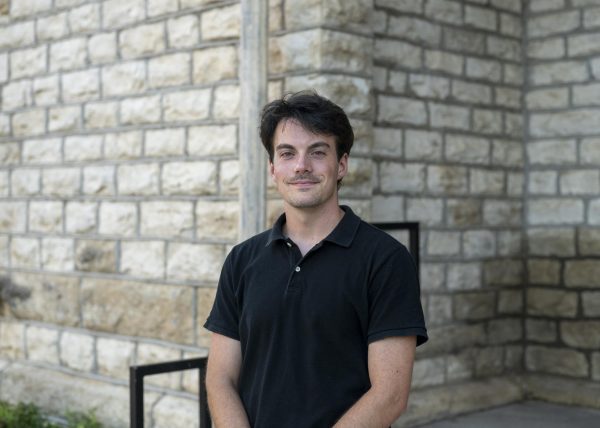
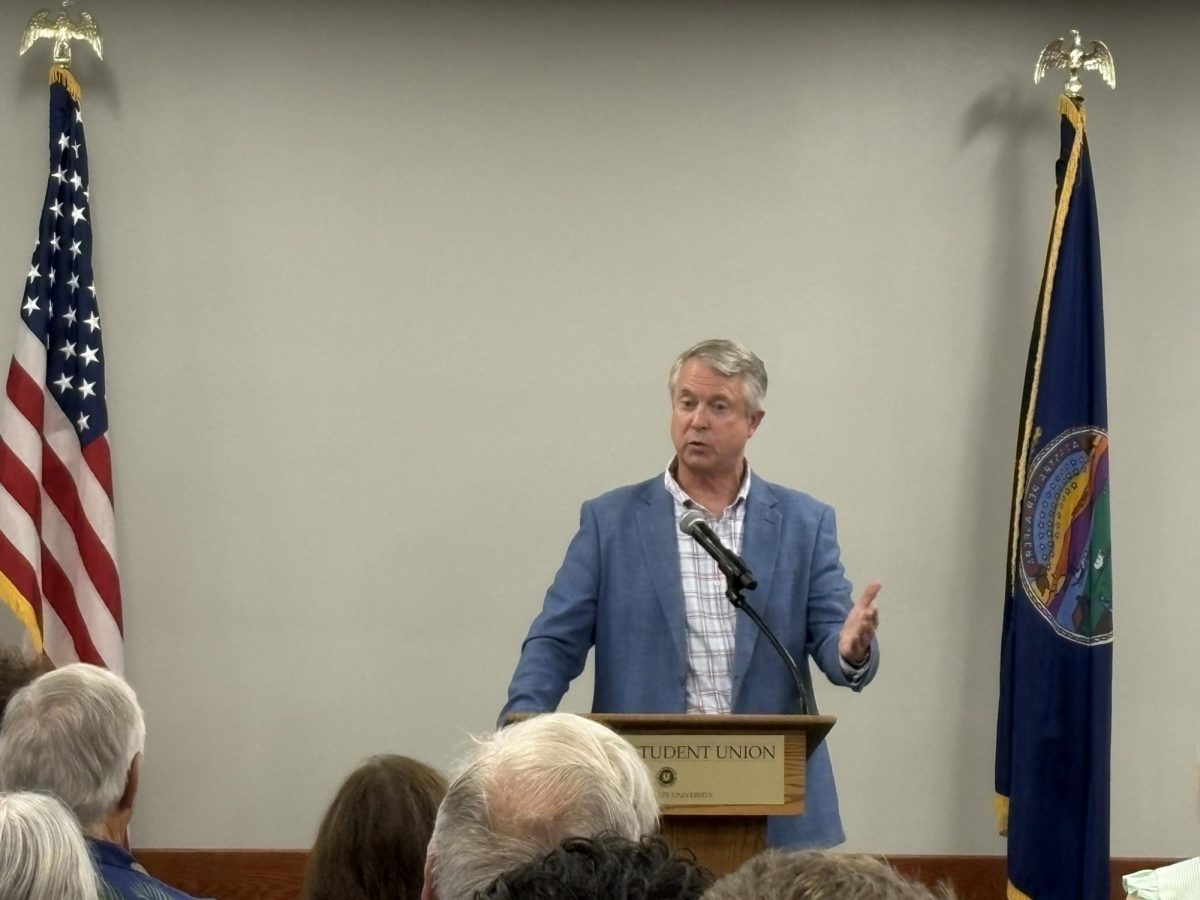
Travis Habhab, retired colonel and executive director of military and veterans affairs

After graduating from K-State in 1998, Col. Travis Habhab joined the military to become an Army aviator. On the morning of Sept. 11, 2001, he was on leave at his parents’ house in Fort Riley on his way to Fort Hood in Texas.
Habhab said he was watching TV that morning when stations began reporting that a plane had flown into the World Trade Center. At first, he thought it may have been an accident, but minutes later, everything changed.
“I watched the second plane hit live,” Habhab said, holding back tears. “At that moment, we knew it wasn’t an accident. I mean, we knew we were at war. … I get emotional here, just thinking about the friends that I’ve lost in combat deployments since 9/11.”
In the years following 2001, Habhab served in both Iraq and Afghanistan, where he formed strong bonds with those he served with. Easter Sunday of 2004 was the first time he lost friends in the line of duty.
“We had an Apache shot down in Baghdad by a man pad [man-portable air-defense system], and we lost both those pilots, Chuck and Shane. … They’ve got some stuff named after them out at Fort Rucker, Ala. … And so every time I go to Alabama, I’ll go to the gym that’s named after them … and a few other things to pay my respects.”
Andrew Smith, director of Wildcat Electronic Media and assistant director of the A.Q. Miller School of Media and Communication
In 2001, Andrew Smith lived in Green Bay, Wisc. and was the sports director and main sports anchor at WLUK Channel 11, a local TV station. Each morning, he led a Bible study, and afterwards returned home to catch up on sleep after late nights at the station. However, on the morning of Sept. 11, 2001, Smith’s wife woke him up with a simple message — “Hey, Andrew, I think you’re gonna want to see this.”
“I got up … and got there in time to see the second plane hit,” Smith said. “I immediately called the station and said, ‘What can I do?’ And they said, ‘Well, it looks like this is going to be a disaster [of] massive proportion. We’re gonna be taking a lot of national programming. I wouldn’t plan to do your sports segment tonight.’ I rushed into the newsroom, and there in the newsroom, we just had three to five networks on at any given time. … And so we were watching; we were just watching coverage. And as it unfolded, watched with horror.”
Smith is originally from New Jersey and spent a lot of time in New York City when he was young. He said he could see the Twin Towers on his drive to church every morning, making their collapse personal and hard to comprehend.
“It was surreal,” Smith said. “We are so used to Hollywood effects. And when you’re watching breaking news happen, and you see something happen that seems like it only ever happens in Hollywood, it is a cognitive dissonance that it takes the mind a minute to catch up. … It all just kind of cascades as the building cascades. … Emotions became very volatile. … I found myself suddenly wanting to cry.”
Following 9/11, major professional sports in the United States shut down for one week. However, once they resumed, MLB’s New York Yankees, representing a city united in tragedy, made it to the World Series that October. Smith, a Yankees fan, said he called his brother who lived in California at the time, and they bought tickets to game three of the Series set for Oct. 30, 2001.
But that game wasn’t just any ordinary World Series game. It was the night the 43rd President of the United States, George W. Bush, threw out the ceremonial first pitch.
“President Bush gets up there, and at that point, nobody cared what your party was,” Smith said. “He was the president, and he threw a strike and [there were] chants of ‘USA, USA, USA,’ everywhere.”
Michael Krysko, professor of history
Dr. Michael Krysko lived in Ridge, New York, a small town on eastern Long Island, with his wife and toddler in 2001. On Sept. 11, he was in his second week working as an instructor at Dowling College, while finishing his studies at Stony Brook University.
“I had a toddler … a little over two years old, [and I] was taking her to daycare,” Krysko said. “My landlord comes out and says, ‘Did you hear the news?’ I said, ‘What news?’ ‘A plane has flown into the World Trade Center.’ And I remember my initial thought was [that it] must be an accident.”
Krysko would drop his daughter off at daycare and drive back home, only to receive a call once he returned.
“When I get back, I get a call from the daycare provider,” Krysko said. “And she was very upset and said, ‘We’re closing the daycare. We need to get all the kids home. We’re at war.’”
After picking up his daughter, Krysko drove to Dowling College expecting to teach his classes that day accompanied by his toddler. However, when he arrived at the college, Krysko found it closed and returned home to his wife to watch the rest of the day unfold on TV.
But it wasn’t just his own memory that remains with him 25 years later — it was his father’s too. Krysko’s father worked for New York City at the time in the Department of Environmental Protection. The Twin Towers’ collapse damaged many of the water mains in the surrounding area, so he had to travel to lower Manhattan to get sufficient water pressure as close to ground zero as possible. Krysko said his father’s first visit to the World Trade Center site was one he’ll never forget.
“He said the thing that sticks with him is he just saw shoes everywhere,” Krysko said. “Lots of shoes, empty shoes … they had cleared all the bodies away from the people who had leapt out of the tower.”

Rachel Dirks, associate professor of music and director of orchestral studies
Rachel Dirks was brand new to her jobs teaching orchestra at Lawrence High School and South Junior High — now Billy Mills Middle School — in the fall of 2001. She began her Sept. 11 at Lawrence High, watching TV with her husband, the high school’s band director, as smoke poured from the North Tower of the World Trade Center
Dirks soon left for her first orchestra class at South Junior High, which consisted of 70 eighth- and ninth-graders. She said parents began pulling their children from class as the morning unfolded, something she wrestled with doing herself.
“As a mother, all I wanted to do was get in my car and get my kid,” Dirks said, tears forming in her eyes. “But I knew I needed to stay and reassure the children that I had in my care.”
That reassurance came in the form of music.
“You could feel the anxiety as the students walked in the room,” Dirks said. “I’m constantly [thinking], ‘Hmm, what could we play next that’s calming?” and trying to keep them at bay. … I remember choosing first the piece that they loved the most, and just working on that to try to calm them.”
Dustin Meritt, assistant teaching professor for the College of Education
On Sept. 11, 2001, Dustin Meritt was a student at Highland Community College and a specialist in the Army Reserves. He said he watched the morning’s events unfold on a TV in his apartment.
“I think we must have had ESPN on at the apartment, and then they … broke into the broadcast and talked about it [the attack],” Meritt said. “That day, it changed everything.”
After graduating from Highland Community College with an associate’s degree, Meritt enrolled at K-State. However, in late 2002, he was activated to the military and had to unenroll from his courses. Meritt was stationed in Iraq for one year, an experience he said dramatically impacted his perspective on life.
“You grow up,” Meritt said. “You go over [to Iraq], you’re like a college kid, and so then you … grow up pretty quick. When I was overseas, I realized you could not come back. … Something could happen, and you never go home. … I never thought of life like that.”
After the attacks, Meritt returned to his hometown of Vermillion, Kan., where he went on active duty for three years. Then, in 2007, he left the military and earned a bachelor’s degree in restoration management from McPherson College, before going to Sterling College to study education. After graduating from Sterling, Meritt taught special education for six years before returning to K-State in 2016 to teach and earn a PhD in education.
Meritt said without the events of Sept. 11, 2001, his life’s trajectory would have been very different.
“I wouldn’t have went active duty had I not deployed,” Meritt said. “I wouldn’t have done my stay in the reserves. … I paid into the active duty GI Bill, so it allowed me to have more money to go to college. Not just pay for one degree, but then go into another. … So it was just this ripple effect. You have this massive thing that happens, and then there’s these ripples, and then there’s micro-ripples of how it just changed the world, changed a lot of people in it.”