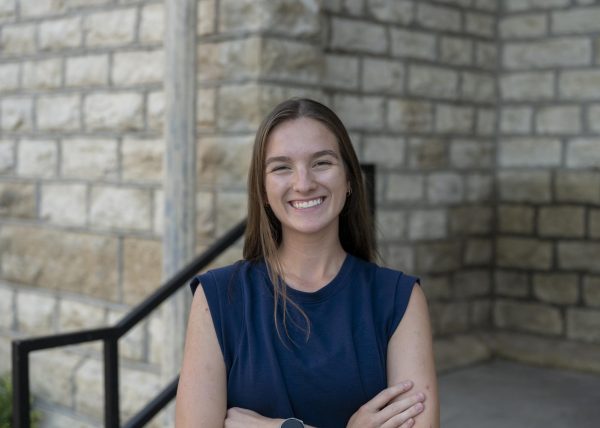







































































































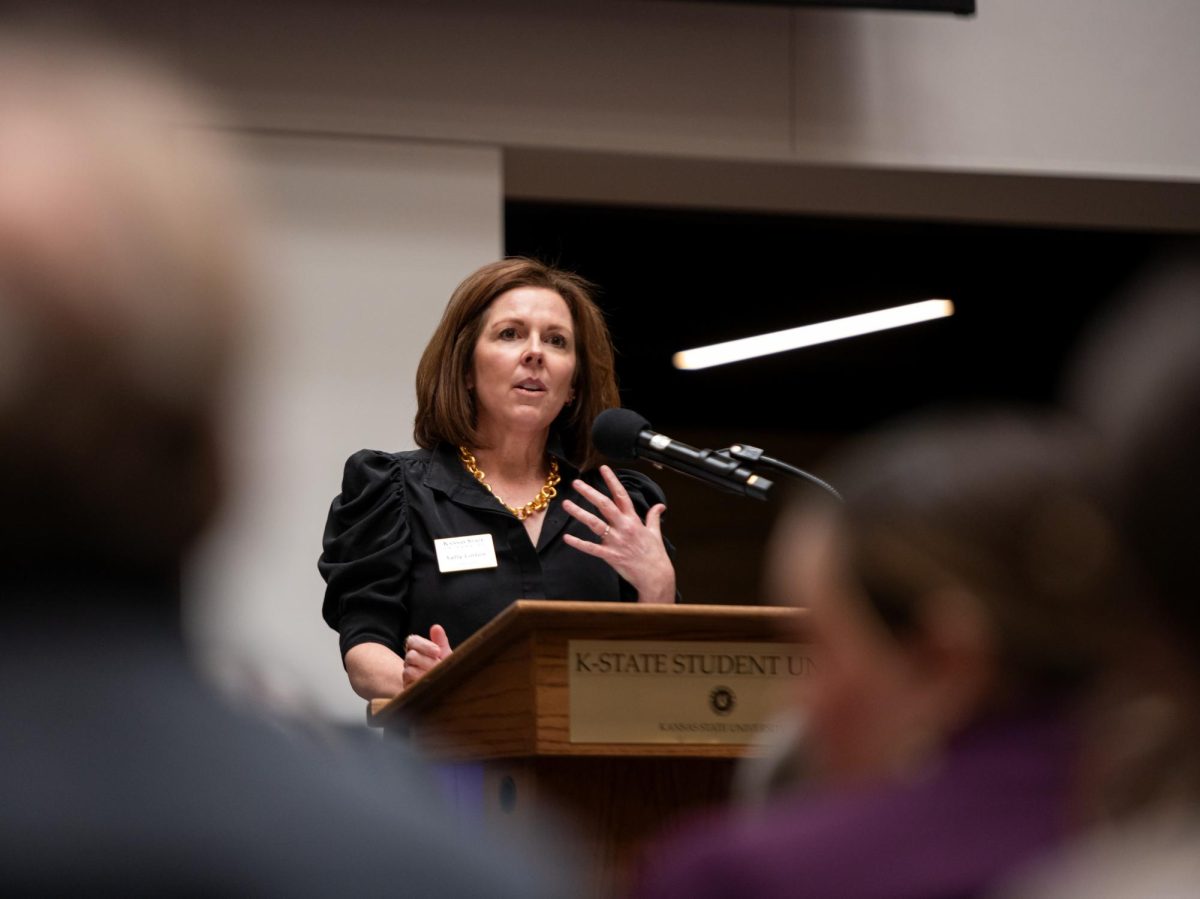
As the school year commences and classes may start to become hectic, it is okay to ask for help. No matter what you need or when you need it, K-State’s first lady, Sally Linton, is there to give a helping hand. In 2020, inspired by her family’s journey, Linton created her own private practice, Coach With Sally, to help others discover their true strengths. In a role often defined by public appearances, Linton has created a unique space focused on mental health and neurodiversity advocacy.
“I strive to bring forth honesty and compassion when working with my clients,” Linton said. “Client sessions are approached with a sense of wonder and curiosity — in a safe environment free from judgment and shame. My hope is for each person to discover their own character values and unlock their unique strengths — to grow into the person they have always wanted to be.”
While her early coaching focused on creating group environments, the client-centered philosophy shapes both her one-on-one sessions and local community programming here in Manhattan.
“I do the majority of my coaching online over Zoom and have clients throughout the US and in Ireland,” Linton said. “I also run a bi-weekly Refuel & Refocus session at the Hale Library on Monday afternoons. It is a body double session where you bring your non-preferred tasks that are hard to start. We hang out, eat free food from JP’s, and work independently in the same space.”
Her deep commitment to the neurodiverse community didn’t just start overnight. It grew from over 10 years of personal exploration with certifications in neuroscience, ADHD, executive functions, mindfulness and yoga, along with a desire to bring calmness into her family’s everyday life.
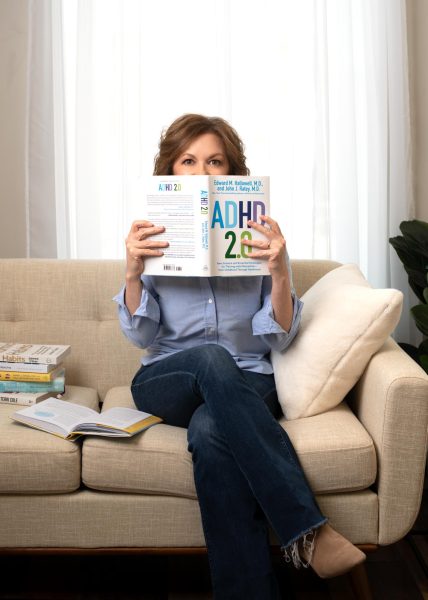
“My initial intention was to help my own family after a diagnosis, which then bloomed into helping others too,” she said. “There’s a lot of information out there to dig through, especially if you are just learning about neurodiversity and what it entails. As I grew my self-awareness and implemented what I was discovering, I saw real, lasting change in myself and my family. The chaos was decreasing. I understood who I was and what strengths we each brought to the table. I wanted to help others experience the same shift.”
Self-acceptance and growth mindset lie at the heart of Linton’s coaching ideology. With her personal breakthrough at home, she was able to form the backbone of her professional work, where sifting a client’s internal narrative takes priority over mundane tasks.
“People with ADHD have often received many negative comments or suggestions throughout their lives,” Linton said. “The research tells us that by age 11 or 12, people with ADHD have received 20,000 more negative comments than their peers. That dramatically impacts how you feel about yourself. Oftentimes, when people first come to me, I will hear ‘I am broken’ or ‘I am a bad person.’ After working together and focusing on their strengths and internal beliefs, that shifts to ‘I am not broken.’ It’s an incredible feeling to see the shift in how they feel about themselves.”
Dismantling self-doubt is an essential first step before any practical organizational tools can take root. With Linton’s experience, she sees many clients who come to ADHD coaching to build strategies; however, emotional reframing is the crucial step before tactical skills can be built.
“Let’s say, you believe ‘I’m lazy and unmotivated,’” she said. “That impacts everything you try to do, including organizing schoolwork and email. When you work on what’s happening with your thinking, by shifting to more positive beliefs, then you can apply it to your entire life and any strategy you build. So, first, we work on strengths and mindset, then you create your own strategies that work for you. This is how you work with your brain and not against it.”
While learning to work with your brain is a crucial inner step, Linton points out that the outside world still has a lot of catching up to do. Through her coaching, Linton has learned that the most common misconception is that when people see an uncommon behavior from an individual with ADHD, they believe they are acting that way on purpose.
“If someone is struggling, there is a reason why,” Linton said. “When working with others who are having difficulty, we need to pause and swim upstream. We need to ask open-ended questions like ‘I noticed that seemed hard for you, what’s up?’ ‘What support do you need from me to help you through this?’ We need to get rid of our assumptions and preconceived notions; we need to validate how someone feels and dig deeper. This is a very sensitive area for me because I know the damage it can cause for someone with ADHD. I like to think of it this way: ‘If you are treating someone in a way you would not want to be treated, then it is time to change your approach.’ Offer kindness and support. These are incredible brains and people who change the world when given the chance.”
Linton not only calls on educators and community members to lead with empathy, but she also encourages individuals seeking help to take the first step towards building their own support system.
“Find someone you feel safe with and ask for support — a friend, a teacher, the Student Access Center, CAPS, or a family member,” she said. “Take the initiative to talk to your Professors at the beginning of the semester even though it feels hard. What I love about the K-State campus is the genuine care faculty and staff have for the students. They want to help. It is also better to build your support team before you need it; that way you have the support in place when things feel overwhelming.”
Whether through virtual coaching or bi-weekly meetings at Hale Library, Linton’s work serves as a daily reminder that neurodiversity is not a flaw needing to be fixed. By pairing early self-advocacy with community support, students can move past the fear of asking for help and instead learn to work with their brains instead of against them.