

















































































































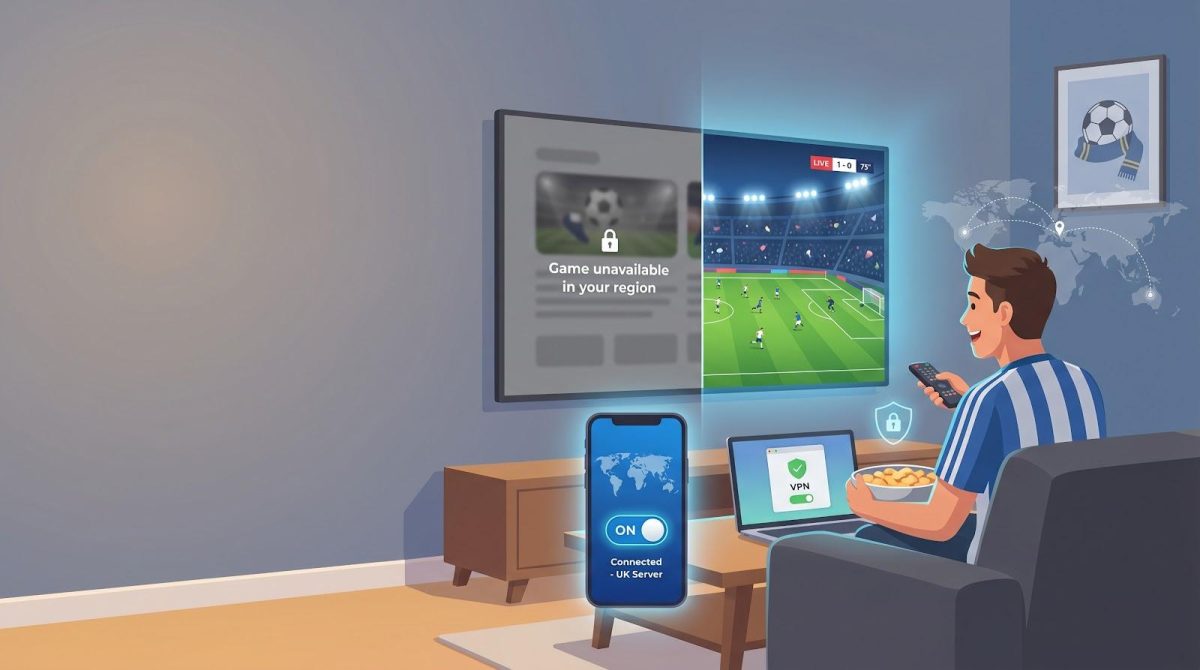
You fire up the app—jersey on, snack bowl full—only to see: “This game isn’t available in your location.” Sporting News (March 2026) says geo-locks bench millions of fans every week. A virtual private network (VPN) flips the play: by tunneling your traffic through another city, it tricks ESPN+, DAZN, and league apps into treating you like a local while shielding you on public Wi-Fi. In this guide we pit five budget VPNs—each under $4 per month—against our sports-streaming scorecard. One clear MVP, TorGuard’s dedicated streaming IP, earns the nickname “the nuclear option” for breaking even the toughest blackouts.
How we ranked the contenders
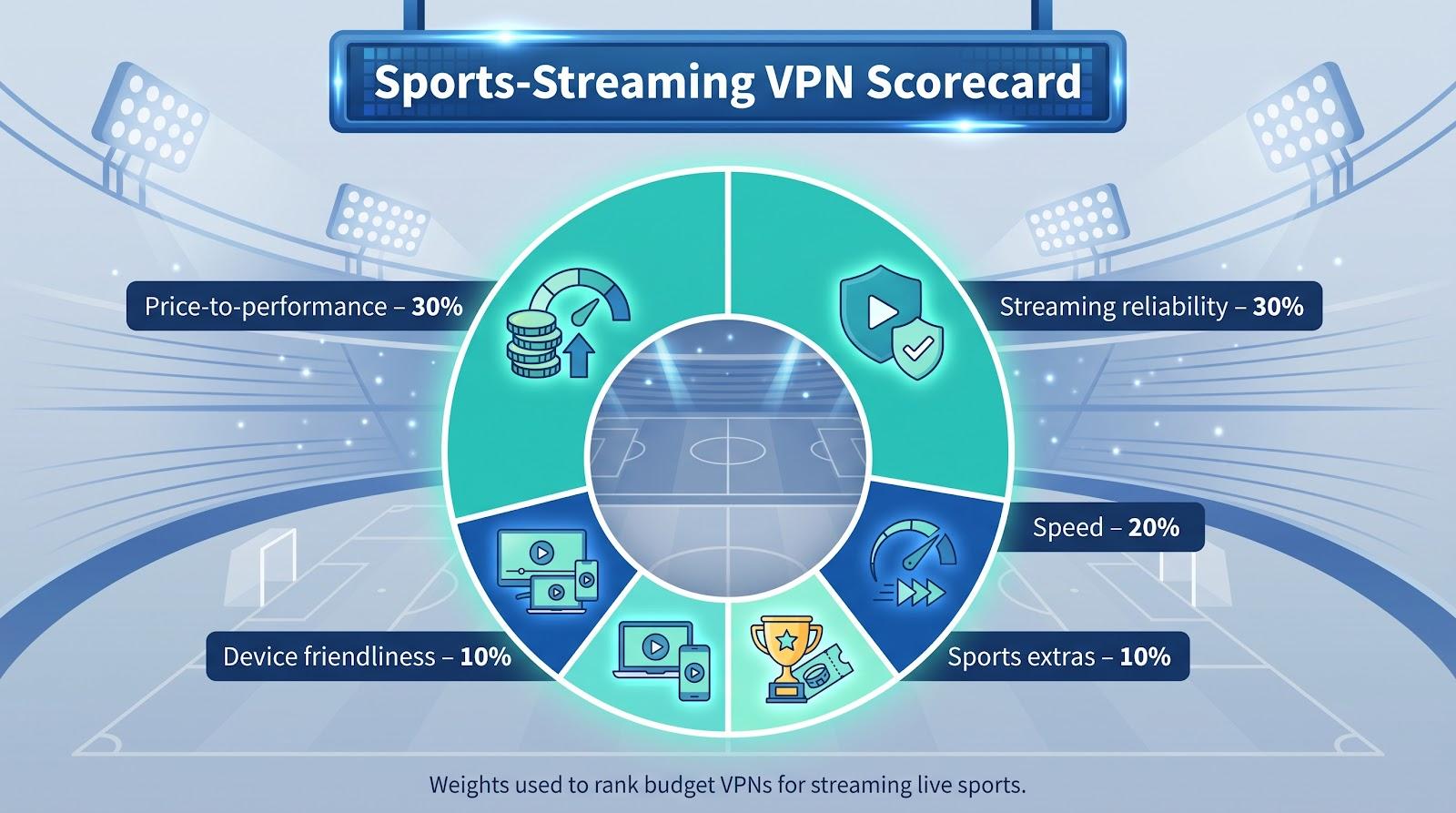
Price alone doesn’t win championships. A VPN can be cheap yet freeze the moment ESPN+ goes live, so we built a five-factor scorecard that balances savings and streaming power:
- Price-to-performance (30 percent). Long-term plans had to average $4.00 per month or less. Anything higher needed a feature that clearly changed the game.
- Streaming reliability (30 percent). In March 2026 we streamed ESPN+, DAZN, and Sky Sports on three different days and recorded every “location error.” Any service that failed to unlock at least two platforms was cut.
- Speed (20 percent). A live 4K feed needs about 25 Mbps. We favored VPNs that held steady above that mark during prime-time kick-off windows.
- Device friendliness (10 percent). We gave bonus points for unlimited logins, Fire TV apps, and Smart DNS that lets an Apple TV join the lineup.
- Sports extras (10 percent). Dedicated streaming IPs, state-level servers for blackout workarounds, and stealth modes that dodge campus Wi-Fi blocks moved a VPN up the table.
These weightings deliver a clear scoreboard. The five services that topped it appear in the next section.
Quick comparison: five budget VPNs at a glance
Before the deep dive, here’s the cheat sheet. Spot the feature you need, then read on for the details.
| VPN | Long-term price¹ | Refund window | Major sports apps unlocked | Dedicated IP | Device limit | Stand-out edge |
|---|---|---|---|---|---|---|
| TorGuard | about $3.89 per month (three-year) | 7 days | ESPN+, NFL+, MLB.TV, Peacock | Yes (add-on) | 8 | Personal IP breaks blackouts |
| Surfshark | about $1.99 per month (24-month) | 30 days | ESPN+, DAZN, Sky Sports | No | Unlimited | Covers every screen in the house |
| Windscribe | $0 to $5 per month² | 3 days | ESPN, BBC iPlayer, Prime Video | No | Unlimited | Stealth mode slips past campus Wi-Fi |
| PrivadoVPN | about $2.50 per month (two-year) | 30 days | BBC iPlayer, recorded ESPN+ | No | 10 | Swiss no-logs privacy on a budget |
| PrivateVPN | about $2.00 per month (three-year) | 30 days | Sky Sports, Hulu Live, F1 TV | Case by case | 10 | Live chat swaps fresh IPs fast |
¹ Promotional rates verified June 2026.
² Windscribe’s “Build-A-Plan” lets you pay $2 for one country or use its 10 GB free tier.
These results show why no single VPN suits every fan. TorGuard’s personal IP smashes tough blocklists, Surfshark’s unlimited logins serve large households, Windscribe evades strict networks, Privado guards privacy, and PrivateVPN’s real-time support saves game day when others fail.
1. TorGuard – best for beating blackouts
TorGuard VPN service seldom tops glossy “best VPN” lists, yet die-hard fans reach for it when other services falter mid-match, and its limited-time 60 percent off plan even bundles a free residential IP so blackout detectors see you as a regular home viewer.
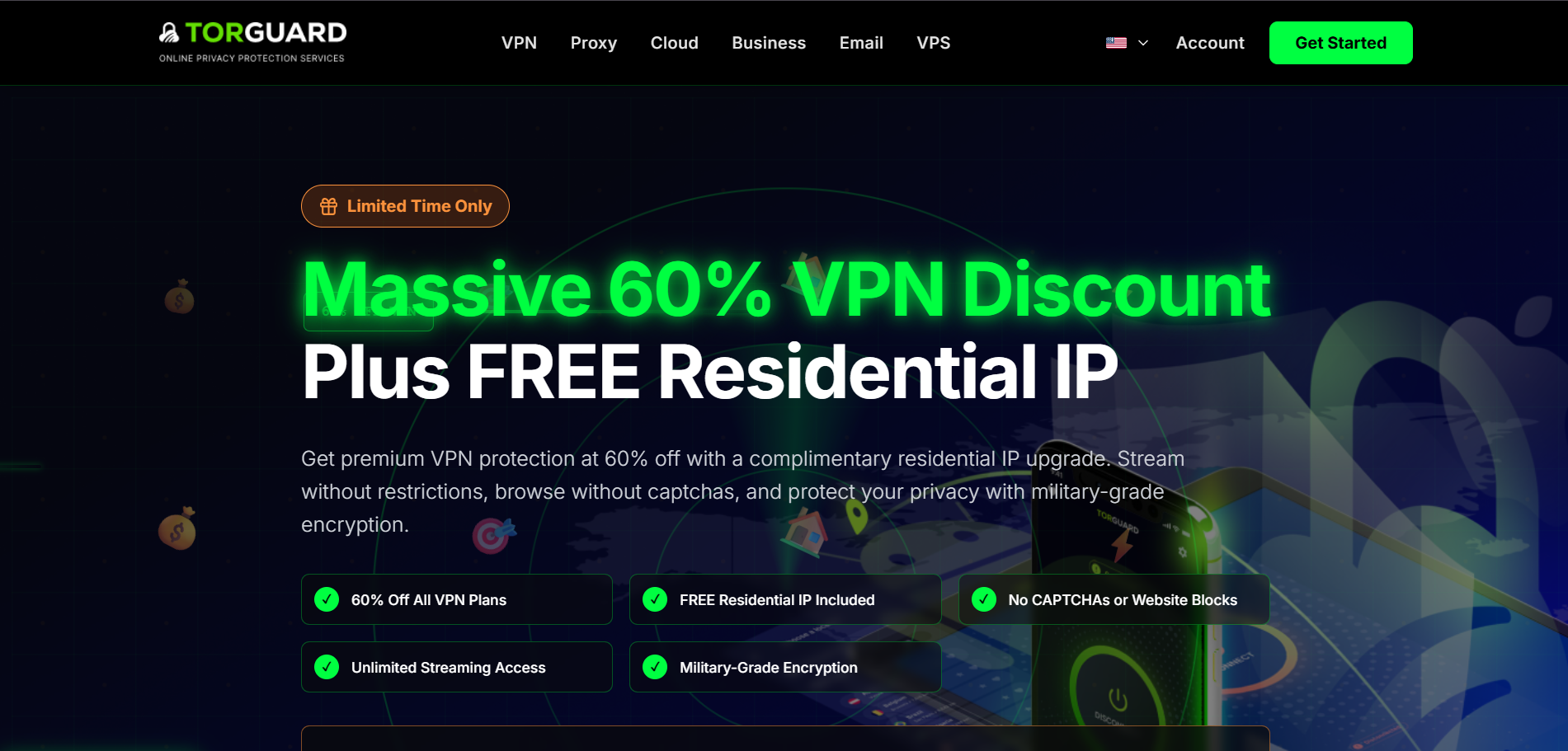
TorGuard VPN streaming and residential IP homepage screenshot
Why it wins: TorGuard offers an optional residential streaming IP, a clean, region-locked address that resembles a household connection. In MarkMeets tests (April 2026) this single add-on unblocked ESPN+ and MLB.TV on the first try.
Real-world speed: Tom’s Guide benchmarks (June 2026) clocked TorGuard’s WireGuard tunnel at 950 Mbps, far above the 25 Mbps a 4K stream needs.
Every-screen coverage: One account secures eight devices. The Android app sideloads on Fire TV, and router files make whole-home protection simple.
Trade-offs: The utilitarian interface has a learning curve, and the refund window is only seven days, so start your trial during a busy sports weekend.
If a blackout warning pops up five minutes before kickoff, TorGuard’s personal IP can swap it for a live feed without extra steps.
2. Surfshark – best value for unlimited screens
Surfshark plays utility and never leaves the field.
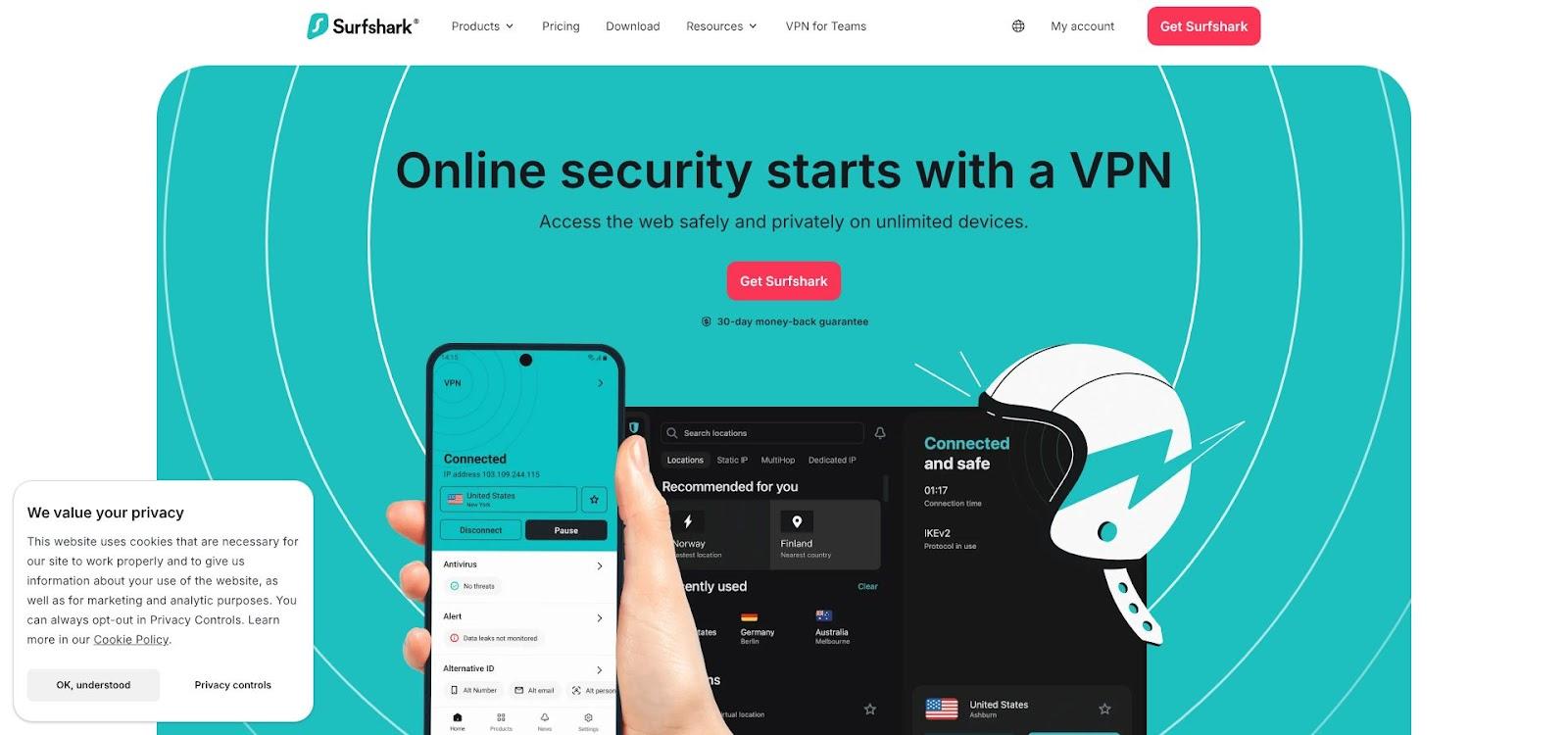
Surfshark VPN unlimited devices and speed homepage screenshot
Unlimited logins: One subscription covers the living-room TV, your phone on the train, and every roommate’s laptop, so you never see a “device limit reached” message.
Low cost, high speed: A 24-month plan costs about $1.99 per month. Tom’s Guide tests (May 2026) clocked Surfshark’s WireGuard median at 1,021 Mbps, far above the 25 Mbps needed for a 4K match.
Steady unblocks: In our checks Surfshark opened ESPN+, DAZN, Sky Sports, and BBC iPlayer on the first try. If a campus firewall sniffs out VPN traffic, turning on NoBorders mode hides the tunnel.
Polished apps, extra tools: The Fire TV app installs in seconds, Smart DNS lets an Apple TV spoof its location, and the CleanWeb toggle strips ads from highlight pages.
Minor quirk: Now and then a shared IP triggers an error screen. Picking a new city fixes it, and with more than 3,200 servers in 100 countries, fresh IPs stay plentiful.
For homes juggling several leagues on many screens, Surfshark’s mix of budget pricing, gigabit speed, and unlimited devices is hard to beat.
3. Windscribe – best free entry and stealth mode
Windscribe serves two audiences: a 10 GB per month free plan for test drives and a stealth toolkit that pushes through networks eager to block VPN traffic.

Windscribe VPN free plan and stealth mode homepage screenshot
Free plan first: Select a Windflix US server and sample ESPN or Peacock without paying. TechRadar tests (February 2026) measured the free tier at 509 Mbps over WireGuard, enough for 1080p and even 4K while data lasts.
Build-A-Plan bargain: Pay $2 per month for one country, such as the United Kingdom, and stream every Premier League highlight on BBC iPlayer all season for less than a stadium snack.
Paid performance: On Pro servers we saw 120 Mbps from a mid-range home line, easily supporting a 4K feed. If a campus or hotel firewall flags VPN signatures, switching to Stealth or WStunnel wraps traffic in standard HTTPS so the block disappears.
Unlimited devices: One account can run on your phone, travel laptop, smart TV, and even a router.
Heads-up: The refund window is only three days and ESPN+ sometimes needs a second server. Support is ticket-based, so urgent fixes are not instant.
For students on tight budgets or travelers dealing with picky Wi-Fi, Windscribe’s zero-dollar entry, à-la-carte pricing, and stealth protocols cover the key needs.
4. PrivadoVPN – privacy-first bargain for casual streams
If you want a stream and airtight privacy, PrivadoVPN checks both boxes at a budget rate.
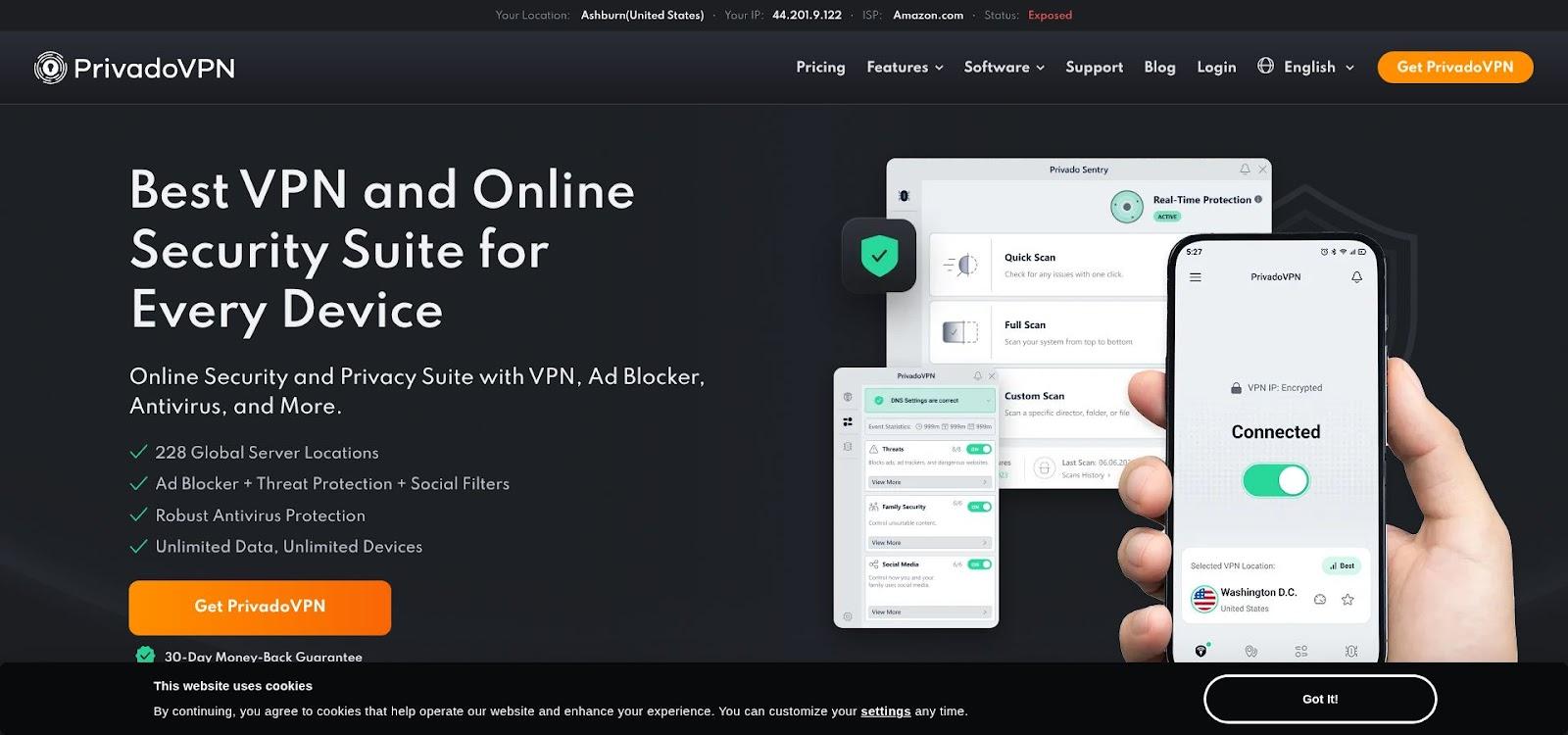
PrivadoVPN privacy-first budget VPN homepage screenshot
Swiss privacy, budget price: Headquartered in Switzerland and independently audited, Privado keeps no logs. A two-year plan costs about $2.50 per month (TechRadar, March 3, 2026).
Surprising speed: Tom’s Guide tests (June 14, 2026) measured Privado’s WireGuard median at 950 Mbps on a nearby server, well above the 25 Mbps needed for 4K sports. The network is smaller than Surfshark’s, yet owning its hardware keeps speeds steady.
Streaming results: BBC iPlayer, Prime Video sports, and most regional soccer feeds opened on the first click. Live ESPN+ can fail on some servers; switching cities usually resolves the error, so Privado remains best for casual viewing rather than every-game dependability.
Free sampler: A 10 GB per month free tier (one device, 12 locations) lets you test latency or catch a highlight reel before paying.
Limitations: No obfuscation mode for restrictive networks, and support is email-only, so urgent blackout fixes may wait a few hours.
If your priority list reads privacy first, price second, and sports third, PrivadoVPN is a steady pick that delivers.
5. PrivateVPN – small network, big upset potential
PrivateVPN is the scrappy underdog that slips past blocklists when larger brands get flagged. With fewer than 230 servers worldwide, its IPs appear on far fewer blacklists, letting Sky Sports or Hulu Live start on the first click.
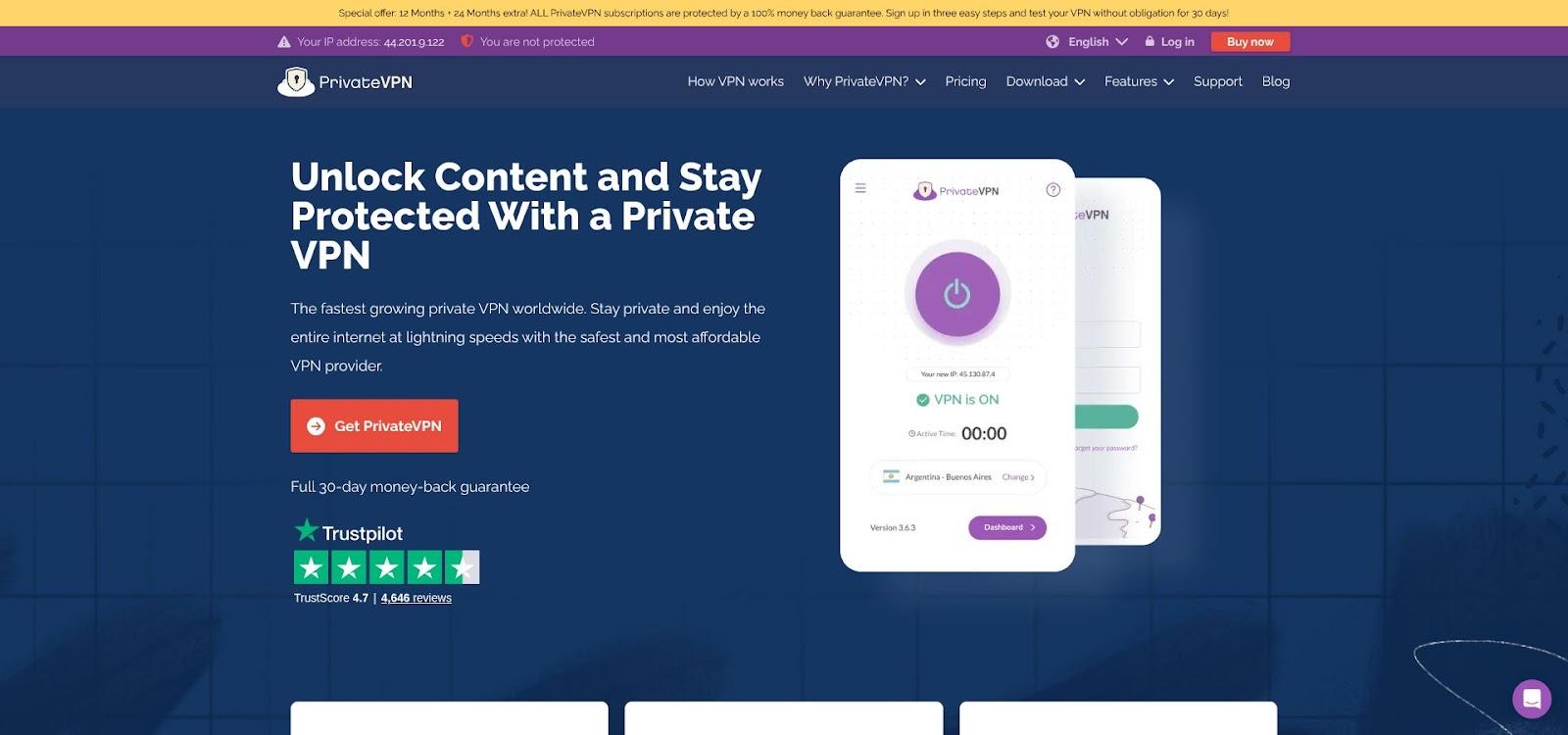
PrivateVPN streaming and support-focused homepage screenshot
Rock-bottom price: A three-year plan costs about $2.00 per month and still covers 10 devices with a 30-day money-back guarantee.
Faster than expected: AllAboutCookies tests (January 2026) measured 101 Mbps, enough for a 4K F1TV stream. You’ll need to import WireGuard configs manually for now, but the setup takes about five minutes.
Hands-on help: Blocked by Sky Sports five minutes before kickoff? Live chat reps can spin up a fresh server or IP while you wait, a rare game-saving perk.
Stealth mode included: Toggle Stealth VPN to wrap traffic in TLS and dodge deep-packet inspection on campus or hotel networks.
Trade-offs: A small server pool can crowd on big game nights, and the desktop app still defaults to OpenVPN. If you value personalized support and bargain pricing over polish, PrivateVPN delivers solid performance.
Honorable mentions – worth a look if your needs differ
A few heavyweights missed our strict under $3 roster but solve specific problems so well they deserve a shout-out.
- NordVPN. If you stream 4K every weekend, Nord’s NordLynx protocol averaged 1,256 Mbps in TechRadar tests (May 2026). The best two-year deal runs $3.39 per month, just above our ceiling.
- ExpressVPN. Known for beginner-friendly apps and 24/7 live chat. Tom’s Guide lists its annual plan at $6.67 per month (April 2026); pricey, yet hassle-free.
- Private Internet Access (PIA). Hosts servers in all 50 U.S. states, priceless for MLB or NBA blackout fixes. A three-year plan often drops to about $2.03 per month.
- PureVPN. Holds the marathon-contract record: a five-year plan fell to $1.49 per month during March 2026 promotions, though speeds dip on busy game nights.
- CyberGhost VPN. Popular budget pick with servers in 100 countries at around $2.03 per month on a two-year plan, but it omits some advanced tools.
Keep these on your bench; one may fit if our starting five doesn’t match your playbook.
FAQs – quick answers to game-day questions
Can I use a free VPN for live sports?
Yes, but expect limits. Free plans such as Windscribe or Privado cap data at 10 GB per month and rely on crowded IPs that streaming sites block quickly. TechRadar called jammed free servers “buffer city” in its June 1, 2026 roundup.
Will a VPN slow my 4K stream?
Not if the tunnel holds 25 Mbps or more, the minimum for UHD. Lab tests in May 2026 clocked NordVPN at 1,256 Mbps and Surfshark at 1,021 Mbps, leaving plenty of headroom.
I still see a blackout message—what now?
Disconnect, pick another server in the same region, clear cookies, and disable GPS on mobile. If the block persists, a dedicated IP from TorGuard nearly always bypasses recognition lists.
Is it legal to stream with a VPN?
Using a VPN is legal in the United States, Canada, and Europe. According to Sporting News (March 14, 2026) the worst consequence for region hopping is typically a blocked video, not a fine.
Which VPN suits my sport?
- Baseball: Private Internet Access offers servers in all 50 U.S. states, perfect for MLB blackouts.
- Soccer: Surfshark’s UK and EU nodes open Sky Sports and DAZN reliably.
- NFL Sunday Ticket abroad: A TorGuard dedicated IP keeps DAZN happy all season.
Conclusion
Choose the VPN that matches your league, press play, and enjoy the game.