













































































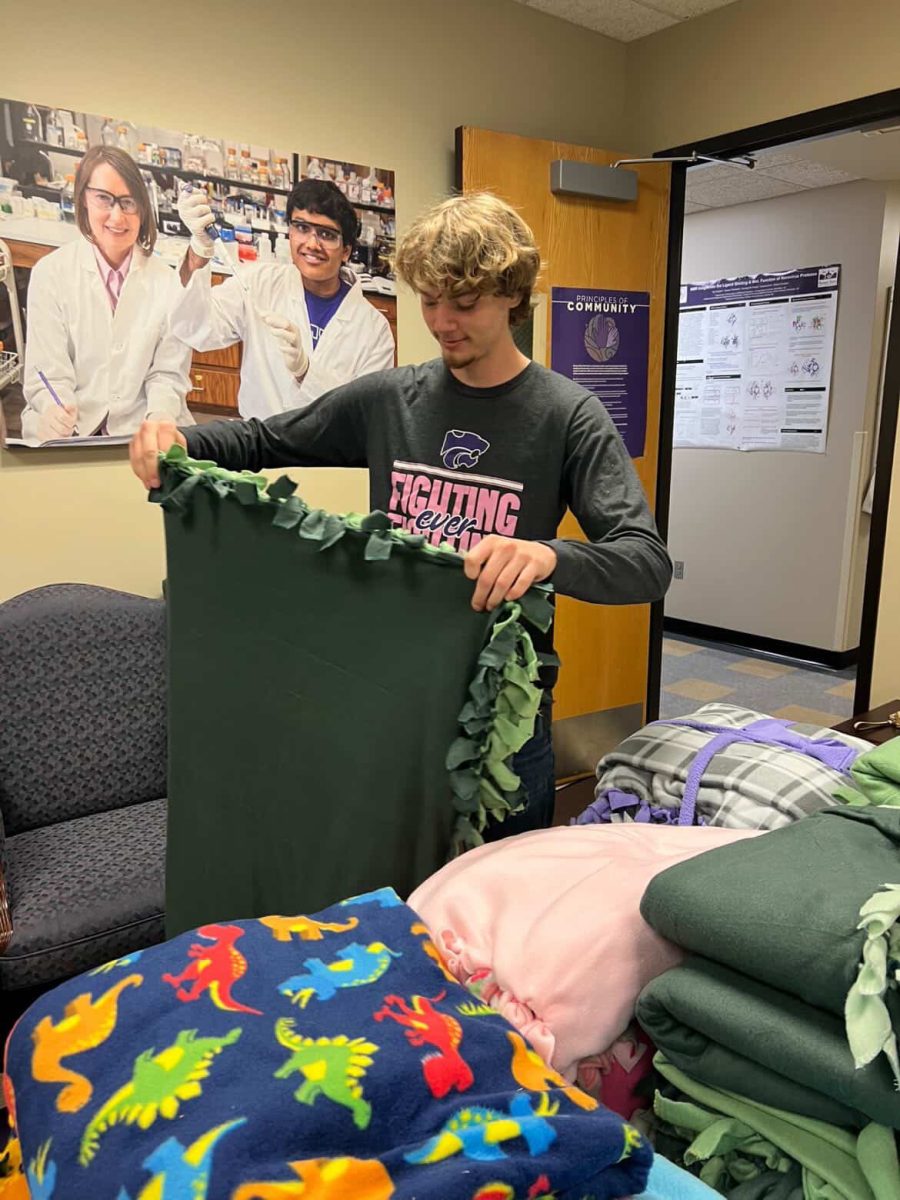
Cancer is often talked about in terms of statistics, research breakthroughs and awareness campaigns. But inside the Johnson Cancer Research Center (JCRC), filled with tie blankets, handwritten notes and port pillows, Cats for a Cure is focused on something more personal — reminding patients that they aren’t alone.
What began as a small research-based organization with only a few consistent members has grown into a campuswide effort centered on community outreach and support for cancer patients. This year, the organization expects to distribute around 190 care packages to cancer centers across Kansas, a major jump from the roughly 28 packages assembled last year, the first year of the project.
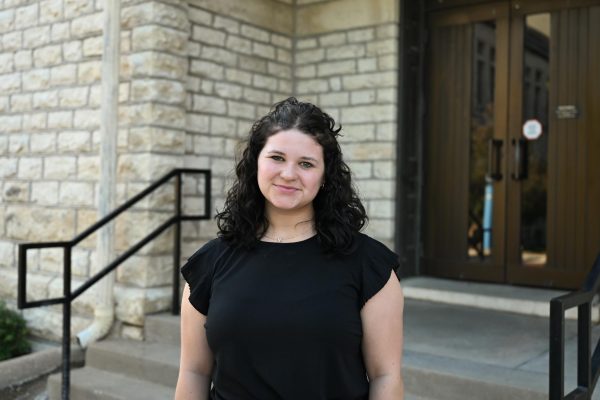
For Alynna Mattox, senior in life science and integrative health studies and president of Cats for a Cure, the growth reflects years of rebuilding the organization from the ground up.
“Cats for a Cure is a student organization that partners with the Johnson Cancer Research Center here on campus,” Mattox said. “And we do whatever we can to help promote research. We also do a service project, which is making care packages for cancer patients.”
Mattox joined the organization during her sophomore year when it was still called Cancer Fighters. At the time, meetings primarily centered around listening to cancer researchers present their work, but attendance was sparse.
Working alongside former JCRC director Sherry Fleming, Mattox helped reshape the organization, focusing not only on research awareness but also direct service. Since then, the group has expanded its membership and volunteer efforts through projects like sewing port pillows, making tie blankets and organizing donations for care packages.
“We try to do as much volunteering as we can with service project stuff,” Mattox said. “We’ve been making port pillows in the library and teaching students how to sew those, which cover the seat belts so the chemo port doesn’t rub. We make the tie blankets, and then we try to fundraise and put out our Amazon wish list to get the items for the care packages, which is our big, end-of-the-year thing.”
The organization sends the care packages out to various locations, including the University of Kansas Medical Center, Children’s Mercy and cancer support centers in Manhattan and Reno County.

For Mikynzie Tatro, sophomore chemistry major and the organization’s treasurer, the club allowed her to immediately become involved on campus while contributing to something meaningful.
“My freshman year, I was just trying to look for somewhere to get involved in,” Tatro said. “And then I saw Cats for a Cure here with Alynna and her vice president, and I thought, ‘Hey, that would be a cool thing to get involved in.’”
As the organization has grown, so has the impact of its outreach. Tatro said seeing reactions from patients and medical staff has reinforced the importance of the group’s work.
“I think that it is definitely very rewarding in terms of knowing that we’re making an impact on people, no matter how small it is,” Tatro said. “When we went to the Manhattan Central Cancer Center, they were so excited to see us. They were ecstatic. The staff there, we took a picture and everything. They were like, ‘This helps out so much.’”
Much of the organization’s ability to expand comes from community support. Mattox said nearly everything used in the care packages was donations through fundraising efforts or purchased from the organization’s Amazon wish list.
“We rely solely on community help, fundraising efforts, donations,” Mattox said. “Everything you see in this room, for the most part, was bought off our Amazon wish list by community members, family members, people that want to help support us. And it’s a great way to get them involved, too, in giving back to the community.”
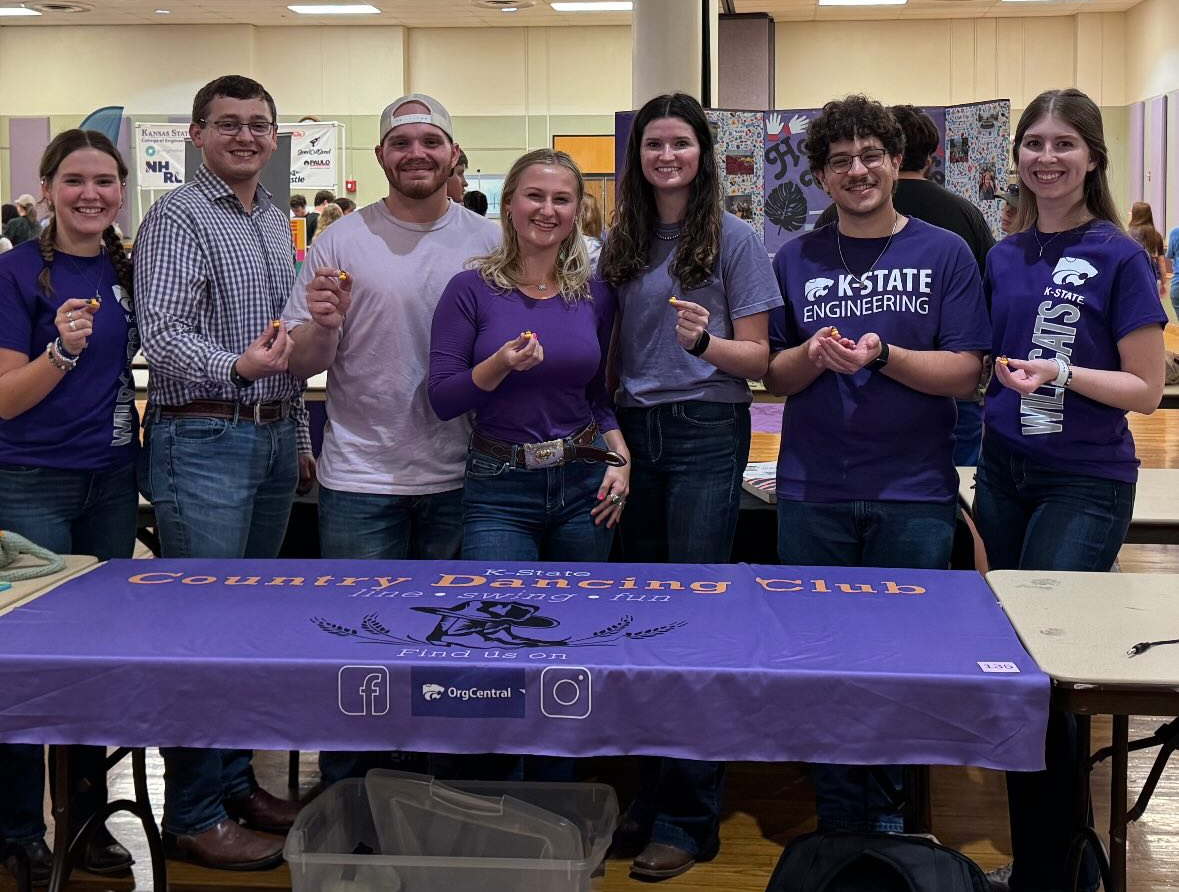
Beyond assembling packages, Mattox hopes the organization also broadens conversations surrounding cancer and the people affected by it. During tabling events, members display ribbons representing different forms of cancer and invite people to contribute to a “Puzzle of Hope,” where participants write the names of loved ones affected by cancer on puzzle pieces that are later assembled together.
“My big thing is that most people think cancer, they think breast cancer, or they think prostate cancer,” Mattox said. “But there are so many different types of cancer, and all of them matter.”