















































































































In a world of technology that far surpasses the average American’s knowledge, privacy online can feel like a myth. However, the problem of privacy online is not that people are unaware — it is the helpless feeling that nothing can be done.
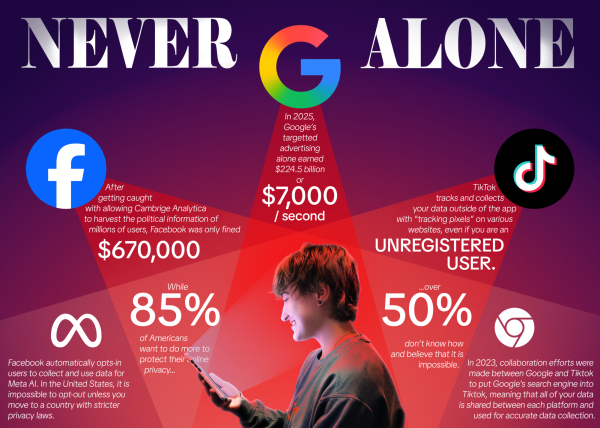
In fact, while nine out of 10 Americans consider online privacy an important issue, 55% believe it is impossible to fully protect their privacy, according to Exploding Topics.
This learned helplessness is scary to me as an online privacy hobbyist. It shows that companies’ efforts to ensure people accept the fact that they will be stalked and tracked are working very well.
With how advanced modern technology is as well, many people simply don’t know much about the technology they use every day. For many, it seems the only options to get their privacy back are to become a tech expert, drop off the face of the earth or give up.
I felt like this, too. But as I’ve learned more about online privacy, I’ve realized that the solution for many isn’t so black and white. While anyone who is online will never receive true privacy, some simple changes can make users much safer without completely altering how they use their devices.
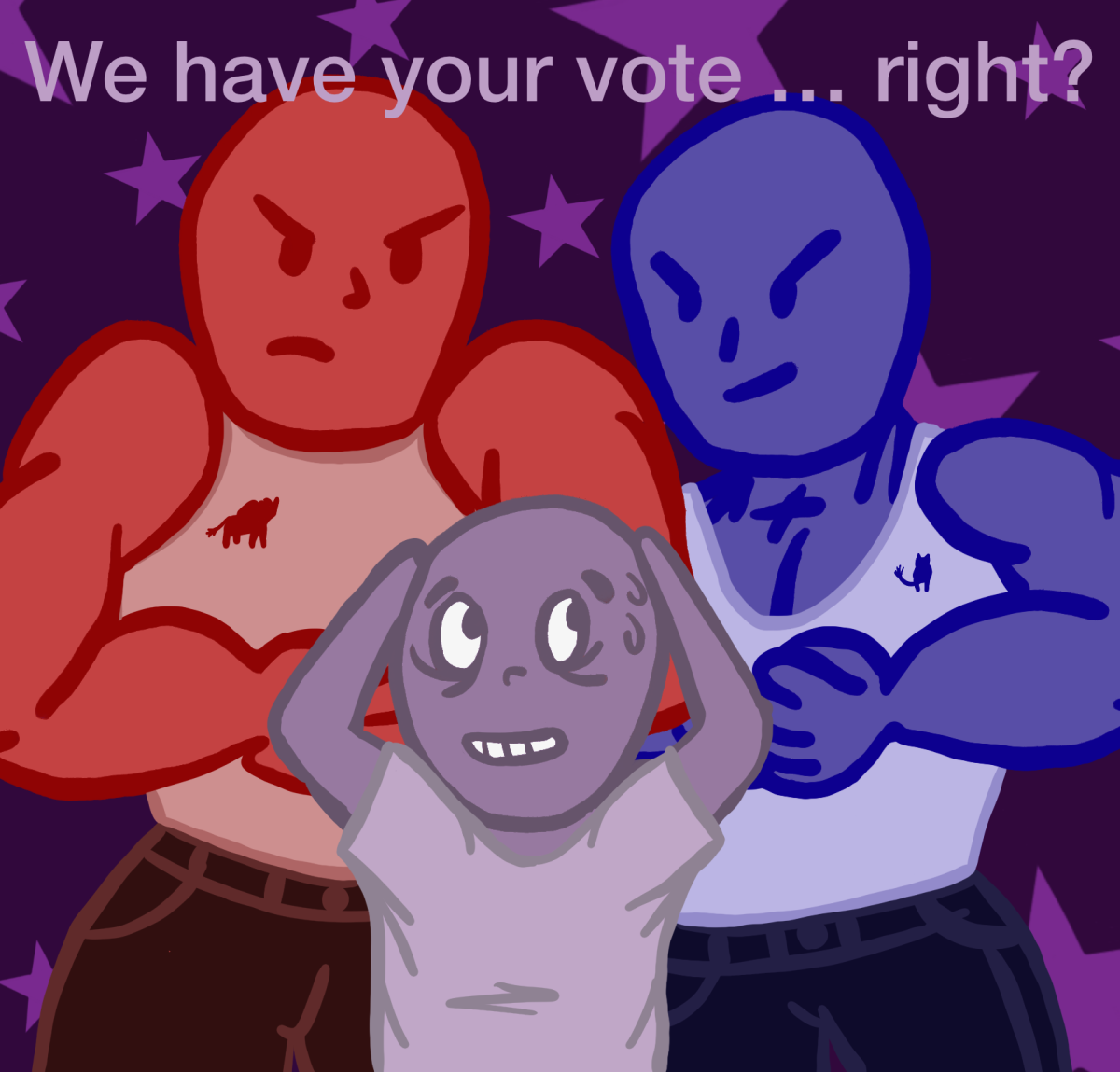
But why shouldn’t we give up? Online privacy is more than just stopping corporations from stalking; it’s about regaining one’s autonomy. Corporations stalk and track a person’s data, compile it with millions of other people, then use that data to weaponize our beliefs and fears. This exploitation affects how political advertisements are distributed, what people see on their feed and in turn impacts how we interact with the world around us in ways we may not realize. Our brain cannot possibly compete with corporations that spend billions on research to manipulate us and our attention. However, there is an ever-growing community working hard to fight this.
In a quick Google search, one will find many people discussing privacy and standing up for a safe, open-source internet. Open-source software and foundations — where anyone can see how the product is being made, funded and where the funds are going — is being developed to give people more options.
For example, LibreOffice is a free, open-source alternative to the Microsoft and Google suites that performs all its processes locally on the computer, meaning that it can’t track anything anyone does.
Another example is Firefox, an open-source web browser that is not only safer than Google or Edge, but also occupies less processing power on the device. Additionally, despite being funded by Google, Firefox takes the necessary precautions to stay as safe as possible.
To further remove Google’s surveillance, running the open-source browser engine DuckDuckGo in any browser keeps users as anonymous as possible while still retaining everything needed in a browser.
There are also some changes that anyone can make just once on each device and then never think about again. Changing the Domain Name System on a device sounds like gibberish, but it can be done in just a few steps with Cloudflare’s 1.1.1.1. After the quick change, the DNS will protect users in the background for as long as they have the device. Furthermore, equipping uBlock Origin on most browsers will shield users from predatory advertisements and any trackers that it finds.
While these tips are currently my favorite for privacy, they can always change later as companies develop new programs and if the current apps take a wrong turn. Even just a quick search every once in a while can either be eye-opening or invoke a sigh of relief.
Right now, online privacy is still about tradeoffs. Users trade their privacy to use Instagram. Users trade convenience for safety. However, as technology grows and the online privacy community gets stronger, the lines will start to blur, as they already have in major areas.
Consumers have a much easier time choosing privacy while keeping the majority of their conveniences if they choose to look, and it will only get better from here. We just need to keep our chins up and treat our attention like the currency it has now become.