














































































The history of Manhattan’s Yuma Street stretches back generations, but this week marked the start of a new chapter. On March 10, community members, city leaders and local organizations gathered to celebrate the groundbreaking of the Yuma Street Cultural Center.
Following the Emancipation Proclamation of 1863, formerly enslaved people moved to Kansas as part of the Exoduster Movement, establishing communities across the state. Yuma Street served as Manhattan’s cornerstone for the Black community, with historical icons such as Rosa Parks, Jackie Robinson, Martin Luther King Jr. and more spending time there over the years.
Housed in the historic Shepherd’s Chapel, the new cultural center aims to preserve that legacy by creating opportunities for entrepreneurship, education and cultural connection.
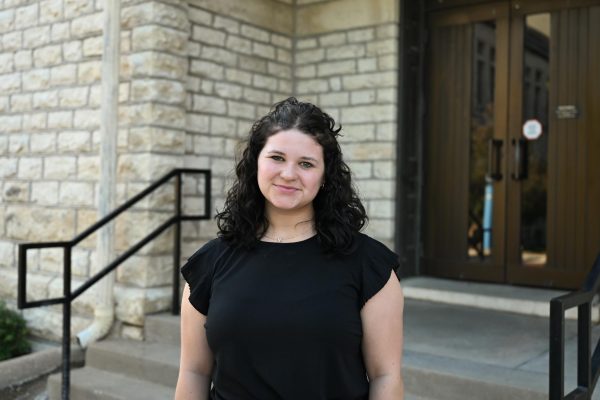
Opening the ceremony, Andrea Young, community programs coordinator for Black Entrepreneurs of the Flit Hills, spoke about the project’s importance for Yuma Street and the Douglass community.
“Today, we gather to not only celebrate a new beginning for this building, but also honor the rich legacy of the Yuma Street and Douglass community,” Young said. “A place that’s rooted in faith, resilience, entrepreneurship and cultural pride.”
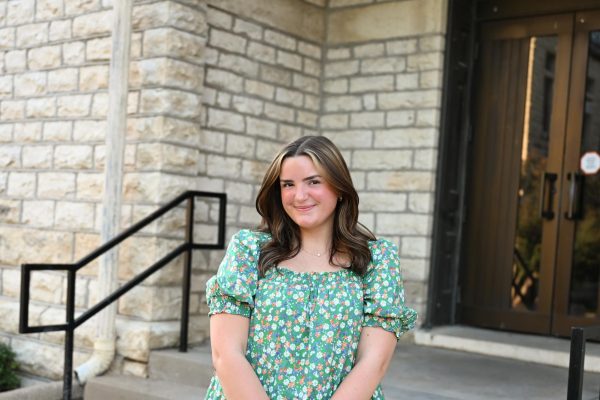
Sheila Ellis-Glasper, one of the founders of Black Entrepreneurs of the Flint Hills and one of the leaders behind the project, said the cultural center will create a space for community members to both learn about the past and to build opportunities for the future.
Ellis-Glasper emphasized that the project has been driven largely by community support.
“This is a project funded by the community,” she said. “It’s for the community, by the community.”
For Ellis-Glasper, the idea for the cultural center is tied closely to the history of the neighborhood and her exposure to it while a student at Kansas State.
“I had the opportunity to interview Ms. Rosa Hickman,” Ellis-Glasper said. “Her family was one of the first Black families to come to Manhattan with the Exodusters.”
Ellis-Glasper said projects like the Yuma Street Cultural Center are especially important as conversations about history and representation continue across the country.
“Especially in today’s climate, there’s an erasure of history happening,” Ellis-Glasper said. “This center helps make sure those stories are preserved and accessible for future generations.”
However, preserving history is only part of the vision for the new cultural center.
Teresa Parks, who works at the K-State Career Center and serves on the board of Black Entrepreneurs of the Flint Hills, said the center will help connect the past with new opportunities for the community.
“I think that it’s dual-sided because it does everything from help preserve the past that a lot of people don’t know about or that’s been kind of erased and rewritten,” Parks said. “Then it also sets up for future generations to be able to thrive.”
Parks said the center will also provide resources for entrepreneurs and individuals looking to explore new career paths.
“It’s going to be a training hub and an entrepreneur pop-up for everything,” Parks said. “It’s such a resource, and I am so excited for this community.”
She also added that the space is intended to serve the entirety of the Manhattan community.
“This is not just going to be something for Black people,” she said. “This is going to be something for anybody in this community who is looking to either get information, to access tools and resources, who wants to empower themselves.”
As construction begins, the organizer of the project said the next phase will continue to rely on community support through donations, volunteers and outreach.
“We definitely want to make sure people know about the project,” Ellis-Glasper said. “Just sharing us on social media or sharing an encouraging word goes a long way.”
For those involved in the project, the support from the Manhattan community has made the vision possible.
“The community wants this, and they’re showing that they want this by supporting this project,” Ellis-Glasper said. “That’s why today is so important and monumental for us.”