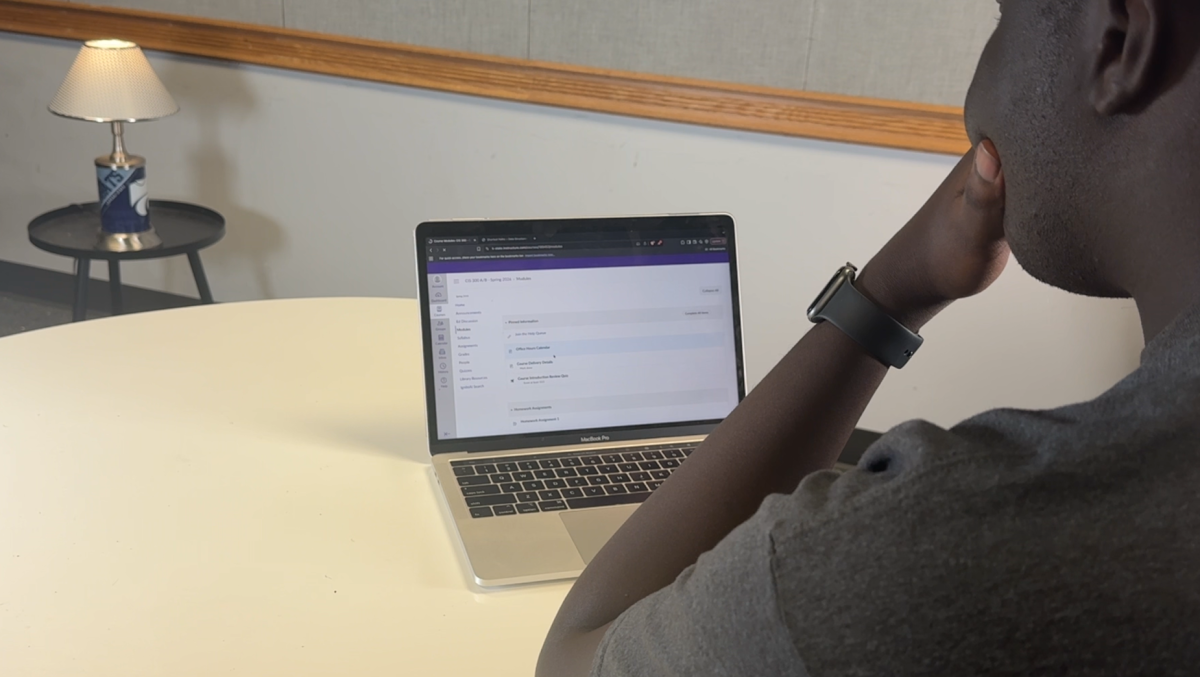











































































































College students constantly struggle to complete and manage assignments, readings, and tasks for each class while maintaining a social life and not losing their minds. I, for one, strongly believe in organizing your schoolwork in a digital system. It makes life so much easier. Although setting up a study system can seem like a huge task at first, in the long run it will greatly improve your ability to complete tasks and retain information. Most students use passive studying, like rereading their notes or highlighting parts of the textbook. These types of study systems are not very efficient. You will complete a lot of work but retain very little information.
Let’s face it, lots of students waste lots of time studying, partly because lots of study materials are dispersed in space, physical and virtual, and lots of students have to spend lots of time finding the things that they are supposed to be studying. This is cognitive load. Your study materials are all distributed throughout space, physical and virtual. The materials are dispersed, and you waste time searching for materials you already have. This is bad because it is time you could spend studying, and you need to study to pass your classes. Set up your study space to support your studying, not make it harder. Study space supports studying. Your study space can be configured to support studying or hinder it. A study space that supports studying is better than one that hinders it.
Establishing a Single Source of Truth
First, get all your notes into one app. This app can include lecture notes, reading materials, and even your study schedule. Think about all the time spent searching for a note that was written for a specific reading assignment and having to find a specific handout that was given for a lecture. In fact, a good study app can help you keep all your course materials organized and help you stay on top of your reading assignments.
Your organization should rely on a clear hierarchy rather than a chaotic mix of random files.
For the folders, use the course codes and the respective modules. Organize your notes by subject, then by weekly topics, for better organization.
Within each note for a particular topic, organize the information using a consistent format to make studying easier and reduce stress when reviewing for tests and exams.
Active Recall and Spaced Repetition
As mentioned before, taking neat notes is not enough for a good study system. You need active recall to test your knowledge. This will make sure that you have learned and that you can recall the information in the future.
Active Recall + Spaced Repetition: Study in Rhythms, Not in Marathons. Active Recall is a proven method to solidify knowledge in your long-term memory. Spaced Repetition complements this method perfectly, as it makes sure you review the knowledge you have acquired just in time to prevent the typical rapid decay of newly acquired knowledge.
Digital tools make this process seamless. Using an AI flashcard generator can save hours of manual card creation, allowing you to convert lecture summaries into active test questions instantly. Automated scheduling algorithms then prompt reviews right when the information is about to be forgotten, optimizing study time and maximizing retention.
Managing Digital Distractions
A digital study space can be an extremely powerful study area. However, it can also be extremely distracting. Distractions in digital study spaces include notifications, social media, and other online work. These digital distractions are particularly problematic because they can cause the individual to “fall down a rabbit hole” of wasted time and reduce their work output.
Set boundaries for your digital study space. These can include having timed study blocks and turning off non-essential notifications during your study time. These boundaries help protect your mental bandwidth.
Your workspace setup also extends to browser hygiene.
Closing unnecessary pages and keeping only relevant study materials open helps you focus on the task at hand and keeps your digital study space from becoming a tangled web of distractions.
Streamlining Assignments and Deadlines
Note-taking, revising, assigning tasks, and tracking obligations and deadlines are also part of a study system.
Digital task managers can provide a list of tasks to check off daily/weekly/monthly, allowing you to regularly review your work and school obligations. When you break tasks down into the simplest to-do list, even the most complex tasks and assignments can seem possible to complete promptly.
A weekly review will help keep your studies on track and assist in planning for the upcoming week, helping to prevent last-minute panicked studying for that upcoming assignment or study date. Taking 15 minutes on a Sunday afternoon to organize your notes and study materials, update your task list, and review what you studied the previous week will help to keep your studies on track for the week.
Adapting the System to Your Workflow
Every student learns differently. Therefore, your study system must be flexible. A study system for a science student with lots of memorization can be completely different from a study system for a literature student who is preparing to write essays. Therefore, your system will look completely different from that of your classmate.
This study system aims to reduce stress and increase study efficiency.
By utilizing a note-taking system, smart study retrieval, and a task-tracking system, you can study smarter rather than wasting your time and achieve your academic goals. Also, by assessing and changing the aspects of your study system that work for you and those that do not, you can improve your study system and make it better for you as the semester goes on.