













































































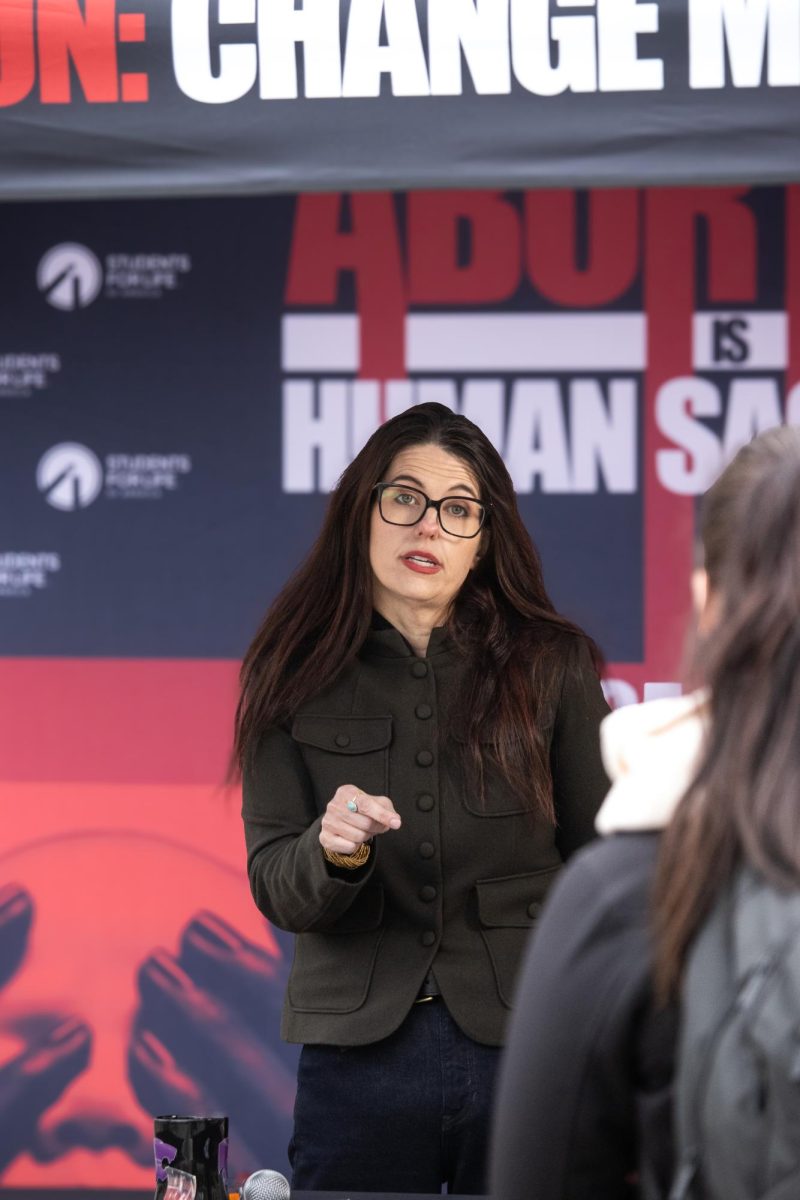
Between classes and lunchtime on April 1, Kansas State students passing through Bosco Plaza found more than the foot traffic they’re used to. Instead, what they found included police officers on top of the student union, a drone flying overhead and Kristen Hawkins, president of Students for Life of America, on her “Abortion is Human Sacrifice” tour.
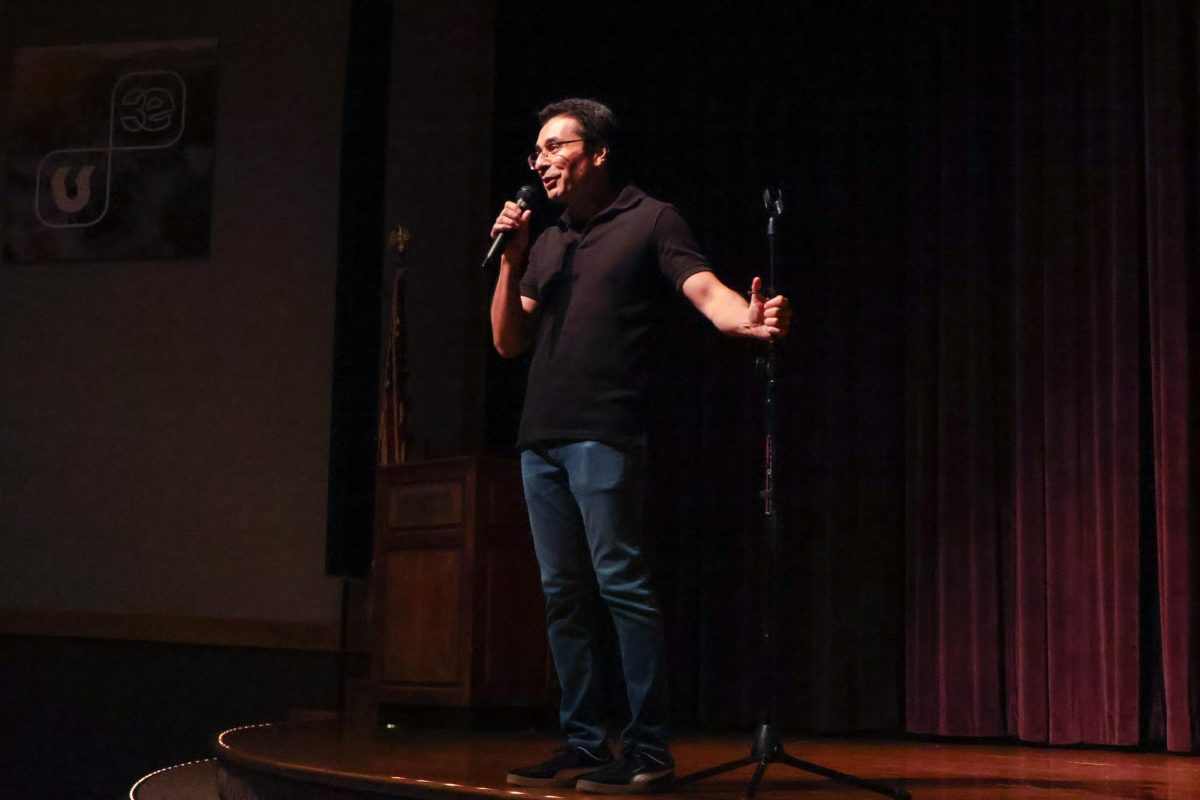
For nearly four hours — from 11:15 a.m. to 3 p.m. — students gathered around a microphone as Hawkins invited them to publicly debate abortion, one of the country’s most complex and divisive issues.
Hawkins, who launched Students for Life of America in 2006, travels to college campuses across the country to host open forums where students are invited to debate issues related to abortion. Students for Life of America is one of the largest anti-abortion student organizations in the United States, with chapters at universities nationwide.
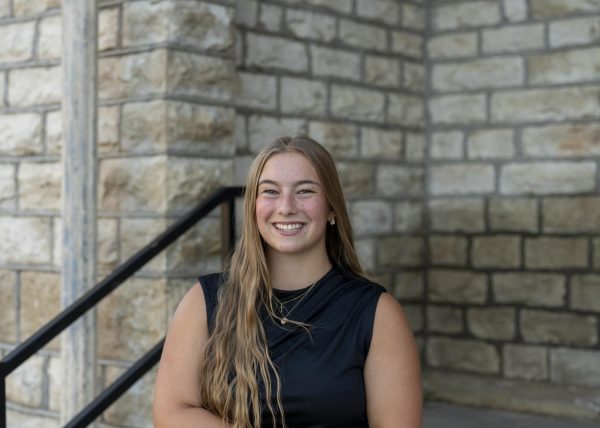
This event was organized by Cats for Life, which was relaunched in December 2025. Brooke Evans, animal science junior and president of Cats for Life, said bringing Hawkins to campus was to encourage conversations surrounding the topic of abortion.
“The real reason we brought Kristen here today was just to have a big event so people can see the other side of the issue,” Evans said.
Evans pointed out that many students may encounter abortion discussions primarily through what appears in their online feeds.
“Media pushes both sides pretty hard,” Evans said. “Some people, on their algorithms, might only see the pro-choice side and might be convinced just solely on that because they never had an argument to counteract what they already believe.”
For Evans, the turnout itself demonstrated just how strongly students feel about the polarizing topic of abortion.
“My biggest takeaway is just how impactful this conversation is,” Evans said. “You hear the word abortion, and people go ‘Shhh, stop. It’s triggering or scary’ or something. It doesn’t have to be that way. It needs to be an open conversation.”
Some students arrived intentionally, while others wandered into the debate out of curiosity.
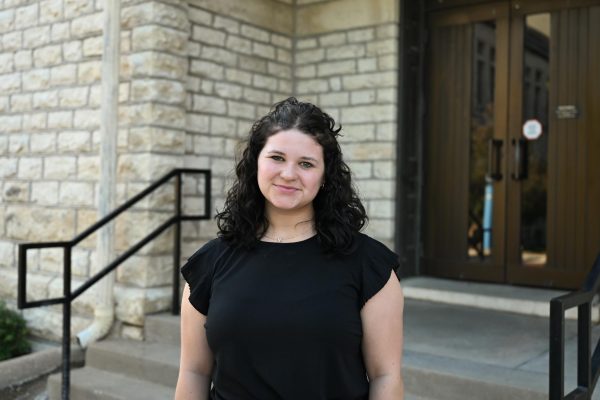
For juniors AJ Grutsch, a personal financial planning major, and Drew Hutchinson, who is dual-majoring in anthropology and secondary education with a focus in social studies, the event was more about witnessing the discussion rather than participating in it.
Grutsch and Hutchinson agreed that they felt the format of the debate favored the speaker, making it unlikely that the pair would step up for the debate. Both believe that the format is a way for Hawkins to “clip-farm,” a relatively new marketing strategy where content creators deliberately highlight “viral-worthy” moments to post to their social media platforms.
“She’s coming here, she’s super prepared to debate college students that may not be entirely educated, and like Drew said, clip-farming,” Grutsch said. “I’m not going to be caught dead doing that.”
Hutchinson said that concern was part of the reason he chose not to participate.
“I don’t want to be the woke liberal crying on the Instagram,” Hutchinson said.
Grutsch said he already holds firm views on the issue.
“I have a feeling a lot of things that are gonna be said are things that have been said before and will be said again, and nothing’s gonna change,” Grutsch said. “I mean, it’s important to hear both sides and have an understanding, but honestly, I’m pretty set.”
Other students approached the event from a different perspective — a curiosity about American political discourse. Alexandra Ghabour Haroun, sophomore in theater, said she attended largely to observe how conversations about abortion unfolded in the United States.
“You always see these kinds of things online,” Ghabour Haroun said. “It’s a very American thing.”
Ghabour Haroun, who grew up in Dubai, explained that abortion debates are not commonly discussed in the same manner as where she was raised.
“As an international student, this has always been really interesting to me, especially because this is a very intense topic in America,” she said.
Other students came prepared to actively challenge the arguments that Hawkins presented, going as far as printing literature to back up their own opinions.
Ranger Kesarapalli, freshman in pre-veterinary medicine, said her interest in biology and healthcare motivated her to participate.
“I am very passionate about biology,” Kesarapalli said. “I am passionate about the subject of abortion as not only a woman, but as someone who is very supportive of women’s autonomy and independence.”
Kesarapalli said she had brought research with her in preparation for the debate.
“I think it’s very important that when discussing things about abortion, especially around people in college or students in general, we need to come at it from a biological and scientific perspective rather than a religious perspective, which is why I came here with quite a few papers that expressed both sides of the argument.”
While Kesarapalli was able to speak during the debate, she said the interaction was frustrating.
“I didn’t really get a chance to say anything because she [Hawkins] kept talking,” Kesarapalli said. “Every time I mentioned that a life is sustained from a woman’s body, as in every life is started from a woman’s body, she equated it to owning another human being. She equated it to slavery and racism and completely overlooked every point that I had about individual life and the characteristics of being an independent being, and really just turned it on me.”
However, it wasn’t just students with opposing opinions who disagreed with the way Hawkins formatted her forum.
Liam Quinn, junior in secondary education who identifies as Catholic and pro-life, agreed with many of Hawkins’s arguments but felt the discussions lacked compassion.
“I think that there’s a lot of fruit that pours out from conversations like this,” Quinn said. “But I also think that to a certain degree, I was very turned off by some of the ways that the speaker was portraying herself because I think there was just a lack of charity, especially coming from a Christian perspective.”
Quinn said that kind of “charity” means approaching disagreements with patience and respect.
“By charity, I just mean being gentle and kind — being meek and humble,” Quinn said. “Meek doesn’t necessarily mean cowardly, but knowing when to draw your sword. If you’re cutting someone off and not letting them finish their sentence, then they’re not being heard.”