







































































































Debra Granik’s 2010 “Winter’s Bone,” starring Jennifer Lawrence, follows 17-year-old Ree Dolly, who takes care of her mother and siblings on her own. Her father, arrested for cooking meth, disappears after putting their house as collateral for bail. Ree must find her father, dead or alive, before his court date; otherwise, she and her family risk losing their home.
Ree needs to navigate her family ties and criminal activities in her rural Missouri community to discover his whereabouts and what happened to him. This effort pits her against the tight-knit community, which is trying to keep its secrets buried.
The environment and scenery were so realistic; it felt as if it transported the viewer into the community itself. The set design was crafted with great attention to detail. Members of the film appreciation society expressed their admiration for the immersive atmosphere.
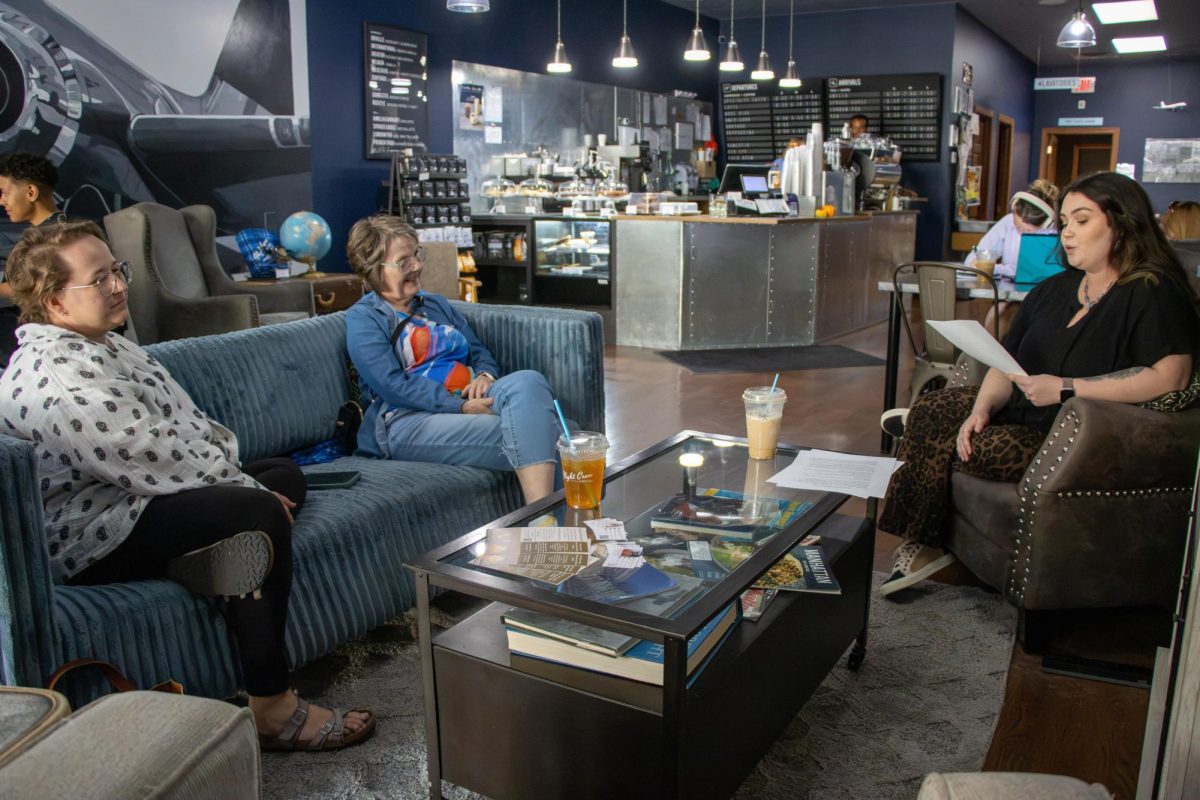
George Colburn, president of the film appreciation society, explains his love for the environment, which he finds similar to another movie WFAS watched this semester.
“Just like American Honey, this movie shows these amazing sets,” he said. “Every single location and scene looks so lived in. This movie is so amazing with that. That is real rust on all those run-down cars.”
Ethan Hayden, a senior in environmental science, also expressed his interest in the scenery of the town’s environment.
“I liked a lot of the landscape shots,” Hayden said. “There was one where the sky was this really dark grey — it’s just very depressingly Missouri.”
After Ree finds out that her father was murdered for attempting to report other meth cooks in his area, she realizes why the community is so hostile towards her.
Kansas State senior instructor/assistant director of the writing center, Deborah Murray, explained the profound distrust the community has for Ree.
“The worst thing her father did was tell,” Murray said. “He was a snitch. That’s worse than killing people to them.”
The film appreciation society also discussed the police involvement within the community. The police play a crucial role in the conflict. In one scene, a character named Teardrop gets pulled over by a cop who tries to question him about his brother. He flashes his gun and takes off. In a community where drug crime is common, police are seen as untrustworthy and potentially dangerous.
Donovan Stratton, freshman in computer science, expanded on why he believed the community had so much distrust in the police.
“I have a feeling that a lot of the co ps in this town might be corrupt,” Stratton said. “It’s not shown in the film. I feel like everyone is in on it [drug crime], so nobody does anything.”
My favorite aspect of the film was its thorough exploration of world-building. The relationship between crime and police, which impacts every character’s life, creates an intriguing plot that extends beyond what is shown to the viewers. The movie showed fascinating aspects of the community, and I appreciate how there was clearly much more story and history within the characters than what is revealed to Ree and the audience. Overall, I would give this film 4.5 out of 5 stars.