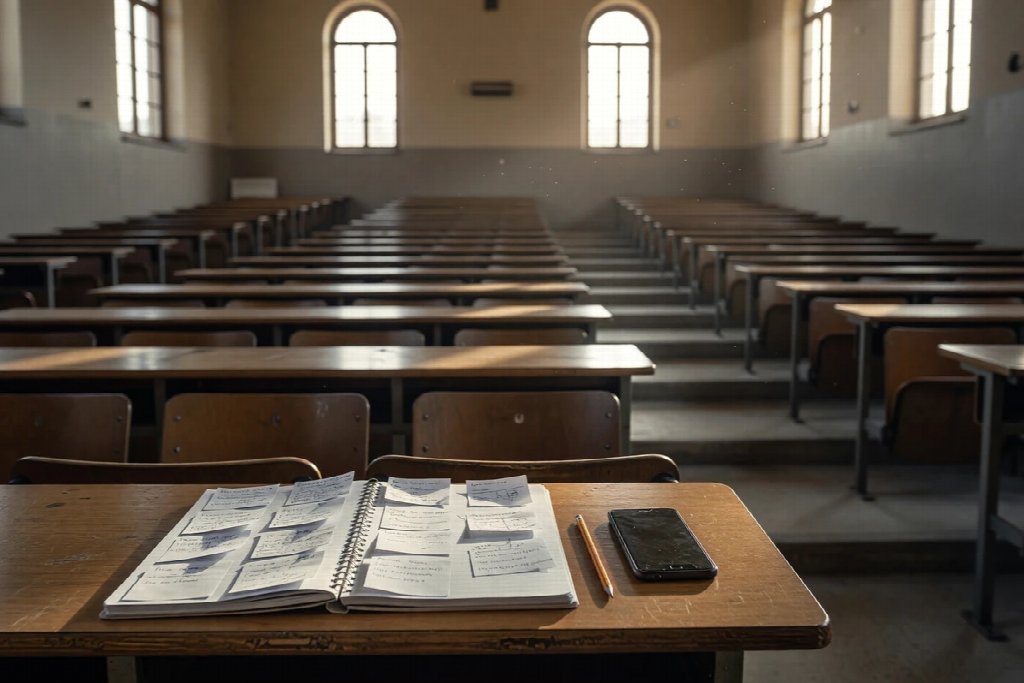

















































































































The traditional college campus is changing fast. For decades, the rhythm of higher education stayed pretty much the same from one generation to the next. Students filed into large lecture halls, took notes on paper or tablets, and prepared for midterms based on a static syllabus. Professors spent hours grading basic quizzes, responding to the same emails over and over, and trying to spot plagiarism.
Today, a quiet shift is happening across universities. Artificial intelligence isn’t just a futuristic concept wrapped up in computer science labs anymore. It’s actively reshaping how students learn, how professors teach, and how institutions operate every day.
This transformation is deeply felt by everyone on campus.
But it brings a mix of incredible opportunity and real challenges that academia has to navigate. How do we embrace innovation without losing the core of what makes learning human? Honestly, walking across a campus plaza these days, you can almost feel the collective anxiety and excitement hanging in the air.
Redefining the Student Experience
The most immediate impact of artificial intelligence is on the students themselves. In a traditional university setting, education is often forced into a one-size-fits-all model. A professor lecturing to three hundred students can’t easily adapt to the individual pace of every single person in the room. Some students find the material too fast and fall behind, while others find it too slow and completely tune out.
Intelligent software platforms are beginning to solve this problem. These tools act as personal learning assistants that adapt to a student’s unique strengths and weaknesses. If someone struggles with a specific concept in calculus or macroeconomics, the platform detects the gap right away. It then provides targeted practice problems and alternative explanations until the concept finally clicks.
This level of customization helps keep students engaged. It offers a safety net for those who might otherwise drop out simply because of academic frustration.
And that changes everything for a struggling student. You know, it’s the difference between feeling completely invisible in a crowded room and feeling like someone actually notices you’re drowning.
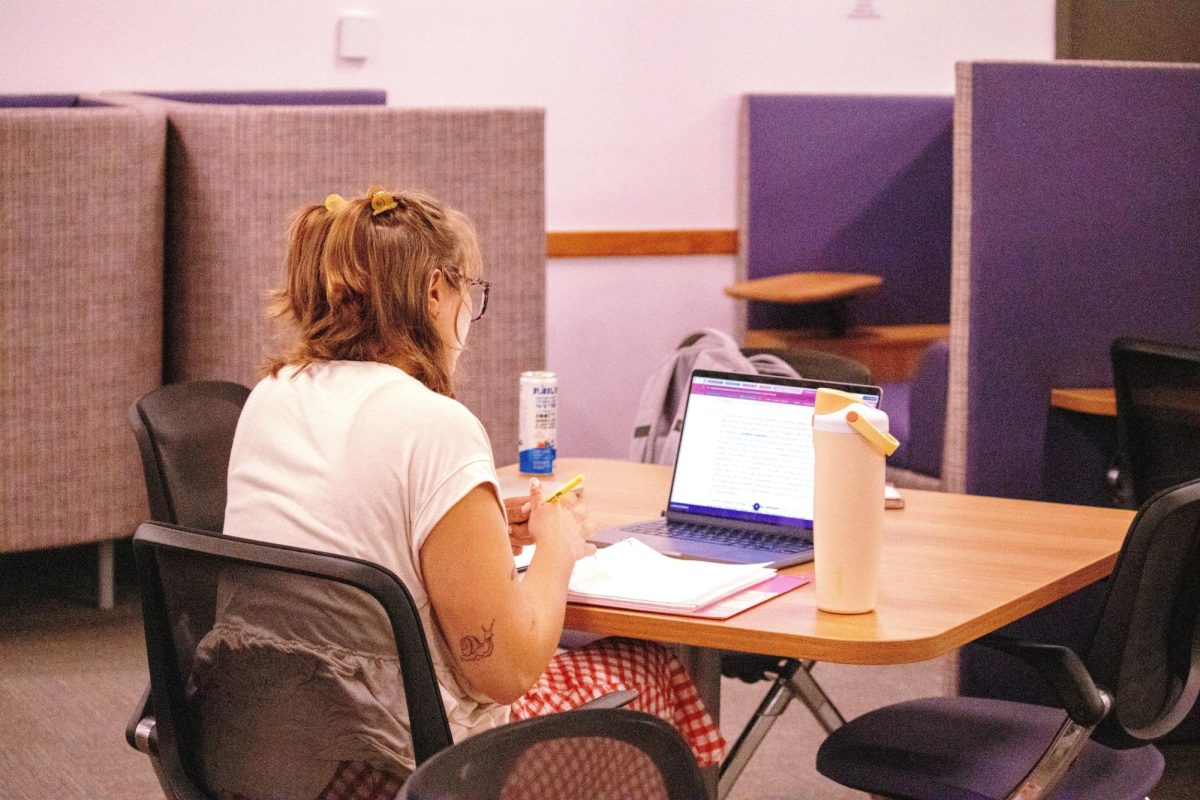
Beyond coursework, virtual assistants are managing the logistical side of campus life. Students can get instant answers to questions about financial aid deadlines, course prerequisites, and housing applications at any hour of the night. I remember staring at a laptop screen at midnight, panicking over a missing financial form, wishing someone, anyone, could give me a straight answer. Now, a chatbot does it in three seconds.
We’re also seeing this impact directly in classroom communication. International students are now using advanced live translation apps during seminars. These apps listen to the professor’s lecture and instantly translate the speech into the student’s native language on their screen. It allows students who are still mastering English to follow complex arguments in real time, making sure they don’t miss crucial nuances just because of a language barrier. But can software truly replace the deep nuance of human conversation? Maybe not entirely, but it is a lifeline.
A New Toolkit for Educators
There’s a common fear that artificial intelligence will replace teachers entirely. In reality, the technology is functioning as an administrative partner for educators. Professors often find themselves bogged down by routine tasks that pull them away from actual teaching and mentorship. Grading hundreds of introductory quizzes or formatting data takes a significant amount of time.
Automated systems can now handle a large portion of this routine grading. This frees up professors to focus on high-level assessments like research projects and creative presentations. When routine grading is offloaded, faculty members have way more time for one-on-one office hours. They can spend their energy helping students develop critical thinking skills rather than just checking boxes.
So, teachers get to actually teach again.
Furthermore, these systems can analyze class performance data in real time. A professor can see exactly which question on a practice exam confused the majority of the class. This insight allows them to adjust their next lecture to address that specific misunderstanding before the actual exam arrives. It makes teaching more responsive and genuinely data-informed. And that’s the point. Technology shouldn’t push us apart; it should give us the time to actually sit down and talk to each other.
Ethical Hurdles and the Question of Integrity
The transformation of higher education isn’t happening without friction. The sudden, widespread availability of advanced text generators has created a massive challenge for academic integrity. Universities have struggled to adapt to a world where a student can generate a passable essay in a matter of seconds. I guess it was naive to think people wouldn’t take the shortcut.
Detecting this type of assistance is notoriously difficult. Early detection software often produces false positives, which can lead to unfair accusations against honest students. This has forced institutions to rethink how they evaluate learning entirely. Many professors are moving away from traditional take-home essays. Instead, they’re implementing in-person writing assignments, oral exams, and project-based assessments that require students to demonstrate their thought process live.
There’s also a deeper philosophical question about critical thinking. If technology can synthesize information and draft arguments instantly, students might miss out on the vital cognitive struggle of formulating thoughts on their own. Learning how to struggle with a difficult concept is a core part of personal growth in college. What happens to our minds when we stop doing the heavy lifting? Finding the balance between using technology as a tool and maintaining intellectual rigor is the defining challenge for modern universities. It feels like we are rewriting the entire rulebook on the fly.
Preparing for an Unpredictable Job Market
Ultimately, the purpose of a college education is to prepare students for the world beyond campus. The rise of automation means the job market our current students enter will look vastly different from the market of a decade ago. Tasks that rely on basic data entry, standard pattern recognition, and routine writing are increasingly handled by software.
Because of this, universities are shifting their focus toward human-centric skills. The traits that technology can’t easily replicate are becoming the most valuable assets a graduate can possess. Creativity, emotional intelligence, cross-disciplinary thinking, and complex leadership are now at the center of modern curricula.
Colleges are also realizing that education can’t end at graduation. The rapid pace of technological change means skills become obsolete quickly. How do we keep up when the finish line keeps moving? It’s exhausting to think about, honestly. Institutions are developing more flexible, short-term certificate programs to help working professionals return and update their knowledge throughout their careers.
The lecture halls of tomorrow will likely look very different from the ones we know today. The physical spaces might remain, but the interactions within them are being completely redrawn. Artificial intelligence isn’t removing the human element from higher education. Instead, it’s forcing us to define what makes human learning uniquely valuable in the first place.