





































































































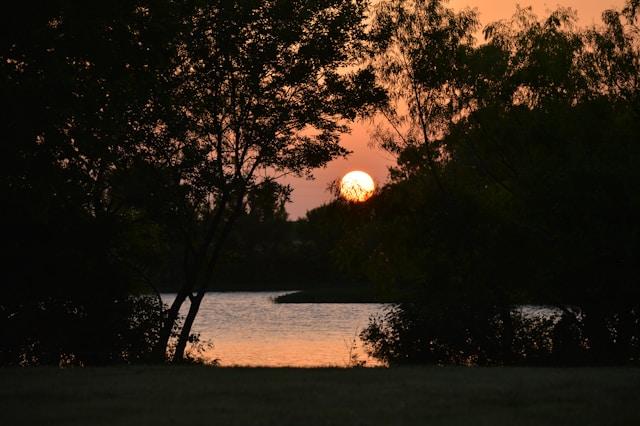
Source: https://unsplash.com/photos/silhouette-of-trees-near-body-of-water-during-sunset-T1cXa0kwh2I
Kansas may not immediately come to mind when planning aquatic adventures, but the Sunflower State offers a range of water-based escapes for those willing to look beyond its famous wheat fields.
While it lacks ocean beaches or alpine lakes, Kansas provides reservoirs, rivers, and spring-influenced creeks that help residents and visitors cool off during the summer months.
From quiet fishing lakes to large multi-use reservoirs, the state’s water features reflect its diverse geography, from the rolling Flint Hills to the wooded southeastern corner and the High Plains of the west. Each region offers swimming opportunities shaped by the local landscape and climate.
Planning Your Kansas Water Adventure
Exploring Kansas swimming areas requires realistic expectations and advance preparation. Unlike coastal or mountain destinations, most Kansas water features were built primarily for flood control, irrigation, or water supply, with recreation as a secondary purpose. As a result, amenities are often limited.
Packing appropriate gear is essential. Quick-drying towels, sun protection, sturdy water shoes, and ample drinking water are practical necessities for summer swimming in Kansas heat. Waterproof cameras can be useful, though underwater visibility is often limited due to natural turbidity.
Seasonal timing matters. Spring brings higher water levels and stronger currents in rivers and creeks, while summer offers warmer water but can also lead to algae growth or murky conditions in some lakes. Checking local advisories and water conditions before visiting is important.
Springs and Creeks of Eastern and Central Kansas
Kansas does have natural springs, particularly in the Flint Hills and parts of south-central and southeastern Kansas, where limestone geology allows groundwater to reach the surface.
These springs often feed creeks and streams, contributing cooler water temperatures, though fully spring-fed swimming holes with consistently clear water are uncommon.
In the Flint Hills, spring-fed creeks occasionally form deeper pools suitable for wading or swimming during certain times of year.
Access is often informal, and many sites are on or near private land, making local knowledge and permission essential.
Rather than classic spring pools, most natural swimming in these areas takes place in rivers and creeks whose conditions vary widely depending on rainfall, season, and land use upstream.
Fishing Lakes and Reservoir Recreation
Kansas has constructed numerous reservoirs and state fishing lakes over the past century. These lakes now form the backbone of water recreation across the state, offering designated swimming areas, boating access, and picnic facilities in select locations.
State fishing lakes are typically small impoundments, often under 100 acres. While some allow swimming, many do not have designated beaches or facilities, and swimming policies vary by location. Visitors should always check posted regulations before entering the water.
Milford Lake is the largest lake in Kansas, covering more than 15,000 surface acres. It features several maintained swimming beaches and multiple recreation areas. Due to its size, visitors can often find quieter coves, especially away from main access points. Lifeguards, however, are generally not provided, and swimming is typically at one’s own risk.
Cheney Reservoir near Wichita is a popular destination for boating and swimming, particularly for residents of south-central Kansas.
Water clarity varies depending on wind and conditions, but sandy shoreline areas make entry relatively comfortable. Visiting during off-peak hours can provide a more relaxed experience.
State Park Swimming Destinations
Kansas state parks offer the most predictable swimming opportunities, with maintained beaches, restrooms, and regular water quality monitoring during the summer season. While these parks provide a higher level of infrastructure, most swimming areas do not have lifeguards, and visitors are expected to use caution.
Kanopolis State Park surrounds one of the state’s most scenic reservoirs, with sandstone bluffs rising above the lake. The designated swimming beach features gradual entry, making it suitable for families. The surrounding trails allow visitors to combine swimming with hiking and wildlife viewing.
Crawford State Park, located in southeastern Kansas, sits within the Ozark Plateau fringe. The wooded shoreline and rolling terrain create a setting that feels distinct from much of the state. The lake supports swimming, fishing, and paddling in a quieter, forested environment.
Discovering Your Own Kansas Swimming Spot
Kansas water destinations reward patience, research, and flexibility. While the state’s lakes and rivers may not offer dramatic clarity or vertical scenery, they provide accessible natural spaces where families and communities have gathered for decades.
Exploring beyond the most popular reservoirs reveals a side of Kansas defined by open landscapes, warm summers, and simple pleasures. For those willing to adapt expectations, the state’s swimming holes and lakes offer a refreshing way to experience the prairie from a different perspective.