


















































































































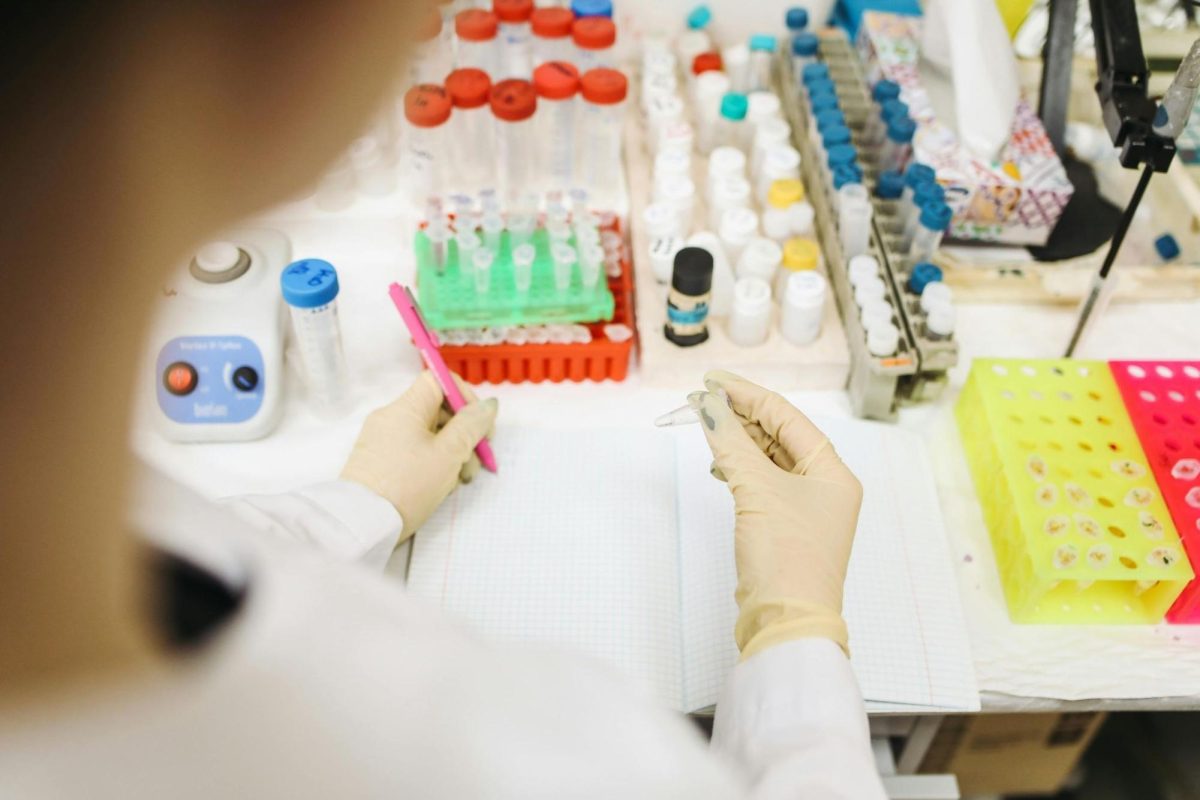
Alt: Researcher in lab, courtesy of Polina on Pexels
Not very long ago, peptides were still largely an insider conversation. You would hear about them in friend circles, underground bodybuilding forums, niche research communities, or from the occasional biohacker experimenting quietly at the edges of mainstream wellness culture.
Now, celebrities casually reference peptide protocols on podcasts. Beauty influencers talk about copper peptides and tanning peptides in skincare routines. Wellness clinics market recovery and longevity stacks to high-end clients. Even social media audiences that have never opened a medical journal can now recognize names like BPC-157, GHK-Cu, or Melanotan II almost instantly.
The shift has been surprisingly fast, and Hollywood played a major role in accelerating it. Part of the appeal is obvious. Peptides sit at the intersection of nearly every modern wellness obsession at once: healthier aging, improved body composition, faster recovery, glowing skin, higher energy, and “optimized” performance.
But, unlike older supplement trends, peptides sound more sophisticated. They carry the language of biotechnology rather than traditional wellness marketing, which makes them especially attractive in celebrity and luxury wellness circles where being early matters almost as much as the results themselves.
Many of the compounds now trending across TikTok, Instagram, podcasts, and wellness media still exist primarily within research or experimental contexts. Yet celebrity visibility has given peptides something most research compounds never receive: cultural momentum. Once public figures and influencers began speaking openly about peptide use, the category stopped feeling fringe and started feeling aspirational. For laboratory-focused audiences, Peptides are also being discussed through a more verification-driven lens, with suppliers like Janera Science emphasizing research-use materials, batch-specific COAs, and documented quality controls.
Because while the internet tends to treat peptides like the next luxury wellness breakthrough, researchers are watching something much bigger happen in real time: the collision between experimental science, biohacking culture, aesthetics, longevity research, and celebrity influence all at once.
Melanotan II and the Rise of Appearance-Driven Peptide Culture
One of the clearest examples of peptides entering mainstream culture is the rapid rise of Melanotan II.
Originally developed as a synthetic analog related to melanocortin signaling, Melanotan II — often shortened to MT2 Peptide, became widely associated online with tanning enhancement and appearance-focused biohacking. Media coverage increasingly refers to it as the “Barbie peptide” because of its growing popularity among beauty and aesthetic communities.
That popularity exploded once influencers and celebrities began openly discussing injectable peptide protocols tied to aesthetics, skin tone, and “looksmaxxing” culture. Social media platforms accelerated the trend dramatically, especially among younger audiences consuming transformation-style content daily.
Products like Melanotan 2 sit directly at the center of that cultural shift. As demand for tanning-related peptides increased, suppliers offering research-focused access to compounds like MT-2 saw growing visibility across peptide communities and online discussion spaces.
At the same time, concerns around safety and sourcing have grown just as quickly. Multiple reports in 2026 have highlighted the rise of unregulated peptide use among social-media-driven wellness and appearance communities. That tension defines the current peptide landscape, but public fascination keeps growing because the compounds sound futuristic and highly targeted.
However, researchers continue emphasizing that many of these peptides still lack robust long-term human data, especially outside tightly controlled settings. In this context, the celebrity effect made peptides culturally visible. It did not magically make them fully understood.
MOTS-c and the Longevity Obsession
While Melanotan II became closely tied to aesthetics and appearance culture, MOTS-c entered the mainstream through a different gateway entirely: longevity, metabolic health, and performance optimization.
Discovered in 2015, MOTS-c is a mitochondria-derived peptide that quickly attracted attention within the research community for its potential relationship to metabolism, exercise adaptation, cellular stress responses, and energy regulation. Early animal studies linked MOTS-c administration to improvements in metabolic function and physical performance, though meaningful long-term human data remains limited.
Modern wellness culture has become deeply fascinated with anything connected to mitochondria, cellular energy, and biological aging. Once longevity-focused celebrities, Silicon Valley founders, and high-profile biohackers began openly discussing mitochondrial health, compounds associated with cellular performance suddenly moved from scientific obscurity into mainstream wellness conversations.
MOTS-c fit perfectly into that narrative. The peptide became associated with many of the ideas dominating elite optimization culture today: sustained energy, healthier aging, metabolic efficiency, exercise resilience, and high-performance longevity. MOTS-c for sale is marketed as a mitochondrial peptide that’s central to how the body ages and performs over time.
The broader longevity industry has only accelerated that momentum. Recent reporting suggests peptide experimentation has become increasingly common among tech executives, wellness entrepreneurs, and optimization-focused communities pursuing more personalized approaches to health and performance.
Culturally, what makes MOTS-c especially fascinating is the balance it strikes between scientific legitimacy and futuristic appeal. Its technical and experimental nature carries the allure of being “ahead of the curve.” In the age of podcasts, wellness influencers, and optimization culture, that combination spreads incredibly well online.
At the same time, researchers continue emphasizing an important distinction: enthusiasm around mitochondrial peptides still moves faster than the science itself. Much of the excitement surrounding MOTS-c continues to come from mechanistic theories, animal models, early-stage findings, and anecdotal experiences rather than definitive human clinical evidence.
But celebrity culture rarely cares about lack of controlled clinical data. Once influential people begin associating a compound with energy, longevity, and elite performance, public perception quickly simplifies into something much more powerful. It brings in the aspect of, “If high performers are using it, there must be something to it.”
GHK-Cu and Glow Peptides: Explosion into the Beauty Industry
If one category of peptides truly broke into mainstream beauty culture, it was copper peptides.
At the center of that movement is GHK-Cu, a naturally occurring copper-binding tripeptide that has been studied for decades in relation to collagen production, tissue remodeling, wound healing, skin regeneration, and broader cellular repair mechanisms. Long before peptides became trendy on social media, GHK-Cu already carried a serious scientific reputation within regenerative and dermatological research circles.
That scientific foundation made it especially attractive once celebrity wellness culture began colliding with the beauty industry.
By 2026, conversations around GHK-Cu have expanded far beyond research communities. Beauty influencers now discuss copper peptides alongside luxury skincare routines. Wellness clinics incorporate peptide-based recovery and skin protocols into premium aesthetic programs. Celebrities and online creators now reference peptides in conversations about hair quality, skin texture, anti-aging, and post-procedure recovery.
At the same time, the language surrounding peptides has changed dramatically. Instead of sounding like experimental laboratory compounds, many peptide products are adopting softer, more lifestyle-oriented branding centered around radiance, recovery, rejuvenation, and “glow.” That subtle shift in presentation has helped move peptides into the beauty mainstream far faster than most researchers probably expected.
Products like Glow 70 by Evolve Peptides reflect this broader evolution toward combination peptide formulations associated with skin appearance, tissue support, collagen signaling, and recovery-focused biohacking. The appeal is obvious: these compounds sit at the intersection of beauty, longevity, wellness, and performance culture all at once.
And celebrity culture has gobbled up this hype, amplifying it to a point where injectable aesthetics are no longer viewed exclusively through the lens of cosmetic procedures or dermatology clinics. Peptides now occupy a grey cultural space somewhere between skincare, wellness optimization, regenerative science, and self-experimentation. That overlap is one of the biggest reasons the market has expanded so aggressively over the last few years.
Still, researchers and medical experts continue urging caution. Much of the public excitement surrounding injectable peptides currently moves faster than the available clinical evidence and regulatory oversight. Major publications have repeatedly highlighted concerns involving gray-market sourcing, contamination risks, inconsistent formulations, and exaggerated claims spreading through social media wellness culture.
Yet despite those concerns, momentum around peptides in the beauty world continues accelerating. Ultimately, compounds like GHK-Cu tap directly into one of the most powerful ideas in modern wellness culture: the possibility that aging, recovery, and appearance can all be influenced at the molecular level.
Why Celebrity Culture Changed the Peptide Industry So Quickly
Before social media pushed biohacking and longevity culture into the mainstream, peptides were reserved for the most knowledgeable among biohackers. Outside specialized research circles, performance communities, and underground wellness forums, very few people had ever heard of compounds like BPC-157, MOTS-c, GHK-Cu, or Melanotan II.
Today, those same names appear casually in podcasts, celebrity interviews, beauty discussions, wellness newsletters, TikTok routines, and high-end longevity clinics.
That visibility created something extremely powerful: social proof.
Once recognizable public figures began openly discussing peptides for recovery, skin quality, longevity, metabolism, tanning, or performance optimization, the category suddenly became culturally familiar rather than scientifically obscure. Peptides no longer felt like niche research compounds. They started feeling aspirational, modern, and surprisingly accessible.
At the same time, that popularity blurred important boundaries between science, wellness, aesthetics, and internet culture.
Many consumers now encounter peptides through beauty trends, transformation stories, or optimization-focused content long before they ever encounter the underlying research itself. As a result, peptides increasingly occupy a strange middle ground somewhere between legitimate scientific innovation, experimental wellness, luxury aesthetics, and online self-optimization culture.
That overlap is a major reason the industry continues expanding so rapidly.
Peptides tap directly into some of modern culture’s biggest obsessions all at once: longevity, performance, appearance, energy, recovery, and the idea that biology itself can be upgraded through increasingly targeted interventions.
Final Thoughts: Just Getting Started
The peptide boom is no longer confined to research labs and niche biohacking forums. It has become part of mainstream wellness culture, driven largely by celebrity visibility, social media amplification, and growing public fascination with longevity and optimization science.
At the same time, researchers continue emphasizing an important reality: many of the peptides dominating online conversations still exist within evolving or experimental research contexts. Public enthusiasm often moves much faster than long-term clinical evidence, which makes transparency, education, and responsible sourcing more important than ever.
Still, there is little doubt that peptides have crossed an important cultural threshold. What was once considered fringe experimentation now sits at the center of some of the biggest conversations happening in beauty, wellness, recovery, and longevity, and the industry itself is likely only getting started.