



























































































































Source: Magnific.com
Growth sounds great in theory. More orders, more inventory, more customers. Then suddenly, someone’s storing boxes in walkways, pickers are wasting half their shift searching for SKUs, and the warehouse that felt “big enough for now” six months ago already feels cramped.
That’s the point where storage stops being a background issue and starts affecting everything else – labor costs, fulfillment speed, employee morale, even customer satisfaction.
A lot of growing companies assume the only fix is moving into a larger building. In reality, many warehouses are simply using their existing space inefficiently. That’s why more operations are investing in smarter systems like ASRS for warehouses, vertical storage modules, and optimized picking layouts instead of immediately expanding their footprint.
And honestly, it makes sense. Leasing more space is expensive. Using the space you already have more intelligently usually delivers faster ROI.
Warehouses Lose More Time Than Most Businesses Realize
Most warehouse inefficiencies don’t come from employees working slowly. They come from unnecessary movement.
Pickers walking back and forth across long aisles. Teams climbing ladders for parts stored too high. Workers hunting for inventory because storage locations changed but the system didn’t. Those tiny delays add up fast.
Research found that order picking alone accounts for roughly 55% of warehouse operating costs.
That number surprises people outside logistics, but anyone who’s spent time inside a busy warehouse understands it immediately. Picking isn’t just “grabbing products.” It’s travel time, search time, congestion, scanning, restocking interruptions, and repeated physical movement.
That’s why smart storage matters so much. Better storage systems reduce friction. And in warehousing, friction is expensive.
ASRS for Warehouses Is Becoming Less “Future Tech” and More Standard Practice
A few years ago, automated storage systems felt like something only massive fulfillment centers could afford. Now they’re becoming far more common across mid-sized operations too.
The biggest reason is simple: warehouse space is expensive, but vertical space is often wasted.
Modern Automated Storage and Retrieval Systems, or ASRS for warehouses, uses automated retrieval systems to bring inventory directly to operators instead of forcing workers to constantly travel through aisles. The result is faster picking, fewer errors, and significantly better space utilization.
Companies adopting automated storage systems aren’t necessarily trying to eliminate workers. Most are trying to solve labor shortages, reduce burnout, and increase output without continuously adding headcount.
Vertical Storage Solves Problems Businesses Usually Blame on “Lack of Space”
A surprising number of warehouses don’t actually have a square footage problem. They have a cube utilization problem.
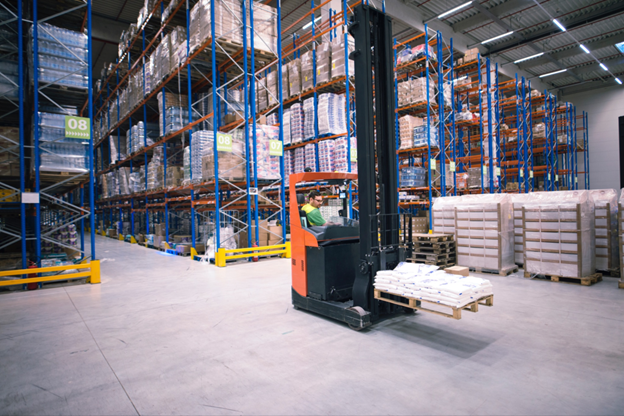
Walk into older facilities and you’ll often see shelves stopping far below ceiling height while inventory overflows into staging areas and aisles. That setup creates congestion fast, especially during busy seasons.
Things like vertical lift modules, high-density tray systems, and automated shelving allow businesses to store more inventory within the same unit while keeping products accessible. Instead of expanding outward, warehouses expand upward.
And beyond the efficiency gains, there’s another benefit people don’t talk about enough: organization.
Warehouses become dramatically easier to manage when inventory has designated, traceable locations instead of “temporary spots” that somehow become permanent.
Source: Magnific.com
Smarter Storage Also Makes Warehouses Safer
This is the part many businesses overlook until injuries start happening.
Poor storage setups create unnecessary physical strain. Employees repeatedly bending, climbing, reaching, or maneuvering around overcrowded aisles eventually leads to fatigue and mistakes.
Modern storage systems reduce a lot of that wear and tear.
Automated retrieval systems bring products to ergonomic picking heights. Vertical systems reduce ladder use. Better slotting reduces excessive walking. Cleaner layouts improve forklift traffic flow and reduce congestion.
Efficiency and safety are usually treated like separate conversations in warehousing, but they’re closely connected.
Growth Gets Easier When Storage Systems Are Built to Scale
One of the biggest mistakes growing businesses make is treating storage like a temporary solution.
They add racks as inventory grows. Then add overflow shelving. Then create temporary holding zones. Before long, the warehouse operates around workarounds instead of actual systems.
Scalable storage systems prevent that cycle. Modular shelving, automated retrieval systems, and smarter inventory organization allow businesses to grow without constantly redesigning operations every year.
Smart Warehouses Are About Removing Friction
There’s a misconception that warehouse automation is mainly about reducing labor.
In reality, most growing businesses are simply trying to help existing teams work more efficiently without burning them out.
Nobody enjoys spending half a shift searching for inventory or walking unnecessary miles through poorly organized aisles. And customers definitely don’t enjoy delayed or incorrect orders because a warehouse system couldn’t keep up with growth.
Smart storage solutions solve those issues at the operational level.
Because at a certain point, warehouse performance stops depending on how hard employees work and starts depending on how intelligently the space itself works.