
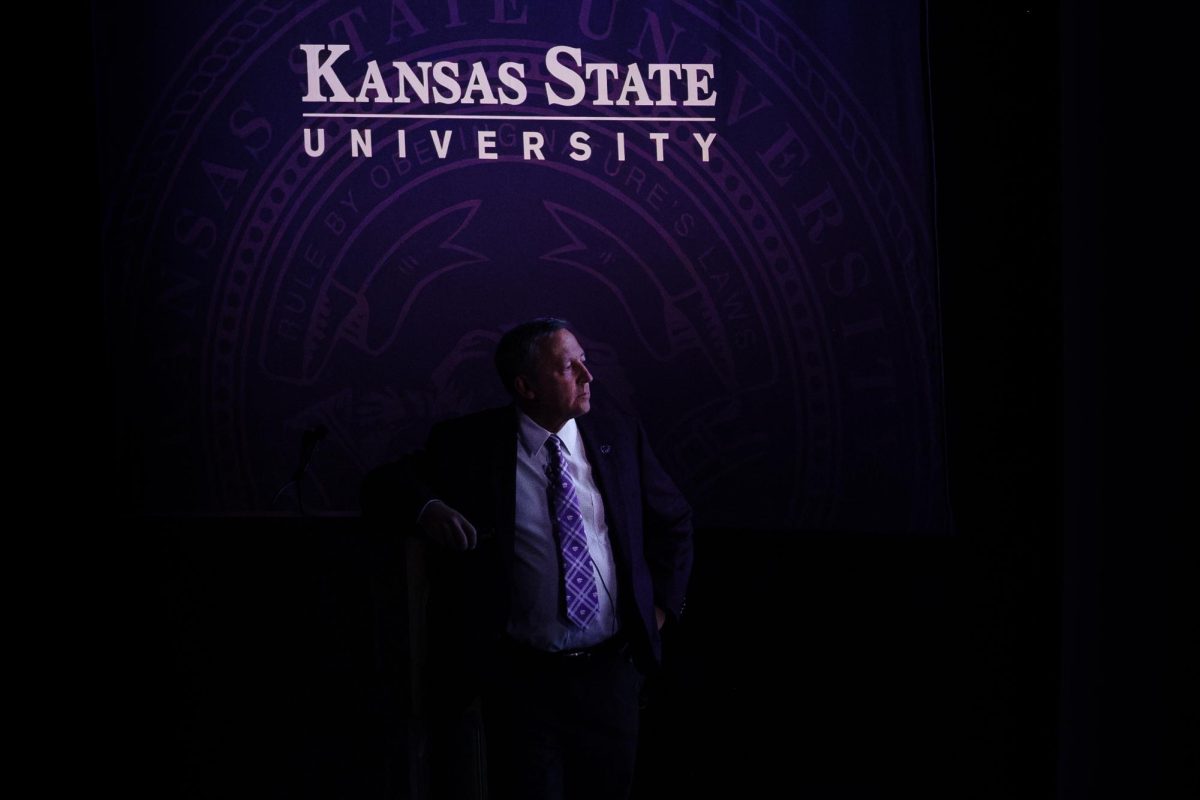
















































































Kansas State physics assistant professor Meng Han received both a U.S. Department of Energy Early Career Award and a National Science Foundation CAREER award in 2026.
Han and his team at K-State set groundbreaking world records through their work.
“We created the shortest light pulse in the world and pushed the boundaries of temporal revolution,” Han said.
Han’s team is combined with graduate students and postdoctoral students, including Mahmadul Hasan, Jingsong Gao, Zach Eisenhutt, Yiming Yuan and Pavan Gudiwada at the James R. Macdonald Laboratory.
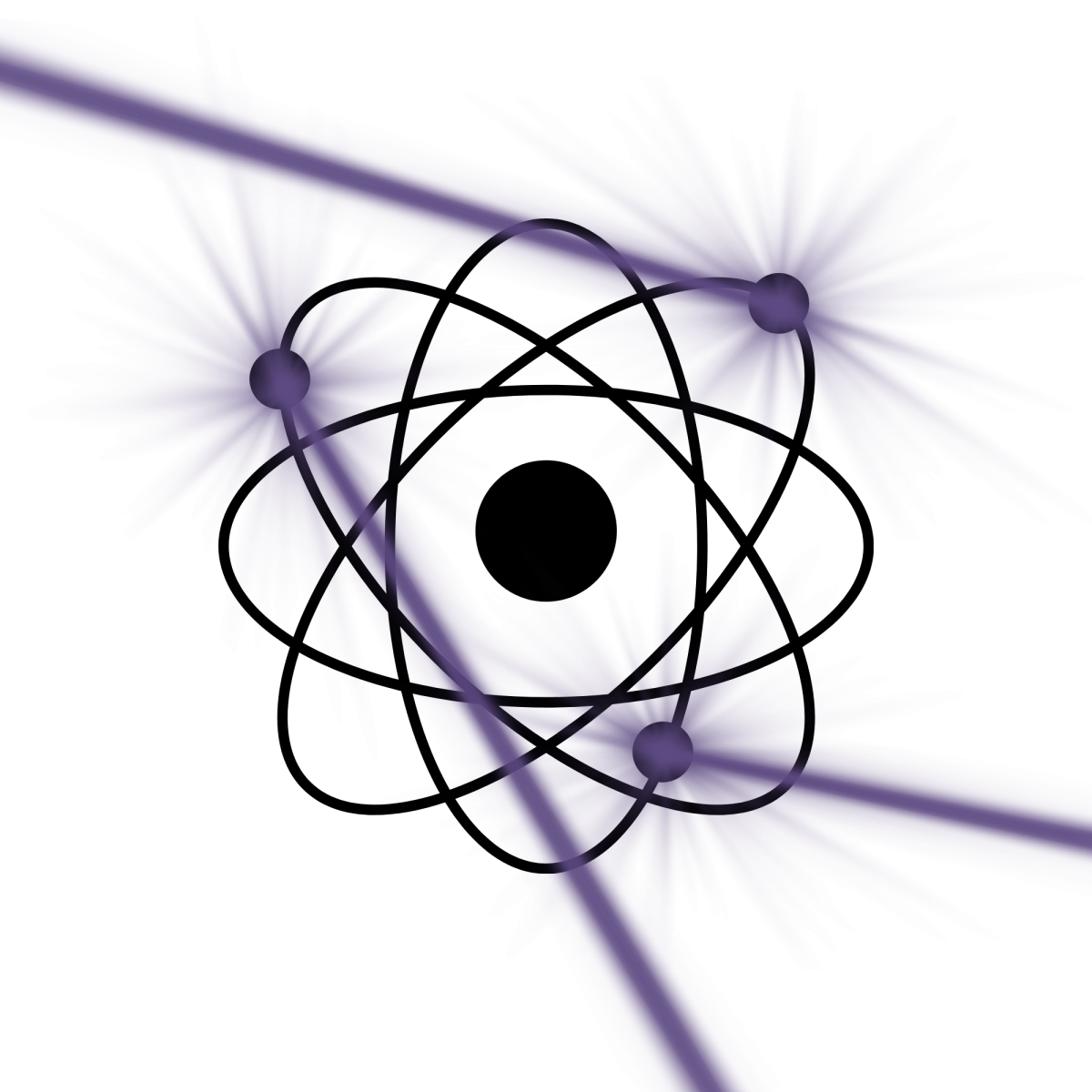
One aspect of Han’s groundbreaking research was creating a camera to view electrons within an atom. However, electrons move extremely fast, making it difficult to track.
“We are studying the fastest time scale that humans can observe and control,” Han said. “This is attosecond dynamics.”
Han and his team created a pulse to examine electrons within their attosecond timescales.
“If you want to observe a bullet moving through an apple, you need to have a camera that has enough frames per second to capture that, and this is the same principle,” he said. “We made a camera that operates within attoseconds, and we can see the dynamic of how fast electrons are moving around an atom and within molecules.”
To do this, Han and his team used a femtosecond laser, which is not fast enough on its own to view electrons.
The other feature of Han and his team’s work involves light beams. Light is nonlinear when it changes frequencies, which is indicated by a change in color.
“The big picture is that the pulse is very strong,” Han said. “When your pulse is strong, you can make a strong magnetic field and a strong electrofield.”
The research is groundbreaking because they created a pulse with strong energy. Both of these things together allow Han and his team to see the electron cloud moving around the atom.
The research doesn’t stop there. They hope to eventually control chemical reactions.
“Our final goal is to control the electron, and eventually control the nucleus, and then you can control the chemical reaction,” Han said.
Han wants students to hear about the research and what goes on through research.
“I hope more young people can know this story, that this research is happening at K-State,” he said.