






















































































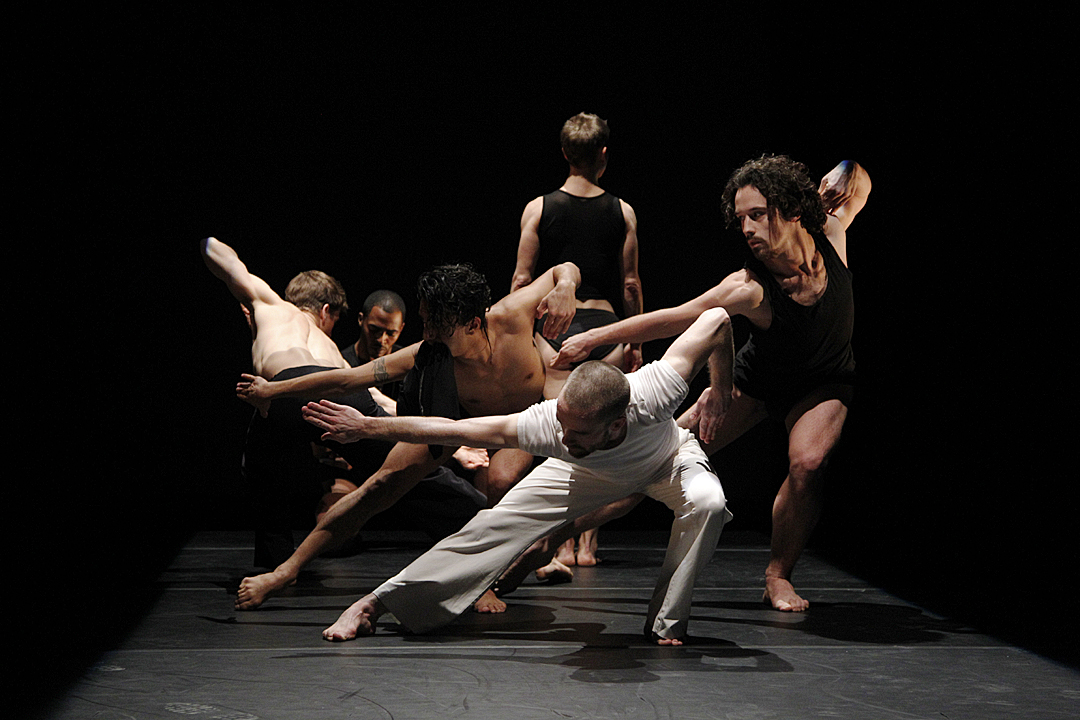
Forty-five shapes — simple in theory, yet exacting in practice — repeat and rearrange, where movement becomes memory and precision builds into something far less predictable. Those shapes don’t stay static for long. Instead, they stretch, collide and accelerate, transforming into a layered sequence that feels both controlled and chaotic. What begins as something seemingly repetitive evolves into something that asks not just to be watched, but actively followed — maybe even solved.
Those shapes trace back decades.
Founded in 1982 by Bill T. Jones and Arnie Zane, the Bill T. Jones/Arnie Zane Company quickly became a defining force in modern and postmodern dance. The company is known for blending movement with storytelling, often exploring issues of identity, form and social commentary. Over the years, its repertory has continued to evolve, balancing its early foundations with new interpretations and restagings.
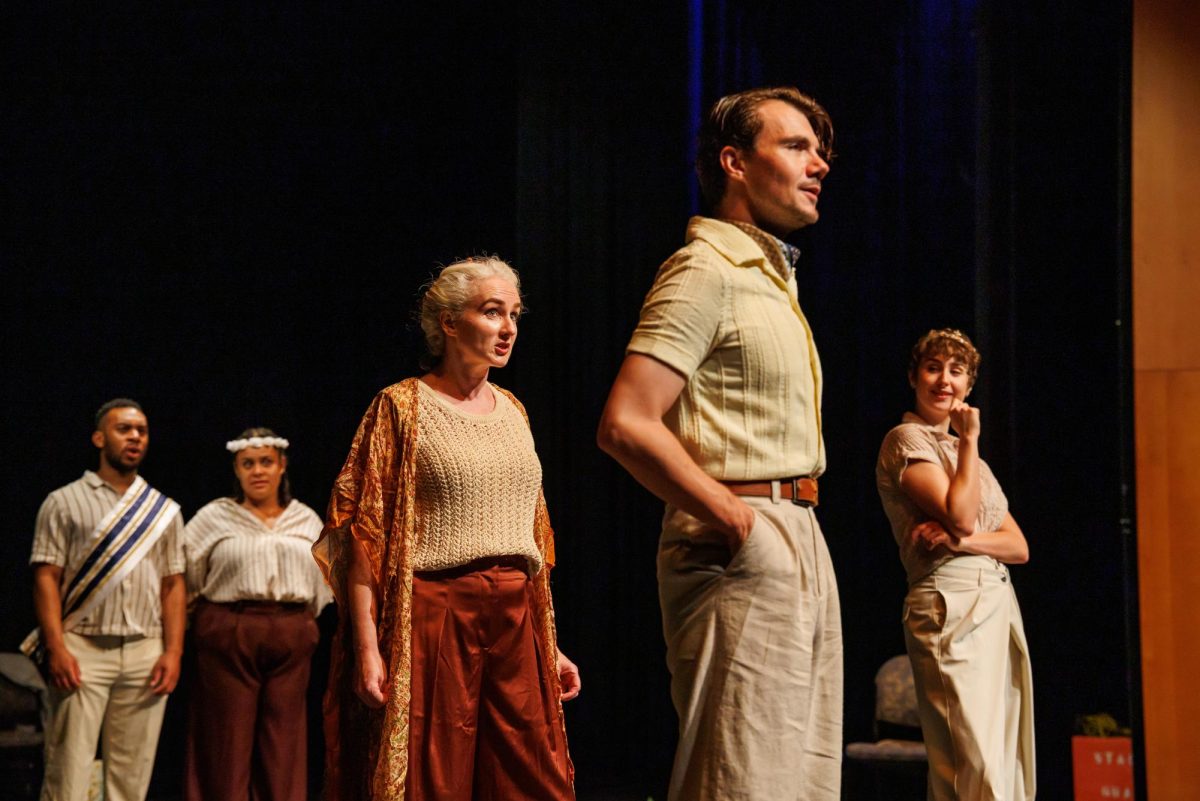
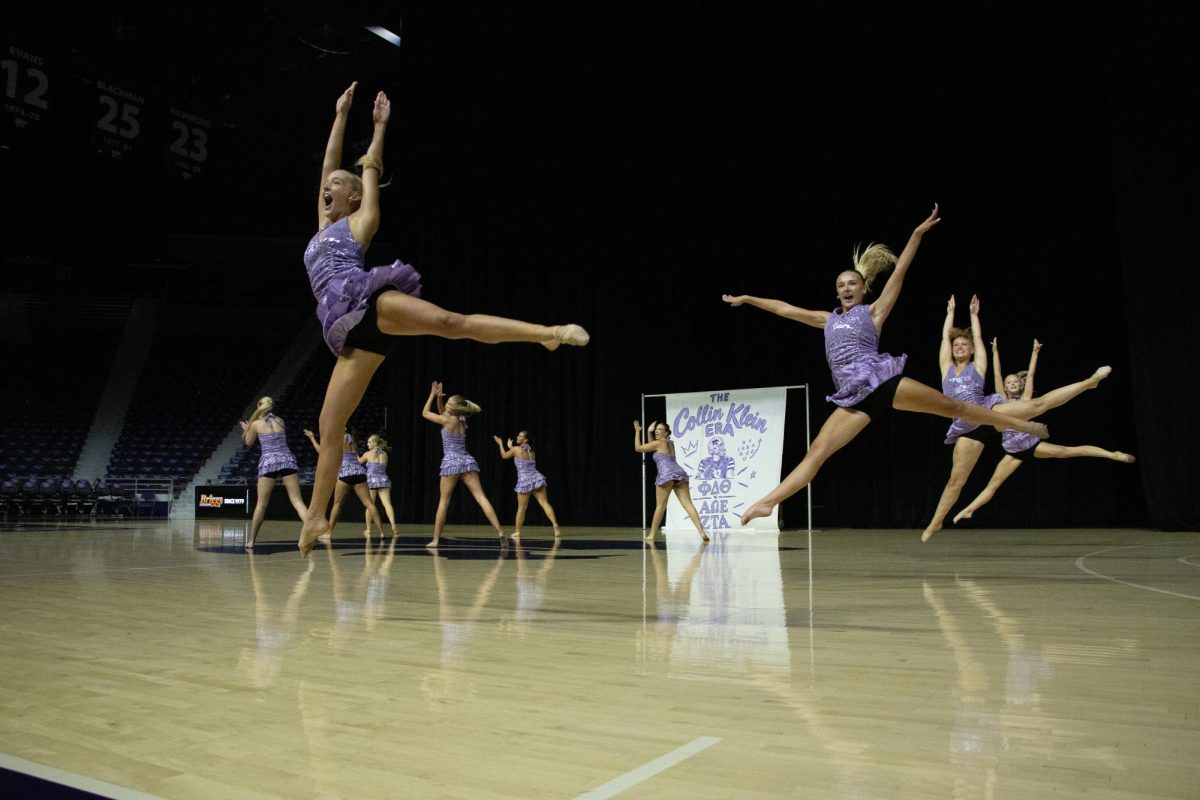
On March 28, Kansas State student dancers will share the stage with members of the Bill T. Jones/Arnie Zane Company, bringing decades of modern dance history into the direct spotlight of Manhattan.
For company members Jada Jenai and Jacoby Pruitt, both in their fifth seasons with the company, that evolution now includes passing down the work.
“This company has so many different iterations … and we’ve been able to meet a lot of those people and hear those stories, their stories of how Bill was or how the process was,” Jenai said.
The piece itself, first choreographed by Zane before being reinvigorated by Jones after Zane’s death in 1988, is rooted in a series of 45 distinctive “shapes” — positions that build on one another, gradually increasing in their speed and complexity.
“There’s 45 shapes that anyone can do,” Jenai said. “But the goal is to hit each one with the same precision from the first time you do it slowly to the last time when it’s super fast.”
As those shapes accumulate, the experience shifts, not just for the audience but for the dancers learning it.
“It’s been a really amazing opportunity,” Kieran Boeger, senior in psychology and dance, said. “The style of dance is completely out of my ballpark, so to get to learn something new and really challenge my body and my brain has been really exciting.”
For Rose Carter, sophomore in human development and family science, the piece shifted her understanding of what the movements demand.
“I didn’t realize how much goes into each movement,” Carter said. “It challenges you in a way you don’t expect.”
There’s no single storyline guiding the audience. Instead, the meaning builds throughout the piece — through movement, spacing, timing and the improvisational choices that dancers may make. The result is something that feels almost like a puzzle.
“In this work as a dancer, I haven’t really sat down and watched this piece performed live more than once, maybe,” Pruitt said. “So seeing it now, watching them run it over and over, I’m noticing it myself. Having to watch and solve the puzzles and see the choices people are making and watching the space change, watching the energy flow, hearing the music come in, watching the lighting shift. There’s so much that’s ever-evolving.”
At K-State, the challenge was handed directly to student dancers, who learned the material in just a matter of days via a residency that was funded by the QuVee Mock Masterclass series.
“I feel like I’ve learned that I can do more,” Boeger said. “My body can do more than I think it can.”
That growth is exactly what stands out to the company members guiding them.
“The students have been so receptive and so open and they’re working so hard,” Pruitt said. “It’s so rewarding for us on this side of it. A work like this can be very simple but it is so intricate and requires such attention to detail to see young artists really tap in that way is very invigorating.”
For audiences, the piece offers something less direct than a traditional narrative. It asks viewers to pay attention, to track patterns and notice shifts while sitting with the repetition long enough to see it transform.
“It’s a slow build that gets wild and chaotic,” Pruitt said. “I believe Bill has said something before about the audience and the experience of watching that you can notice yourself noticing something. And I think this is a great piece for that.”