



































































































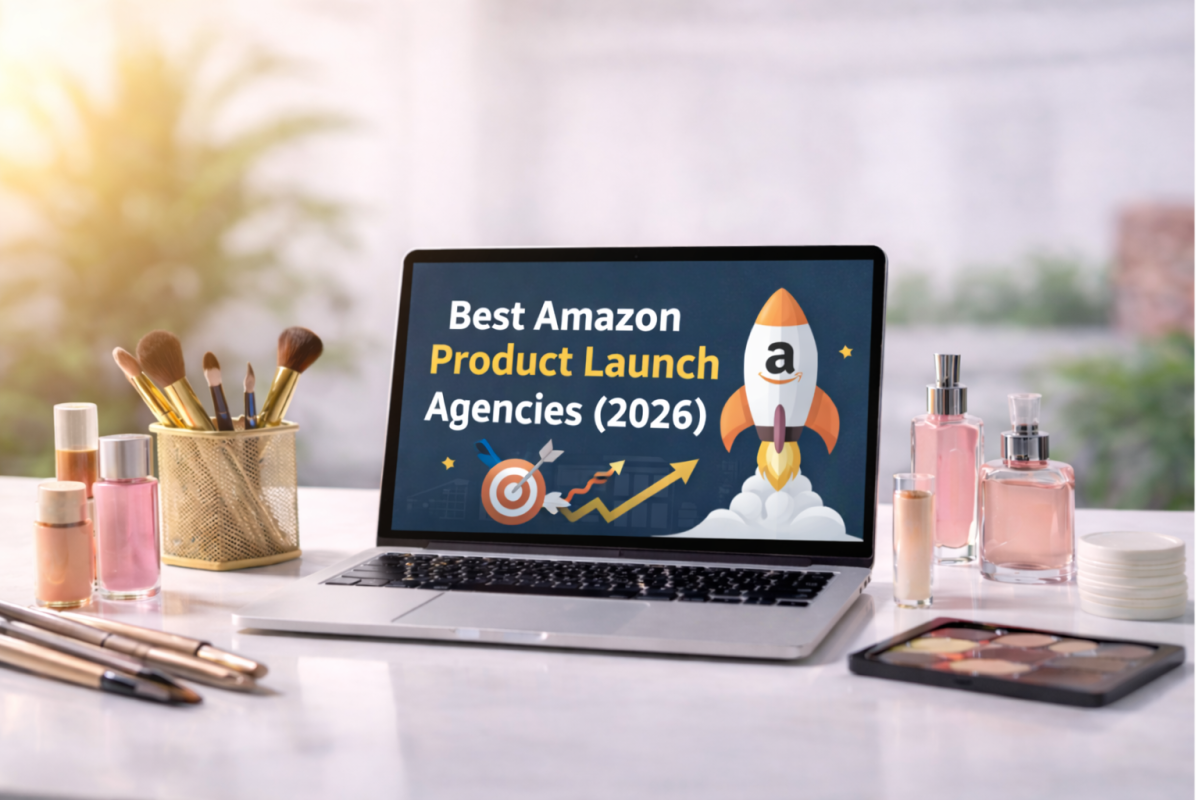
The best Amazon product launch services coordinate listing optimization, conversion-focused creative, and early sales velocity to generate ranking momentum and sustainable revenue growth, not just short-term traffic spikes.
Leading agencies structure launches across pre-launch preparation, the launch window, and post-launch scaling to maximize visibility, conversion, and algorithmic performance.
Amazon launches often fail because they miss the three signals that determine success: visibility, conversion, and early sales velocity. Without traffic, a product is not discovered. Without strong conversion, traffic is wasted. And without early momentum, Amazon’s algorithm does not reward the listing with sustained organic ranking.
This guide explains how Amazon product launches work in 2026, what a full-service launch agency should deliver, which KPIs matter, typical launch costs, and how to choose the right partner. It also reviews the top Amazon product launch agencies and what differentiates the strongest performers from the rest.
What Is an Amazon Product Launch Agency?
An Amazon product launch agency is a specialized partner that plans and executes a product’s go-to-market strategy on Amazon. Unlike general marketing agencies or listing-only service providers, launch agencies coordinate every moving part required to gain traction inside Amazon’s ecosystem — from positioning and creative production to advertising, pricing strategy, and operational readiness.
At its core, a launch agency exists to do one thing: compress time to traction. That means helping a product gain visibility, generate early sales velocity, and build sustainable organic ranking as quickly and efficiently as possible — without violating Amazon’s policies.
What They Actually Do
A true launch agency doesn’t just “optimize” a listing. They:
- Conduct deep category and competitor research
- Define positioning and differentiation
- Build high-converting listings (title, bullets, backend search terms, attributes)
- Produce conversion-focused creative assets (image stack, A+ content, video)
- Plan and execute a structured advertising strategy
- Coordinate promotional mechanics
- Manage inventory pacing during rank acceleration
- Track KPIs and iterate during the first 30–90 days
Because Amazon’s algorithm rewards performance signals (CTR, conversion rate, sales velocity), launches require synchronized execution. Creative affects conversion. Ads drive traffic. Pricing influences velocity. Inventory availability impacts rank stability. A launch agency coordinates all of it under one roadmap.
Who Amazon Launch Agencies Help
Amazon product launch agencies typically support:
1. Brands new to Amazon
Companies with successful products off-Amazon (DTC, retail, Shopify, etc.) that need marketplace-specific strategy and execution.
2. Existing Amazon sellers launching new ASINs
Private label sellers expanding their catalog or introducing variations into competitive categories.
3. Brands expanding into new marketplaces
Sellers entering Amazon UK, EU, Canada, or other regions who need localization, compliance, and coordinated advertising.
4. Enterprise brands entering competitive categories
Larger companies that require structured rollout plans, reporting, and cross-functional coordination.
In each case, the goal is the same: reduce launch risk and accelerate organic growth.
How Launch Agencies Differ from “Listing Optimization Only” Providers
Many freelancers and agencies offer listing optimization — rewriting titles and bullets for keywords. While important, this represents only one piece of the launch equation.
A listing-only provider focuses on:
- Copy updates
- Keyword placement
- Basic SEO improvements
A launch agency focuses on:
- Traffic generation strategy
- PPC budget pacing
- Pricing tests
- Conversion optimization
- Inventory planning
- Organic rank tracking
- Launch reporting cadence
- 30/60/90-day optimization roadmap
In other words, optimization improves a listing. A launch strategy builds momentum.
The difference matters most in competitive categories where ranking depends on sustained performance, not just keyword inclusion. Without coordinated ads, controlled promo mechanics, and operational readiness, even a perfectly written listing will struggle to gain traction.
A strong Amazon product launch agency acts as a go-to-market partner, aligning marketing, advertising, and operations to give your product the best possible start — and positioning it for scalable growth beyond the initial launch window.
Amazon Launch Phases (Core Framework)
A successful Amazon product launch is not a single event — it’s a structured progression across three phases designed to build momentum, generate performance signals, and secure long-term organic growth. Each phase serves a different objective, and skipping steps often leads to weak ranking, wasted ad spend, or stalled sales.
Below is the core framework used by high-performing launch agencies.
Phase 1: Pre-Launch (2–6 Weeks)
The pre-launch phase lays the foundation. This is where positioning, conversion readiness, and operational planning happen — before a single ad dollar is spent. The goal is to enter the market fully prepared to convert traffic and sustain early sales velocity.
Key Objectives
- Define positioning and differentiation
- Ensure listing is conversion-ready
- Prepare inventory and operational flow
- Build launch roadmap and KPI targets
Market & Competitor Research
A strong launch begins with category intelligence. This includes identifying top competitors, price bands, feature gaps, review patterns, and keyword opportunities. The outcome is a clear positioning strategy — not just “another product,” but one with a defined reason to win.
Offer & Positioning Development
This step defines the product’s value proposition, differentiation angle, bundle or variation strategy, and pricing hypothesis. Positioning must align with real customer demand and competitive realities.
Listing Build (Conversion Foundation)
A full listing is built before launch:
- Title optimized for relevance and click-through
- Bullet points focused on benefits and objections
- Description / A+ structured for conversion
- Backend search terms and attributes completed
- Correct category and browse node setup
The goal is simple: when traffic arrives, the listing converts.
Creative Production
High-performing launches require a complete creative stack:
- Main image optimized for CTR
- Lifestyle and feature images
- Infographics explaining benefits
- Comparison visuals
- Video (if available)
Creative directly impacts conversion rate — one of the strongest ranking signals.
Review Readiness & Customer Experience
While reviews cannot be manipulated, systems can be prepared:
- Post-purchase follow-up flows
- Customer service response playbook
- Packaging and insert compliance check
Inventory & Operational Planning
Inventory planning is critical during a launch. Stockouts during ranking acceleration can permanently damage momentum. Agencies forecast:
- Initial order quantity
- Reorder points
- Sales velocity scenarios
- FBA vs FBM readiness
Launch Plan & KPI Targets
Before entering the launch window, agencies define:
- Keyword targets
- Initial ad structure
- Pricing tests
- Budget pacing
- Conversion benchmarks
- Rank movement expectations
With preparation complete, the product enters the most sensitive phase — the launch window.
Phase 2: Launch Window (First 7–21 Days)
The launch window is where momentum is created. The objective is to generate consistent, conversion-backed sales velocity while signaling relevance to Amazon’s algorithm.
This phase requires tight coordination across advertising, pricing, and traffic flow.
Key Objectives
- Drive targeted traffic
- Generate early sales velocity
- Achieve keyword indexation
- Begin organic rank movement
- Maintain inventory stability
Core Activities
Coordinated PPC Execution
Advertising is structured across Sponsored Products, Sponsored Brands, and sometimes Sponsored Display.
Campaigns typically include:
- Keyword-targeted campaigns (exact, phrase, broad)
- Competitor targeting
- Discovery campaigns
- Defensive brand protection (if applicable)
Budget pacing is carefully controlled to sustain velocity — not spike and collapse.
Traffic Shaping & Demand Control
Traffic must be relevant and conversion-ready. Agencies shape traffic through keyword prioritization, bid adjustments, and budget allocation to focus on ranking-driving terms.
Pricing & Offer Testing
Early pricing plays a strategic role. Temporary pricing adjustments or value-driven offers may be used to accelerate conversion and sales velocity. The objective is controlled momentum, not margin maximization.
Promotion Mechanics
Where eligible, compliant promotion tools may be used:
- Coupons
- Limited-time discounts
- Deal eligibility (category dependent)
These tools help increase conversion rate and click-through performance during the early ranking phase.
Keyword Indexation & Rank Monitoring
During the launch window, agencies monitor:
- Which keywords index
- Rank movement on priority terms
- CTR and conversion signals
- Sales velocity vs targets
Adjustments are made in near real-time.
Operational Stability
Inventory, fulfillment speed, and account health must remain stable. Any disruption during this phase can slow ranking progress.
By the end of the launch window, the product should be indexed, generating consistent sales, and beginning to climb organic rankings.
Phase 3: Post-Launch Optimization & Scaling (30–90+ Days)
Once initial traction is achieved, the focus shifts from momentum-building to efficiency and scalable growth. This phase determines whether a product stabilizes and grows — or loses rank after launch.
Key Objectives
- Improve advertising efficiency
- Expand keyword coverage
- Increase conversion rate
- Stabilize organic ranking
- Scale revenue sustainably
Core Activities
Advertising Optimization
Campaigns are refined based on real performance data:
- Expand converting search terms
- Add negative keywords to reduce waste
- Reallocate budgets to profitable segments
- Improve ACOS and TACOS
The goal shifts from velocity → efficiency + scale.
Keyword Expansion & Rank Growth
As the product stabilizes, agencies target additional mid- and long-tail keywords, increasing visibility and broadening organic reach.
Conversion Rate Improvements
Conversion optimization continues through:
- Image testing
- Copy improvements
- A+ content refinement
- Pricing adjustments
- Offer optimization
Even small CVR improvements can significantly impact ranking and profitability.
Budget Scaling
Once campaigns reach stable efficiency, budgets are gradually increased to capture more market share without destabilizing performance.
International Expansion (If Applicable)
Successful launches may expand into additional marketplaces (UK, EU, CA, etc.), using the validated positioning and creative assets.
Inventory Planning & Stability
As sales grow, inventory forecasting becomes more critical to prevent stockouts during scaling phases.
Performance Measurement & Roadmap
Agencies typically provide:
- Weekly KPI tracking
- 30/60/90-day optimization roadmap
- Growth and efficiency reporting
The Big Picture
Each phase builds on the previous one:
- Pre-launch creates conversion readiness
- Launch window builds momentum and ranking signals
- Post-launch scaling drives efficiency and long-term growth
Skipping preparation leads to poor conversion.
Skipping coordination leads to weak momentum.
Skipping optimization leads to stalled growth.
The most successful Amazon launches follow a structured framework — executed with precision across all three phases.
What a Full-Service Launch Should Include (Complete Checklist)
Not all “launch services” are equal. Some providers stop at keyword research and listing copy. Others run ads without coordinating pricing, creative, or inventory. A true full-service Amazon product launch integrates strategy, execution, and performance tracking across multiple disciplines.
Below is a comprehensive checklist of what a professional Amazon product launch agency should include.
1. Market & Competitor Research
Every launch starts with category intelligence. Without understanding the competitive landscape, pricing dynamics, and demand structure, strategy becomes guesswork.
A proper research phase includes:
- Category mapping: identifying top sellers, review thresholds, revenue benchmarks, and entry barriers.
- Price band analysis: determining where demand clusters and where differentiation opportunities exist.
- Feature gap analysis: identifying underserved angles (bundles, variations, benefit positioning).
- Keyword opportunity research: mapping high-volume terms, mid-tail opportunities, and ranking difficulty.
- Claim substantiation: ensuring any benefit claims are compliant and defensible.
The outcome should be a clear, data-backed positioning strategy — not just “optimize for keywords.”
2. Offer & Positioning Strategy
Positioning drives conversion and ranking. A launch agency should define:
- Core value proposition
- Differentiation angle
- Target customer persona
- Bundle or variation strategy
- Launch pricing hypothesis
This is where the product is framed to compete — whether through premium positioning, value bundling, niche targeting, or functional differentiation.
Without defined positioning, the listing becomes generic and struggles to convert.
3. Listing Build (Conversion-First Structure)
The listing must be fully built and optimized before traffic is scaled. A comprehensive listing build includes:
- SEO-optimized title
- Benefit-driven bullet points
- Persuasive description or A+ content
- Backend search terms
- Complete attribute fill-out
- Proper category and browse node placement
The goal is not keyword stuffing. It’s structured persuasion aligned with Amazon’s ranking signals.
High-performing launch agencies balance relevance + clarity + emotional triggers while maintaining compliance.
4. Creative Production
Creative assets directly influence click-through rate (CTR) and conversion rate (CVR) — two metrics that strongly affect organic rank.
A complete creative stack should include:
- Optimized main image (CTR-focused)
- Feature images
- Lifestyle imagery
- Infographic-style visuals
- Comparison charts
- Product video (if available)
- A+ content / brand story modules
Agencies should guide creative strategy, not just accept raw images. The visual sequence should answer buyer objections step-by-step.
Poor creative can waste thousands in ad spend.
5. Launch Advertising Strategy
Traffic coordination is critical during launch. A structured advertising setup typically includes:
- Sponsored Products (exact, phrase, broad)
- Competitor targeting campaigns
- Sponsored Brands (if brand registered)
- Sponsored Display (retargeting and competitor targeting)
- Discovery campaigns for keyword mining
Key components should include:
- Defined keyword prioritization
- Negative keyword strategy
- Budget pacing plan
- Bid escalation/de-escalation rules
- Daily monitoring during the launch window
Ad strategy during launch differs from ongoing management — velocity often takes priority before efficiency.
6. Promotional Mechanics (Policy-Compliant)
Promotions may support conversion acceleration when used strategically and compliantly.
Possible tools include:
- Coupons
- Limited-time price adjustments
- Category-eligible deal participation
The objective is to improve CTR and CVR without damaging long-term pricing perception.
A launch agency should also clearly explain what is compliant — and what is not.
7. Review Readiness & Customer Experience
While reviews cannot be incentivized or manipulated, agencies should prepare:
- Automated, policy-compliant post-purchase follow-ups
- Customer service response framework
- Packaging quality control
- Refund and return management system
Strong early customer satisfaction helps build authentic review velocity over time.
8. Inventory & Operational Planning
One of the most overlooked elements in product launches is inventory coordination.
A full-service agency should plan:
- Initial stock forecasting
- Rank-push sales projections
- Reorder timing
- FBA vs FBM strategy
- Stockout contingency plans
Running out of stock during a launch can reset ranking progress and significantly delay growth.
Operational alignment protects marketing investment.
9. Measurement & Iteration Framework
Launch success depends on structured measurement.
A strong agency should provide:
- KPI dashboard setup
- Daily monitoring during launch window
- Weekly performance reports
- 30/60/90-day optimization roadmap
- Clear benchmarks for success
Metrics tracked should include:
- Impressions
- CTR
- Conversion rate
- ACOS / TACOS
- Keyword rank movement
- Sales velocity
- Inventory levels
Without defined reporting cadence and optimization plans, a launch becomes reactive instead of strategic.
The Bottom Line
A full-service Amazon product launch should not be a collection of disconnected services. It should function as a coordinated system:
- Research informs positioning
- Positioning shapes listing & creative
- Creative drives conversion
- Ads generate velocity
- Promotions improve performance signals
- Inventory planning protects rank
- Reporting guides optimization
When all elements are aligned, launches build durable organic growth — not short-term spikes.
Next, we’ll break down the specific KPIs that matter most during an Amazon product launch and how agencies measure success.
KPIs That Matter in an Amazon Product Launch
A successful Amazon launch isn’t measured by “sales” alone. Early revenue can look promising while deeper signals reveal instability, wasted spend, or poor long-term ranking potential.
The best launch agencies track a structured set of KPIs across four categories: visibility, efficiency, conversion, and operations.
Here’s what actually matters during a launch.
1. Visibility Metrics (Are You Being Discovered?)
Before a product can sell, it must be seen. Visibility metrics indicate whether Amazon’s algorithm recognizes your listing as relevant.
Key visibility KPIs include:
Impressions
The number of times your ads or listing appear in search results. Rising impressions signal expanding reach.
Share of Voice (SOV)
Your presence relative to competitors on priority keywords. Agencies often track impression share or placement trends to understand competitive positioning.
Keyword Indexation
Are you indexed for target keywords? If your product isn’t indexed, it cannot rank organically for those terms.
Organic Rank Movement
Tracking rank changes on high-priority keywords is critical during the launch window. Early upward movement indicates successful sales velocity signals.
Visibility is the foundation. Without growing impressions and keyword relevance, a launch stalls.
2. Efficiency Metrics (Is Spend Under Control?)
During launch, efficiency may temporarily take a backseat to momentum — but it cannot be ignored. Poor efficiency can quickly drain budget without sustainable ranking gains.
Key efficiency KPIs include:
CPC (Cost Per Click)
High CPCs can signal competitive pressure or weak ad relevance.
ACOS (Advertising Cost of Sales)
Measures ad spend relative to attributed sales. In early launch, ACOS may run higher — but should trend toward target benchmarks over time.
TACOS (Total Advertising Cost of Sales)
This is often more important than ACOS. TACOS measures ad spend relative to total revenue (ads + organic). A declining TACOS over time indicates growing organic contribution.
Budget Pacing
Agencies monitor whether daily budgets are being exhausted too early, which may limit velocity on priority keywords.
Search Term Waste
Non-converting search terms should be identified and negated quickly to improve efficiency.
Efficiency determines whether a launch can scale sustainably after initial traction.
3. Conversion Metrics (Does Traffic Turn Into Sales?)
Conversion is the multiplier. High traffic with weak conversion slows ranking progress and increases costs.
Core conversion KPIs include:
CTR (Click-Through Rate)
Indicates how attractive your listing appears in search results. Influenced heavily by main image, price, reviews, and title clarity.
Unit Session Percentage (Conversion Rate Proxy)
Amazon’s built-in metric approximating conversion rate. Even small improvements can significantly improve ranking.
Add-to-Cart Behavior (where tracked externally)
Provides deeper insight into purchase intent.
Refunds & Returns Signals
Early refund spikes can indicate product quality or expectation mismatch issues.
Conversion metrics reveal whether your positioning, creative, and pricing are aligned with buyer expectations.
4. Operational Metrics (Can Growth Be Sustained?)
Operational breakdowns can derail otherwise strong launches.
Important operational KPIs include:
Stockout Rate
Inventory must remain stable during ranking acceleration.
Fulfillment Speed
Prime eligibility and shipping reliability impact conversion.
Account Health Metrics
Order defect rate, late shipment rate (for FBM), and policy compliance must remain clean.
A stockout during rank growth can reset progress and increase recovery cost dramatically.
How Agencies Use These KPIs Together
Strong launch agencies don’t track metrics in isolation. They interpret signals collectively:
- Rising impressions + rising conversion = ranking potential
- High traffic + low conversion = creative or positioning issue
- Strong sales + high TACOS = organic growth not yet stable
- Rank growth + stable inventory = momentum secured
During the first 30–90 days, agencies typically provide daily or weekly reporting on these KPIs, using data to adjust bids, refine targeting, improve creative, and optimize pricing.
The goal isn’t just early sales — it’s durable organic positioning with sustainable ad efficiency.
DIY vs Freelancer vs Launch Agency
When planning an Amazon product launch, most brands face the same question:
Should we handle it internally, hire a freelancer, or partner with a full-service launch agency?
The right choice depends on category competitiveness, budget, internal expertise, and growth timeline. Below is a structured comparison to help decision-makers evaluate tradeoffs clearly.
Quick Comparison Table
| Factor | DIY (In-House) | Freelancer | Full-Service Launch Agency |
|---|---|---|---|
| Cost | Lowest upfront | Moderate | Highest upfront |
| Speed to Market | Slower (learning curve) | Moderate | Fastest (team-based execution) |
| Expertise Depth | Limited to internal knowledge | Specialist in one area | Multi-disciplinary (ads, creative, ops) |
| Coordination | Self-managed | Often fragmented | Fully coordinated roadmap |
| Creative Quality | Depends on internal skills | Varies widely | Structured conversion-focused assets |
| Ad Strategy Sophistication | Basic to moderate | Depends on PPC specialist | Advanced & data-driven |
| Risk Level | High (trial & error) | Moderate | Lower (structured process) |
| Scalability | Limited | Limited | High
|
When DIY Makes Sense
Launching internally can work under specific conditions:
- Low-competition niche
- Established off-Amazon brand demand
- Existing internal Amazon experience
- Limited budget
- Willingness to accept slower ramp-up
DIY works best when ranking difficulty is low and the business can tolerate a longer optimization cycle. However, many brands underestimate the coordination required across listing build, advertising, pricing, and inventory management.
The biggest risk with DIY launches is fragmented execution — where ads are running but the listing isn’t fully optimized, or inventory runs out during momentum building.
When Hiring a Freelancer Works
Freelancers can be effective for targeted execution, such as:
- Listing copywriting
- PPC management
- Creative design
- Keyword research
If a brand already has strong internal coordination and needs support in one area, freelancers are cost-efficient.
However, freelancers typically operate within a narrow scope. A PPC freelancer may not coordinate inventory pacing. A copywriter may not influence pricing strategy. Creative designers may not understand ranking signals.
In competitive categories, this fragmentation can slow momentum and increase launch risk.
When a Launch Agency Wins
A full-service Amazon product launch agency is designed for situations where:
- The category is competitive
- Time-to-rank matters
- Multiple assets need coordination
- Ad budgets are significant
- Multi-market expansion is planned
- Leadership wants structured reporting
Agencies operate as centralized coordinators. They align:
- Market research
- Positioning strategy
- Creative production
- Listing structure
- Advertising campaigns
- Promotional timing
- Inventory forecasting
- KPI tracking
This coordinated execution reduces launch friction and increases probability of early organic ranking.
For brands entering crowded niches, launching multiple ASINs, or targeting aggressive revenue timelines, agency support often accelerates traction significantly.
The Real Cost of Getting It Wrong
While agencies may appear more expensive upfront, failed launches often cost more in:
- Wasted ad spend
- Inventory overstock or stockouts
- Rank resets
- Re-listing rebuilds
- Lost time to market
In competitive categories, speed and coordination can materially affect profitability within the first 90 days.
Decision Framework
Choose DIY if:
- Competition is low
- Budget is minimal
- Internal expertise is strong
Choose a Freelancer if:
- You need help in one specific area
- Internal coordination is strong
- Budget is moderate
Choose a Launch Agency if:
- The niche is competitive
- You want structured execution
- Growth timelines are aggressive
- You need cross-functional coordination
- You want lower execution risk
How to Choose the Right Amazon Product Launch Agency
Not all Amazon agencies are built the same. Some focus only on listings, others primarily manage ads, and a few operate as true launch partners coordinating strategy, creative, advertising, and operations.
Choosing the right agency can significantly impact how quickly your product gains traction — and whether it sustains growth after the launch window.
Below is a structured framework to evaluate potential partners.
The Essential Selection Checklist
When comparing agencies, look for clear evidence in the following areas:
1. A Defined Launch Playbook
Strong agencies operate with a repeatable launch framework covering pre-launch preparation, launch window execution, and post-launch optimization. Ask how they structure each phase and what milestones they track.
2. Proof of Execution
Look for real launch experience — not just general Amazon management. Relevant proof may include:
- Case studies
- Before/after performance data
- Keyword rank improvements
- Conversion and sales growth examples
The best agencies can explain why a launch worked, not just show results.
3. Clear Deliverables
Avoid vague “we handle everything” promises. You should receive a defined scope including:
- Research outputs
- Listing deliverables
- Creative assets
- Ad setup and management
- Reporting cadence
- Optimization roadmap
4. Reporting & Transparency
You should know exactly how performance is measured. Look for:
- KPI dashboards
- Weekly or bi-weekly reporting
- Rank tracking
- Budget pacing visibility
- Action summaries after each reporting cycle
5. Advertising Expertise
Because ads drive early sales velocity, PPC capability is critical. The agency should demonstrate:
- Structured campaign architecture
- Keyword targeting strategy
- Negative keyword management
- Budget pacing methodology
- Optimization framework beyond launch
6. Creative & Conversion Capabilities
Listing copy alone is not enough. Agencies should influence:
- Image strategy
- A+ content structure
- Conversion-focused messaging
- CTR optimization approach
Creative quality directly affects ranking potential.
Key Questions to Ask Before Hiring
To evaluate fit and capability, ask:
- What does your launch timeline typically look like?
- What exactly is included in your launch package?
- What launch budget do you recommend for my category?
- How do you pace advertising spend during the launch window?
- How do you track and report keyword rank movement?
- What happens after the initial launch phase?
- How many revision cycles are included (listing, creative, ads)?
- Who owns the listing, creative, and data assets?
- How do you prevent stockouts during ranking acceleration?
- Do you provide a 30/60/90-day optimization roadmap?
Clear, structured answers usually indicate a mature launch process.
Red Flags to Watch For
Certain claims signal elevated risk:
“Guaranteed #1 ranking”
No agency controls Amazon’s algorithm. Ranking guarantees are unrealistic and often associated with risky tactics.
Black-hat review tactics
Any promise of “fast reviews” or manipulated feedback violates Amazon policy and can jeopardize the account.
Vague deliverables
If scope, reporting, or responsibilities are unclear, coordination problems are likely.
No structured launch reporting
Without KPI tracking, optimization becomes reactive rather than strategic.
Over-focus on listing only
Listing optimization is important — but insufficient for competitive launches.
No post-launch strategy
The first 30–90 days determine long-term stability. Agencies should plan beyond the initial push.
Understanding Fit (Not Just Capability)
The best agency is not always the biggest or most expensive — it’s the one aligned with your:
- Category competitiveness
- Growth timeline
- Budget structure
- Internal resources
- Marketplace expansion plans
Some agencies specialize in enterprise launches, others in emerging brands, and some in aggressive performance-driven growth.
Final Selection Tip
Look for an agency that behaves like a go-to-market partner, not just a service provider.
They should connect:
- Strategy → Execution → Measurement → Optimization
When coordination is strong, launches move faster, spend is more efficient, and organic ranking stabilizes sooner.
Top 10 Amazon Product Launch Agencies (2026)
Below are ten of the most recognized agencies offering Amazon product launch services in 2026. Each differs in positioning, scale, and specialization — from performance-driven launch execution to enterprise-grade commerce growth.
Olifant Digital — Conversion-First Amazon Launch Specialists
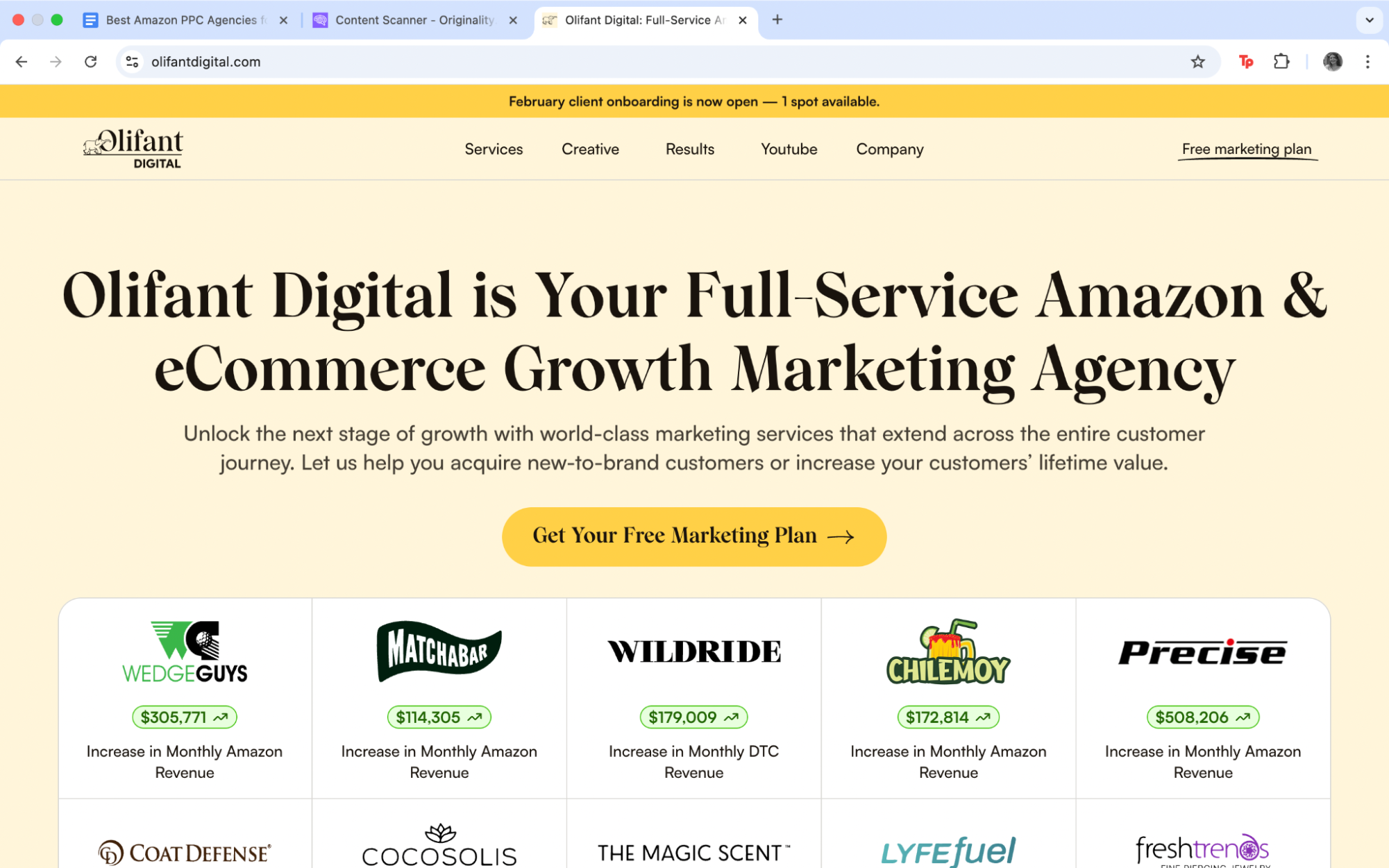
Best for: Brands that want a structured, performance-driven launch focused on conversion, ranking momentum, and long-term profitability.
Olifant Digital structures Amazon launches around measurable outcomes.
- Elite Jumps: A/B-tested listings, hero image overhaul, and precision keyword positioning produced a 51% lift in conversion rate and 124% revenue growth within three months, creating strong early ranking momentum.
- Onsen Secret: Rebuilding listings before scaling advertising — optimizing titles, bullets, images, and A+ content — improved organic visibility and tripled profitability while adding $95,934 in monthly revenue.
- Ekster: Launching Amazon from zero with conversion-first listings, premium A+ content, and structured PPC alignment generated $688,406 in annual Amazon profitability, with flagship products becoming category leaders.
Rather than treating launch as a short campaign, Olifant executes a structured 3-phase launch framework, pre-launch positioning, launch window execution, and post-launch scaling; aligning listing quality, creative assets, advertising pacing, and operational readiness to build early conversion strength and sales velocity.
This approach focuses on improving the core ranking signals Amazon rewards: click-through rate, conversion rate, and sustained sales performance.
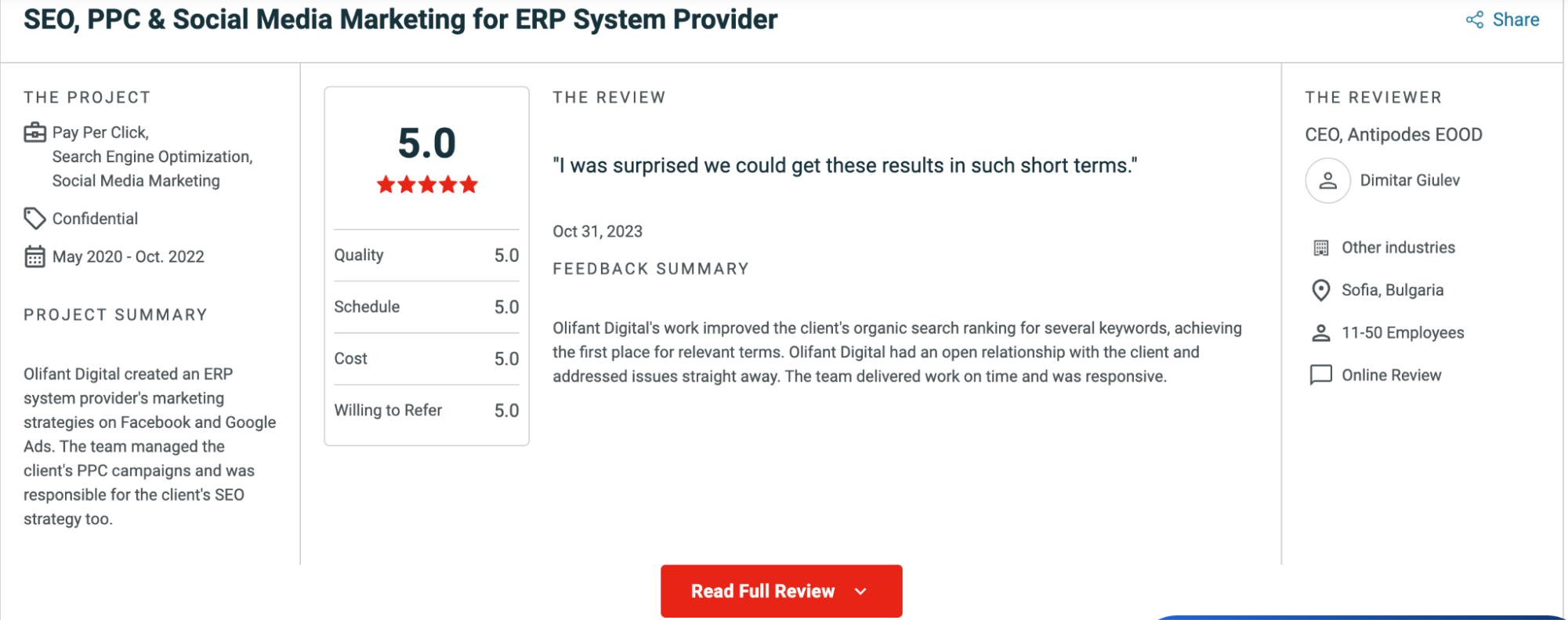
Across verified client reviews, Olifant is frequently recognized for strong Amazon expertise, measurable improvements in organic sales, improved advertising efficiency, and a disciplined, performance-oriented approach to marketplace growth. Clients often highlight communication quality, structured execution, and a focus on long-term profitability rather than short-term ad spend.
What differentiates Olifant in launch execution:
- Conversion-first launch strategy (optimize before scaling traffic)
- Coordinated listing, creative, PPC, and operational execution
- KPI-driven launch reporting and optimization roadmap
- Boutique model with limited client intake and performance alignment
Best fit for: Brands entering competitive categories or seeking a performance-oriented agency
Why we put it on #1: because they are the only agency with all 5-star reviews
2. Tinuiti — Enterprise Commerce & Amazon Growth Team
Best for: Large brands and enterprise-level product launches requiring cross-channel coordination and advanced analytics.
Tinuiti is one of the largest commerce-focused agencies offering Amazon launch and growth services. Their strength lies in enterprise-scale execution, integrating Amazon launches with broader paid media, data analytics, attribution modeling, and cross-channel commerce strategy. For brands managing complex catalogs or launching major product lines across multiple platforms, this level of coordination can provide operational alignment and structured reporting at scale.
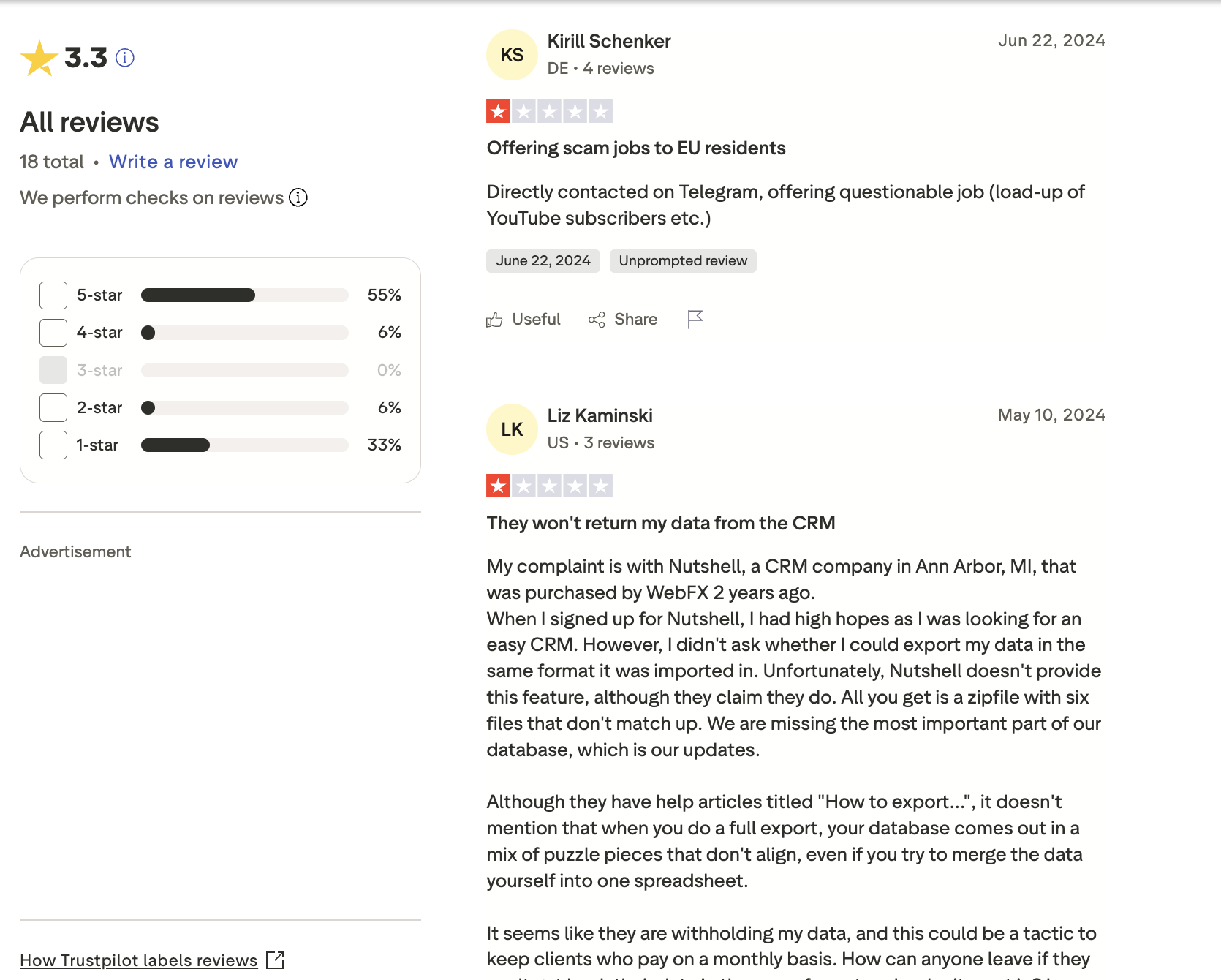
However, public feedback reflects mixed experiences. While some reviewers highlight strong e-commerce expertise, educational resources, and knowledgeable teams, others report concerns around responsiveness, account management consistency, budget pacing, and performance relative to cost expectations. On Yelp, Tinuiti currently holds a 3.3/5 rating across 18 reviews, with comments ranging from praise for their PPC knowledge to criticism around campaign oversight and ROI outcomes.
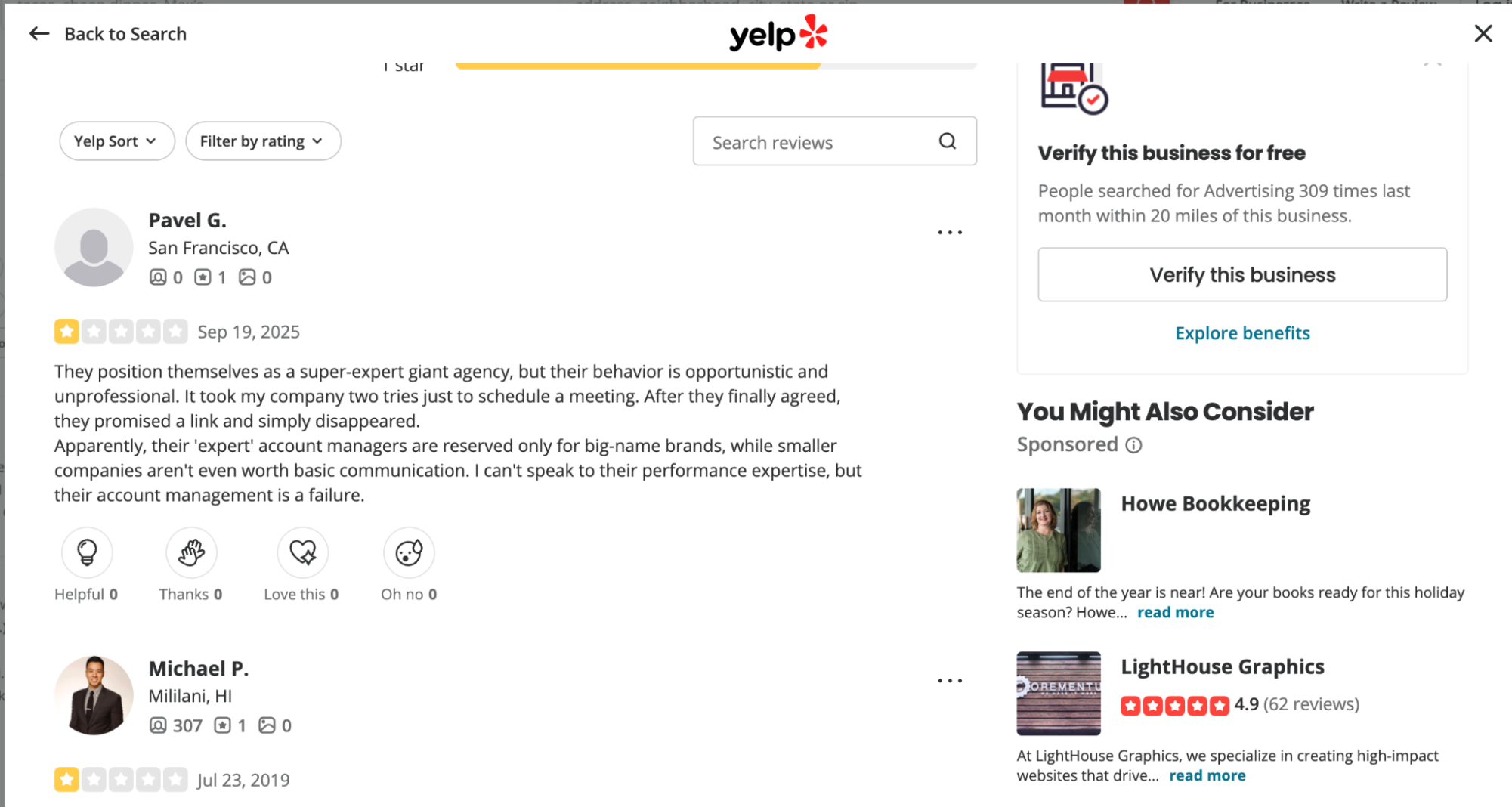
Tinuiti may be a strong fit for established brands with substantial budgets and internal marketing sophistication. Smaller or mid-sized brands should evaluate account structure, communication cadence, and performance accountability before committing to enterprise-level retainers.
3. Seller Interactive — Full-Service Amazon Marketing
Best for: Brands seeking an all-in-one Amazon service provider to manage launch and ongoing growth.
Seller Interactive provides end-to-end Amazon services including listing optimization, creative production, advertising management, account health support, and structured product launches. Their model focuses on coordinated execution across listing, creatives, PPC, and brand registry, making them suitable for brands that prefer a single agency overseeing most Amazon marketing functions.
On G2, Seller Interactive holds a 5/5 rating (3 reviews), with clients highlighting proactive communication, weekly reporting cadence, structured experimentation with keyword and PPC strategies, and measurable revenue growth following launch and optimization efforts. One reviewer reports sales doubling within two months and nearing triple-digit growth shortly after onboarding.
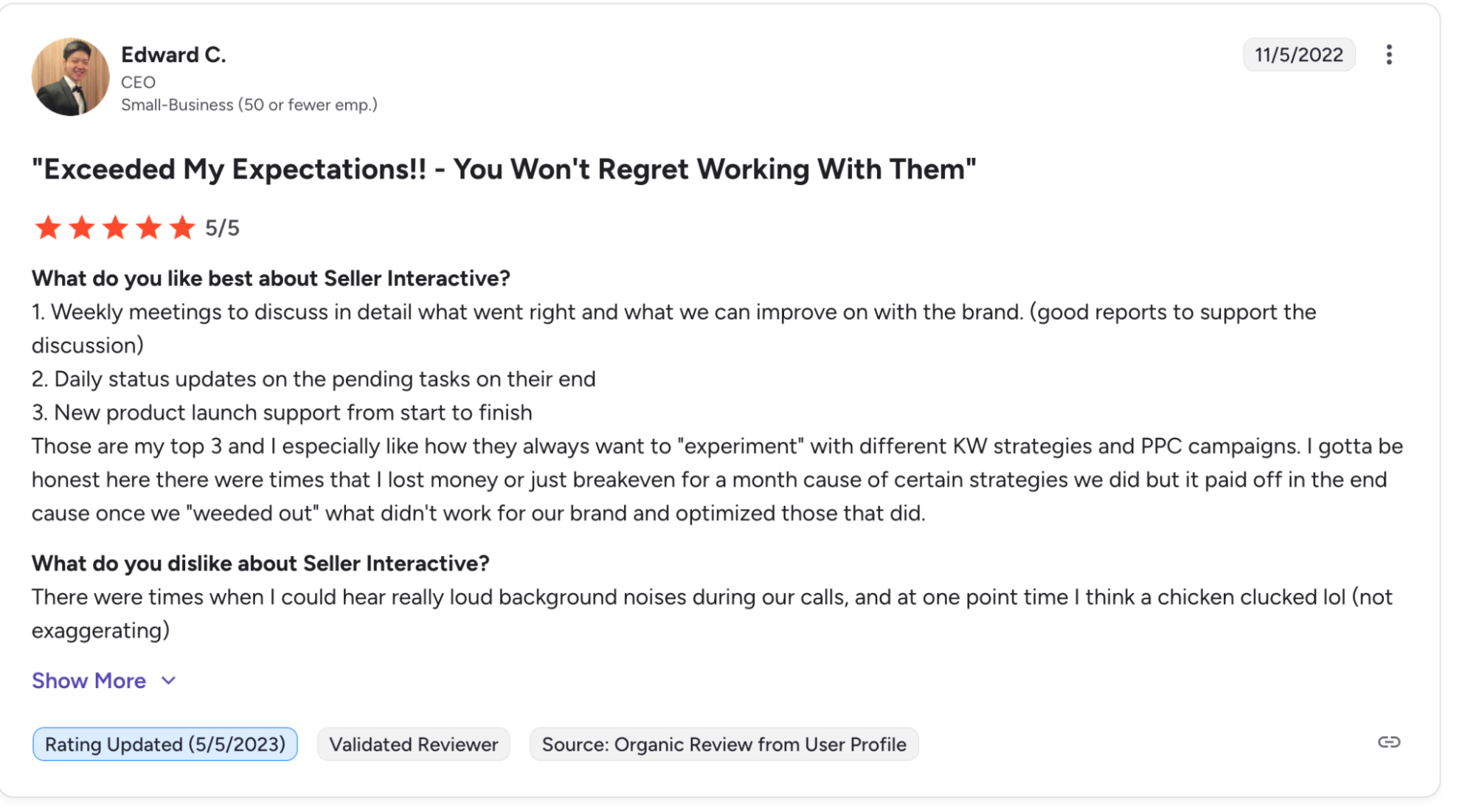
That said, the available review volume is limited, and the feedback reflects primarily small-to-mid-sized brand experiences. Brands considering Seller Interactive should evaluate reporting structure, experimentation tolerance, and account management alignment before committing to long-term launch engagements.
Seller Interactive can be a strong fit for companies wanting consolidated Amazon management under one team, particularly during launch phases where coordination across multiple functions is critical.
4. Envision Horizons — Amazon-Focused Growth Partner
Best for: Brands seeking a strategy-led launch combined with ongoing marketplace expansion and advertising optimization.
Envision Horizons positions itself as an Amazon-native growth agency, combining launch strategy with advertising, creative optimization, and marketplace operations. Their approach focuses on aligning listing quality, advertising efficiency, and operational coordination to support both launch execution and sustained marketplace growth.
Across verified Clutch reviews, clients frequently highlight strong Amazon expertise, organized project management, and measurable performance improvements. In one case, organic sales increased from 22% to 36%, contributing to 428% overall business growth, while other clients report improved advertising efficiency, better storefront optimization, and successful coordination across listing, creative, and operational functions.
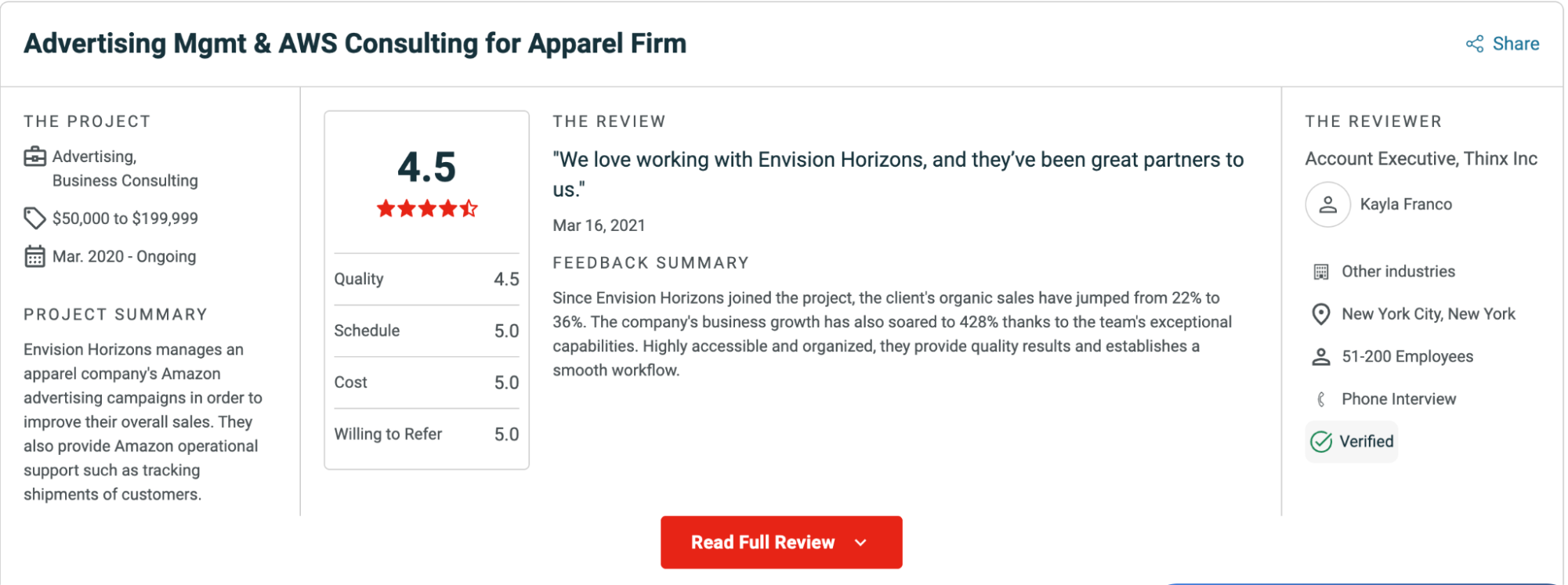
Client feedback is largely positive, particularly around communication, responsiveness, and strategic insight. However, some reviews note that results in highly competitive markets can vary, and strong outcomes may depend on category dynamics, investment level, and execution depth.
Envision Horizons is often well-suited for brands seeking both launch execution and long-term marketplace growth, particularly when advertising, listing optimization, and operational strategy must work in sync.
5. Ignite Visibility — Performance Marketing + Amazon
Best for: Brands wanting Amazon launch execution aligned with wider digital marketing and performance strategy.
Ignite Visibility is a performance marketing agency offering Amazon launch support alongside SEO, paid media, CRO, analytics, and cross-channel growth strategy. Their approach integrates Amazon within a broader marketing ecosystem, which can benefit brands coordinating launch performance across multiple acquisition channels rather than relying solely on marketplace traffic.
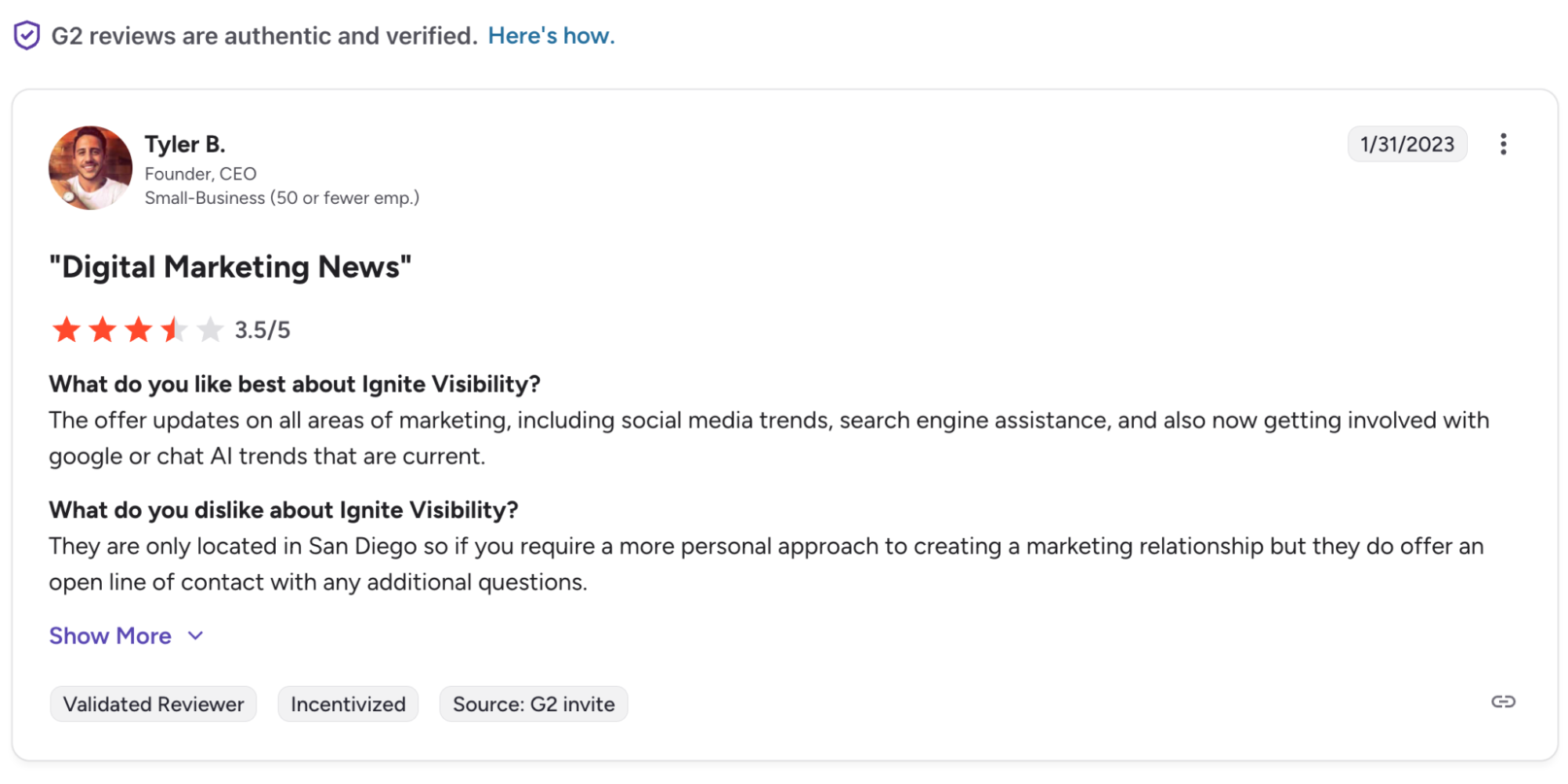
On G2, Ignite Visibility holds a 4.5/5 rating (3 reviews). Reviewers highlight strong paid media expertise, improved ROI on advertising spend, responsive communication, and good overall value. However, feedback also notes that the agency’s structure is broader than Amazon-native specialists, and brands seeking highly marketplace-focused execution may require deeper Amazon-specific alignment.
Ignite Visibility can be a strong fit for companies launching on Amazon as part of a wider digital growth strategy, particularly when cross-channel performance, analytics, and advertising coordination are key priorities.
6. eStore Factory — Multi-Market Amazon Launch Specialists
Best for: Brands launching across multiple Amazon marketplaces and expanding internationally.
eStore Factory focuses on Amazon-native services, combining launch execution, listing optimization, advertising management, and catalog strategy with strong experience across multiple regional marketplaces (including the US, UK, Australia, and others). Their approach is centered on helping brands scale beyond a single Amazon region through coordinated listing, creative, and marketplace expansion support.
Across 135 Trustpilot reviews (4.5/5), client feedback is largely positive, frequently highlighting strong Amazon expertise, clear communication, professional creative execution, and measurable improvements in sales and listing performance. Long-term clients often emphasize reliability, strategic insight, and the team’s ability to manage both operational complexity and marketplace growth.
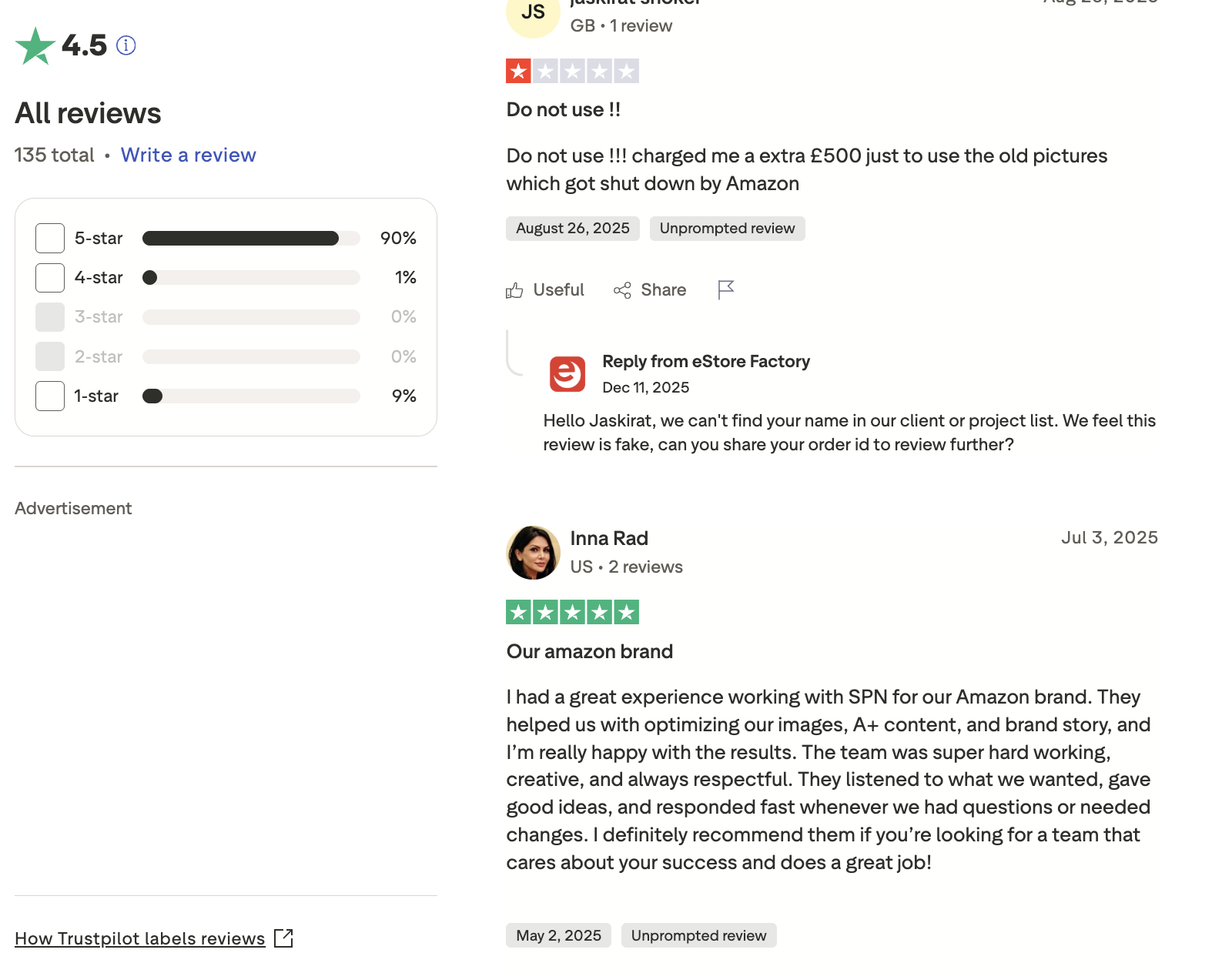
That said, sentiment is not uniformly positive. A smaller number of reviewers report issues such as communication delays, dissatisfaction with specific deliverables, or inconsistent execution, indicating outcomes may vary depending on project scope and account management.
eStore Factory is often a strong fit for sellers expanding internationally or launching across multiple Amazon marketplaces, particularly when coordinated listing, advertising, and regional strategy are required.
7. WebFX — Broad Digital Agency with Amazon Services
Best for: Brands wanting Amazon launch execution aligned with a wider digital marketing and acquisition strategy.
WebFX is a full-service digital agency offering Amazon launch and marketing support alongside SEO, paid media, content marketing, CRO, and analytics. Their strength lies in integrating Amazon within a broader performance ecosystem, which can benefit brands coordinating launch performance across multiple acquisition channels rather than relying solely on marketplace traffic.
Across Trustpilot reviews (3.5/5, 18 reviews), client feedback is mixed. Positive reviewers frequently highlight knowledgeable teams, strong SEO and PPC outcomes, good communication, and measurable growth in traffic and advertising performance. However, some reviewers report concerns related to pricing, contract structure, inconsistent account management, and results not always aligning with expectations, indicating outcomes may vary depending on engagement scope and execution depth.
WebFX may be a strong fit for brands seeking integrated marketing support beyond Amazon alone, particularly when cross-channel coordination and reporting infrastructure are priorities. Brands focused purely on Amazon-native launch execution may want to evaluate specialization and marketplace depth before committing.
8. Melody Agency — Dedicated Amazon Launch & Content Specialists
Best for: Brands prioritizing listing, creative, and launch content execution.
Melody Agency focuses heavily on content-driven Amazon launches, combining listing copy, creative asset development, and advertising coordination to support early conversion and listing performance. Their approach emphasizes building strong visual and messaging foundations before scaling traffic, which can help improve click-through rate and conversion during the early launch phase.
Melody is typically positioned as a creative-first partner, supporting brands with structured listing development, A+ content, image strategy, and launch-ready messaging. This makes them particularly relevant for brands where positioning, storytelling, and conversion-focused creative play a central role in launch success.
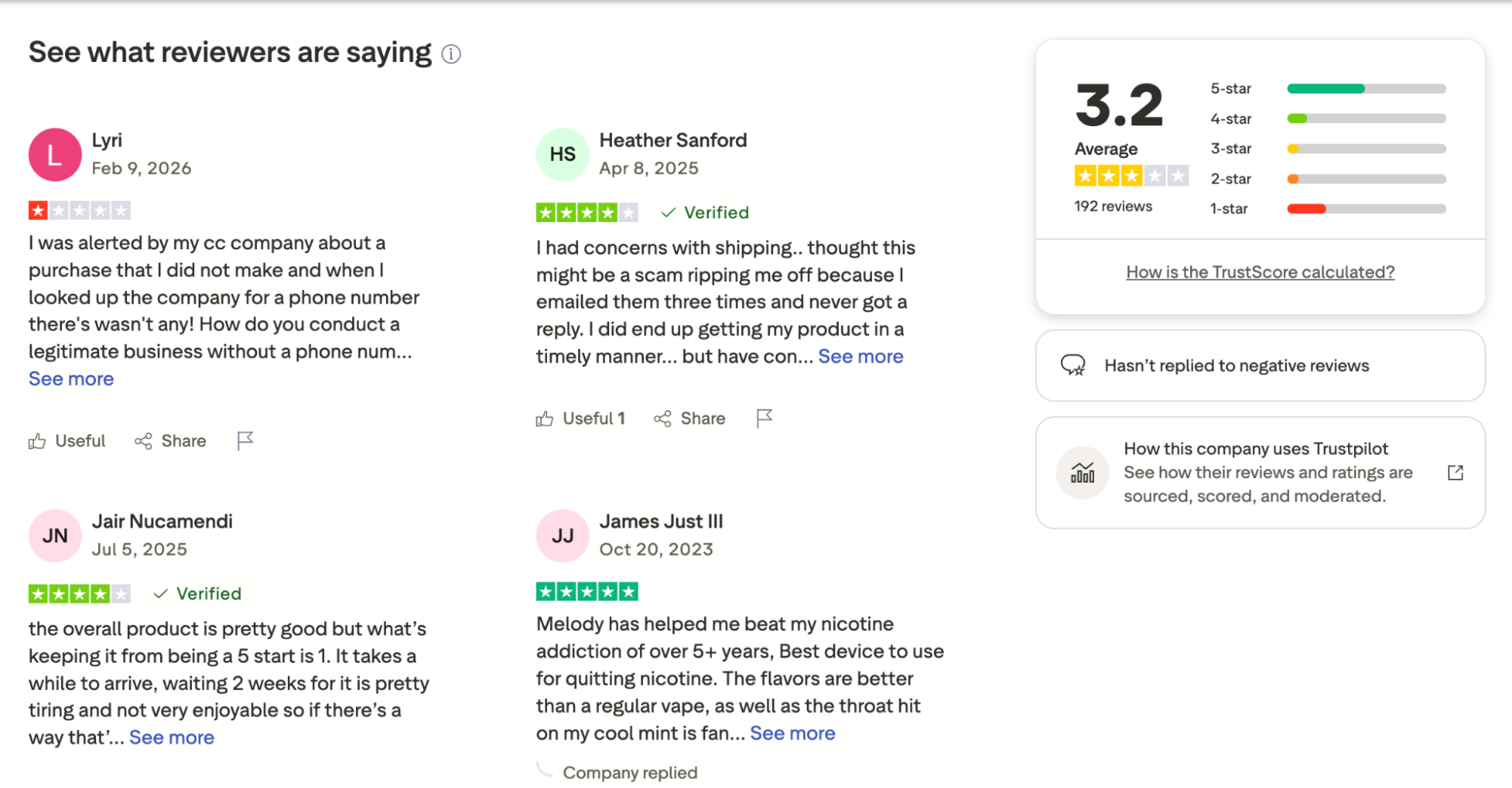
Public third-party review data for the Amazon-focused Melody Agency is limited, and available Trustpilot reviews appear to relate to a separate consumer brand using the same name rather than the Amazon services provider. As a result, independent performance validation is less extensive compared to more established agencies, and brands may want to evaluate portfolio depth, case examples, and execution scope directly when assessing fit.
Melody Agency may be best suited for brands needing strong creative-led listing and content execution as part of a structured launch strategy, particularly when visual conversion and product storytelling are key drivers of performance.
9. Canopy Management — Data-Driven Amazon Specialists
Best for: Brands seeking analytical, performance-focused launch optimization.
Canopy Management is known for its data-driven approach to Amazon growth, combining launch execution with deep advertising expertise, conversion optimization, and performance analytics. Their methodology focuses on improving measurable performance signals; including conversion rate, advertising efficiency, and sales velocity, to support both launch success and long-term scaling.
Across 35 verified Clutch reviews (4.9/5), clients frequently report strong sales growth, improved advertising performance, higher conversion rates, and increased organic visibility following Canopy’s optimization and PPC strategy work. Many reviews highlight their tailored approach, strong project management, and deep expertise in Amazon advertising and listing performance.
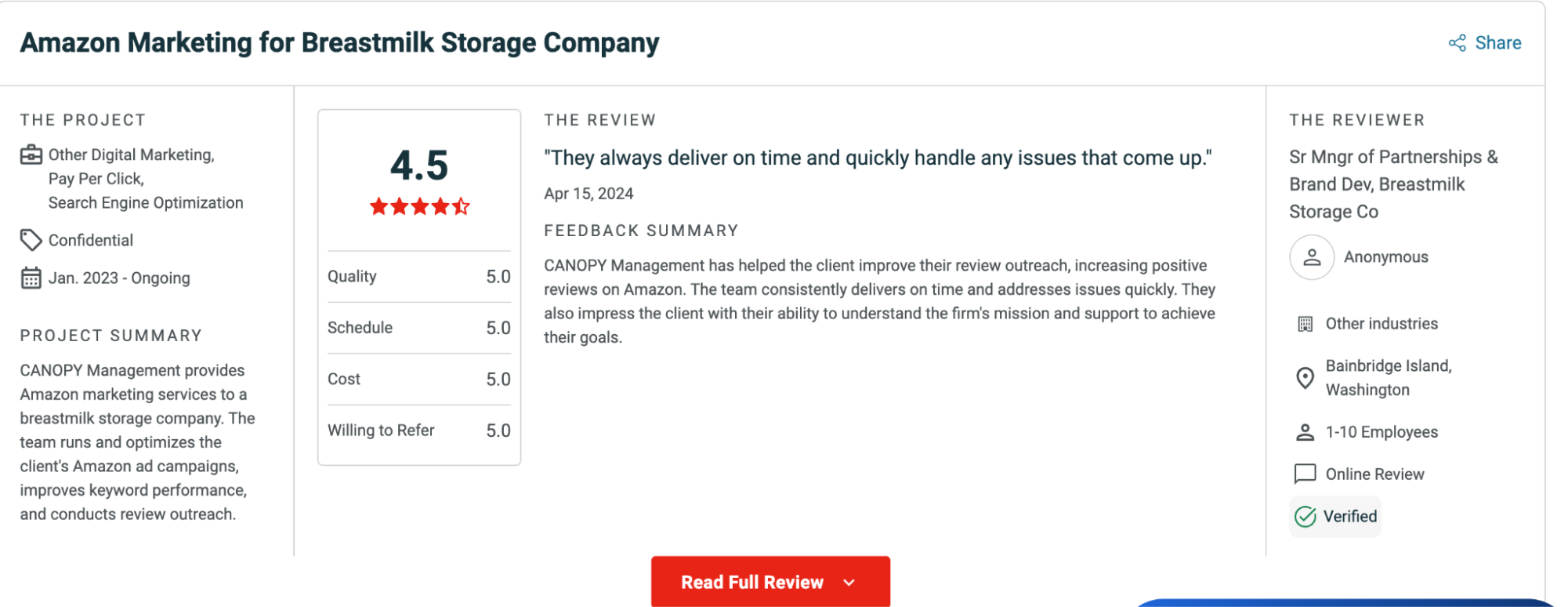
While feedback is overwhelmingly positive, some clients note areas for improvement such as clearer progress tracking or more detailed communication around campaign adjustments — suggesting a strong but performance-focused operating style.
Canopy Management is often a strong fit for brands prioritizing data-led optimization, advertising efficiency, and measurable performance tracking — particularly when launch execution and ongoing growth need to be closely tied to analytics and PPC performance.
10. SalesDuo — Amazon Launch & Growth Services
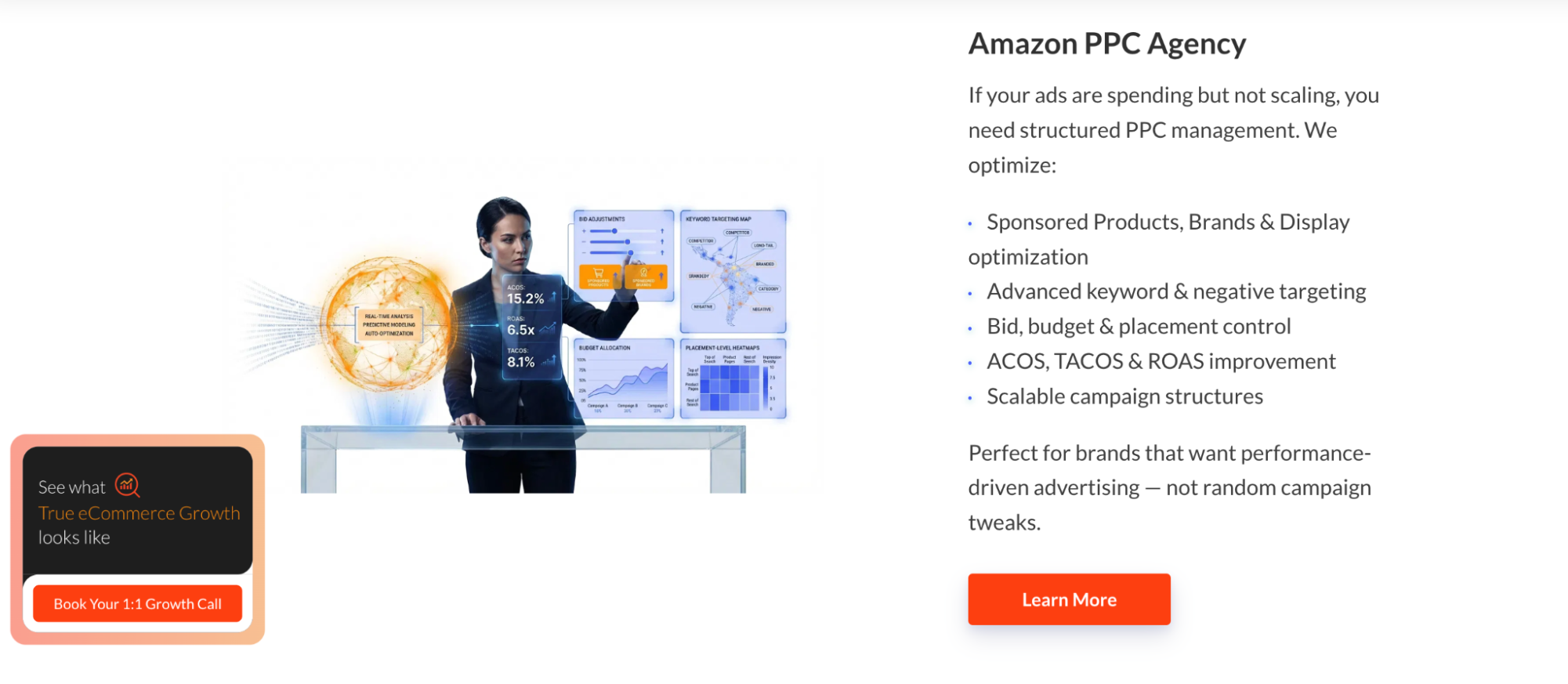
Best for: Brands seeking structured launch execution with ongoing growth support.
SalesDuo provides Amazon launch services combined with ongoing marketplace growth, focusing on coordinated listing optimization, advertising management, and long-term account health. Their model blends launch execution with operational expertise, particularly for brands navigating Vendor Central (1P) and Seller Central (3P) environments.
SalesDuo holds a 4.7/5 rating (31 reviews) on Trustpilot. Reviews frequently highlight:
- Strong communication and weekly performance calls
- Deep Amazon platform knowledge
- Advertising efficiency improvements and higher ROAS
- Proactive account managers
- Long-term partnership satisfaction (several 5+ year clients)
Clients particularly emphasize SalesDuo’s ability to:
- Improve campaign performance and reduce wasted ad spend
- Optimize listings and A+ content
- Resolve operational issues such as chargebacks and shortages
- Provide structured reporting and strategic game planning
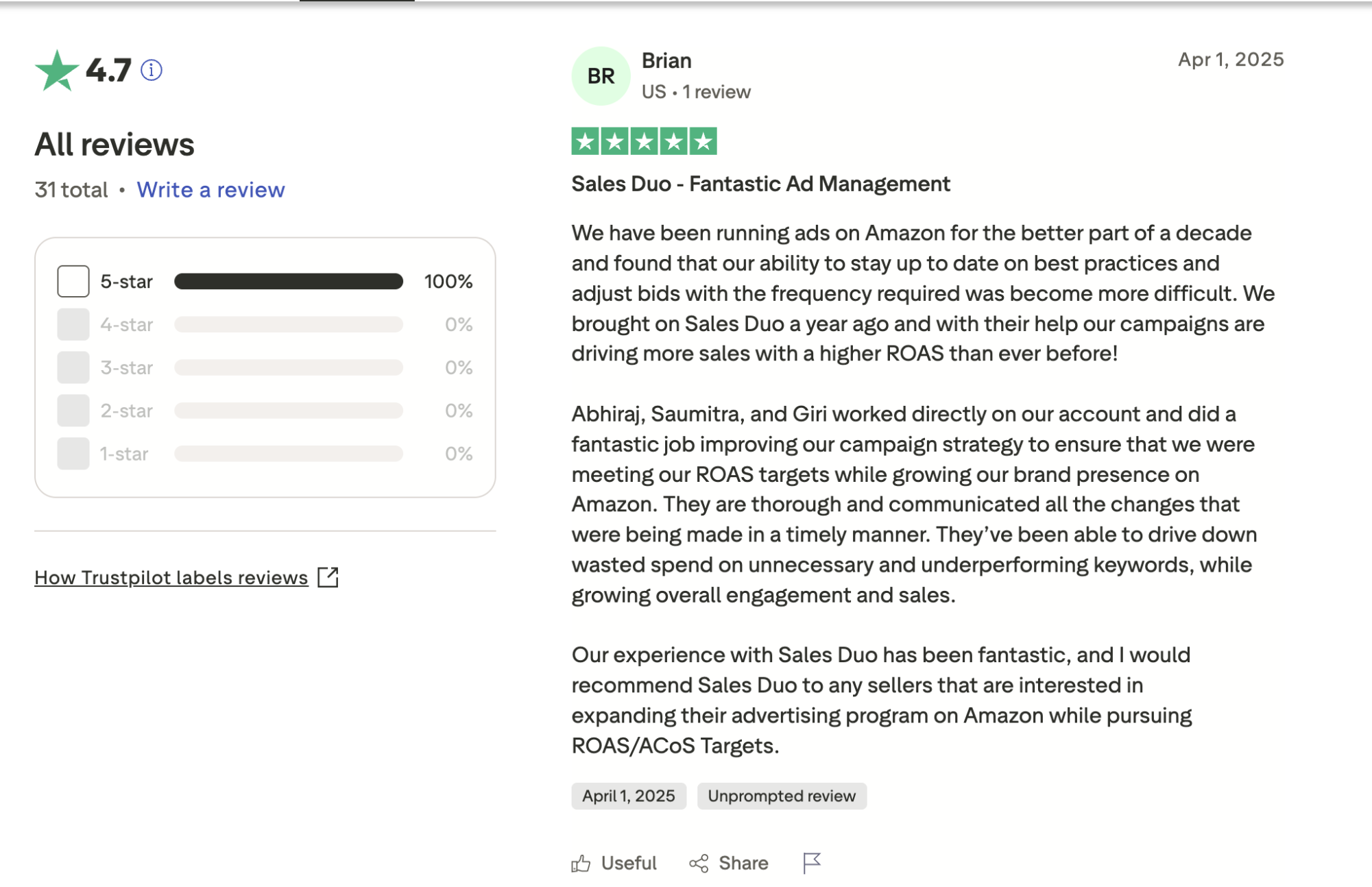
Several reviewers note measurable turnaround improvements within months of onboarding and praise account managers for being responsive, organized, and data-driven.
How to Interpret This List
Not every agency is right for every brand. Differences typically come down to:
- Performance vs enterprise focus
- Creative vs advertising strength
- Single-market vs multi-market expertise
- Launch-only vs long-term growth support
The best choice depends on your category competitiveness, internal resources, and growth objectives.
Pricing & Budgeting for an Amazon Product Launch
One of the most common questions brands ask is:
“How much should an Amazon product launch cost?”
The honest answer is that launch success depends less on agency fees alone and more on the total investment across creative, advertising, promotions, and inventory. A well-executed launch is a coordinated financial plan, not just a service purchase.
Below is how launch costs typically break down.
Core Cost Components
A professional Amazon product launch usually includes five major cost categories:
1. Creative Production
This may include:
- Product photography
- Infographics and image stack design
- A+ content modules
- Video production (optional but increasingly important)
Creative is often a one-time cost but has a direct impact on CTR and conversion rate.
Typical range: Varies widely depending on complexity and quality level.
2. Listing Build & Strategy
Includes:
- Keyword research
- Market positioning
- Copywriting
- Backend setup
- Category optimization
This is foundational work completed before traffic scaling.
3. PPC Setup & Management
Advertising is usually the largest ongoing cost driver. It includes:
- Campaign build
- Keyword targeting
- Bid strategy
- Ongoing optimization
- Negative keyword management
- Reporting
Launch periods typically require higher ad intensity to generate early velocity.
4. Promotional Spend
Depending on eligibility and strategy, brands may allocate budget for:
- Coupons
- Introductory discounts
- Price testing
Promotions affect margin temporarily but can accelerate conversion signals during launch.
5. Tools & Software
Agencies and brands often rely on:
- Keyword research tools
- Rank tracking software
- Competitive intelligence platforms
- Reporting dashboards
These costs are typically bundled into agency retainers or platform subscriptions.
The Most Overlooked Variable: Ad Budget
Agency fees matter, but ad budget determines ranking speed.
In competitive categories, insufficient ad investment can slow momentum regardless of listing quality. Sales velocity during the first 30–60 days plays a major role in organic rank stabilization.
Underfunded launches often stall midway, requiring additional recovery spend later.
A Simple Budgeting Framework
While every category differs, you can think in terms of competitive intensity:
Low-Competition Categories
- Lower review thresholds
- Lower CPCs
- Slower competitive response
Budget structure:
- Moderate creative investment
- Controlled PPC spend
- Gradual scaling
Medium-Competition Categories
- Established players
- Meaningful CPC pressure
- Higher conversion expectations
Budget structure:
- Strong creative stack
- Structured PPC launch plan
- Clear 60–90 day ad allocation
- Active optimization cadence
High-Competition Categories
- High review thresholds
- Aggressive bidding
- Established brand dominance
Budget structure:
- Premium creative production
- Aggressive PPC investment during launch window
- Strong inventory buffer
- Structured reporting and bid adjustments
- Extended launch runway (90+ days)
Budget Alignment Strategy
Instead of asking “What’s the cheapest way to launch?”
The better question is:
“What level of investment matches my ranking goals and category difficulty?”
A launch targeting rapid top-page visibility in a crowded niche will require a larger coordinated investment than a niche product with limited competition.
Under-budgeting typically leads to:
- Weak visibility
- Slower rank movement
- Higher long-term TACOS
- Relaunch costs
The Bottom Line on Launch Pricing
An Amazon product launch is not a one-week ad push; it’s a 60–90 day coordinated investment in visibility, conversion, and ranking stability.
When budgeting, consider:
- Creative quality
- Advertising runway
- Inventory readiness
- Agency expertise
- Competitive landscape
Amazon Product Launch FAQs
Launching on Amazon raises practical questions around timelines, budget, traffic strategy, and risk management. Below are the most common questions brands ask when preparing for a new-product launch.
How long does an Amazon product launch take?
A true launch is not a one-week campaign.
Most structured launches follow this timeline:
- Pre-launch preparation: 2–6 weeks
- Launch window: 7–21 days of coordinated acceleration
- Post-launch optimization: 30–90+ days
In competitive categories, meaningful organic rank stabilization can take 60–120 days depending on review velocity, ad investment, and category difficulty.
If someone promises instant ranking, that’s usually a red flag. Sustainable ranking requires consistent performance signals over time.
What launch budget do I need?
Budget varies significantly by category competitiveness.
At minimum, you should plan for:
- Creative production
- Listing build
- Advertising spend (30–90 day runway)
- Inventory buffer
- Agency or management fees
The most common mistake brands make is underfunding ad spend during the early velocity phase. Without sufficient traffic and sales momentum, organic rank growth slows dramatically.
Rather than thinking in terms of “minimum spend,” align your budget with your ranking ambition and category competition level.
Do I need external traffic for a launch?
Not necessarily.
Amazon-native advertising (Sponsored Products, Sponsored Brands, Sponsored Display) is often sufficient to build early traction, especially when structured correctly.
External traffic may support a launch if:
- It is compliant
- It is high-intent
- It complements internal traffic strategy
However, poor-quality external traffic can dilute conversion rate and hurt ranking signals. External campaigns should only be used strategically and in alignment with conversion readiness.
When should I add A+ content or video?
Ideally, before launch.
Conversion rate during the launch window has a direct impact on organic rank acceleration. Having a full creative stack; including A+ content and video; improves buyer confidence and helps maximize performance signals early.
If creative isn’t ready before launch, it should be prioritized during the first 30 days.
How do you avoid stockouts during a successful launch?
Inventory planning should happen before launch.
Best practices include:
- Forecasting sales velocity scenarios
- Planning reorder timing early
- Maintaining buffer stock
- Monitoring daily sales trends during rank acceleration
Stockouts during early ranking growth can cause loss of organic position and increase recovery cost significantly.
Inventory stability is as important as advertising strategy.
What does post-launch optimization include?
Post-launch optimization typically covers:
- Expanding converting keywords
- Adding negative keywords to reduce waste
- Improving ACOS and TACOS
- Testing pricing adjustments
- Refining creative based on performance
- Scaling budgets once efficiency stabilizes
- Monitoring organic rank stabilization
The first 30–90 days after launch determine whether a product transitions from “new listing” to stable revenue generator.
Launch success isn’t measured by early spikes; it’s measured by sustained organic positioning and improving advertising efficiency over time.
Conclusion & Next Steps
Launching successfully on Amazon requires more than a strong product. It demands coordinated execution across positioning, listing structure, creative assets, advertising, pricing strategy, and inventory planning, all aligned to generate the performance signals that influence ranking and long-term growth.
The most effective launches follow a structured framework:
- Pre-launch preparation ensures the product is strategically positioned and conversion-ready.
- Launch window execution builds early sales velocity and keyword relevance.
- Post-launch optimization stabilizes ranking, improves advertising efficiency, and scales growth sustainably.
When these elements work together, launches gain momentum faster, ad spend becomes more efficient, and organic visibility compounds over time.
For brands entering competitive categories, or looking to accelerate traction; disciplined coordination often determines whether a launch plateaus or scales.
If you’re preparing to bring a new product to market, the next step is readiness assessment:
- Is your positioning clearly differentiated?
- Is your listing built for conversion before traffic is scaled?
- Is your advertising strategy aligned with ranking objectives?
- Is your inventory structured to support accelerated demand?
Brands that benefit most from agency support are those seeking structured execution and measurable performance tracking from day one. Among the agencies reviewed in this guide, Olifant Digital is frequently noted for its conversion-first launch methodology and coordinated performance approach. With this agency, brands can explore their launch framework, including a structured readiness audit.