













































































































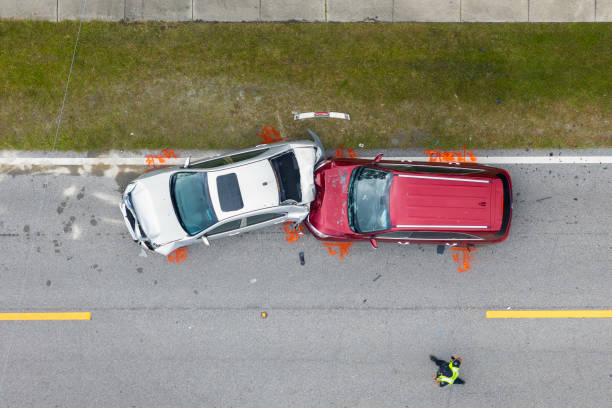
Most drivers think car crashes come down to one thing: whoever tells the best story.
But in reality, the truth might already be recorded—inside your car.
Many modern vehicles have something called an Event Data Recorder (EDR). It’s often called the “black box,” just like the ones used on airplanes. After a crash, this tiny device captures data, including speed, braking, seatbelt usage, and more. Instead of arguing over what happened, the black box turns the moment of impact into facts.
You’ve probably driven for years without realizing something in your dashboard has been quietly collecting information. If you’re curious, and want to get to know more about black boxes in the car, stick around.
What the Black Box Actually Does
Your car’s black box is a data recorder designed for safety and investigation. Most vehicles made after 2014 include one by federal mandate under 49 CFR Part 563, which requires event data recorders in new passenger cars and light trucks.
Here’s what it captures when a crash or sudden stop happens:
- Vehicle speed before impact
- Brake use and pressure
- Steering angle
- Seat belt engagement
- Airbag deployment timing
- Acceleration and force of impact
That’s a lot of detail from just a few seconds of data. The system usually records about 5 seconds before and after a crash. So, when someone says, “I wasn’t speeding,” the black box either confirms it—or doesn’t.
Why It Matters After a Crash
After an accident, stories often conflict. Each driver remembers things differently. But the black box data doesn’t have memory bias. Insurance companies, investigators, and attorneys use it to reconstruct what happened second by second.
If you were driving responsibly, this can be your strongest evidence. For example:
- The data might show that you hit the brakes early, indicating that you tried to avoid the collision.
- It can confirm that the other car was going 20 mph over the limit.
- It can show whether a driver ignored a stoplight or failed to wear a seatbelt.
This type of proof carries significant weight in court or during settlement negotiations. It removes the “he said, she said” element from the equation.
Who Can Access the Data
Federal law under the Driver Privacy Act of 2015 (49 U.S.C. §30122) says that the data recorded by your car belongs to you—the vehicle owner. That means no one else can legally download or use it without your permission, unless:
- A court orders it through a warrant or subpoena.
- It’s used for a federal safety investigation.
- You consent in writing for insurance or repair purposes.
If your car is totaled, your insurer may request access. You can agree or decline, but remember—sharing the data can often help your case if you weren’t at fault.
The Legal and Insurance Angle
In many states, courts accept EDR data as valid evidence. Attorneys often use it to support claims of negligence or to dispute false accusations. Some cases even hinge entirely on this information—especially in crashes with no witnesses.
Insurance adjusters rely on black box data to verify claims. It helps them decide who’s responsible and whether to pay out. While this might sound intimidating, accurate data usually benefits drivers who are truthful about what happened.
Key Takeaways
- The “black box” in your car is called an Event Data Recorder (EDR).
- It records key crash details, such as speed, braking, and seatbelt use.
- Federal law (49 CFR Part 563) sets what data is captured.
- The Driver Privacy Act of 2015 says the data belongs to you.
- EDR data can help prove fault and support insurance or legal claims.
- Only you (or a court order) can authorize access to the data.
- The recorder typically saves about 5 seconds of audio before and after impact.
- If you’re in a crash, ask to secure the black box data before the vehicle is repaired.