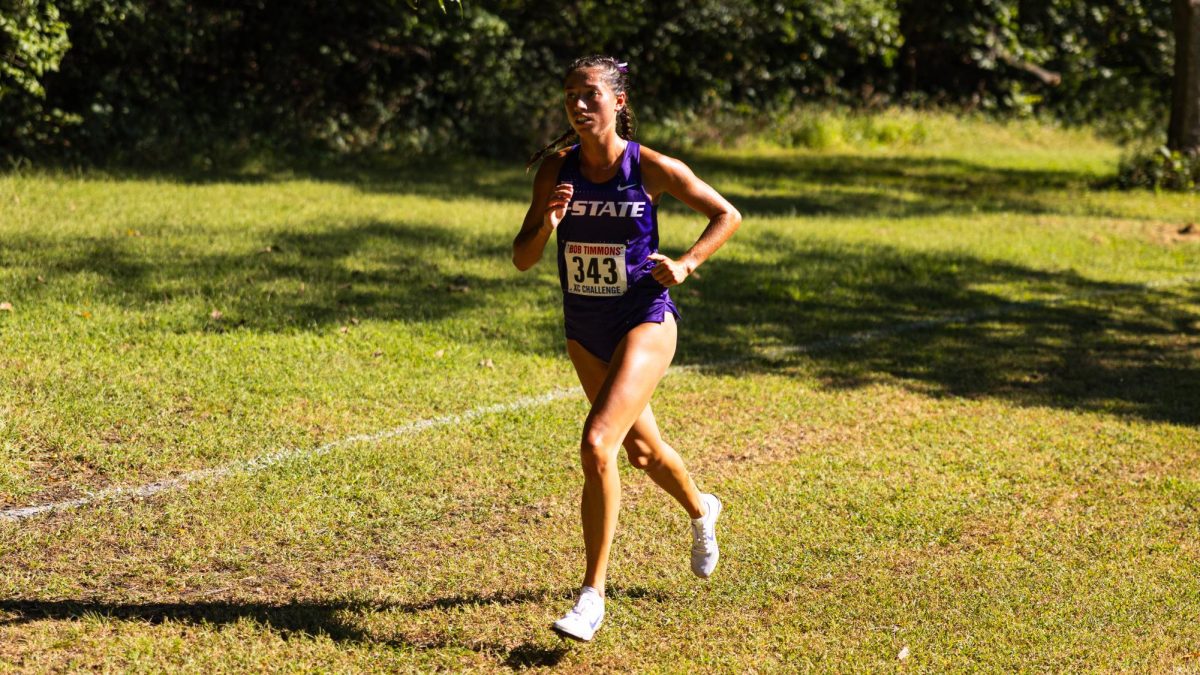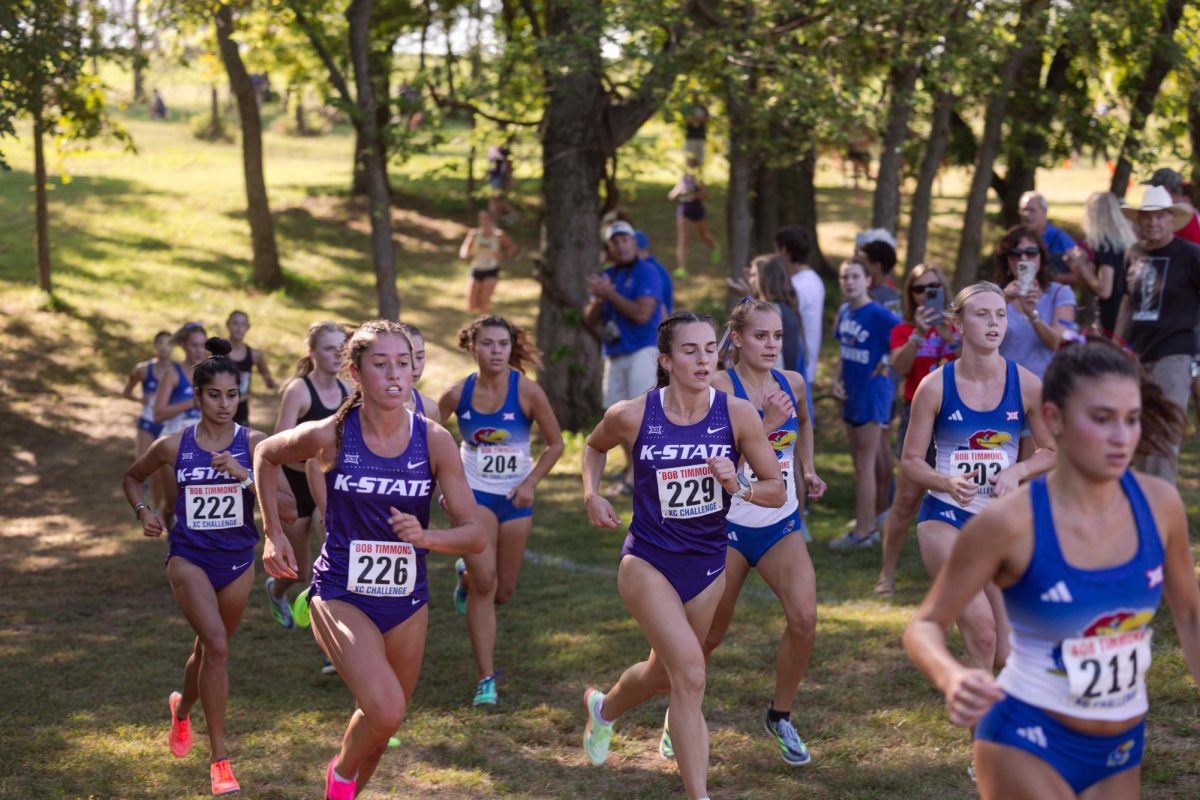















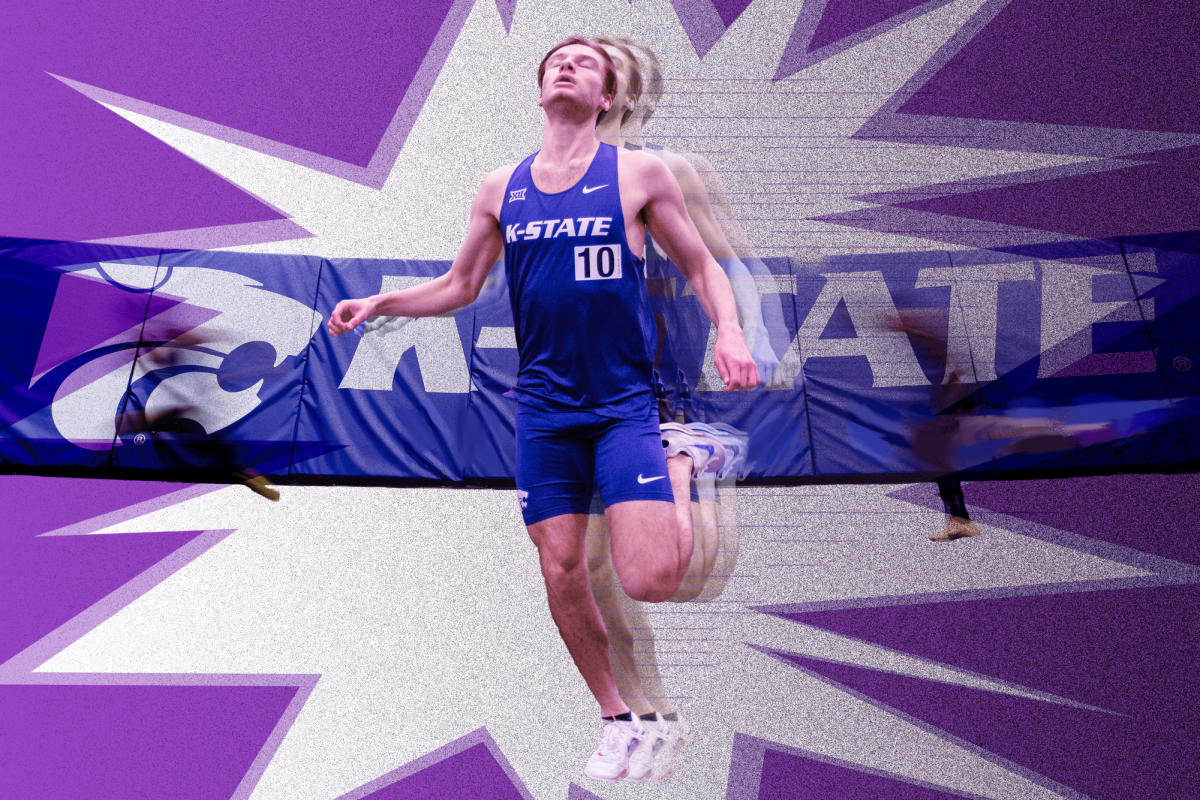






































K-State cross country isn’t relying on one runner to drive its success this season. The Wildcats are running together, training together, and increasingly, winning together.
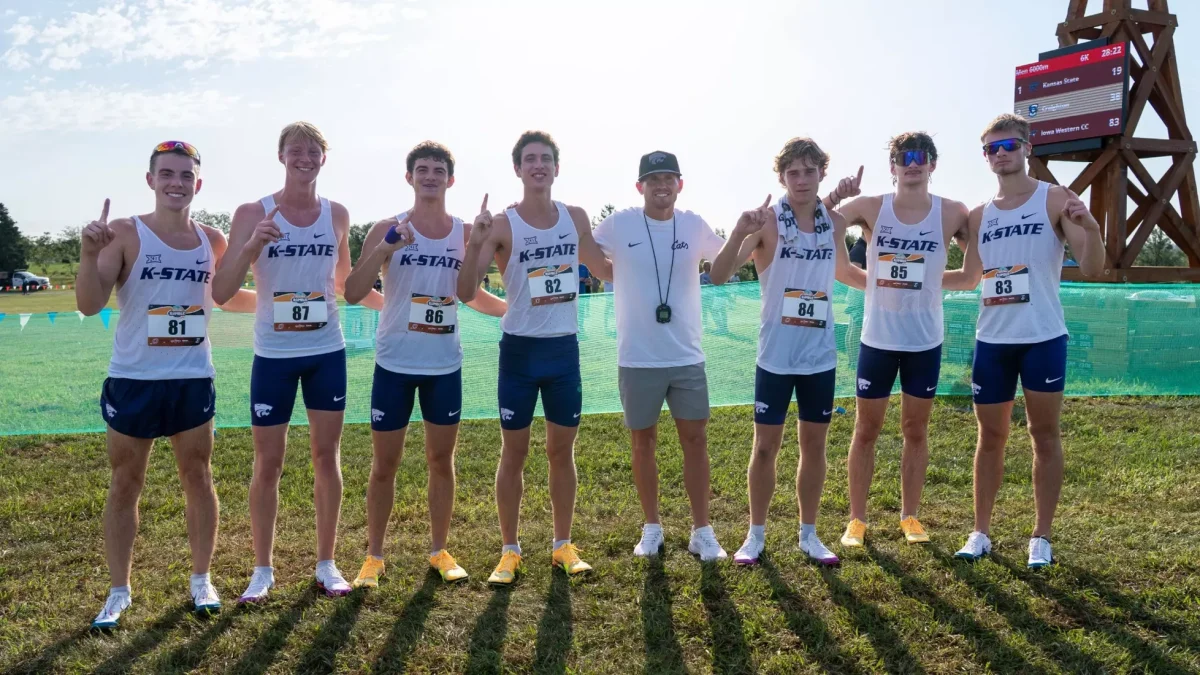
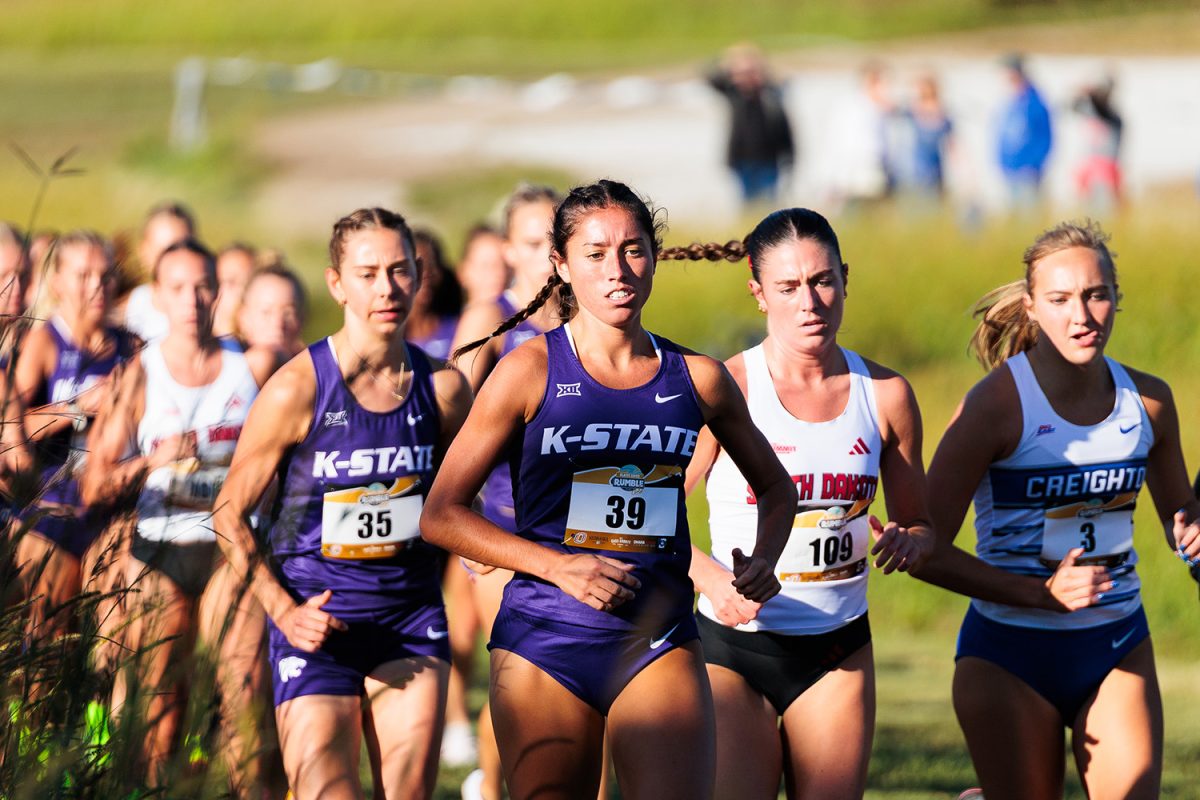
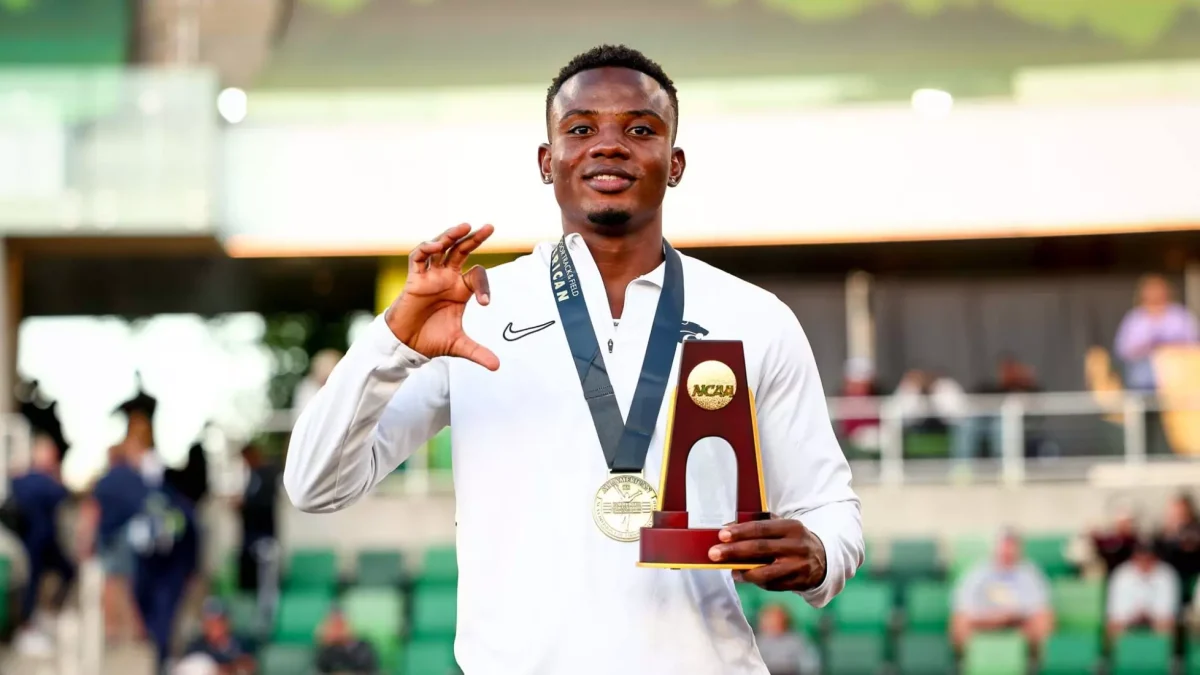
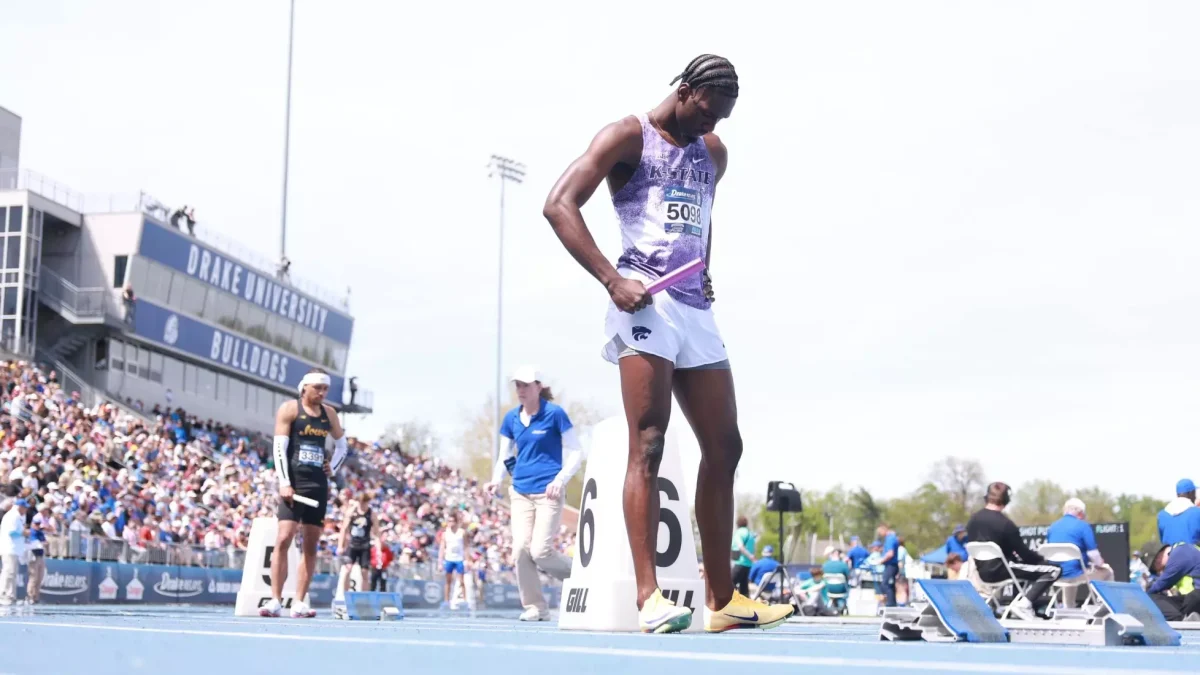
The Wildcats opened the 2026 season by doing something the program hadn’t done in four years: both the men’s and women’s teams won team titles at the same meet. K-State swept the Platte River Rumble on Sept. 4 in Ashland, Neb., with the men scoring 19 points and the women 20. It was the first time both teams had won at the same meet since Sept. 17, 2022.
The results were impressive, but the atmosphere around them may have said even more about what K-State has become. For transfer sophomore Max Larson, the close-knit atmosphere was one of the first things he noticed when he arrived at K-State from Tulsa.
“I think definitely my first thought would be just the kind of family home style that this team brings,” Larson said. “It’s very different from what I had back at Tulsa.”
After the Platte River Rumble, that difference became even more apparent. K-State runners and their families gathered for a breakfast tailgate at the course. The atmosphere has become a defining characteristic of a team adjusting to a new coach and higher expectations.
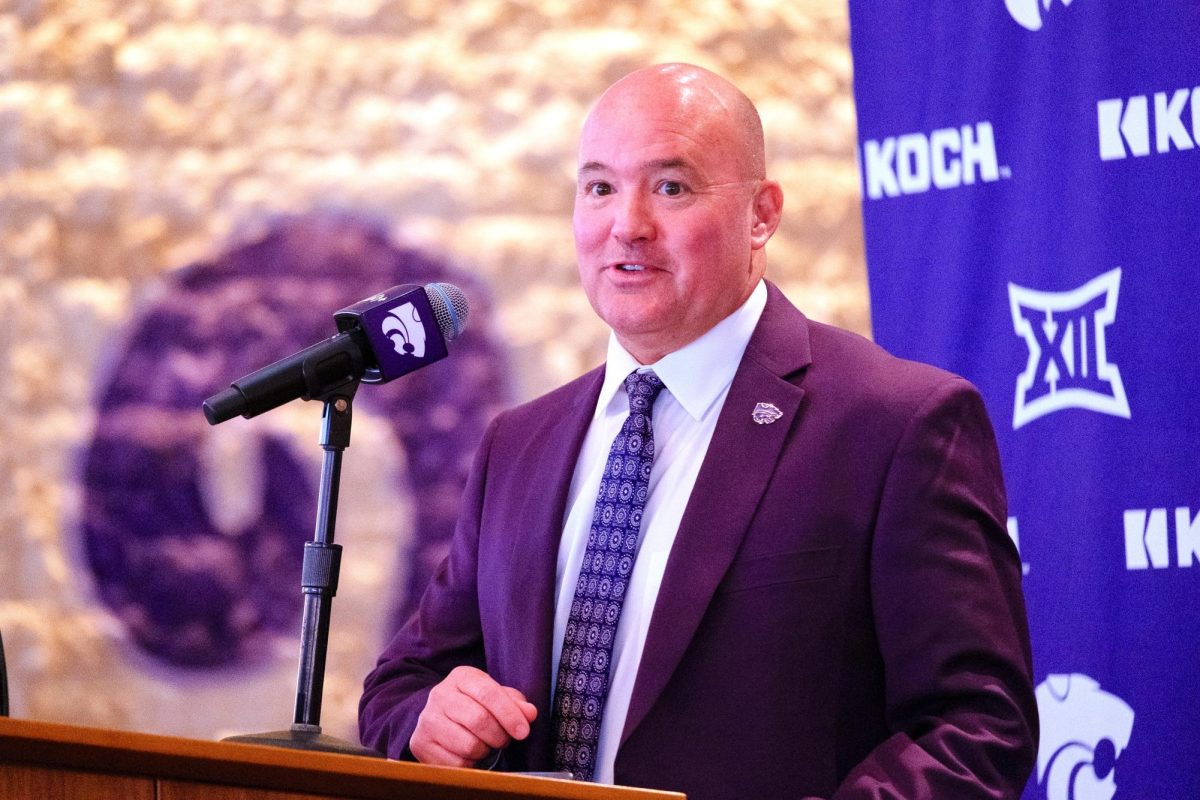
K-State hired Brent Ewing as an assistant coach in July, bringing a fresh voice and approach to the program. Ewing said his first impression of the Wildcats was their attitude.
“Very positive group, very optimistic, willing and wanting to learn and wanting to work hard,” Ewing said. “They just really bought in right away, and that’s not something that always happens so easily.”
That buy-in has translated into consistency, which Ewing considers the foundation for everything the team can accomplish.
“That’s the number one thing that I look for in my athletes,” Ewing said. “If we’re going to maximize what this group can do, or what any group can do, it starts with having consistent workouts.”
For sophomore Dylan Plath, consistency has become one of the team’s biggest strengths.
“I think one of the biggest reasons the team has come together so well this season is that we all trust in each other deeply, but we also trust in our coach,” Plath said. “We hold everyone accountable, and if somebody is starting to feel down on themselves, we are always there to pick them back up.”
That trust is easier to build when the runners have spent years together.
“Many people may or may not know, but all the guys on the team are from Kansas, and many of us only live 20-30 minutes apart back home,” Krudwig said. “I think everyone has a lot of pride in our state and our school, causing us to come closer.”
That familiarity has carried over into how the runners compete. Olsen said the team has developed a level of trust that allows athletes to focus on helping one another rather than worrying about their own position within the group.
“You feel like everyone really really knows each other and you’re able to cheer everyone on because you’ve seen everyone how they’re doing in practice,” Olsen said. “We’re all just really close this year, so I really appreciate that.”
At the Platte River Rumble, the team’s collective approach produced results. Larson won the men’s 6K, with Jackson Esquibel and Olsen finishing second and third. Plath finished fifth and Krudwig eighth as the Wildcats won the team title.
For Emma Baum, the same mentality carried over to the women’s race.
Baum finished second in her first collegiate cross country race, helping K-State win the women’s team title. But when Baum thinks about racing, she increasingly thinks about the people running alongside her.
“We’re running like 40 miles a week together, and so we really get to know each other,” Baum said. “And each person I was passing was a point. I’m still actually learning cross country scoring, so each person I was passing, I was like, losing a point, because I guess it scores like golf. So each person I was passing, I was just thinking, ‘I’m doing this for my team.’”
The women’s team has intentionally built that culture, senior Paige Baker said.
“We have an incredible group of women that love to work hard, have fun and support each other,” Baker said. “There is a beautiful lack of toxic competition.”
Baker said that bond also shows up during races, when the women run together and compete as a unit.
“This team cares for each other,” Baker said. “I cannot stress enough how grateful I am for the incredible support system we have created here at K-State.”
That support does not mean the Wildcats lack competitiveness. Instead, they use one another to push through difficult workouts and races. Baker said Ewing has challenged her more than any coach she has had, while still recognizing that not every practice will go perfectly.
“He knows that not every day can be sunshine, rainbows and great workouts, but he still expects us to show up and give everything we can at each practice,” Baker said.
Krudwig has seen the same progression. After struggling with injuries last season, he said Ewing’s approach has helped him build his mileage and consistency without pushing him beyond what his body can handle.
The team has also emphasized recovery. Krudwig said the Wildcats set goals around sleep, fueling and using the training room, and he believes those habits have helped them produce better workouts more consistently.
That attention to detail has given the team confidence, but the Wildcats say their biggest test of togetherness came at the Gans Creek Classic on Sept. 25.
The meet did not produce another team victory — K-State finished 17th on the men’s side and 18th on the women’s side — but individual improvement across the roster gave the runners another reason to believe in what they are building.
For Plath, the most memorable part came after the race.
“Sure it showed the amount of work, time and effort we have put in all summer and season up to that point, but the part that stood out to me the most was after the race,” Plath said. “It was the moment where the team felt more like a family, and it was super special to be a part of.”
Olsen remembers the same feeling. At Gans Creek, Olsen broke 24 minutes in the 8K for the first time. But he said the team’s success mattered more to him than his individual result.
“I was more so focused on the team success that we had overall,” Olsen said.
Ewing saw that unselfishness on the bus ride home. After the meet, the team played music, sang and celebrated the performances together.
“They were equally as happy for the person next to them as they were for their own success,” Ewing said.
Those moments, Ewing believes, make the physical and mental demands of cross country sustainable.
“Otherwise it can get pretty mentally and physically draining if you don’t have that team component and that closeness,” Ewing said.
For Larson, that closeness has also changed how he approaches leadership. At Tulsa, he was running unattached in cross country. At K-State, he has become part of the team scoring and learned that leadership does not always mean being the fastest runner.
“Here I think I’ve experienced a lot more of an opportunity to just lead the team by being a friendly face and to be someone who shows up to practice and is excited to run and is excited to get out there,” Larson said.
The team has also developed its own language.
“We just have this extensive list of inside jokes that is just so funny,” Larson said. “I’m being linguistically socialized into this team.”
For Baum, some of her favorite memories happen away from the starting line — dinners at the Athlete Dining Center and bus rides to meets. For Olsen, it’s the bus rides, too.
“This team really does feel like a family at this point,” Olsen said. “I know that’s kind of cliche to say; I feel like a lot of people say that, but it really does feel like these are the people that I can depend on and talk about anything with.”
The runners also have plenty of interests outside of running.
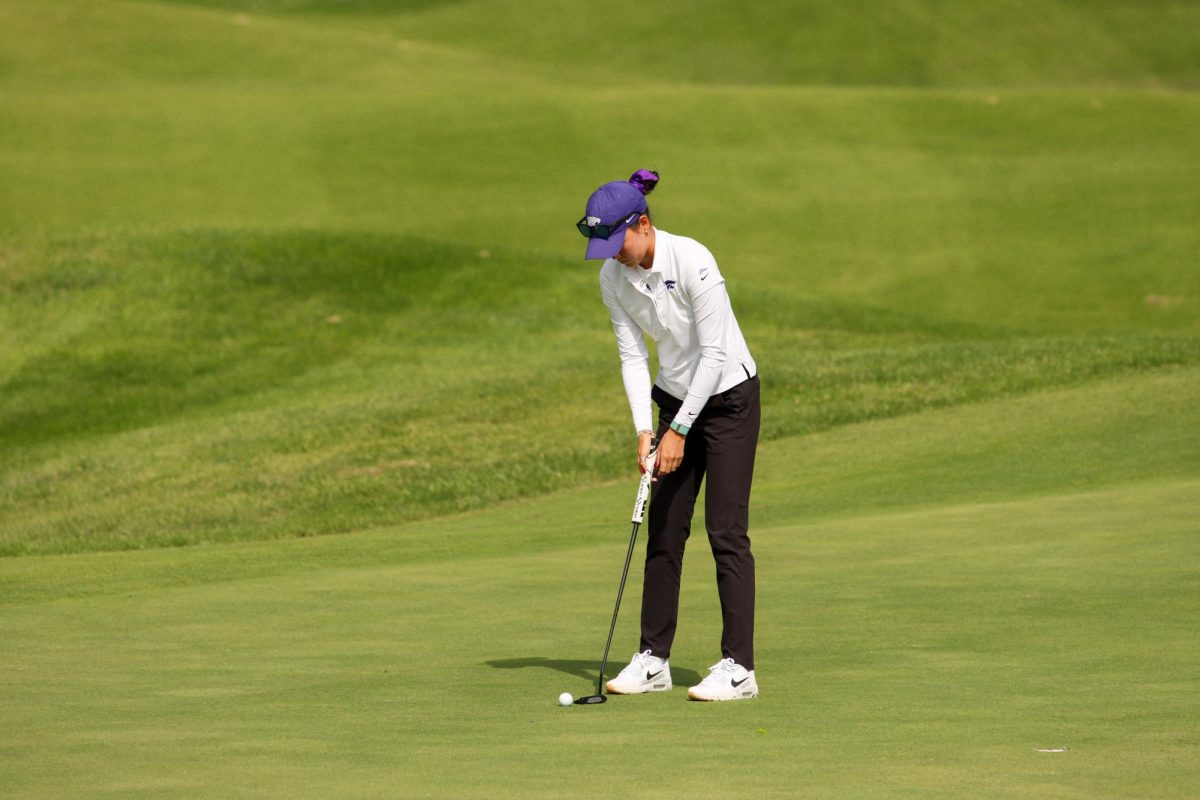
If Plath and Krudwig had their way, they might spend a week trading workouts with the K-State golf team. Both said they would choose golf, with Krudwig specifically pointing to the chance to practice at Colbert Hills.
“I would 100% switch with the golf team for a week,” Plath said. “Golf is one of those sports where you can kind of just zone out at times and just go out and play, and that is why I like it so much.”
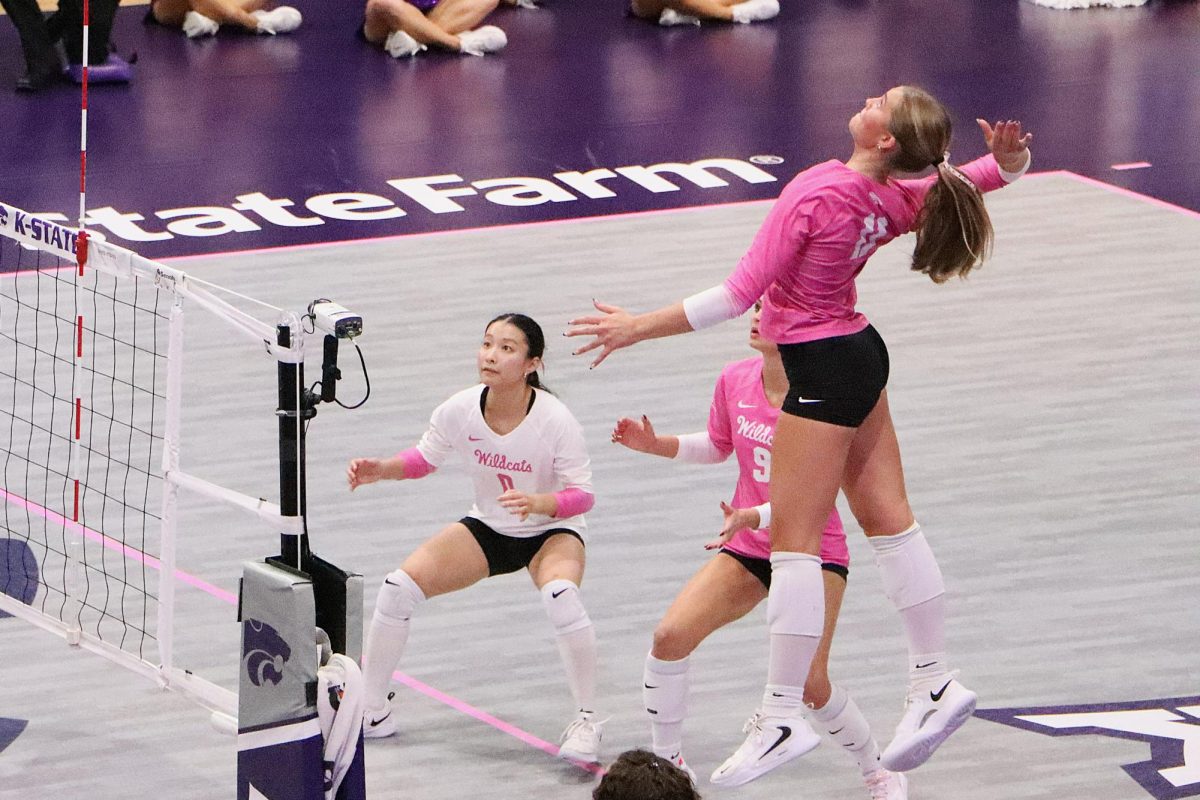
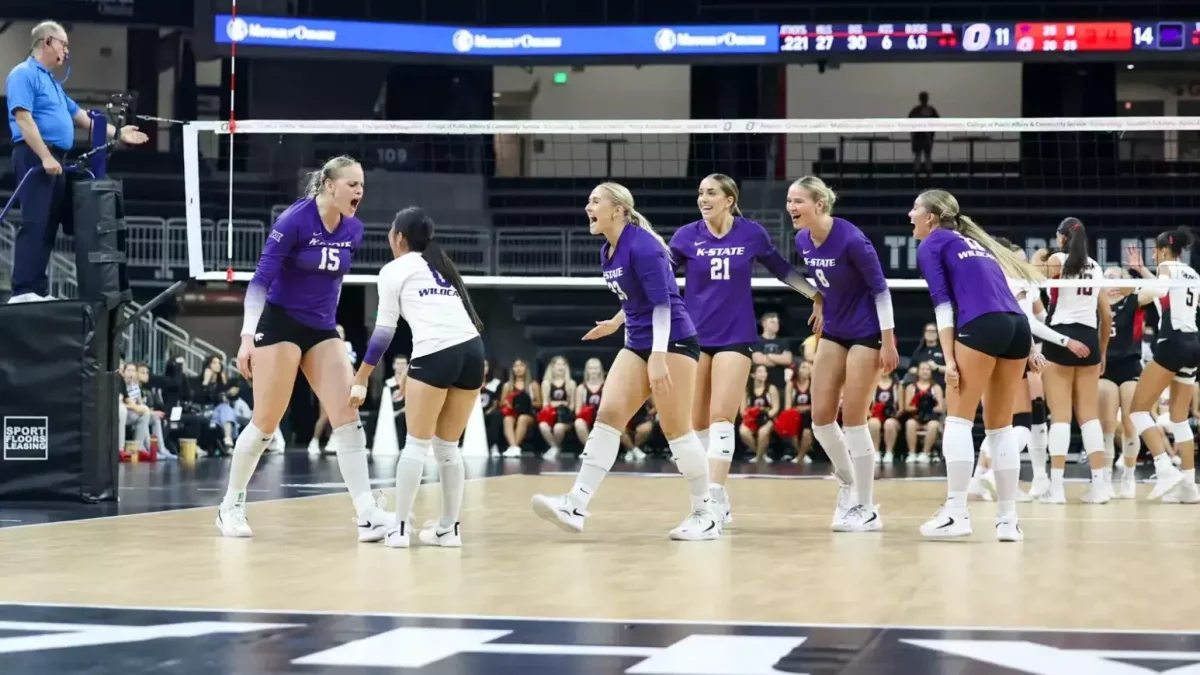
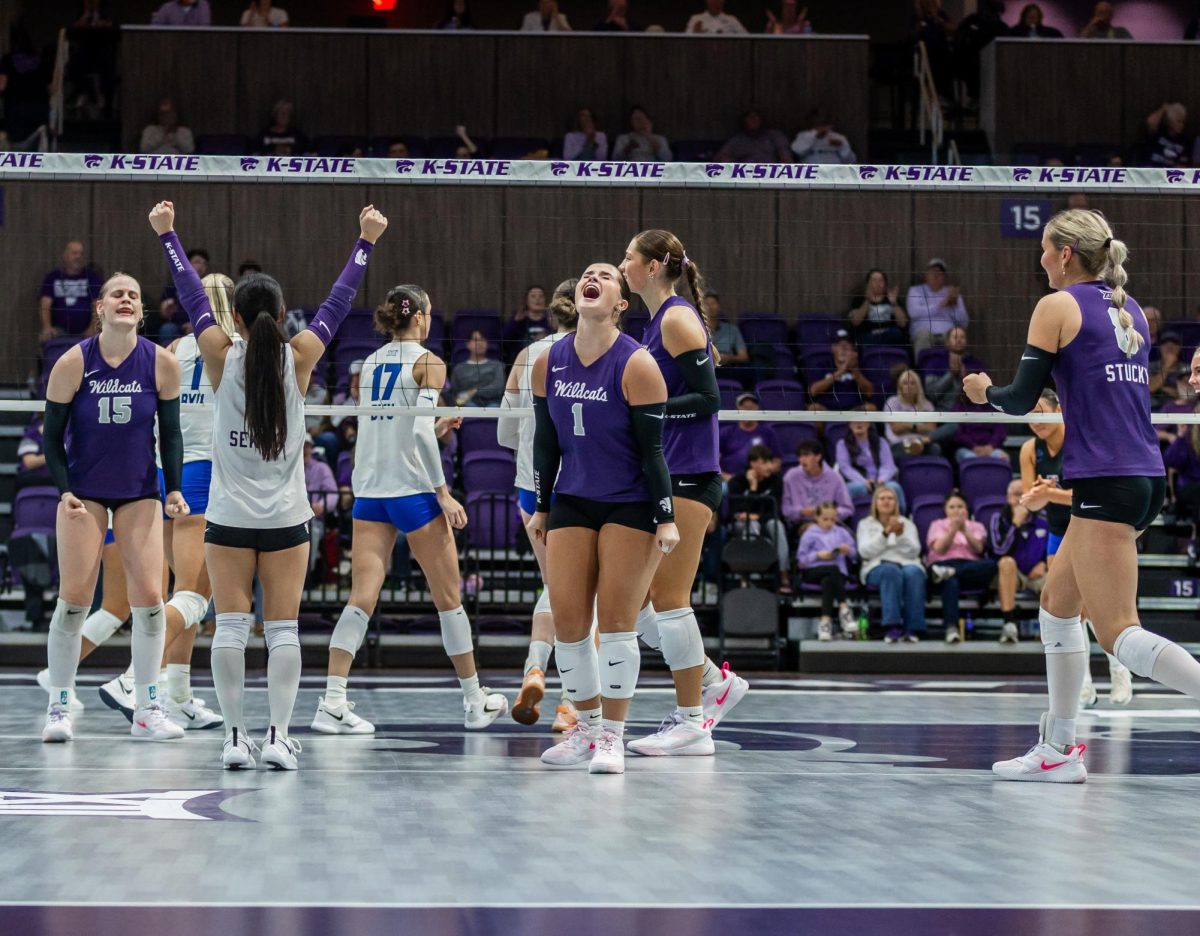
Baker, meanwhile, would take her chances with volleyball despite admitting she is not particularly good at it.
“I think I would be most interested in trading my training with the volleyball team because I LOVE playing volleyball,” Baker said. “However, I am actually quite bad at volleyball, and one spike to the face by Addison Massey would definitely send me to the emergency room.”
And if Olsen needs someone to lighten the mood at practice, he knows exactly where to look: Krudwig, who he said always has a few creative jokes ready.
The group’s personality may be hard to quantify, but Krudwig has his own description.
“We are a more intelligent group of guys, but we have our moments of being idiots,” Krudwig said. “We all have a built-in lock-in feature when needed, but normally we are a relaxed and funny group that is here to support each other and get better as a team.”
That balance — knowing when to laugh and when to lock in — is part of what the Wildcats believe has helped them get this far.
Ewing said the team’s goal is not simply to win a certain meet or finish at a certain time. It is to get everything possible out of the group.
“I want them to say that we overachieved, that we maximized every possible outcome that we could have with this group,” Ewing said.
The Wildcats still have the Weis-Crockett Invitational, Big 12 Championship and NCAA postseason ahead of them.
Times, places and points will eventually decide the races. But for K-State, the biggest advantage may be something that never appears on a results sheet. The Wildcats have built a team that genuinely wants the person next to them to succeed.
And when the season gets harder, they won’t have to run through it alone.